


Referenced in this article
Key Takeaways
- The DSM-5 defines AUD through 11 diagnostic criteria — meeting 2–3 indicates mild, 4–5 moderate, and 6 or more severe AUD
- 29.5 million Americans aged 12 and older met AUD criteria in 2022 (SAMHSA NSDUH); only 7.6% received any treatment that year
- Alcohol was listed as the primary or a contributing cause on 108,791 U.S. death certificates in 2021 (NIAAA), up 9.9% year over year
- Genetic heritability accounts for 50–60% of AUD risk (NIAAA twin and adoption studies); first-degree relatives of individuals with AUD are 3–4 times more likely to develop AUD
- Alcohol withdrawal begins 6–24 hours after the last drink; delirium tremens (DTs) occur in 3–5% of withdrawal cases and carry mortality of up to 37% without medical treatment
What Are the 11 DSM-5 Criteria for Alcohol Use Disorder?
The 11 DSM-5 criteria for alcohol use disorder are specific behavioral and physiological indicators a clinician evaluates within a 12-month period — a minimum of 2 must be present for an AUD diagnosis. The DSM-5, published by the American Psychiatric Association in its 2022 Text Revision (DSM-5-TR), eliminated the previous DSM-IV distinction between "alcohol abuse" and "alcohol dependence" and replaced both with a single unified diagnosis graduated by severity. Meeting 2–3 criteria = mild AUD. Meeting 4–5 criteria = moderate AUD. Meeting 6 or more criteria = severe AUD.
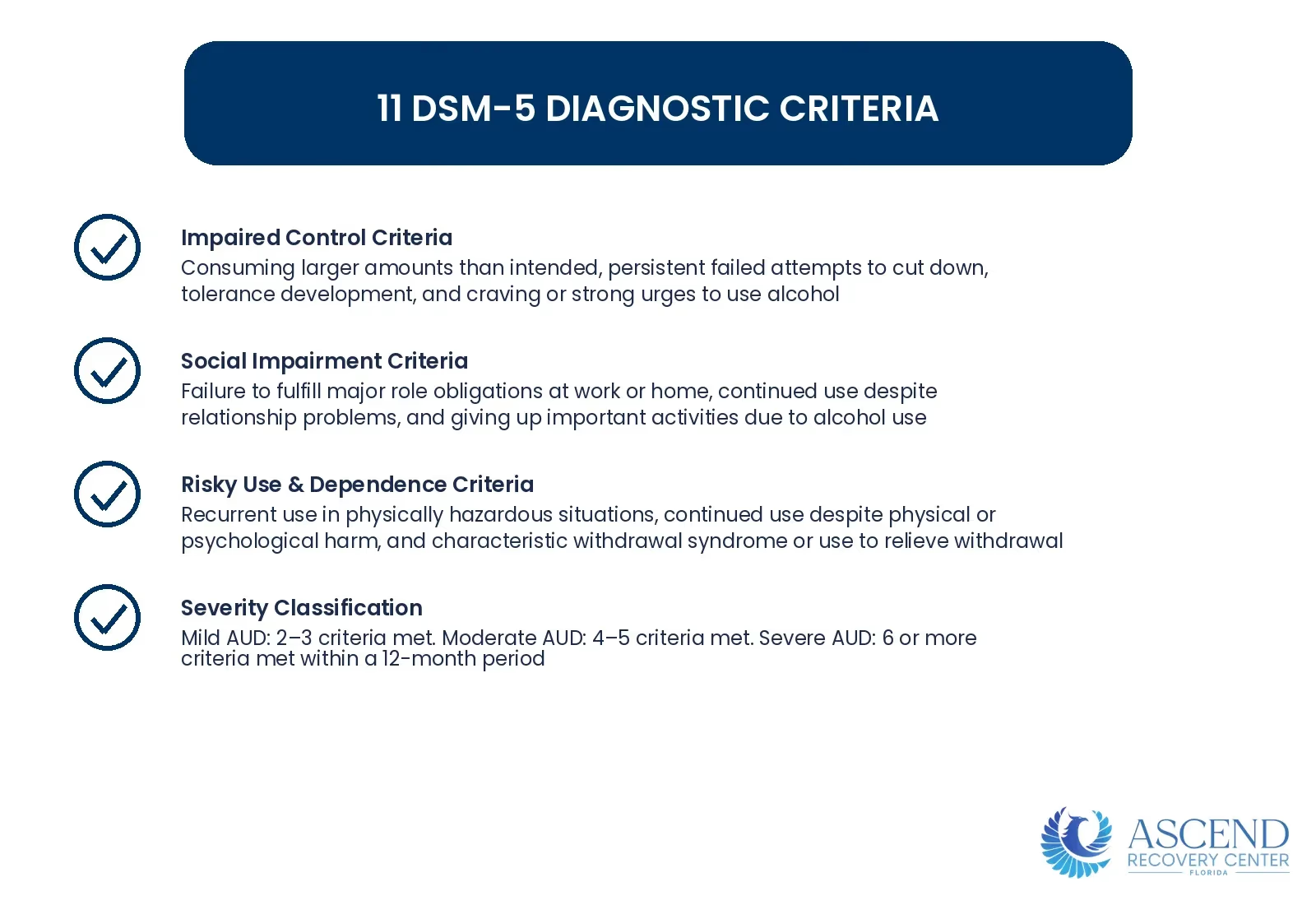
The 11 DSM-5 diagnostic criteria for AUD are listed below.
- Consuming alcohol in larger amounts or over longer periods than intended
- Persistent desire or unsuccessful efforts to cut down or control alcohol use
- Spending a great deal of time obtaining, using, or recovering from alcohol
- Craving or a strong urge to use alcohol
- Recurrent alcohol use resulting in failure to fulfill major role obligations at work, school, or home
- Continued alcohol use despite persistent or recurrent social or interpersonal problems caused or worsened by alcohol
- Important social, occupational, or recreational activities given up or reduced because of alcohol use
- Recurrent alcohol use in physically hazardous situations
- Continued alcohol use despite knowledge of a persistent or recurrent physical or psychological problem caused or worsened by alcohol
- Tolerance: a need for markedly increased alcohol amounts to achieve the same effect, or markedly diminished effect with the same amount
- Withdrawal: the characteristic alcohol withdrawal syndrome appears, or alcohol is taken to relieve or avoid withdrawal symptoms
In 2021, 108,791 U.S. death certificates for people aged 16 and older listed alcohol as the primary or a contributing cause of death, a 9.9% increase over the prior year, according to the National Institute on Alcohol Abuse and Alcoholism. That figure establishes AUD as a lethal condition — not a behavioral failure — requiring clinical intervention. Because individuals rarely self-report these 11 criteria early, the disorder is usually first detected by the people around the drinker — which makes the behavioral signs of alcohol addiction that family members notice the most common entry point to treatment.

Alcohol Addiction Symptom Categories
Craving, unsuccessful quit attempts, larger amounts, and time spent drinking.
Missed obligations, relationship conflict, and reduced activities.
Hazardous drinking and continued drinking despite harm.
Tolerance and withdrawal symptoms.

 FL DCF LicensedFARR Certified
What Are the Behavioral Signs of Alcohol Addiction That Family Members Notice?
The 4 most observable behavioral signs of alcohol addiction are concealment of drinking, neglect of obligations, personality shifts during intoxication, and escalating relationship conflict. Family members identify behavioral changes before the individual with AUD recognizes the problem in the majority of cases. These behaviors correspond directly to DSM-5 criteria 5, 6, and 7.
Four behavioral patterns that signal AUD to family members and close contacts are described below.
- Concealment and secrecy — hiding bottles in atypical locations such as inside vehicles, closets, or behind furniture; drinking alone; underreporting consumption when asked; becoming hostile when alcohol use is discussed
- Neglect of obligations — missing work 3 or more days per month, declining performance reviews, failing to attend parenting responsibilities, and defaulting on recurring financial obligations
- Personality and mood shifts — irritability when alcohol is unavailable, emotional volatility during intoxication, uncharacteristic verbal aggression, and withdrawal from social activities that do not include alcohol
- Relationship deterioration — recurring arguments about drinking frequency, broken commitments to reduce consumption, erosion of trust through dishonest behavior, and avoidance of family events
The CAGE questionnaire — a 4-item validated screening tool assessing Cut down attempts, Annoyance at criticism, Guilty feelings, and Eye-opener drinking — identifies probable AUD with a score of 2 or higher. The AUDIT (Alcohol Use Disorders Identification Test), a 10-question WHO-validated instrument, provides a fuller clinical picture. Family members who identify 2 or more behavioral patterns above benefit from requesting a licensed clinician administer either instrument. A faster 3-question screen, the AUDIT-C, flags hazardous drinking at a score of 4 or higher in men and 3 or higher in women — thresholds primary-care clinicians use to trigger a full AUD evaluation. Behavioral signs surface first, but as alcohol use disorder advances it begins to mark the body, producing the physical signs of alcohol addiction that make the condition visible on examination and lab work.
What Are the Physical Signs of Alcohol Addiction?
The 5 primary physical signs of alcohol addiction are hepatic changes (liver enlargement, jaundice), facial and skin changes (redness, broken capillaries), unexplained weight fluctuation, impaired motor coordination, and increasing physiological tolerance. Physical signs emerge as chronic alcohol consumption damages organ systems across weeks, months, and years of sustained heavy drinking. The National Institute on Alcohol Abuse and Alcoholism (NIAAA) defines chronic heavy drinking as more than 14 drinks per week or more than 4 drinks per occasion for men, and more than 7 drinks per week or more than 3 drinks per occasion for women.
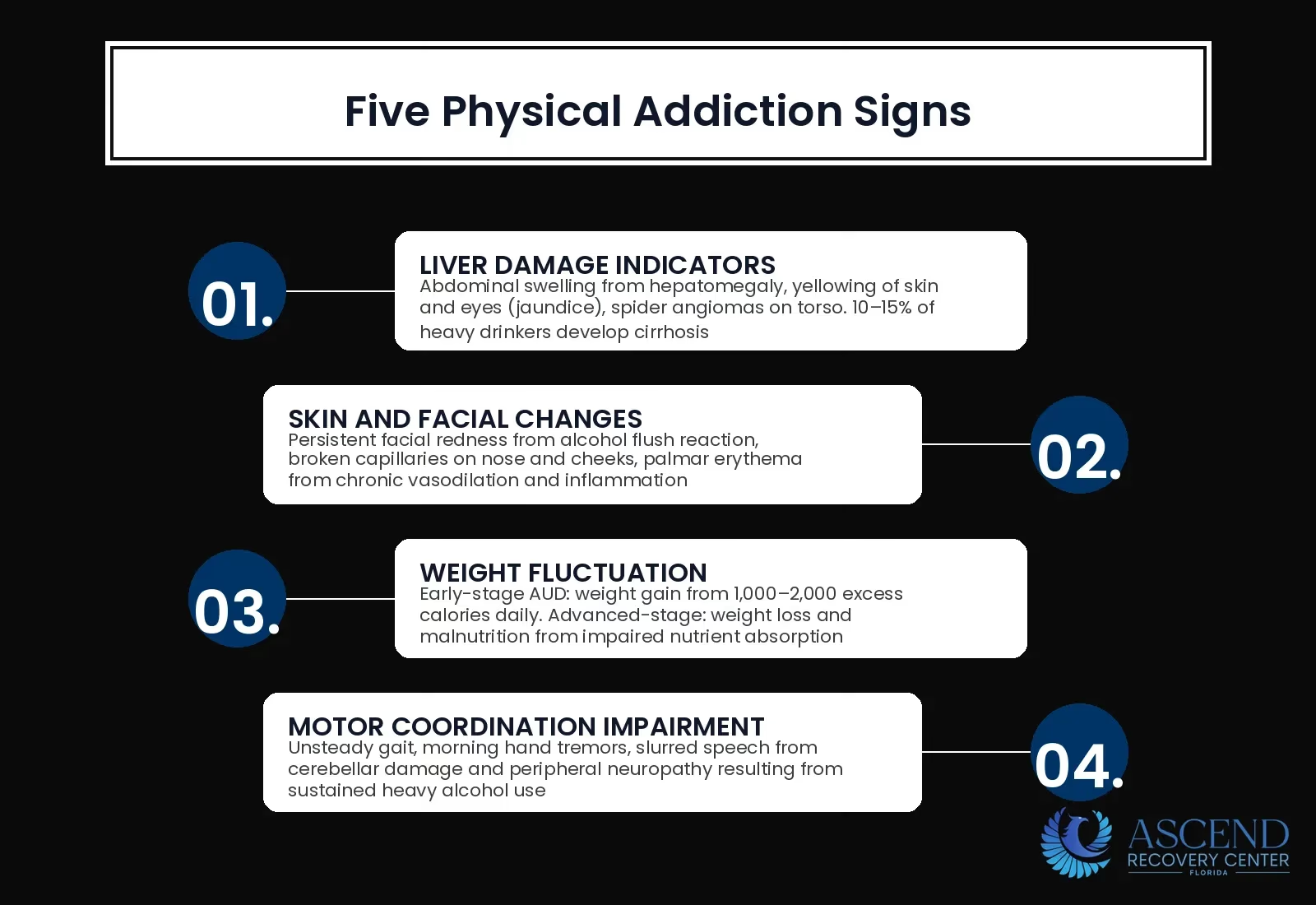
Five physical sign categories are described below.
- Liver damage indicators — abdominal swelling from hepatomegaly, yellowing of skin and eyes (jaundice), spider angiomas on the torso, and right upper quadrant tenderness. The NIAAA reports that 10–15% of heavy drinkers develop cirrhosis. Wernicke-Korsakoff syndrome, a thiamine-deficiency brain injury caused by chronic alcohol use, affects 12–14% of chronic heavy drinkers.
- Skin and facial changes — persistent facial redness (alcohol flush reaction), broken capillaries on the nose and cheeks, palmar erythema, and premature skin aging. These changes result from alcohol-induced vasodilation and chronic systemic inflammation.
- Weight changes — alcohol delivers 7 calories per gram. Heavy drinking adds 1,000–2,000 calories per day. Weight gain is common in early-stage AUD. Weight loss and malnutrition develop in advanced-stage AUD as nutrient absorption becomes impaired.
- Motor coordination impairment — unsteady gait, morning hand tremors upon waking, slurred speech during intoxication periods, and impaired fine motor control. These signs reflect alcohol-related cerebellar damage and peripheral neuropathy from sustained use.
- Tolerance — requiring progressively larger alcohol quantities to achieve the same subjective effect. An individual who previously felt intoxication after 3 drinks but now requires 6–8 drinks demonstrates pharmacological tolerance driven by hepatic CYP2E1 enzyme induction and GABA-A receptor downregulation. Tolerance is DSM-5 criterion 10 and is a direct indicator of neuroadaptation.
Tolerance and the physical signs above are downstream of a single root cause — the way alcohol rewires neurotransmitter systems. Understanding how alcohol affects the brain explains why these signs appear and why abrupt cessation becomes medically dangerous.
DSM-5 Alcohol Use Disorder Severity Levels
Early-stage disorder with impaired control; intervention at this level produces the highest treatment response rates
Escalating behavioral and physiological signs; structured outpatient treatment (PHP/IOP) is clinically indicated
Advanced disorder with significant neuroadaptation; medical detox followed by intensive treatment is the standard of care
FL DCF LicensedFARR CertifiedAUD identified at the mild stage — 2 or 3 DSM-5 criteria — responds to treatment faster, with lower relapse rates and shorter treatment duration than AUD identified after severe consequences accumulate. The 11 diagnostic criteria exist precisely to enable that early identification.
How Does Alcohol Affect the Brain?
Alcohol affects the brain by enhancing gamma-aminobutyric acid (GABA) inhibitory neurotransmission and suppressing glutamate excitatory neurotransmission, producing sedation, anxiolysis, and cognitive impairment. These two neurochemical mechanisms explain both the acute intoxicating effects and the chronic neuroadaptive changes that drive alcohol dependence and withdrawal risk.
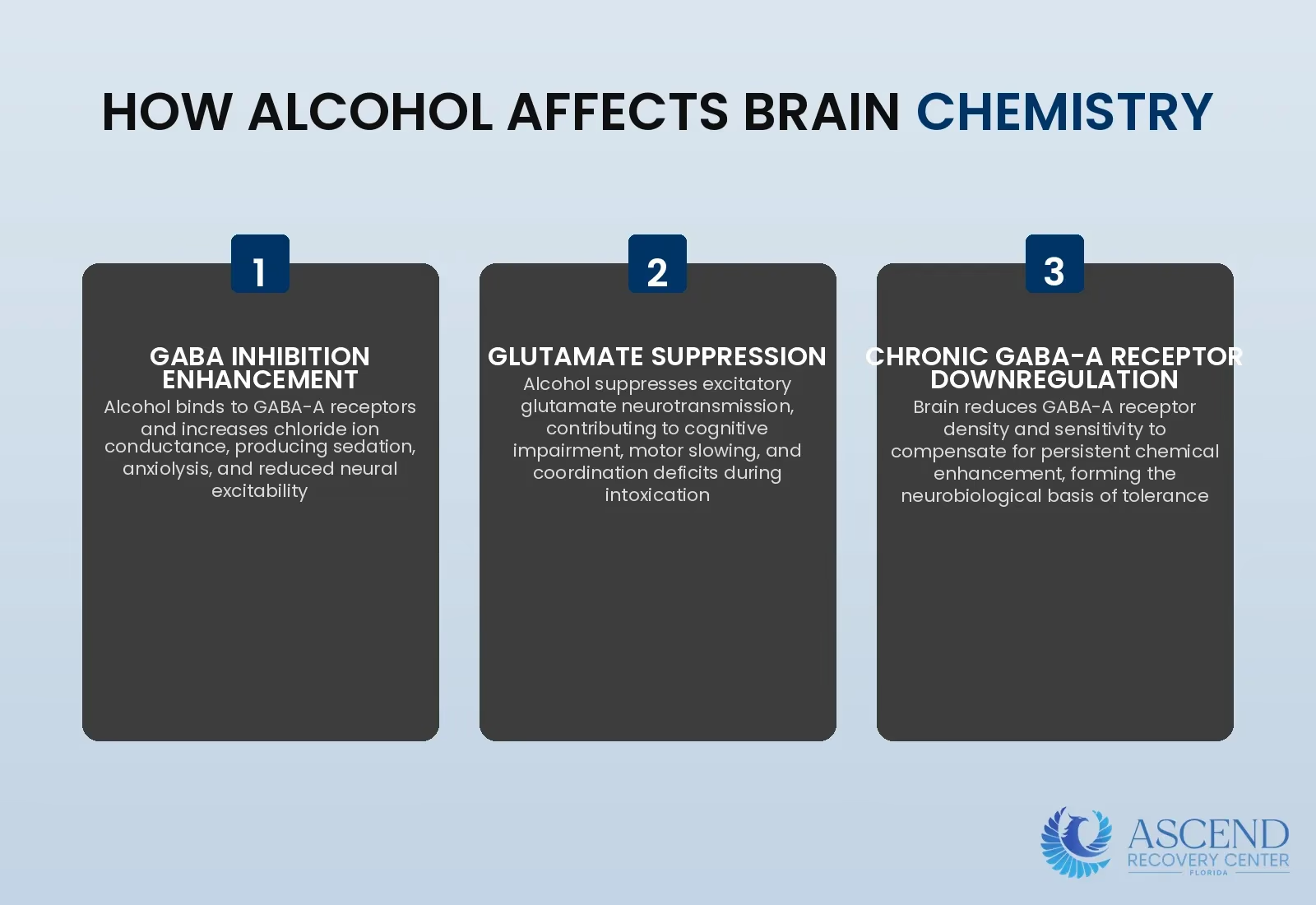
GABA system enhancement: Alcohol binds to GABA-A receptors and increases chloride ion conductance across neuronal membranes. Chronic alcohol exposure causes GABA-A receptor downregulation — the brain reduces receptor density and sensitivity to compensate for persistent chemical enhancement. This downregulation is the neurobiological basis of tolerance. When alcohol is removed, the under-responsive inhibitory system cannot counterbalance excitatory activity, producing the hyperexcitable withdrawal state.
Glutamate system suppression: Alcohol inhibits N-methyl-D-aspartate (NMDA) glutamate receptors, reducing excitatory neurotransmission. Chronic exposure triggers compensatory NMDA receptor upregulation. Abrupt cessation leaves the upregulated excitatory system unopposed by the downregulated inhibitory system. This excitatory-inhibitory imbalance produces seizures and delirium tremens during withdrawal — the same mechanism that makes medically supervised alcohol detox a clinical necessity.
Dopamine pathway activation: Alcohol increases dopamine release in the nucleus accumbens by 40–360% depending on dose and individual genetics, as established by Di Chiara and Imperato (1988) in a foundational study published in the Proceedings of the National Academy of Sciences. This dopaminergic surge reinforces drinking behavior. Chronic alcohol exposure blunts baseline dopamine signaling, producing anhedonia and driving continued use to restore baseline dopamine levels. Neuroimaging studies at the National Institute on Alcohol Abuse and Alcoholism demonstrate measurable recovery of gray matter volume within 6–12 months of sustained abstinence.
Blood Alcohol Concentration (BAC) of 0.08% constitutes the legal impairment threshold in Florida under Florida Statute 316.193. Cognitive impairment begins at BAC levels below 0.08% in non-tolerant individuals. These neurochemical changes explain the mechanism of addiction, but they do not explain why one person develops alcohol use disorder and another does not — that difference is governed by the risk factors for developing alcohol addiction.
Alcohol's Neurochemical Effects
Alcohol increases dopamine 40–360% depending on dose and genetics — reinforcing drinking behavior and driving addiction
Chronic exposure causes GABA-A downregulation — the neurological basis of tolerance and withdrawal seizure risk
Compensatory NMDA upregulation creates the excitatory-inhibitory imbalance that causes seizures during withdrawal
FL DCF LicensedFARR CertifiedDoes Your Insurance Cover Alcohol Addiction Education?
Free, confidential verification in under 15 minutes.
What Are the Risk Factors for Developing Alcohol Addiction?
The risk factors for developing alcohol addiction are genetic predisposition (50–60% heritability), early onset of drinking before age 15, co-occurring mental health disorders, environmental exposure, and adverse childhood experiences (ACEs). The NIAAA identifies both genetic and environmental factors as independent contributors to AUD development. No single risk factor guarantees AUD. Multiple interacting factors determine individual risk.
Five risk factor categories are described below.
- Genetic heritability — twin and adoption studies establish that 50–60% of the variance in AUD risk is attributable to genetic factors (NIAAA, 2023). Specific gene variants affecting alcohol metabolism (ADH1B, ALDH2) and neuroreceptor function (GABRA2, CHRM2) alter AUD susceptibility. First-degree relatives of individuals with AUD are 3–4 times more likely to develop AUD than the general population.
- Age of first use — individuals who begin drinking before age 15 are 4 times more likely to develop AUD than individuals who begin drinking at age 21 or later (NIAAA). Adolescent brain development is particularly vulnerable to alcohol-induced neuroplastic changes in reward circuitry. Each year of delayed alcohol initiation reduces lifetime AUD risk.
- Co-occurring mental health disorders — major depressive disorder, generalized anxiety disorder, PTSD, and bipolar disorder each independently increase AUD risk by 2–4 times. Approximately 37% of individuals with AUD have at least one co-occurring psychiatric disorder (SAMHSA, 2022). Integrated dual diagnosis treatment addresses both AUD and co-occurring psychiatric conditions within a single clinical framework — ASAM-certified programs require co-occurring treatment capability as a core standard.
- Environmental factors — high alcohol availability, peer group heavy drinking patterns, socioeconomic stress, and cultural normalization of alcohol use each increase AUD risk independently of genetic predisposition.
- Adverse childhood experiences (ACEs) — individuals with 4 or more ACEs are 7.4 times more likely to develop AUD than individuals with 0 ACEs, according to the landmark ACE Study by Dube et al. (2002) published in Pediatrics. Childhood trauma produces persistent neurobiological stress dysregulation that increases vulnerability to alcohol-mediated relief-seeking.
Risk factors identify who is vulnerable to alcohol use disorder; the next question is when that vulnerability has crossed into a disorder that warrants intervention — the point at which it is time to seek treatment for alcohol addiction.
FL DCF LicensedFARR CertifiedWhen Is It Time to Seek Treatment for Alcohol Addiction?
Treatment for alcohol addiction is indicated the moment an individual meets 2 or more of the 11 DSM-5 criteria for AUD, or when alcohol use produces measurable impairment in occupational, social, or physical functioning. Treatment need does not require a subjective rock bottom. The NIAAA's landmark Alcohol and Alcohol Problems Science Database documents that earlier treatment engagement produces better 12-month outcomes across all three AUD severity levels. Alcohol withdrawal symptoms begin 6–24 hours after the last drink — the presence of withdrawal is itself a clinical emergency requiring immediate medical evaluation.
Five specific indicators that treatment is needed are listed below.
- Failed self-directed quit attempts — 2 or more unsuccessful attempts to stop or reduce drinking in the past 12 months
- Withdrawal symptoms upon cessation — tremors, sweating, anxiety, insomnia, or nausea when alcohol consumption stops or decreases. Delirium tremens (DTs) occur in 3–5% of people undergoing alcohol withdrawal and carry mortality of up to 37% if left untreated, falling to approximately 1% to 5% with prompt medical management. Withdrawal requires immediate physician evaluation.
- Functional impairment — job loss, academic failure, DUI arrest in Florida (BAC 0.08% threshold), relationship dissolution, or child custody issues directly attributable to drinking
- Escalating consumption — progressive increase in drinking quantity or frequency over the past 6–12 months, indicating advancing neurological tolerance
- Physical health consequences — physician-documented liver enzyme elevation (AST/ALT ratio above 2:1), pancreatitis, gastritis, or other alcohol-attributable medical diagnoses. The NIAAA reports that 10–15% of heavy drinkers develop cirrhosis.
Recognizing that treatment is needed is the trigger; confirming the diagnosis and matching it to the right level of care is a formal clinical process — this is how alcohol addiction is clinically assessed.
Individuals with active withdrawal symptoms require medical alcohol detox before beginning PHP or IOP programming. DCF-licensed programs in South Florida coordinate directly with detox facilities to ensure safe physiological stabilization before step-down. at no cost.
Neuroadaptation from chronic alcohol use follows a predictable trajectory across the GABA and glutamate systems. Intervention at any point along that trajectory reduces cumulative neurological harm and shortens the path to stable recovery.
How Is Alcohol Addiction Clinically Assessed?
Alcohol addiction is clinically assessed through a comprehensive biopsychosocial evaluation and an ASAM (American Society of Addiction Medicine) placement assessment conducted by licensed clinicians. The assessment determines AUD diagnosis, severity level (mild, moderate, or severe), co-occurring disorder identification, and appropriate level-of-care placement across the ASAM continuum.
A comprehensive clinical assessment includes 4 components.
- Clinical interview — a licensed therapist or counselor conducts a structured diagnostic interview evaluating all 11 DSM-5 criteria, drinking history, prior treatment episodes, and current psychosocial functioning. The interview takes 60–90 minutes.
- ASAM multidimensional assessment — evaluation across the 6 ASAM dimensions: (1) acute intoxication and withdrawal potential, (2) biomedical conditions and complications, (3) emotional, behavioral, and cognitive conditions, (4) readiness to change, (5) relapse and continued use potential, (6) recovery environment. ASAM scores determine placement at PHP (ASAM Level 2.5), IOP (ASAM Level 2.1), or outpatient (ASAM Level 1).
- Standardized screening instruments — the AUDIT (Alcohol Use Disorders Identification Test), PHQ-9 (depression), GAD-7 (anxiety), and PCL-5 (PTSD) provide objective severity measurement for AUD and co-occurring conditions. AUDIT scores of 8 or above indicate hazardous or harmful alcohol use.
- Medical history review — evaluation of current medications, prior detox episodes, medical comorbidities, and available laboratory results. Individuals with active withdrawal symptoms are referred to a medical detox facility before step-down to PHP or IOP programming.
DCF-licensed outpatient programs in Florida, including alcohol rehab programs at the PHP and IOP levels, complete ASAM placement assessments before enrollment. online — most major carriers are accepted, and verification is completed within 24 hours.
Alcohol Addiction Assessment Steps
- 1Self-Screening
Online or phone-based screening to identify potential AUD signs and determine if a clinical evaluation is appropriate
- 2Clinical Assessment
60-90 minute structured diagnostic interview evaluating all 11 DSM-5 criteria, drinking history, and psychosocial functioning
- 3ASAM Placement
Multidimensional assessment across 6 ASAM dimensions to determine the appropriate level of care (PHP, IOP, or outpatient)
- 4Treatment Start
Enrollment in the recommended program with individualized treatment plan, therapy assignments, and psychiatric evaluation
- 5Continuing Care
Ongoing step-down support through IOP and outpatient programming with relapse prevention planning
FL DCF LicensedFARR CertifiedIf someone functions at work, do they really have a drinking problem?
Common Misconception
"Someone who holds down a job and pays the bills can't have a real drinking problem."
What the Evidence Shows
High-functioning alcohol use disorder is common — maintaining employment and responsibilities does not rule out AUD. The DSM-5 diagnoses AUD on clinical criteria (impaired control, cravings, tolerance, continued use despite harm), not on whether someone has lost their job. Outward functioning often delays help-seeking and lets the disorder progress; the criteria, not the career, define the condition.
American Psychiatric Association, DSM-5-TR (2022); NIAAA.
Is My Loved One Struggling With Alcohol?
Answer 8 questions about observable behavioral changes. This assessment provides general guidance — a clinical evaluation determines diagnosis.
Does the individual drink larger amounts or for longer periods than intended?
Confidential · Not a clinical diagnosis · Your answers stay in your browser


