


Referenced in this article
Key Takeaways
- Alcohol use disorder (AUD) replaced the DSM-IV terms 'alcohol abuse' and 'alcohol dependence' in 2013 — it is a single spectrum diagnosis with mild (2–3 criteria), moderate (4–5 criteria), and severe (6+ criteria) classifications.
- 29.5 million U.S. adults (11.2%) meet AUD criteria annually; fewer than 1 in 10 receive treatment — the largest treatment gap of any major chronic disease.
- The defining feature of AUD is impaired control over drinking — not quantity consumed — differentiating it from heavy drinking or binge drinking patterns.
- Three FDA-approved medications (naltrexone, acamprosate, disulfiram) are evidence-based for AUD, with naltrexone showing the strongest evidence for reducing heavy drinking and combined treatment (MAT + behavioral therapy) producing the best outcomes.
- 75% of individuals with AUD eventually achieve stable recovery; NIAAA research shows neurological restoration continues for 1–5 years of sustained abstinence, improving cognitive function, emotional regulation, and reward circuit health.
What Is Alcohol Use Disorder (AUD)?
Alcohol use disorder (AUD) is defined in the DSM-5 as a problematic pattern of alcohol use leading to clinically significant impairment or distress, manifesting as at least 2 of 11 diagnostic criteria within a 12-month period. The DSM-5 unified the previously separate DSM-IV diagnoses of alcohol abuse (a less severe category involving social consequences but not dependence) and alcohol dependence (the severe, physiological form involving tolerance and withdrawal) into a single spectrum disorder with mild, moderate, and severe classifications — a change that better reflects the clinical reality that there is no clear threshold separating "problem drinking" from "alcoholism."
The NIAAA defines AUD through four core domains:
- Impaired control: drinking more or longer than intended; unsuccessful efforts to cut down; spending significant time obtaining, using, or recovering from alcohol; cravings that interfere with concentration
- Social impairment: failure to fulfill work, school, or home obligations; continued drinking despite relationship problems caused by drinking; giving up important activities
- Risky use: continued drinking in physically hazardous situations; continued drinking despite knowledge of persistent physical or psychological harm caused by it
- Pharmacological criteria: tolerance (needing more alcohol to achieve the same effect, or diminished effect with the same amount); withdrawal symptoms when alcohol is reduced or stopped
AUD is distinguished from normal or low-risk drinking by the loss of control dimension — a person with AUD does not simply choose to drink heavily; the neurological changes produced by chronic alcohol exposure progressively impair the brain circuits responsible for voluntary control over drinking behavior. This is why willpower-based approaches alone are ineffective for moderate-to-severe AUD, and why evidence-based treatment combines pharmacological management with behavioral therapy to address both the neurobiological and psychological dimensions of the disorder.


 FL DCF LicensedFARR Certified
What Are the 11 DSM-5 Diagnostic Criteria for Alcohol Use Disorder?
The DSM-5 provides 11 specific criteria for alcohol use disorder — presence of 2 or more within the same 12-month period constitutes a diagnosable AUD, with the total count of criteria met determining severity. The following are all 11 DSM-5 AUD criteria, stated as questions a clinician or individual can use for self-reflection:
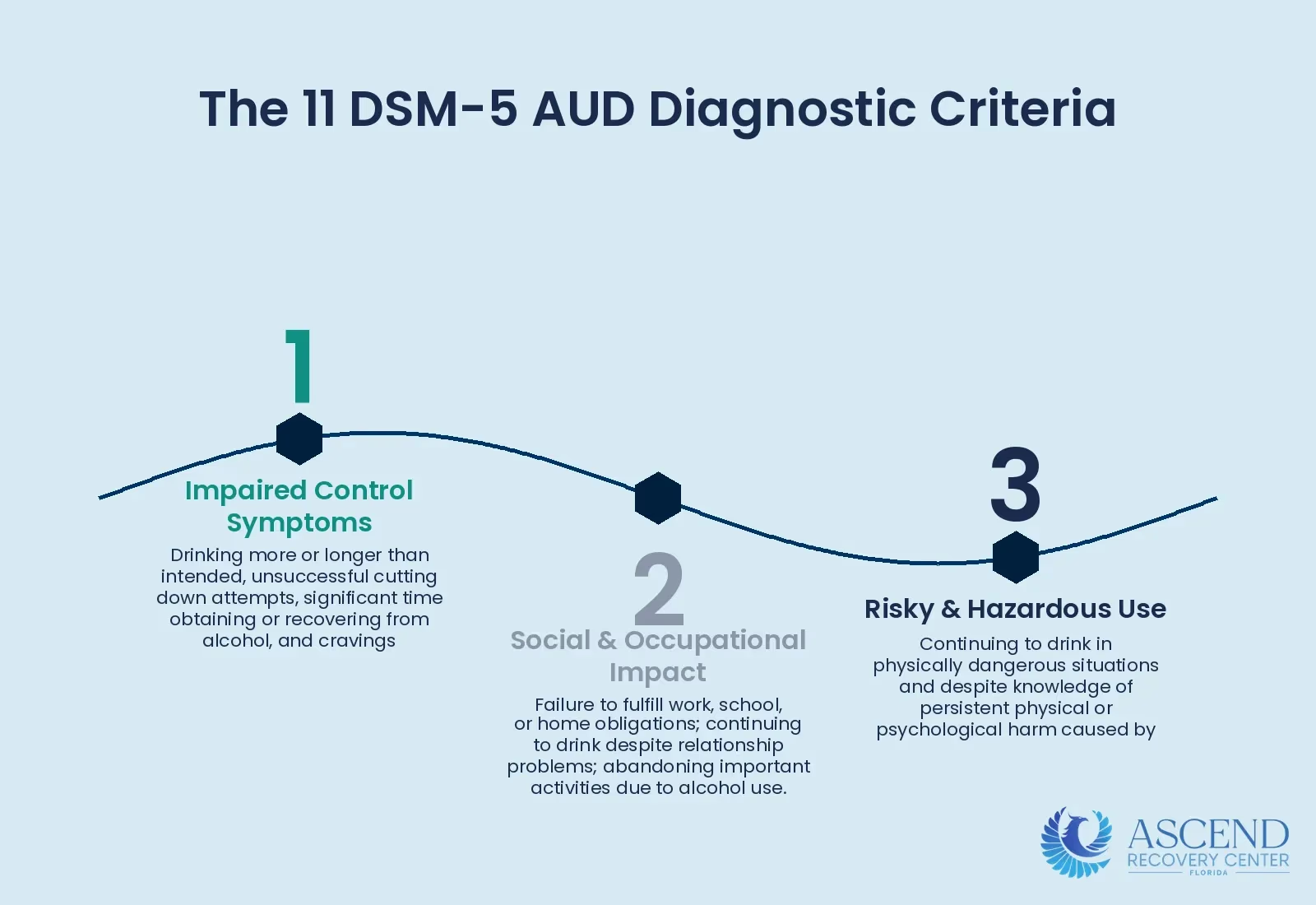
- Do you often drink more or for longer than you intend?
- Have you tried to cut down or stop drinking but found you couldn't?
- Do you spend a lot of time drinking or recovering from drinking?
- Do you experience cravings — a strong urge or compulsion to drink?
- Has drinking (or recovering from drinking) interfered with your work, school, or home responsibilities?
- Have you continued to drink despite it causing ongoing problems with your family or others?
- Have you given up or reduced activities you care about because of drinking?
- Have you gotten into unsafe situations because of drinking (driving drunk, unsafe sex, using other drugs)?
- Have you continued to drink even though it was making a physical or mental health problem worse?
- Do you need to drink more than you used to to feel the same effect (tolerance)?
- When you stop or cut back drinking, do you experience withdrawal symptoms — shaking, sweating, nausea, anxiety, or seizures?
Two important clinical notes on these criteria: First, the tolerance criterion (criterion 10) does not apply to individuals who develop tolerance through heavy regular drinking without loss of control — tolerance alone, without at least one other criterion, does not constitute AUD. Second, the withdrawal criterion (criterion 11) is present in severe AUD but its absence does not rule out the disorder; mild-to-moderate AUD does not necessarily involve physiological withdrawal.
The NIAAA's definition of low-risk drinking — for healthy adults who are not pregnant, not taking medications that interact with alcohol, and without conditions contraindicated by alcohol use — is no more than 4 drinks per day and 14 drinks per week for men, and no more than 3 drinks per day and 7 drinks per week for women. Consistent drinking above these thresholds does not automatically constitute AUD but substantially increases risk.
AUD Severity by DSM-5 Criteria Count
Occupational or social consequences beginning to emerge; moderate cravings; early tolerance; appropriate for outpatient treatment with MAT evaluation
Significant functional impairment across multiple life domains; withdrawal risk on cessation; IOP or PHP with MAT strongly recommended
"Alcohol dependence" in prior terminology; high physiological dependence; withdrawal seizure and DT risk; PHP + medical detox coordination required before behavioral treatment
FL DCF LicensedFARR CertifiedWhat Are the Health Consequences of Alcohol Use Disorder?
Alcohol use disorder produces health consequences across virtually every organ system, with severity correlated to the duration and quantity of alcohol use and the presence of genetic risk factors for alcohol-related organ damage. The following are the major medical consequences by organ system:
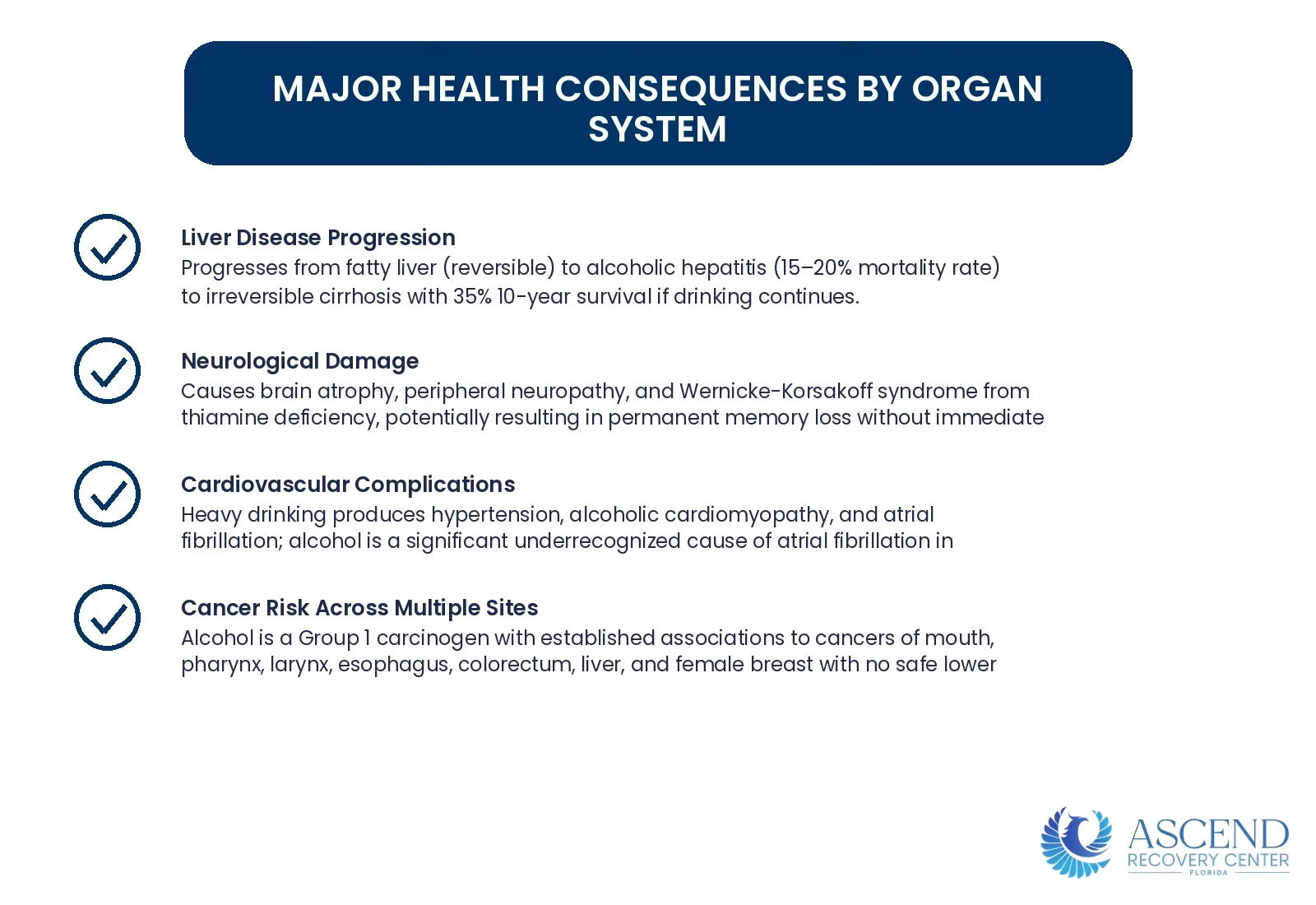
- Liver disease: the liver metabolizes approximately 90% of consumed alcohol; alcohol hepatotoxicity progresses from fatty liver (reversible, occurs in nearly all heavy drinkers) to alcoholic hepatitis (symptomatic liver inflammation, mortality risk 15–20% in severe cases) to alcoholic cirrhosis (irreversible liver fibrosis, 10-year survival of 35% with continued drinking vs 70% with abstinence); alcohol is the most common preventable cause of liver failure requiring transplantation in the United States
- Neurological damage: chronic alcohol exposure causes progressive brain atrophy (particularly of the frontal lobes and cerebellum), peripheral neuropathy (numbness, tingling, and pain in extremities), and Wernicke-Korsakoff syndrome (a devastating neurological disorder caused by thiamine deficiency, producing acute ataxia, ophthalmoplegia, and confusion that can progress to permanent memory loss if not treated immediately with IV thiamine)
- Cardiovascular effects: moderate alcohol use is associated with reduced cardiovascular events in some populations, but heavy drinking produces hypertension, alcoholic cardiomyopathy (dilated cardiomyopathy from direct ethanol toxicity to cardiac muscle), and atrial fibrillation; alcohol is a significant and underrecognized cause of atrial fibrillation, even in younger adults
- Cancer risk: alcohol is a Group 1 human carcinogen (International Agency for Research on Cancer); established associations between alcohol use and cancers of the mouth, pharynx, larynx, esophagus, colorectum, liver, and female breast; the risk is dose-dependent with no safe lower threshold for cancer risk reduction
- Mental health co-occurrence: 50–60% of individuals with AUD have at least one co-occurring mental health disorder — most commonly major depressive disorder, anxiety disorders (GAD, social anxiety, PTSD), and bipolar disorder; the relationship is bidirectional: psychiatric disorders increase risk of developing AUD, and heavy alcohol use worsens psychiatric symptoms and reduces medication effectiveness
Alcohol use disorder is a medical condition, not a moral failing. The brain changes caused by chronic heavy alcohol use are real, measurable, and — with treatment — reversible.
How Is Alcohol Use Disorder Different from Heavy Drinking?
The distinction between heavy drinking, problem drinking, and alcohol use disorder lies not in the quantity consumed but in the presence of impaired control — the defining feature that separates AUD from other drinking patterns. The following are the key distinctions:
- Moderate drinking: no more than 1 drink/day for women or 2 drinks/day for men; consumption within NIAAA's low-risk guidelines; no loss of control; no functional impairment; alcohol plays a social role without dominating life priorities
- Heavy drinking: NIAAA defines heavy drinking as more than 4 drinks on any day or more than 14 drinks per week for men (more than 3 per day or 7 per week for women); heavy drinking does not require loss of control; a person can drink heavily in a controlled, intentional manner; heavy drinking substantially increases AUD risk over time but is not itself AUD
- Binge drinking: a pattern of drinking that brings blood alcohol concentration (BAC) to 0.08 g/dL or higher — typically 5+ drinks within ~2 hours for men, 4+ for women; binge drinking can occur without AUD (episodic binge drinking without craving, withdrawal, or functional impairment); but binge drinking is a risk factor for AUD development and is itself associated with acute harm (injury, accident, alcohol poisoning)
- Alcohol use disorder: defined by loss of control — the distinguishing feature is that drinking continues despite genuine desire to stop, despite harm, and despite increasingly serious consequences; the brain's reward system has been reorganized around alcohol to such an extent that normal voluntary control over the behavior is impaired; this is the neurobiological threshold at which willpower-only approaches become insufficient and evidence-based treatment becomes necessary
An important practical note: many individuals with AUD maintain functional careers and stable external lives — the stereotype of AUD as a condition of visible dysfunction misses the majority of affected individuals; NIAAA data shows that approximately 70% of individuals with AUD are employed and most are not visibly in crisis. High-functioning AUD is common and often delays help-seeking by years.
Does Your Insurance Cover Alcohol Addiction Education?
Free, confidential verification in under 15 minutes.
What Are the Evidence-Based Treatments for Alcohol Use Disorder?
Alcohol use disorder has more FDA-approved medications than any other substance use disorder — three pharmacological agents with distinct mechanisms and evidence bases — combined with the strongest evidence base in behavioral therapy of any addiction treatment context. The following are the primary treatment components for AUD:
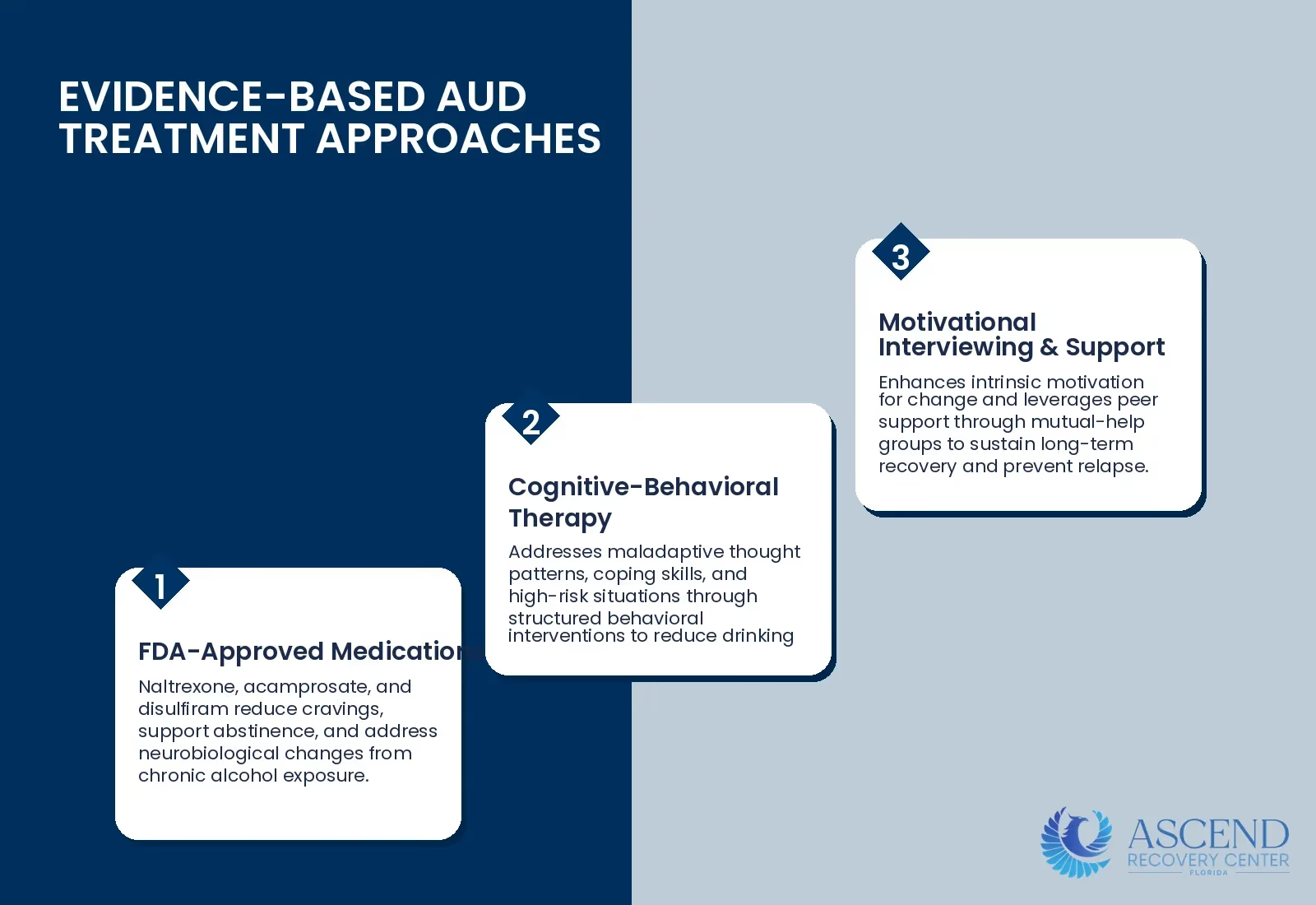
- Naltrexone (oral and injectable): an opioid antagonist that blocks the pleasurable effects of alcohol by preventing endorphin release; oral naltrexone 50 mg/day reduces heavy drinking days by 25–35% compared to placebo in randomized controlled trials; monthly injectable naltrexone (Vivitrol) eliminates adherence barriers by requiring only one injection per month; most effective in individuals with strong cravings and family history of alcoholism (the OPRM1 gene variant predicts naltrexone response)
- Acamprosate (Campral): modulates glutamate and GABA activity to reduce the protracted withdrawal syndrome (PAWS) — the anxiety, insomnia, and dysphoria that drive relapse in early recovery; most effective in individuals who have already stopped drinking and want to maintain abstinence; does not reduce the reward of drinking once it occurs, but reduces the neurological distress that triggers drinking; dosed three times daily
- Disulfiram (Antabuse): produces an aversive reaction (flushing, nausea, tachycardia, hypotension) when alcohol is consumed; primarily functions as a deterrence tool; most effective when directly observed — supervised administration by a partner, family member, or clinician — rather than self-administered; not recommended for individuals with severe cardiovascular disease or poor motivation for abstinence
- Behavioral therapies: cognitive-behavioral therapy (CBT) addresses the thought patterns and behavioral triggers that maintain drinking; motivational enhancement therapy (MET) resolves ambivalence and builds intrinsic motivation for change; 12-step facilitation connects clients to AA community and the sponsor relationship; behavioral couples therapy involves the partner in the recovery process; all are evidence-based in combination with MAT or as standalone interventions for mild AUD
The combination of naltrexone with structured behavioral therapy in PHP or IOP — the level of care matched to AUD severity by ASAM Criteria — produces substantially better outcomes than either intervention alone. Medical alcohol detox is required before behavioral treatment for moderate-to-severe AUD to ensure physical safety and neurological stabilization.
What Level of Care Is Appropriate for AUD?
The American Society of Addiction Medicine (ASAM) Criteria provides a six-dimension assessment framework that determines the appropriate level of care for alcohol use disorder based on withdrawal risk, medical status, psychiatric co-occurrence, motivation, relapse history, and recovery environment.
The following ASAM levels of care apply to AUD treatment:
- ASAM Level 4 — Medically Managed Intensive Inpatient (hospital detox): required for CIWA-Ar scores above 20, prior DT history, significant medical comorbidities (cardiac disease, liver failure, seizure disorder), or inability to maintain safety in lower-level settings; IV benzodiazepine protocol, ICU monitoring, electrolyte management
- ASAM Level 3.2–3.7 — Residential Treatment: 24-hour care in a non-hospital residential setting for individuals with severe AUD who cannot safely or effectively engage in outpatient treatment due to environmental instability, psychiatric severity, or failed outpatient treatment attempts; residential treatment is coordinated with appropriate partner facilities when clinically indicated
- ASAM Level 2.5 — Partial Hospitalization (PHP): 4–6 hours of daily programming, 5 days per week; appropriate for moderate-severe AUD following detox completion; combines group therapy, individual therapy, psychiatric medication management, MAT initiation, and family therapy; the step-down from inpatient or residential treatment, or the entry point for individuals who do not require residential-level care
- ASAM Level 2.1 — Intensive Outpatient (IOP): 9–19 hours per week of structured programming; appropriate for mild-moderate AUD or as a step-down from PHP; allows work and family maintenance while providing clinical intensity above standard outpatient
- ASAM Level 1.0 — Standard Outpatient: 1–4 sessions per week; appropriate for mild AUD, maintenance phase of treatment, or as continuing care following higher-intensity treatment completion
PHP and IOP programs operating under ASAM Criteria Level 2.5 and 2.1 are available across Florida, including at outpatient facilities in Palm Beach County. Detox coordination, psychiatric services, and MAT prescribing are standard components of ASAM-compliant programs. before beginning the admissions process.
The gap between those who need alcohol use disorder treatment and those who receive it remains the most significant public health challenge in addiction medicine. Only 8.8% of the 29.5 million Americans with AUD received any treatment in 2022.
Can Alcohol Use Disorder Be Cured?
Alcohol use disorder is classified as a chronic, relapsing brain disease — there is no pharmacological "cure" in the conventional sense, but sustained recovery (defined as elimination of diagnostic criteria and restoration of health and functioning) is achievable and durable for the majority of individuals who engage with evidence-based treatment.
The following are the most important evidence-based facts about AUD and long-term recovery:
- Recovery rates are high: NIAAA longitudinal research shows that approximately 75% of individuals with AUD eventually achieve stable recovery — most through a combination of formal treatment, mutual aid (AA), and natural recovery processes; recovery is the norm, not the exception
- Most people require multiple treatment episodes: the chronic disease model of addiction predicts that most individuals require 2–4 treatment contacts before achieving sustained recovery; this does not reflect treatment failure but rather the progressive nature of recovery motivation and behavioral change
- Neurological recovery continues for years: neuroimaging research documents progressive restoration of prefrontal cortex gray matter volume and dopamine receptor density over 1–5 years of sustained abstinence; cognitive function (working memory, impulse control, emotional regulation) continues to improve well beyond the acute withdrawal period
- Controlled drinking as a treatment goal: controlled drinking — returning to low-risk alcohol use rather than abstinence — is a treatment goal in some mild AUD contexts (primarily mild AUD in individuals without prior severe withdrawal, liver disease, or pregnancy); for moderate-to-severe AUD, abstinence is the standard clinical recommendation due to evidence that controlled drinking is rarely sustained long-term in individuals with significant physiological dependence history
The question is not whether AUD is "curable" but whether it is manageable — and the answer, supported by decades of clinical research, is clearly yes. Recovery from alcohol use disorder, with appropriate treatment and support, allows individuals to lead healthy, meaningful, and alcohol-free lives. Reaching out to a DCF-licensed treatment facility is the appropriate next step for anyone who recognizes AUD criteria in themselves or a family member.
Florida DCF-licensed facilities offer confidential clinical assessments to determine the appropriate level of care. takes approximately 15 minutes and confirms coverage before admission.
Are you either an alcoholic or completely fine?
Common Misconception
"You're either an alcoholic or you don't have a drinking problem — there's no in between."
What the Evidence Shows
Alcohol use disorder is a spectrum, not a binary. The DSM-5 grades AUD by the number of the 11 criteria met: mild (2–3), moderate (4–5), and severe (6+). Most people with AUD fall in the mild-to-moderate range and never fit the stereotype of 'alcoholic.' The spectrum framing matters because it helps people recognize a problem and seek help earlier, when treatment works best.
American Psychiatric Association, DSM-5-TR (2022); NIAAA.


