


Referenced in this article
Key Takeaways
- ASAM (2019), NIDA (2020), and DSM-5 (2013) all define addiction as a chronic relapsing brain disease — characterized by compulsive use despite harm, loss of control, and neurobiological changes visible on imaging
- Genetic factors account for 40–60% of addiction vulnerability; first-degree relatives of individuals with substance use disorder are 4–8× more likely to develop addiction themselves
- Addiction produces measurable changes in 3 brain systems: the mesolimbic dopamine reward circuit (anhedonia), the prefrontal cortex (impaired decision-making), and the amygdala-stress system (negative emotional states driving continued use)
- The disease model does not eliminate personal agency — recovery requires active behavioral change, and every evidence-based treatment program integrates personal accountability with clinical support
- MHPAEA (2008) and the ACA (2010) require insurance plans to cover addiction treatment at parity with medical benefits — most commercial plans cover PHP, IOP, and medication-assisted treatment
What Is the Disease Model of Addiction?
The disease model of addiction holds that addiction is a brain disorder with biological, psychological, and social components — not a failure of willpower or a moral deficiency. ASAM's 2019 updated definition describes addiction as "a treatable, chronic medical disease involving complex interactions among brain circuits, genetics, the environment, and an individual's life experiences." The following are the 4 core criteria that define addiction as a disease under the ASAM framework:
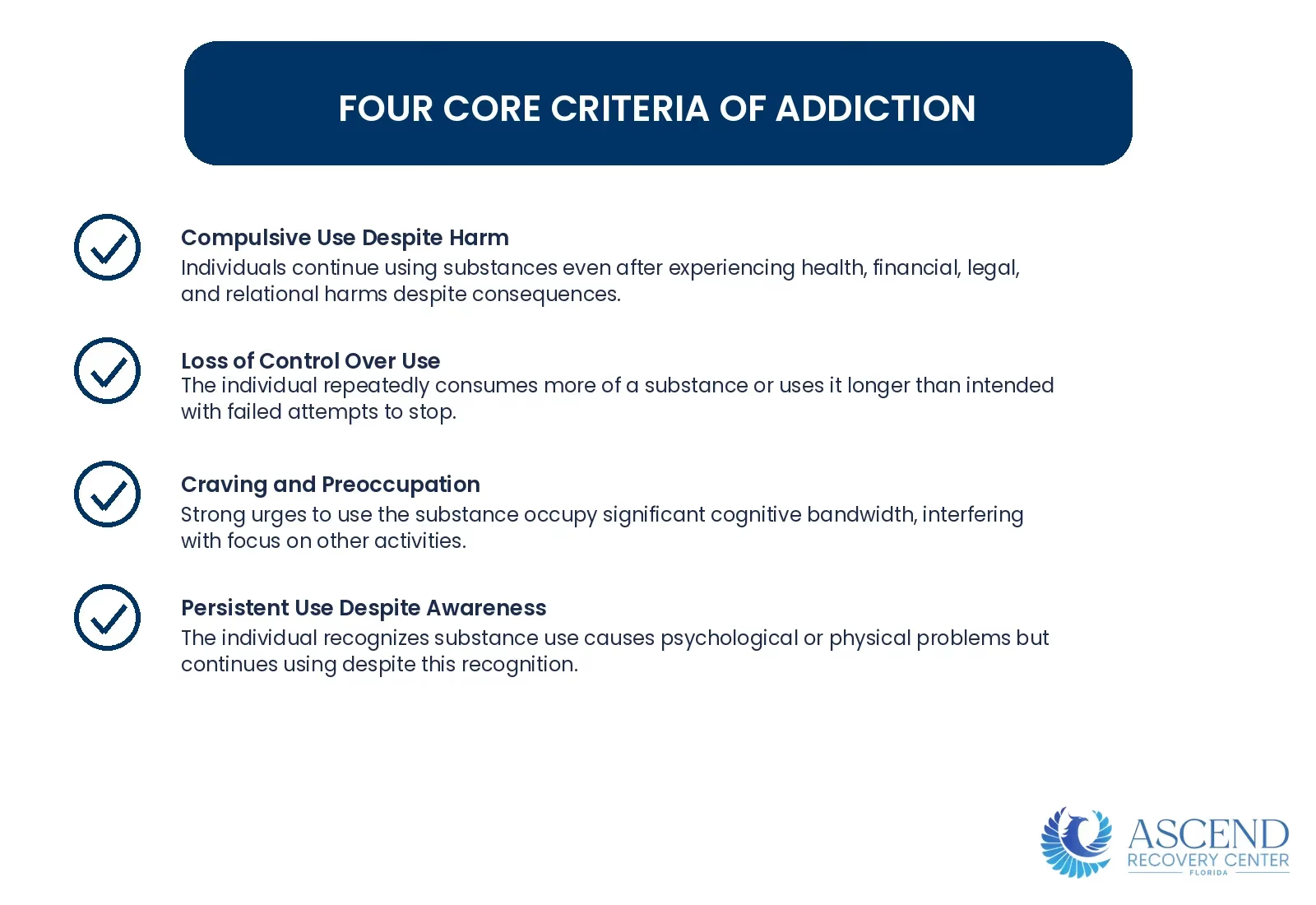
- Compulsive use despite negative consequences — Individuals continue using substances even after experiencing health, financial, legal, and relational harms. This persistence despite adverse consequences distinguishes addiction from recreational substance use or misuse.
- Loss of control over quantity and frequency — The individual repeatedly consumes more of a substance or uses it for longer than intended. Attempts to cut down or control use repeatedly fail despite genuine motivation to stop.
- Craving and preoccupation — Strong urges to use the substance occupy significant cognitive bandwidth, interfering with the ability to focus on other activities or responsibilities.
- Persistent use despite awareness of harm — The individual recognizes that substance use is causing psychological or physical problems but continues using. This reflects the impairment of higher-order decision-making, not ignorance of the consequences.
The disease model does not claim that addiction is identical to cancer or diabetes in mechanism. It claims that addiction meets the 3 criteria applied to any disease: a defined biological substrate (the brain), a characteristic set of signs and symptoms, and an identifiable clinical course. NIDA's 2020 research summary confirms that chronic substance use produces changes in brain structure and function that persist well beyond the period of active use, meeting the standard definition of a disease state.

Three Core Features That Define Addiction as a Disease
Like hypertension or diabetes, addiction is a long-term condition requiring ongoing management rather than a single acute episode
Addiction produces measurable structural and functional changes in the prefrontal cortex, nucleus accumbens, and amygdala — visible on PET and fMRI scans
Genetic factors account for 40–60% of addiction vulnerability, comparable to heritability estimates for type 2 diabetes (30–70%) and hypertension (30–50%)

 FL DCF LicensedFARR Certified
How Does Addiction Change Brain Structure and Function?
Addiction produces measurable changes in 3 interconnected brain systems: the reward circuit, the prefrontal cortex, and the stress system — changes that drive compulsive use, impaired decision-making, and dysregulation of emotional states. These changes are documented in peer-reviewed neuroimaging research and represent the neurobiological evidence base for classifying addiction as a brain disease. The following are the 3 primary systems affected:
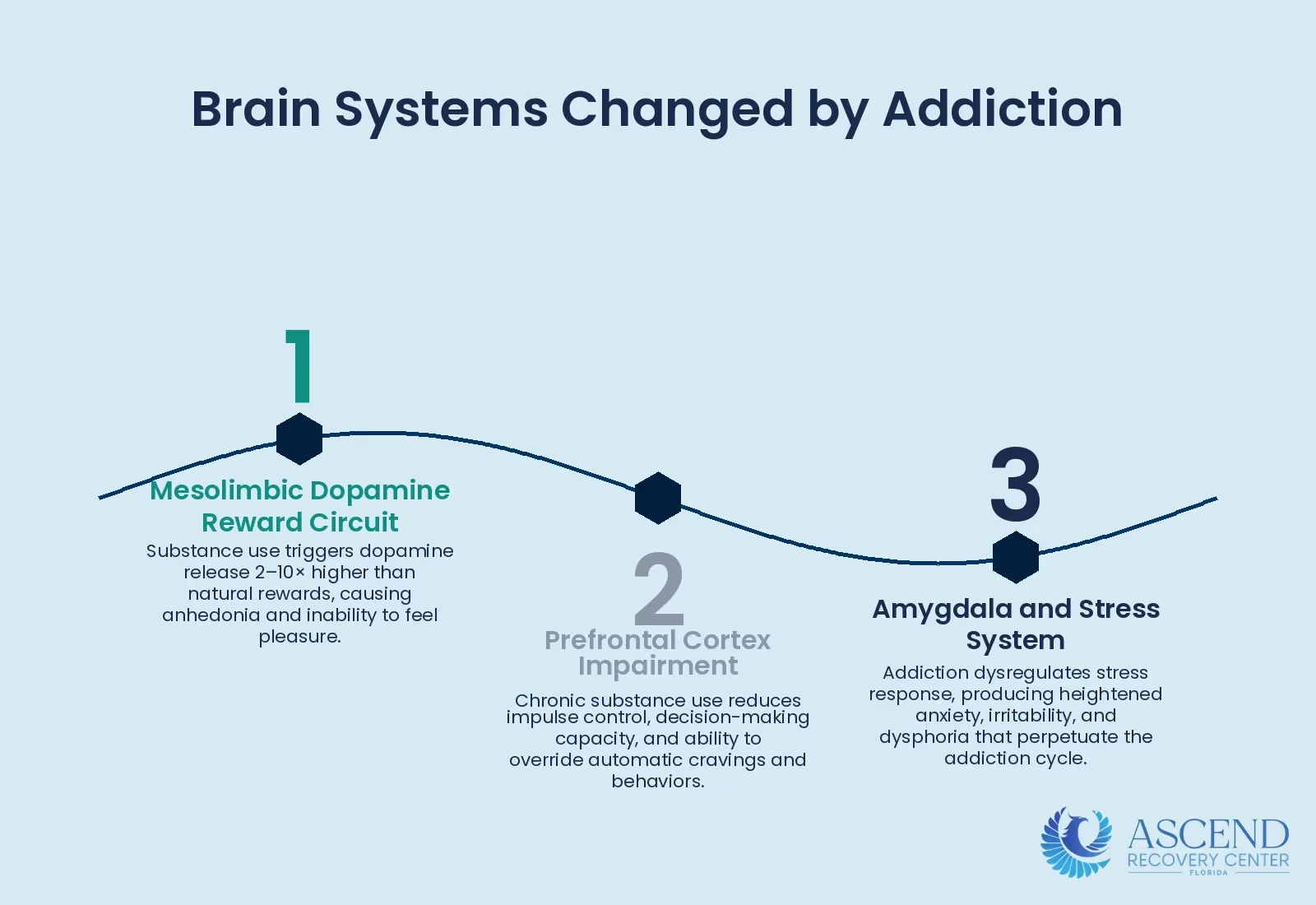
- The mesolimbic dopamine reward circuit — Substance use triggers dopamine release in the nucleus accumbens at levels 2–10× higher than natural rewards such as food or sex. Over time, the brain adapts by reducing dopamine receptor density (downregulation), leaving the individual less able to experience pleasure from everyday activities. This anhedonia — the inability to feel pleasure without the substance — is one of the defining features of addiction and a primary driver of continued use.
- The prefrontal cortex (PFC) — The PFC governs impulse control, decision-making, delayed gratification, and the ability to override automatic behaviors. Chronic substance use impairs PFC function, reducing the individual's capacity to resist cravings, consider long-term consequences, and stop compulsive behaviors even when they want to. Neuroimaging studies consistently show reduced prefrontal activation in individuals with active addiction — the biological substrate of the "wanting without choosing" experience that characterizes the disorder.
- The amygdala and stress system — Addiction dysregulates the brain's stress response. During acute withdrawal and early abstinence, the amygdala produces heightened stress responses — anxiety, irritability, dysphoria — that drive continued use as a coping mechanism. Corticotropin-releasing factor (CRF) dysregulation in the extended amygdala underlies the negative emotional states that perpetuate the addiction cycle even in the absence of reward.
These 3 systems interact to produce the hallmark of addiction: continued use despite clear, recognized harm. The prefrontal impairment prevents the "top-down" override of cravings. The dopamine dysregulation removes the rewarding experience of abstinence. The stress system activation makes withdrawal intolerable. Together, these neurobiological changes explain why motivation and willpower alone are rarely sufficient to overcome addiction without clinical intervention.
What Role Does Genetics Play in Addiction?
Genetic factors account for 40–60% of the variance in addiction risk, establishing a clear hereditary component to the disorder and supporting the disease classification. Twin studies comparing identical (monozygotic) and fraternal (dizygotic) twins have consistently demonstrated that the correlation of addiction diagnoses is significantly higher in identical twins — who share 100% of their DNA — than in fraternal twins who share approximately 50%. The following are the key findings from addiction genetics research:
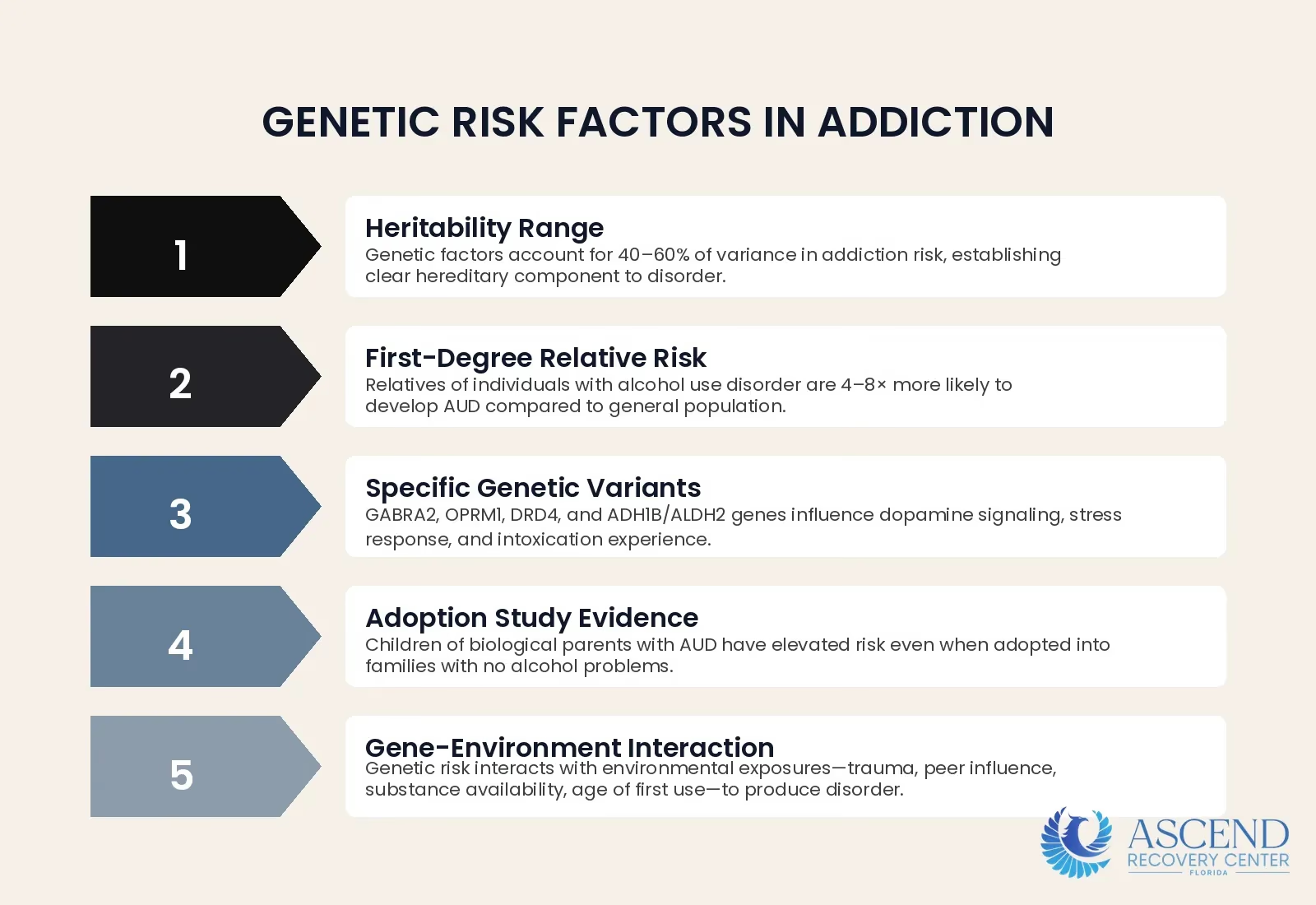
- First-degree relatives of individuals with alcohol use disorder are 4–8× more likely to develop AUD themselves compared to the general population, controlling for shared environmental factors.
- Specific genetic variants associated with elevated addiction risk include GABRA2 (gamma-aminobutyric acid receptor subunit alpha-2), OPRM1 (mu-opioid receptor gene), DRD4 (dopamine receptor D4), and ADH1B/ALDH2 genes that affect alcohol metabolism. These variants influence dopamine signaling, stress response, and the subjective experience of intoxication.
- Adoption studies demonstrate that children of biological parents with alcohol use disorder have elevated AUD risk even when adopted into families with no alcohol problems — isolating genetic from environmental transmission.
- Gene-environment interactions are critical: genetic risk does not predetermine addiction but interacts with environmental exposures — trauma, peer influence, substance availability, age of first use — to produce the disorder in susceptible individuals.
The hereditary component of addiction does not mean destiny. It means that individuals with a family history of addiction carry a higher baseline risk and benefit most from early prevention, awareness of that risk, and prompt clinical intervention when use patterns emerge. The genetic architecture of addiction closely parallels that of other accepted medical diseases: type 2 diabetes (30–70% heritable), hypertension (30–50%), and coronary artery disease (40–60%).
FL DCF LicensedFARR CertifiedAddiction is not a moral failure or a lack of willpower. It is a complex brain disorder shaped by genetics, neurobiology, and environment. Treating it with the same clinical rigor we apply to any chronic disease — and with the same compassion — changes outcomes.
If Addiction Is a Disease, Why Does Personal Choice Matter in Recovery?
The disease model of addiction does not eliminate personal agency — it reframes the context in which choices are made and the neurobiological constraints under which those choices occur. Critics of the disease model argue that calling addiction a disease removes moral responsibility and excuses harmful behavior. This conflation misunderstands the disease model. People with hypertension make choices about diet, exercise, and medication adherence that directly affect the course of their disease. People with type 2 diabetes make daily choices that determine disease progression. Addiction is no different. The following are 4 ways personal choice remains central within the disease framework:
- The decision to seek treatment — Entering treatment is a choice that the disease model supports rather than negates. Acknowledging addiction as a disease reduces shame, increases help-seeking behavior, and supports the decision to engage with clinical care rather than delaying it.
- Engagement in behavioral therapy — Evidence-based treatments for addiction — cognitive behavioral therapy (CBT), dialectical behavior therapy (DBT), motivational interviewing (MI) — work precisely by developing the individual's capacity to make different choices. Behavioral therapy builds the skills, awareness, and coping strategies that counteract the prefrontal impairment addiction causes.
- Neuroplasticity and recovery — The brain changes produced by addiction are not permanent. Sustained abstinence and engagement in treatment produce measurable recovery of prefrontal function — the biological substrate of improved decision-making. Recovery is, in part, the restoration of the neurobiological capacity for choice.
- Accountability in recovery — Treatment programs integrate personal accountability — drug testing, meeting attendance requirements, discharge for rule violations — not because addiction is a moral failing, but because accountability structures support the behavioral changes recovery requires. Disease management and personal responsibility are not mutually exclusive.
The disease model is most accurately understood as a biological explanation for why change is difficult, not as a justification for why change is impossible. Every evidence-based addiction treatment program requires active engagement, behavioral change, and continued effort from the individual in recovery.
Does Your Insurance Cover Addiction Education?
Free, confidential verification in under 15 minutes.
What Is the Difference Between Physical Dependence and Addiction?
Physical dependence and addiction are distinct conditions that the DSM-5 carefully separates — the presence of tolerance and withdrawal symptoms alone does not constitute addiction. This distinction matters clinically and legally. A patient who has taken prescribed opioids for chronic pain for 12 months may develop physical dependence — they will experience withdrawal if the medication is abruptly stopped — without meeting any criterion for opioid use disorder (addiction). The following table distinguishes the 2 conditions across 4 dimensions:
- Physical Dependence — Physiological adaptation to a substance resulting in tolerance (requiring increased doses for the same effect) and withdrawal (physical symptoms upon dose reduction or cessation). Can occur with many prescribed medications taken as directed — opioids, benzodiazepines, beta-blockers, SSRIs. Not inherently pathological. Does not require psychiatric diagnosis.
- Addiction (Substance Use Disorder, DSM-5) — A chronic neurobiological syndrome characterized by 11 diagnostic criteria spanning impaired control, social impairment, risky use, and pharmacological criteria. Requires meeting at least 2 criteria within a 12-month period. Tolerance and withdrawal count as 2 of the 11 criteria but are not sufficient alone. The defining feature of addiction is continued use despite clear, documented harm — not simply physical adaptation to a substance.
The DSM-5 explicitly addresses this: "The specifiers 'with physiological dependence' and 'without physiological dependence' that were in DSM-IV have been eliminated. Tolerance and withdrawal are not counted toward a substance use disorder diagnosis if they occur only in the context of appropriate medical treatment." A post-surgical patient in opioid withdrawal after stopping a short-course pain prescription is not experiencing addiction. A person who continues using opioids compulsively despite job loss, relationship breakdown, and overdose history is. The disease applies to the latter, not the former.
Physical Dependence vs. Addiction
Body adapts to a substance and produces tolerance and withdrawal — can occur with prescribed medications taken as directed, without any addiction
Compulsive use despite harm, loss of control, and craving — a behavioral and neurobiological syndrome that goes far beyond physical dependence
Many individuals with opioid or alcohol addiction have both physical dependence and the full behavioral syndrome of addiction — requiring treatment for both
FL DCF LicensedFARR CertifiedDoes Florida Law Recognize Addiction as a Medical Condition?
Florida law and federal law both recognize addiction as a medical condition requiring clinical treatment — a position that shapes insurance coverage, civil commitment authority, and licensing standards for treatment facilities. The following are 4 legal frameworks that reflect the disease classification of addiction in Florida:
- The Marchman Act (Florida Statute Chapter 397) — Florida's involuntary assessment and treatment law for substance use disorders authorizes courts to compel clinical evaluation and treatment for individuals who are incapacitated by addiction and unable to protect their own safety. The Marchman Act framework is grounded in the premise that addiction is a medical condition — not a criminal offense — requiring clinical intervention, not incarceration.
- Mental Health Parity and Addiction Equity Act (MHPAEA, 2008) — Federal law requires that insurance plans covering mental health and substance use disorder treatment do so at parity with medical and surgical benefits. This mandate reflects the legislative recognition that addiction is a health condition equivalent in legitimacy to physical illness. MHPAEA requires equal coverage for addiction treatment — deductibles, copays, prior authorization requirements, and days of care — matching what the plan covers for comparable medical conditions.
- AHCA Licensing for Addiction Treatment Facilities — Florida's Agency for Health Care Administration (AHCA) licenses and regulates addiction treatment facilities under Chapter 397, Florida Statutes, applying the same clinical standards framework used for other healthcare facilities. This regulatory classification reflects the legislative determination that addiction treatment is healthcare.
- Affordable Care Act (ACA) Section 1302 — ACA mandates substance use disorder treatment as one of the 10 essential health benefits that qualified health plans must cover. This provision operationalizes the disease model into insurance coverage requirements for every plan sold through the Florida Health Exchange.
These legal frameworks have practical consequences: Florida insurers are prohibited from applying more restrictive coverage terms to addiction treatment than to comparable medical conditions. Individuals with addiction have the same rights to coverage under their insurance plans as individuals with chronic medical diseases.
The disease model doesn't remove personal responsibility. It provides the biological context that makes personal responsibility possible to exercise. When we reduce shame and connect people to evidence-based care, they recover at rates that rival treatment outcomes for hypertension and diabetes.
How Is Addiction Treated?
Evidence-based addiction treatment addresses the neurobiological, psychological, and social dimensions of the disorder simultaneously — across a structured continuum of care defined by the ASAM Criteria. ASAM-certified programs evaluate all clients across 6 clinical dimensions before determining placement at the PHP, IOP, or outpatient level. The following are the 5 core components of evidence-based addiction treatment:
- ASAM Criteria-Based Assessment — Every client undergoes a comprehensive biopsychosocial assessment using the ASAM multidimensional criteria to determine the appropriate level of care, identify co-occurring mental health conditions, and establish individualized treatment goals. Placement is determined by clinical need, not by insurance preference or facility convenience.
- Medication-Assisted Treatment (MAT) — For opioid use disorder, buprenorphine (Suboxone) and naltrexone (Vivitrol) are the evidence-based standard of care. For alcohol use disorder, naltrexone and acamprosate reduce relapse risk. MAT is FDA-approved pharmacotherapy that reduces cravings, prevents relapse, and lowers overdose mortality risk.
- Evidence-Based Behavioral Therapy — Cognitive behavioral therapy (CBT), dialectical behavior therapy (DBT), and motivational interviewing (MI) directly address the prefrontal impairment addiction causes by building coping skills, relapse prevention strategies, and the cognitive-behavioral patterns that support sustained recovery.
- Co-Occurring Disorder Treatment — The majority of individuals with addiction have at least one co-occurring mental health condition — depression, anxiety, PTSD, ADHD. Integrated programming treats both the addiction and the co-occurring condition simultaneously through psychiatric medication management and evidence-based dual diagnosis therapy.
- Step-Down Continuing Care — Recovery from a chronic disease requires continuing care. The step-down model — PHP to IOP to outpatient — provides progressively less intensive support as the individual develops independent coping skills. Alumni programming and community connection are integrated into discharge planning from the first week of treatment.
DCF-licensed outpatient programs in Florida deliver the full evidence-based continuum described above. online — most PPO plans cover PHP, IOP, and MAT for substance use disorders under MHPAEA parity requirements.
Is addiction a choice or a lack of willpower?
Common Misconception
"Addiction is a choice — people could stop if they just had more willpower."
What the Evidence Shows
The American Society of Addiction Medicine (ASAM) and the National Institute on Drug Abuse (NIDA) both define addiction as a chronic, treatable brain disease — not a moral failing. Neuroimaging shows measurable changes in the brain's reward, motivation, and executive-control circuits (mesolimbic dopamine and prefrontal cortex). Heritability is 40–60% per twin studies — comparable to type 2 diabetes and hypertension. The initial decision to use may be voluntary; the compulsive use that defines addiction reflects altered brain function that willpower alone does not reverse.
American Society of Addiction Medicine, Definition of Addiction (2019); National Institute on Drug Abuse, Drugs, Brains, and Behavior: The Science of Addiction.


