


Referenced in this article
Key Takeaways
- Naloxone is a pure opioid receptor antagonist that reverses opioid overdose within 2–5 minutes by displacing opioids from mu-receptors; it has no psychoactive effect of its own, is not a controlled substance, and is safe to administer even when opioid involvement is uncertain.
- Since March 2023, 4mg intranasal Narcan is FDA-approved as an over-the-counter product; Florida residents can also obtain generic naloxone nasal spray ($25–$40) without a prescription at pharmacies under the state's statewide standing order, or free through harm reduction programs like NEXT Distro.
- Naloxone wears off in 30–90 minutes while most opioids — particularly fentanyl — remain pharmacologically active for hours; re-narcotization is a documented risk that makes EMS transport and hospital observation essential even after apparent full recovery.
- The claim that naloxone enables drug use is contradicted by the evidence: multiple large-scale studies, including Walley et al. (BMJ, 2013), found 27% to 46% lower depending on program implementation level overdose death rates in communities with naloxone distribution programs with no corresponding increase in opioid use.
- ASAM-certified OUD treatment programs prescribe naloxone to every patient at admission and include household member education as a standard component of medication-assisted treatment — naloxone prescription is a clinical standard of care, not an optional add-on.
What Is Naloxone and How Does It Work?
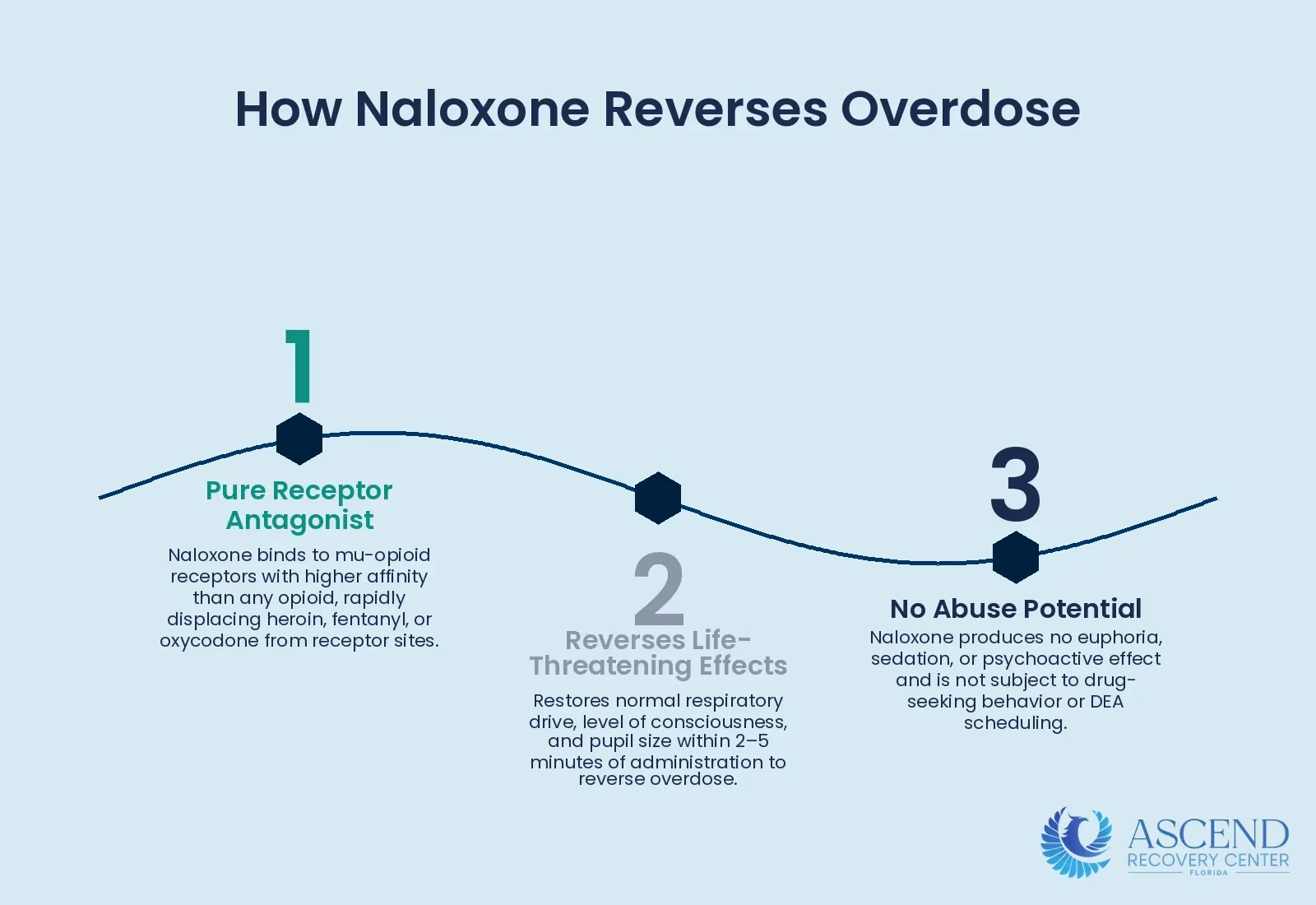
Naloxone is a pure opioid receptor antagonist — a medication that binds to mu-opioid receptors in the brain with higher affinity than any opioid, rapidly displacing heroin, fentanyl, oxycodone, or any other opioid and reversing their life-threatening effects within 2–5 minutes of administration. When an opioid overdose occurs, the drug binds to mu-opioid receptors in the brainstem's respiratory control centers, causing breathing to slow and eventually stop. Naloxone competes for and wins that binding site — knocking the opioid off the receptor and restoring normal respiratory drive, level of consciousness, and pupil size.
Key pharmacological facts about naloxone:
- Not a controlled substance: naloxone has no abuse potential — it produces no euphoria, no sedation, and no psychoactive effect in a person who has not taken opioids; the DEA has never scheduled it as a controlled substance; it is not subject to drug-seeking behavior or diversion
- Multiple formulations available: nasal spray (Narcan 4mg, Kloxxado 8mg — for lay rescuers and family members); auto-injector (EVZIO — with voice-guided instructions that walk bystanders through administration); intramuscular vials (used by first responders, medical teams, and treatment programs); all formulations deliver the same mechanism of action
- FDA OTC approval (March 2023): the FDA approved Narcan 4mg intranasal spray as an over-the-counter product on March 29, 2023 — the first nonprescription naloxone approval in U.S. history; this landmark change means anyone can purchase naloxone at a pharmacy without a doctor's visit or prescription
- Naloxone is a bridge, not a destination: naloxone reverses a single overdose event; it does not address the underlying opioid use disorder; a person who has been revived with naloxone still has opioid use disorder and requires evidence-based opioid addiction treatment to achieve sustained recovery; survival from overdose is the prerequisite for recovery — naloxone creates that survival
Naloxone's safety profile is exceptional. It is safe to administer if you are uncertain whether the person took opioids — if no opioids are present in the system, naloxone has no clinical effect and causes no harm. It cannot make a non-opioid overdose worse. That safety margin only saves lives when bystanders recognize an opioid overdose in time to act.


 FL DCF LicensedFARR Certified
How Do You Recognize an Opioid Overdose?
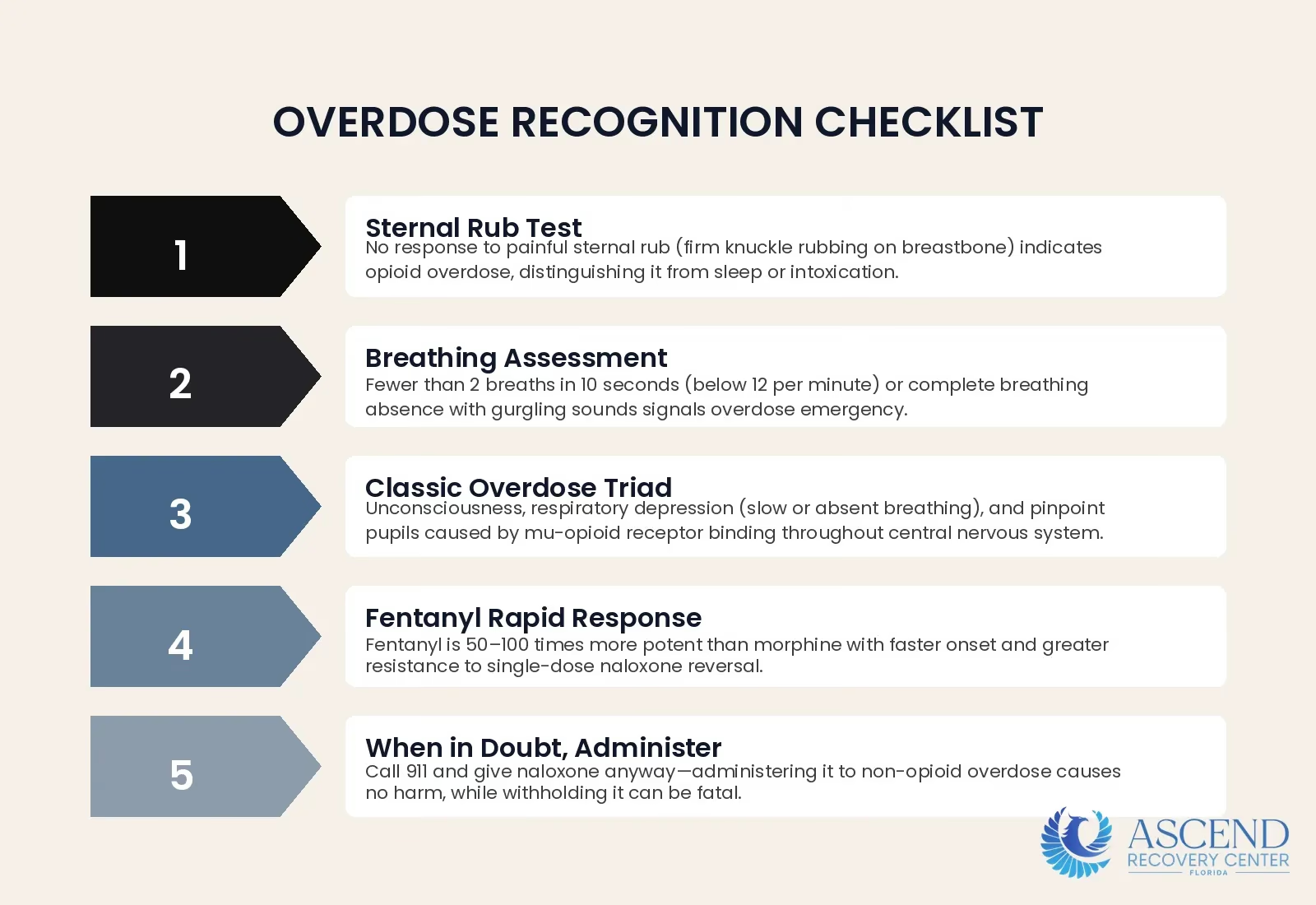
You recognize an opioid overdose by the classic triad: unresponsiveness to voice or sternal rub, slow or absent breathing (fewer than 12 breaths per minute), and pinpoint (miotic) pupils. All three findings result from opioid binding at mu-opioid receptors in the central nervous system and brainstem, and the assessment takes under 30 seconds — seconds that determine whether the person survives.
Critical points for overdose recognition:
- Distinguishing overdose from sleep or intoxication: a person who is drunk or heavily intoxicated responds to their name when called loudly; a person who is sleeping wakes up when you shout or shake them; a person in opioid overdose does not respond to painful stimulation — the sternal rub (rubbing knuckles firmly against the breastbone) is the standard layperson test; no response to sternal rub in someone who appears unconscious warrants immediate naloxone administration and 911 call
- Breathing assessment: watch the chest for rise and fall; listen for breath sounds; count breaths for 10 seconds; fewer than 2 breaths in 10 seconds (fewer than 12 per minute) or complete absence of breathing is an overdose emergency; a gurgling or snoring sound — sometimes called the "death rattle" — indicates the airway is partially obstructed by relaxed throat muscles and requires immediate action
- Fentanyl overdose requires faster action and more naloxone: fentanyl and fentanyl analogs are 50–100 times more potent than morphine; they produce faster onset overdose, more complete respiratory depression, and are frequently resistant to reversal with a single naloxone dose; if the person does not respond within 2–3 minutes of naloxone administration, a second dose is needed; fentanyl overdose has become the dominant pattern in opioid fatalities nationwide — assume fentanyl exposure in any suspected opioid overdose and prepare to administer multiple doses
If you are uncertain whether the situation is an overdose — call 911 and administer naloxone anyway. The downside of giving naloxone to someone who was not experiencing an opioid overdose is nil. The downside of not giving it when they were is fatal. Once the triad is confirmed, naloxone (Narcan) administration follows six steps.
Signs of an Opioid Overdose — Call 911 Immediately
Cannot be woken up by shouting, sternal rub, or painful stimulus; appears unconscious or deeply asleep and cannot be roused
Blue, gray, or pale lips and fingernails indicate oxygen deprivation — a medical emergency; caused by respiratory depression reducing oxygen delivery
Fewer than 1 breath every 5 seconds (12 breaths/minute) or completely absent breathing; may hear gurgling or 'death rattle' sound
Extremely small pupils despite low light conditions; characteristic opioid toxidrome finding; distinguishes opioid overdose from stimulant overdose (dilated pupils)
Completely limp body with no muscle tone; relaxed jaw; unable to support own weight; distinct from seizure activity
FL DCF LicensedFARR CertifiedHow Do You Use Naloxone (Narcan) Step by Step?
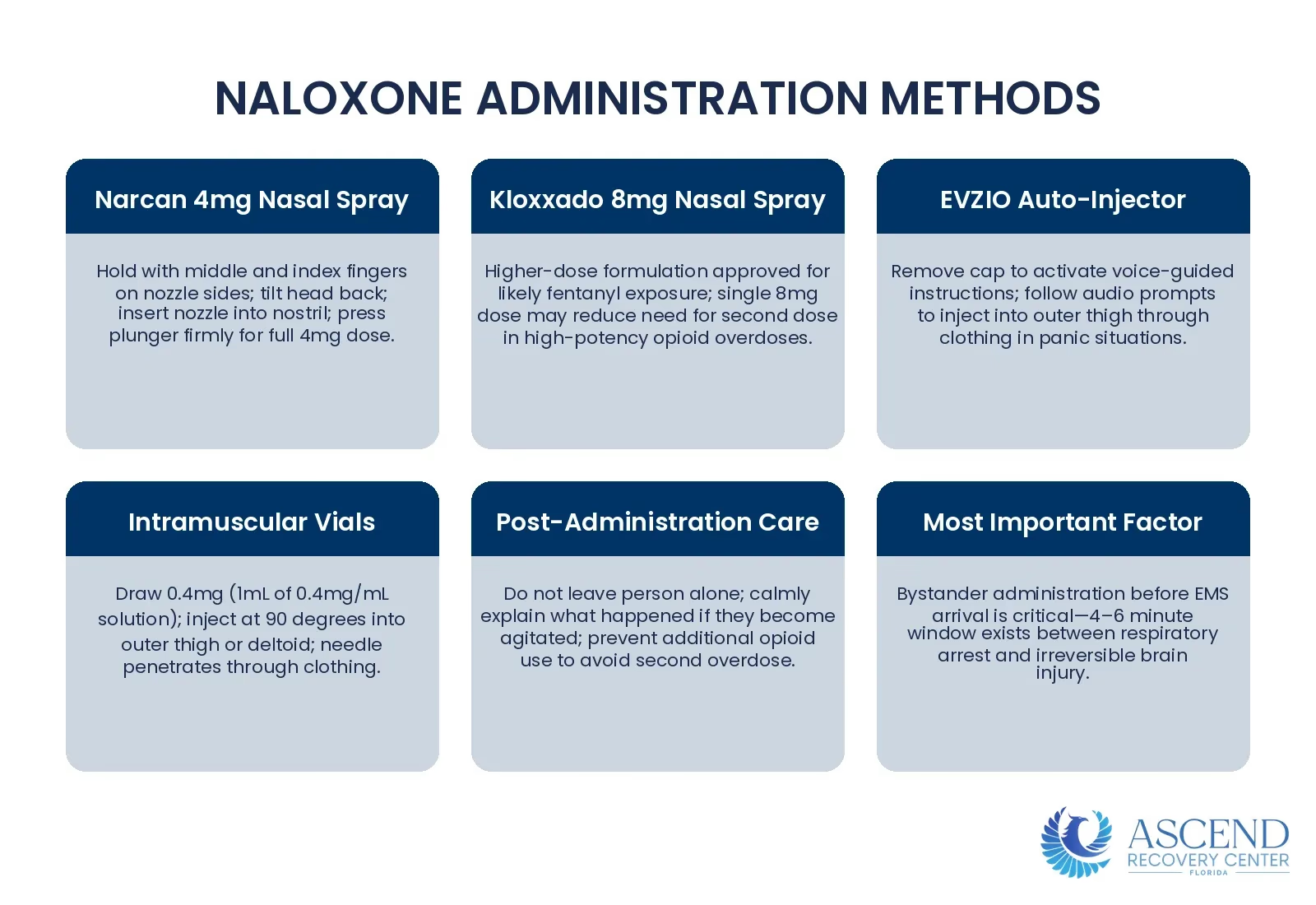
You use naloxone (Narcan) in six steps: call 911, stimulate and assess the person, administer the nasal spray or injection, give rescue breaths, deliver a second dose after 2–3 minutes if there is no response, and place the person in the recovery position until EMS arrives. Bystander administration before EMS arrival is the single most important survival factor in out-of-hospital opioid overdose — the window between respiratory arrest and irreversible brain injury is 4–6 minutes, less than average EMS response time in most communities.
Formulation-specific administration notes:
- Narcan 4mg nasal spray (most common lay rescuer formulation): no assembly required; remove from package, hold device with middle and index fingers on either side of nozzle and thumb on bottom of plunger; tilt the person's head back; insert nozzle into one nostril until fingers touch the bottom of their nose; press plunger with thumb firmly — a single press delivers the full 4mg dose; do not test spray prior to administration
- Kloxxado 8mg nasal spray: higher-dose formulation approved for situations where fentanyl exposure is likely; administered identically to Narcan; a single dose delivers 8mg — twice the standard dose — which may reduce the need for a second dose in high-potency opioid overdoses
- EVZIO auto-injector: opens and begins providing voice-guided audio instructions when the cap is removed; follow the voice instructions, which walk the user through injection into the outer thigh through clothing; designed for the most inexperienced possible rescuer in a panic situation
- Intramuscular vials: used by trained first responders and treatment program staff; draw 0.4mg (1mL of 0.4mg/mL solution) into a syringe; inject at 90 degrees into the outer thigh or deltoid muscle; needle penetrates through clothing when needed
After administering naloxone, do not leave the person alone. If they become agitated or aggressive when they wake up (a common response to precipitated withdrawal), calmly explain what happened. Do not allow them to use more opioids to "feel better" — this will precipitate a second overdose when naloxone wears off. Every one of these six steps assumes naloxone is already within reach — and Florida offers five channels for getting it.
How to Respond to an Opioid Overdose
- 1Step 1: Call 911 First
Call before administering naloxone — emergency services provide additional support and can transport for hospital observation. Give exact location. Florida's Good Samaritan Law (F.S. 893.21) protects callers from drug-related arrest when calling in good faith.
- 2Step 2: Stimulate and Assess
Try to rouse the person: shout their name, perform a sternal rub (knuckles firmly against breastbone). Check for breathing. If unresponsive, position flat on their back on a firm surface. Tilt head back to open the airway.
- 3Step 3: Administer Naloxone
Narcan nasal spray: hold device with thumb on plunger, tilt person's head back, insert nozzle into one nostril, press plunger firmly and completely with thumb. Intramuscular injection: draw up 0.4mg, inject into outer thigh or upper arm — through clothing if necessary.
- 4Step 4: Rescue Breathing
If not breathing, give 1 rescue breath every 5 seconds while waiting for naloxone to take effect (2–5 minutes). Tilt head back, lift chin, seal your mouth over theirs, breathe in until you see the chest rise. Continue until spontaneous breathing resumes.
- 5Step 5: Second Dose if No Response
If no response within 2–3 minutes, administer a second dose in the other nostril. Fentanyl overdoses frequently require 2–3 doses due to the drug's high receptor affinity and potency. Continue rescue breathing between doses.
- 6Step 6: Recovery Position and Stay
Once breathing, place in the recovery position (on their side) to prevent aspiration. The person will experience precipitated withdrawal — agitation, nausea, dysphoria — which is expected. Naloxone wears off in 30–90 minutes; overdose can recur if long-acting opioids remain in the system. Stay until EMS arrives.
FL DCF LicensedFARR CertifiedAmong communities that implemented overdose education and nasal naloxone distribution programs, opioid overdose death rates were 27% lower in low-implementation communities and 46% lower in high-implementation communities compared to communities without such programs. Naloxone distribution saves lives — the evidence is clear and consistent.
Where Can You Get Naloxone in Florida?
Florida residents get naloxone through five channels: retail pharmacies without a prescription under the statewide standing order, free harm reduction organizations, over-the-counter purchase since the FDA's March 2023 Narcan approval, ASAM-certified treatment programs, and NEXT Distro's free mail-based distribution. Florida law protects both people who carry naloxone and those who call 911 to report an overdose.
Cost and insurance coverage:
- Branded Narcan 4mg nasal spray lists at approximately $150 for a 2-pack without insurance; since the OTC approval, retail pricing has come down significantly at some pharmacies
- Generic naloxone nasal spray is now available for approximately $25–$40 for a 2-pack — a major development for cost access; ask your pharmacist specifically for generic naloxone nasal spray
- Insurance coverage: most commercial insurance plans and Medicaid cover naloxone at $0–$10 copay; Florida Medicaid covers naloxone without prior authorization; online to confirm naloxone and MAT benefits before your first appointment
Florida Good Samaritan Law — Florida Statute 893.21:
- Florida's Good Samaritan Law provides immunity from drug-related arrest and prosecution for individuals who call 911 in good faith to report an opioid overdose
- The law protects both the person making the call AND the person experiencing the overdose from prosecution for possession of small amounts of a controlled substance
- The immunity applies at the scene of the overdose; it does not protect against charges unrelated to simple possession (trafficking, weapons charges)
- Fear of arrest is among the most commonly cited reasons bystanders do not call 911 at overdose scenes — knowing your legal protections can save a life
ASAM-certified OUD programs prescribe naloxone to all patients as a standard component of medication-assisted treatment planning — household member education is included in every naloxone prescription protocol. Access answers where to get naloxone; the next question is who should have it.
Naloxone Access Options in Florida
Florida state law allows pharmacists to dispense naloxone without a prescription under a statewide standing order; available at CVS, Walgreens, Walmart, Publix, and most independent pharmacies; cost $25–$150 without insurance; $0–$10 with most insurance plans
Free naloxone from harm reduction programs; NEXT Distro (mail-based), Palm Beach County Naloxone distribution programs, Florida Harm Reduction Coalition; typically free with training included
FDA approved Narcan 4mg as OTC in March 2023; available without any prescription or consultation; available at pharmacies nationwide including major online retailers
ASAM-certified OUD treatment programs prescribe naloxone to all patients at admission and include household member education as a standard component of medication-assisted treatment planning
NextDistro.org provides free mail-based naloxone distribution to Florida residents; complete a brief online form and naloxone arrives by mail at no cost to the recipient
FL DCF LicensedFARR CertifiedDoes Your Insurance Cover Addiction Education?
Free, confidential verification in under 15 minutes.
Who Should Have Naloxone?
Naloxone belongs in the hands of five groups: household members of people with opioid use disorder, patients prescribed opioids above 90 MME per day or alongside benzodiazepines, people recently released from incarceration, people in recovery, and community bystanders. The most common location of a fatal opioid overdose is a private residence, not a street corner — and CDC SUDORS surveillance found a potential bystander present in 46% of overdose deaths, most without naloxone on hand. Household naloxone access is among the highest-yield harm reduction interventions available.
The following groups have the strongest evidence-based indication for naloxone access:
- Household family members of people with opioid use disorder: family members are frequently the first responders in a home overdose; a 2013 BMJ study found that community naloxone distribution programs — which train and equip family members — are associated with significantly reduced overdose mortality rates at the population level; every family member of someone with OUD should have naloxone and know how to use it
- People receiving prescribed opioids for chronic pain: particularly those on doses above 90 morphine milligram equivalents (MME) per day; those taking opioids in combination with benzodiazepines (a particularly dangerous combination that dramatically increases respiratory depression risk); and those with comorbid conditions that reduce respiratory reserve such as sleep apnea or COPD
- People recently released from incarceration: tolerance drops dramatically and rapidly during incarceration due to enforced abstinence; post-release overdose risk is 10–40 times higher than the general population in the first 2 weeks after release; naloxone at discharge from correctional settings is an evidence-based intervention with mortality benefit
- People in recovery from opioid use disorder: relapse occurs even in people who are highly motivated and engaged in treatment; reduced tolerance following abstinence means a dose that would not have caused overdose during active use can be fatal; having naloxone does not increase the likelihood of relapse — and it dramatically reduces the probability that a relapse becomes fatal
- First responders, neighbors, and community bystanders: lay rescuer naloxone administration before EMS arrival is the most important factor in survival from out-of-hospital opioid overdose; the chain of survival for opioid overdose mirrors cardiac arrest — the first person at the scene determines whether the person lives or dies
The standard of care at ASAM-certified programs includes naloxone prescription at admission for every patient with opioid use disorder, with dedicated naloxone education for household members. to confirm benefits for OUD treatment at a licensed facility. Carrying naloxone also means knowing what happens in the 30–90 minutes after it is administered.
What Happens After Naloxone Is Administered?
What happens in the 30–90 minutes after naloxone administration is as clinically important as the administration itself — because naloxone wears off before most opioids do, creating a re-narcotization window that has caused preventable deaths when bystanders assumed their work was done once the person woke up.
The immediate post-naloxone period:
- Precipitated withdrawal is expected: naloxone does not just reverse the overdose — it also rapidly displaces opioids that were producing therapeutic or recreational effects, triggering immediate opioid withdrawal; the person will wake up feeling acutely ill — dysphoric, agitated, nauseated, with muscle cramping, gooseflesh, and intense drug cravings; this is pharmacologically expected and is not a medical emergency; stay calm, reassure the person, explain that they overdosed and that you gave them a medication to reverse it
- Do not leave them alone: naloxone has a half-life of 30–90 minutes; most opioids — particularly long-acting opioids and fentanyl, which binds mu-receptors with high affinity and, because it is highly lipophilic, redistributes from fat and muscle tissue back into the bloodstream — remain pharmacologically active for hours; as naloxone clears from the receptor, the opioid can re-bind and reproduce respiratory depression; re-narcotization is documented in the medical literature and is especially common following heroin and fentanyl overdoses; EMS transport to the emergency department for a period of clinical observation is the safest course of action even when the person appears fully and completely recovered
- Managing the agitated post-naloxone patient: a person in precipitated withdrawal is often confused, frightened, and angry; they may not know what happened; they may want to use more opioids to relieve the withdrawal symptoms; do not restrain them or allow them to use more drugs; calmly explain that more opioids could kill them when the naloxone wears off; if they leave before EMS arrives, they are at extremely high risk of re-overdose and death
The overdose moment as a treatment engagement opportunity:
- Emergency department bridge prescribing: research now supports initiating buprenorphine in the emergency department setting for patients presenting with opioid overdose — the "bridge prescribing" model provides a 3–7 day buprenorphine prescription with referral to an outpatient OUD treatment program, dramatically improving treatment engagement rates compared to referral alone
- Same-day treatment engagement: if the person who overdosed is willing to discuss treatment when they arrive in the emergency department or when EMS arrives, ASAM-certified PHP and IOP programs offer same-day clinical assessment with MOUD (buprenorphine) initiation for medically stable individuals.
This treatment pathway exists only when naloxone gets used in the first place — which makes the claim that naloxone enables drug use worth answering head-on.
Learn more about opioid addiction treatment and medication-assisted treatment options in Florida. — most PPO plans cover PHP, IOP, and buprenorphine MAT as essential health benefits.
Take-home emergency naloxone for people at risk of heroin overdose is an important strategy for reducing heroin overdose deaths. The evidence shows that trained laypeople can and do administer naloxone effectively in real overdose situations — and their doing so saves lives that would otherwise be lost.
Does Naloxone Enable Drug Use?
No — naloxone does not enable drug use: two decades of peer-reviewed research, including the 2013 BMJ interrupted time series analysis of Massachusetts communities, document 27% to 46% lower depending on program implementation level overdose death rates where naloxone is distributed, with no increase in opioid use.
What the research shows:
- Naloxone distribution does not increase opioid use: Traci Green and colleagues' research on naloxone distribution programs found no evidence of increased opioid use or injection rates among program participants; a 2013 BMJ study by Walley and colleagues compared counties in Massachusetts with and without naloxone distribution and found a 27% to 46% lower depending on program implementation level opioid overdose death rate in counties with naloxone programs — with no corresponding increase in opioid use prevalence; the epidemiological evidence base is unambiguous on this point
- The mechanism of the objection is pharmacologically unfounded: naloxone does not produce euphoria; it does not make drug use more pleasurable; it does not reduce the consequences of opioid use in any way that would be experienced as reward; the idea that someone would use more heroin or fentanyl because naloxone is available requires that the person is deterred from use by fear of death — a deterrence model with essentially no empirical support in the addiction science literature
- What naloxone does: it saves lives; a person who survives an overdose retains the opportunity to enter treatment and achieve recovery; a person who dies from an overdose does not; the public health framing is straightforward — naloxone is what makes treatment possible by keeping people alive until they are ready or able to access care; visit our drug overdose resource page for more on the epidemiology of opioid overdose death in America, or see Florida overdose statistics for state-level fatality and trend data
The recovery community perspective:
- The vast majority of people in long-term recovery from opioid use disorder support naloxone access without restriction; they understand that overdose survival is what allowed them to reach treatment; "naloxone saved my life so I could get sober" is among the most commonly shared stories in OUD recovery communities
- Organizations representing people in recovery — including SMART Recovery, the National Alliance for Medication Assisted Recovery (NAMA), and community recovery advocacy groups — have uniformly supported expanded naloxone access
The clinical position of addiction medicine is unambiguous: naloxone is a life-saving medication that should be prescribed to every patient with opioid use disorder and their household members. Reducing overdose deaths is the foundation of any meaningful addiction treatment system — without survival, recovery is impossible. One version of the enabling objection — that naloxone access encourages drug use — persists widely enough to deserve its own direct answer.
ASAM-certified treatment programs in Florida prescribe naloxone to all OUD patients as a standard of care. If you or someone you love is struggling with opioid use disorder, for PHP and IOP treatment — most commercial plans cover the full continuum from MAT through outpatient.
Does naloxone access encourage drug use?
Common Misconception
"Giving people naloxone just enables them to use more — it's a moral hazard."
What the Evidence Shows
Peer-reviewed research finds no evidence that naloxone access increases drug use; it reduces overdose deaths. Studies of community naloxone distribution show significant reductions in opioid mortality without any rise in use rates — the predicted 'moral hazard' does not appear in the data. The FDA approved over-the-counter naloxone (Narcan) in 2023 specifically to widen access. A reversed overdose is a person who can still enter treatment; a fatal one cannot.
Walley AY et al., Opioid overdose rates and implementation of overdose education and nasal naloxone distribution, BMJ (2013); FDA, 2023.
Naloxone keeps a person alive; treatment ends the overdose cycle. Ascend Recovery Center in Palm Beach Gardens prescribes naloxone at admission and provides PHP and IOP treatment for opioid use disorder — contact the admissions team to begin.


