


Referenced in this article
Key Takeaways
- Relapse affects 40–60% of people with substance use disorder — a rate comparable to hypertension and asthma — confirming that addiction is a chronic medical condition requiring long-term management, not a willpower problem; relapse is clinical information requiring a treatment response, not a reason to abandon recovery.
- The three stages of relapse (emotional, mental, physical) progress in sequence — interventions at the emotional relapse stage are most effective; CBT-based relapse prevention and MBRP teach clients to identify Stage 1 warning signs and intervene before physical relapse occurs.
- Tolerance drops significantly during abstinence: someone who relapses after 30 or more days of sobriety faces a substantially elevated overdose risk if they use their prior dose; opioid relapse in particular requires naloxone availability and immediate medical consideration.
- Continuing care engagement — regular clinical contact, peer support, and medication management sustained for 12–24 months after the initial treatment episode — is the strongest predictor of long-term recovery outcomes and consistently outperforms any specific therapeutic modality in the research literature.
- The correct response to relapse is immediate re-engagement with treatment, systematic reassessment of what was not working in the prior plan, and treatment adjustment — not shame and isolation; same-day re-entry into licensed PHP or IOP programming is available for individuals who have relapsed and are ready to return.
What Is Relapse and How Common Is It?
Relapse is not treatment failure — it is clinical information. When understood through the lens of the chronic disease model of addiction, relapse is a signal that the current treatment plan requires adjustment, not evidence that recovery is impossible or that a person lacks willpower. The relapse rates for addiction (40–60%) are statistically comparable to those for hypertension (40–60%), asthma (50–70%), and diabetes (30–50%) — chronic medical conditions that also require long-term management, periodic reassessment, and plan modification. No clinician tells a hypertensive patient their treatment failed because their blood pressure rose after stopping medication; addiction requires the same clinical framing.
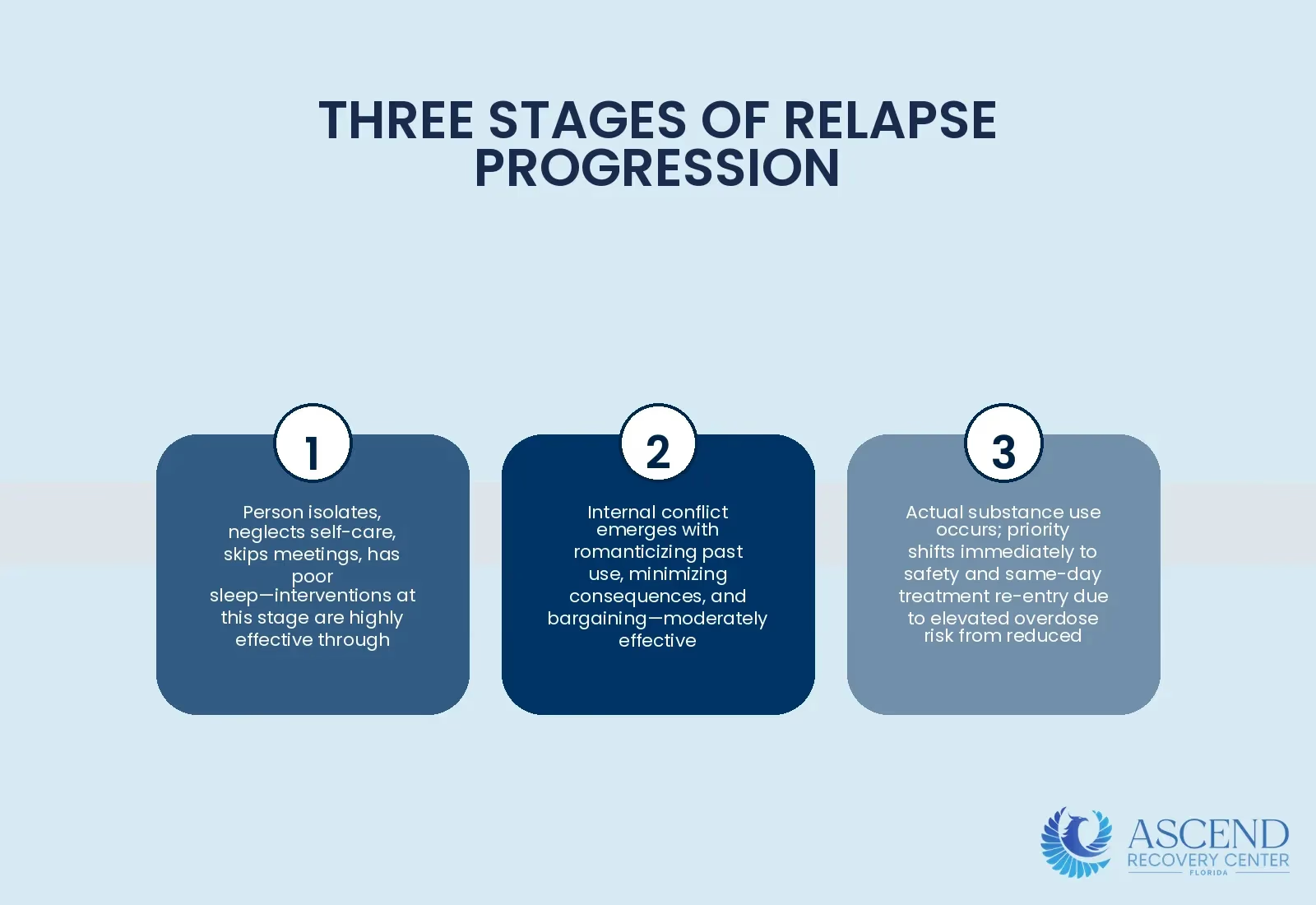
The most influential relapse model in addiction medicine — developed by Gorski (1986) — identifies three sequential stages of relapse that begin well before any substance is consumed:
- Emotional relapse (Stage 1): the person is not consciously thinking about using but is engaging in behavioral and emotional patterns that historically precede physical relapse — isolating from support networks, neglecting self-care, bottling emotions, skipping meetings, poor sleep and nutrition; the intervention at this stage is recognizing the warning signs and re-engaging clinical or peer support before the next stage begins
- Mental relapse (Stage 2): an internal conflict emerges — one part of the person does not want to use, while another part is actively romanticizing past use, minimizing consequences, bargaining ("just once"), and beginning to plan when and how to use; the window for cognitive intervention narrows rapidly at this stage
- Physical relapse (Stage 3): actual substance use occurs; the clinical goal immediately shifts to rapid re-engagement with treatment — not shame, not punishment, not withdrawal — because the period after a physical relapse is the highest-risk window for continued use and overdose
This progression matters clinically because interventions at Stage 1 are highly effective, interventions at Stage 2 are moderately effective, and once physical relapse has occurred, the priority is safety and immediate treatment re-engagement. The goal of relapse prevention therapy is to identify emotional and mental relapse as early as possible — ideally before Stage 2 — and interrupt the progression with targeted coping skills.
A critical safety note: tolerance to substances drops significantly during abstinence. Someone who relapses after 30 or more days of sobriety and uses their pre-treatment dose faces a dramatically elevated overdose risk — particularly with opioids and benzodiazepines. This is one of the primary reasons relapse prevention education emphasizes rapid re-engagement with treatment rather than hiding or minimizing a relapse episode. If you or someone relapses after a period of sobriety, contact a licensed treatment program immediately for same-day re-entry assessment, or call SAMHSA's National Helpline at 1-800-662-4357 for treatment referral.


 FL DCF LicensedFARR Certified
What Are the Most Common Relapse Triggers?
Trigger identification — building a personal, written inventory of the specific people, places, emotional states, and circumstances associated with prior substance use — is the first and most foundational step in relapse prevention therapy. The HALT-E model (Hungry, Angry, Lonely, Tired, Environmental Cues) provides a clinical shorthand for the primary trigger categories, but effective relapse prevention planning goes significantly further to map each individual's unique risk landscape.
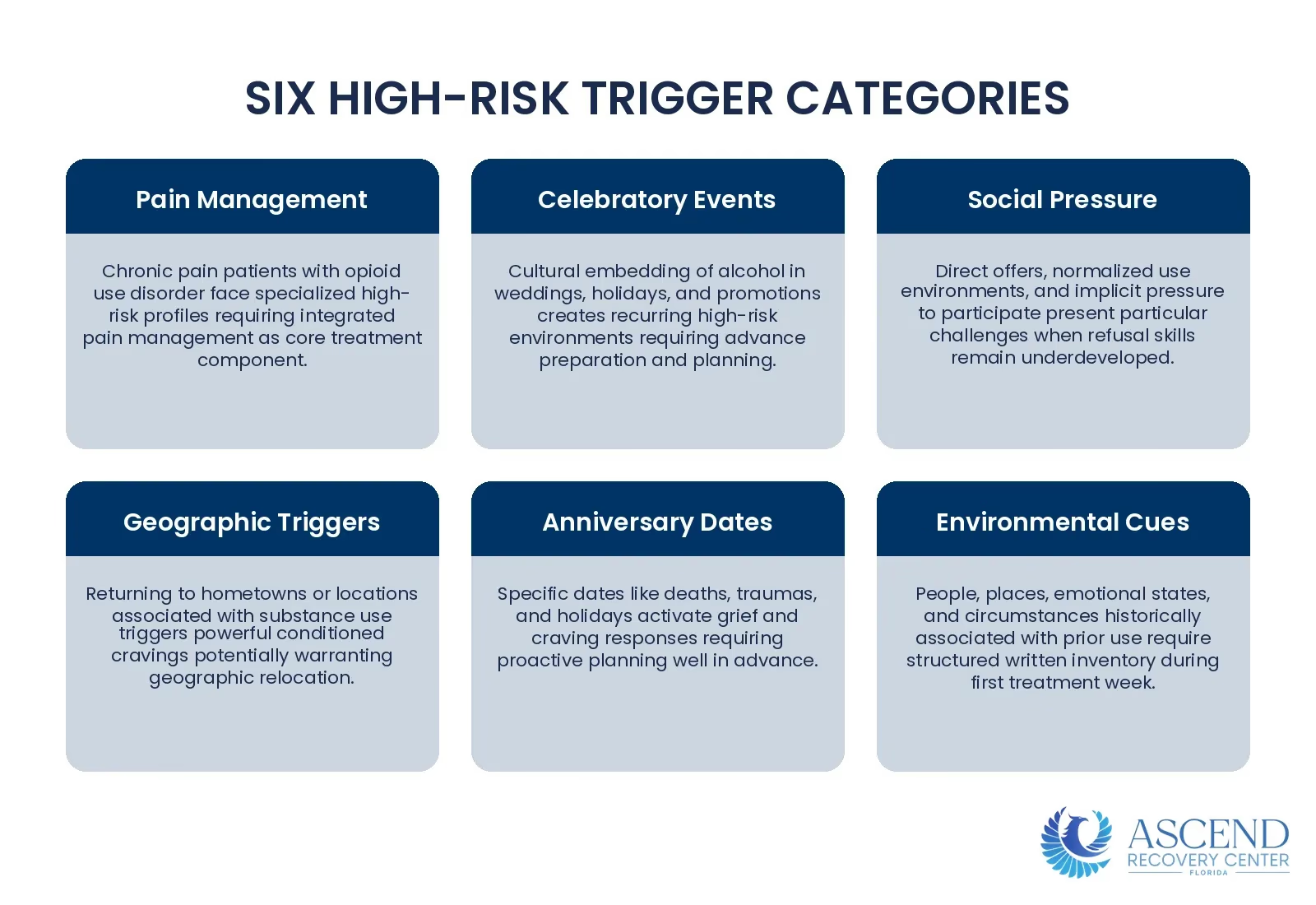
Additional high-risk trigger categories that relapse prevention therapy addresses:
- Pain management: chronic pain patients with opioid use disorder represent a particularly high-risk group; the intersection of legitimate pain, prescription access, and opioid sensitivity creates a relapse risk profile that requires specialized pain management planning as a core component of the treatment plan — not an afterthought
- Celebratory events: the cultural embedding of alcohol in celebration (weddings, holidays, sporting events, promotions) creates a recurring high-risk environment that early-recovery individuals frequently underestimate; preparation and planning for specific upcoming events is a concrete relapse prevention strategy
- Social pressure: direct offers of substances, peer environments where use is normalized, and implicit social pressure to participate are particularly challenging in early recovery when refusal skills are underdeveloped and social anxiety is elevated
- Geographic triggers: returning to a hometown, neighborhood, or specific location associated with substance use can trigger powerful conditioned cravings; for some individuals, geographic relocation is a meaningful risk-reduction strategy
- Anniversary dates and seasonal triggers: specific dates (a loved one's death, a traumatic anniversary, the holidays) can activate grief, trauma, and craving responses that require proactive planning well in advance of the date
In evidence-based PHP and IOP programming, trigger identification is completed as a structured written exercise during the first week of treatment, then refined throughout the clinical episode. Each identified trigger is paired with a written coping plan — a specific behavioral or cognitive strategy to deploy when the trigger is encountered. See warning signs of addiction escalation and stages of recovery for additional context on the recovery continuum.
Common Relapse Triggers — The HALT-E Model
Low blood sugar, poor nutrition, and physical deprivation reduce cognitive control and increase irritability — lowering the threshold for impulsive substance use; regular meals and nutritional recovery are relapse prevention strategies
Anger, frustration, and resentment are among the most cited relapse triggers; substance use frequently began as a mechanism to manage anger; anger management and DBT skills address this trigger
Social isolation is a primary relapse risk factor; peer community and recovery support networks (12-step, SMART Recovery, alumni groups) provide the social connection that reduces isolation-triggered relapse
Sleep disturbance is a near-universal feature of early recovery from most substances; impaired sleep reduces prefrontal cortical control and increases craving reactivity; sleep hygiene is a clinical treatment target
Conditioned stimuli — specific people, locations, sounds, and smells associated with past use — trigger dopaminergic craving responses that operate below conscious awareness; avoidance and extinction strategies address environmental cue-induced craving
FL DCF LicensedFARR CertifiedWhat Evidence-Based Strategies Prevent Relapse?
Evidence-based relapse prevention is not a single intervention — it is a clinical framework that integrates trigger identification, behavioral skill-building, social restructuring, emergency planning, and continued care into a personalized system that addresses the biological, psychological, and social dimensions of relapse risk simultaneously.
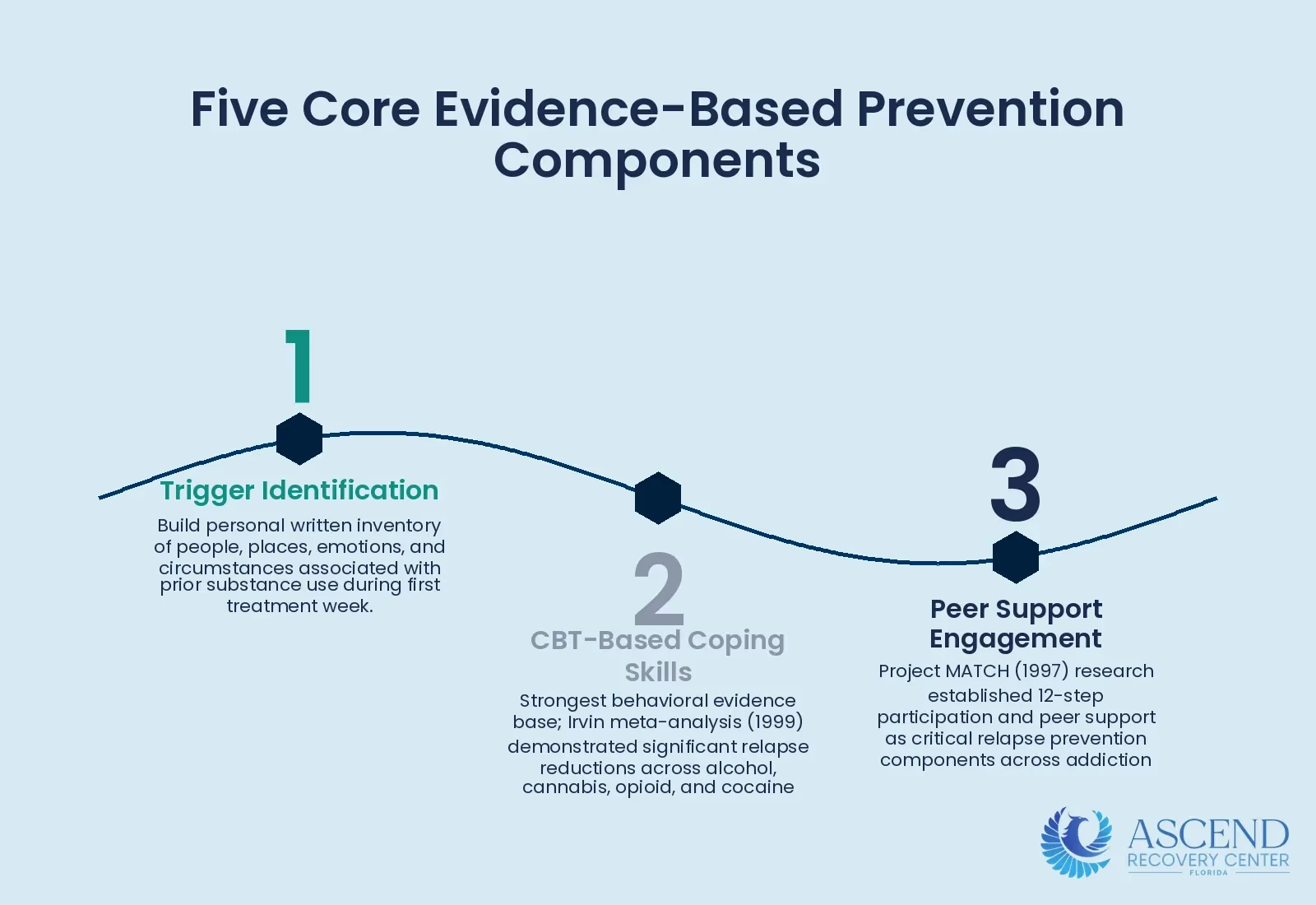
The framework above represents the operational structure of evidence-based relapse prevention therapy. Each step builds on the previous and must be individualized — a relapse prevention plan designed around someone else's triggers is clinically useless. The following evidence standards support the primary components of this framework:
- CBT-based coping skills: the strongest behavioral evidence base for relapse prevention; Irvin et al. (1999) meta-analysis demonstrated CBT produces significant reductions in substance use and relapse rates across alcohol, cannabis, opioid, and cocaine use disorders; skills-based approaches deliver durable protection that continues to improve after treatment ends as skills consolidate with practice
- Peer support and 12-step engagement: Project MATCH (1997) and subsequent research establish 12-step facilitation as equivalent to CBT in producing 12-month abstinence outcomes; the specific mechanism appears to involve social connection, accountability, and daily structure rather than any single program element; SMART Recovery and Refuge Recovery provide secular alternatives with comparable community support functions
- Medication-assisted treatment (MAT): for opioid use disorder, buprenorphine and naltrexone reduce the risk of relapse by 50% or more compared to behavioral treatment alone; for alcohol use disorder, naltrexone reduces heavy drinking days by approximately 83% in meta-analysis; medication continuation after program completion is a primary relapse prevention strategy for these disorders
- Continued care engagement: McKay (2005) demonstrates that clients who maintain clinical contact — even at low intensity — for 12–24 months after initial treatment have meaningfully better outcomes than those who complete a program and disengage; the treatment episode is the beginning of recovery, not the endpoint
Learn more about evidence-based PHP and IOP programming, where relapse prevention therapy is delivered in daily clinical sessions.
Relapse Prevention — A Clinical Framework
- 1Trigger Identification
Systematic written inventory of personal high-risk situations — specific people, places, emotional states, times of day, and social contexts associated with prior use; this inventory forms the foundation of the individualized treatment plan
- 2Coping Skill Development
CBT-based coping skills for each identified trigger: cognitive restructuring (changing automatic thoughts that rationalize use), behavioral activation (planned alternative activities), urge surfing (mindful craving tolerance), and opposite action (behaving contrary to the urge)
- 3Social Network Restructuring
Identifying and limiting contact with people associated with substance use; building recovery-supportive relationships; establishing a 12-step sponsor or SMART Recovery support network; building recovery-supportive community connections
- 4Emergency Response Planning
Written plan for high-risk situations — specific names and numbers to call, locations to go to, and steps to take; includes a relapse response plan: if physical relapse occurs, call treatment immediately, do not wait, no shame, fast action
- 5Continued Care Engagement
Regular outpatient therapy, alumni programming, and peer support group attendance after PHP or IOP completion; research consistently identifies continued care engagement as the strongest predictor of 12-month recovery outcomes
- 6Medication Continuation
MOUD continuation for opioid and alcohol use disorder; psychiatric medication adherence for co-occurring conditions; medication discontinuation without clinical supervision is a high-risk event that should never occur unilaterally
FL DCF LicensedFARR CertifiedTreating addiction as a chronic illness — rather than an acute episode — requires the same long-term management strategies we apply to hypertension or diabetes. Relapse rates for addiction are no higher than for other chronic medical illnesses. It is time to stop treating them differently.
What Is Cognitive-Behavioral Relapse Prevention?
Cognitive-behavioral relapse prevention (Marlatt & Gordon, 1985) is the most thoroughly researched behavioral model for preventing substance use relapse — built on the premise that relapse is not a sudden event but a predictable progression through high-risk situations, coping failures, and specific cognitive patterns that can be identified, interrupted, and modified with targeted skill-building.
The core clinical components of CBT-based relapse prevention therapy:
- Functional analysis of substance use: a structured examination of the antecedents (what happened before use), behaviors (the pattern of use), and consequences (immediate positive effects that maintained the behavior, longer-term negative consequences) that characterize each client's unique use pattern; functional analysis makes the personal logic of substance use visible and clinically addressable — a prerequisite for effective intervention
- Cognitive restructuring: identifying and directly challenging the automatic thoughts that rationalize, minimize, or enable substance use; common examples include "I've been good for three months — one drink won't hurt," "I need this to handle the stress," "I deserve this after everything I've been through," and "I'm not as bad as other people — I can control it"; CBT teaches clients to recognize these thoughts as craving-driven cognitive distortions, not accurate assessments of their situation
- Urge surfing: a mindfulness-based technique for tolerating cravings without acting on them; cravings are time-limited — research shows they typically peak within 20 to 30 minutes and then diminish without behavioral response; urge surfing teaches clients to observe a craving as a physical and cognitive event that rises, peaks, and passes — rather than treating it as an imperative that demands immediate action; repeated practice builds genuine craving tolerance and reduces the perceived urgency of cravings over time
- Abstinence Violation Effect (AVE) intervention: the AVE is the cognitive-emotional cascade that occurs after a lapse — "I've already messed up, I might as well keep going," "I'm a failure, I'll never change" — that drives a single lapse into a full relapse; CBT directly addresses the AVE by teaching clients to recognize it as a predictable, treatable cognitive pattern rather than an accurate self-assessment; the clinical response to the AVE is rapid cognitive reappraisal: a single lapse does not determine recovery trajectory; the next action — returning to treatment immediately — is what determines the outcome
- Stimulus control: environmental restructuring to reduce exposure to conditioned relapse stimuli; concrete interventions include removing alcohol from the home, changing daily routes to avoid locations associated with use, blocking dealer phone numbers, and reorganizing the social schedule away from high-risk social contexts; stimulus control reduces the frequency of craving-triggering encounters while new coping skills are being consolidated
- High-risk situation rehearsal: role-playing specific anticipated high-risk situations (a family gathering with alcohol, an offer from an old using friend, a stressful work conflict) builds behavioral competence and reduces anxiety about encountering these situations in real life; rehearsal in the safe context of group therapy makes the real-world encounter less novel and the coping response more automatic
CBT-based relapse prevention is delivered throughout PHP and IOP programming in both individual therapy sessions and evidence-based group formats. Clients build a written relapse prevention plan during treatment that serves as a portable clinical tool for managing high-risk situations after program completion.
Does Your Insurance Cover Addiction Education?
Free, confidential verification in under 15 minutes.
What Is Mindfulness-Based Relapse Prevention (MBRP)?
Mindfulness-Based Relapse Prevention (MBRP) — developed by Bowen, Chawla, and Marlatt (2010) — integrates formal mindfulness meditation practices with the cognitive-behavioral relapse prevention framework, teaching clients to observe cravings, emotional states, and high-risk situations with non-reactive awareness rather than automatic behavioral response.
Where CBT-based relapse prevention focuses primarily on cognitive restructuring and behavioral skill-building, MBRP adds the dimension of trained, non-reactive awareness — the capacity to notice a craving, a thought, or an emotional state without immediately acting on it. This capacity is trained through formal mindfulness practice integrated into the clinical curriculum.
Core MBRP clinical skills:
- Mindful awareness of cravings: treating cravings as observable physical and cognitive events — sensations in the body, thoughts arising in the mind — rather than commands that require compliance; clients learn to describe cravings with specificity (where in the body, what thoughts accompany, what emotional tone is present) without identifying with them or acting on them
- SOBER breathing space: a structured six-minute mindfulness practice (Stop, Observe, Breathe, Expand, Respond) used as an in-the-moment intervention when a high-risk situation or craving arises; provides a portable tool for creating the brief cognitive and behavioral pause that prevents automatic reactive relapse behavior
- Sitting with discomfort: formal practice in tolerating difficult emotional states — anxiety, anger, grief, loneliness — without escape through substance use; builds the emotional tolerance capacity that enables clients to experience difficult states as temporary and survivable rather than requiring immediate relief
- Mindful identification of high-risk situations: developing moment-to-moment awareness of when a situation is escalating toward relapse risk — recognizing the early warning signs of emotional relapse (Stage 1) before progression to mental relapse (Stage 2)
Evidence base for MBRP: randomized controlled trials of MBRP (Bowen et al., 2014) demonstrate significantly lower rates of substance use and heavy drinking days at 12-month follow-up compared to standard relapse prevention and 12-step programming; MBRP is particularly effective for clients with elevated emotional dysregulation and those with co-occurring anxiety or depression.
Dialectical Behavior Therapy (DBT) extends the mindfulness foundation with behavioral skills specifically targeted at emotional dysregulation — the core driver of relapse for many individuals. DBT's four skill modules each address a primary relapse risk domain:
- Mindfulness: present-moment awareness without judgment — the foundation for all other DBT skills and directly applicable to craving management
- Distress tolerance: tolerating painful emotional states without making them worse through substance use or other crisis behaviors; includes crisis survival skills (TIPP — Temperature, Intense exercise, Paced breathing, Progressive relaxation) that provide immediate relief during acute craving or emotional distress
- Emotional regulation: understanding and managing intense emotions — reducing emotional reactivity and building positive emotional experiences that compete with substance use as a mood management strategy
- Interpersonal effectiveness: maintaining recovery-supportive relationships, setting healthy limits with people who are active in substance use, and building the social connections that support recovery
In evidence-based PHP and IOP programming, mindfulness-based skills — including formal MBRP practices, urge surfing exercises, and DBT skill modules — are integrated into daily clinical sessions. Clients complete treatment with both the cognitive tools from CBT and the awareness tools from MBRP, providing a layered relapse prevention skill set.
What Should You Do If You Relapse?
The most clinically important message about relapse is this: a relapse is not the end of recovery, and the single most important action after a relapse is immediate re-engagement with treatment — not shame, not self-punishment, not hiding, not waiting to see if it gets better on its own.
The National Institute on Drug Abuse frames this directly: "Relapse doesn't mean treatment has failed... If someone relapses, they may need to have their treatment modified or changed — not abandoned." Addiction is a chronic, relapsing-remitting condition; the clinical response to relapse is the primary determinant of long-term recovery trajectory.
Immediate steps if you or someone you love relapses:
- Stop using as soon as possible: the goal after a relapse is to stop the episode as quickly as possible and re-engage clinical support; the longer use continues after a lapse, the more neurological momentum builds toward continued use
- Call your therapist, sponsor, or a treatment program immediately: SAMHSA's National Helpline (1-800-662-4357) provides 24/7 free treatment referrals; same-day re-entry is available at licensed programs for former clients and new individuals who have relapsed and need immediate support
- Tell someone you trust: secrecy and isolation after a relapse create the conditions for continued use; telling a trusted person — a sponsor, a family member, a sober friend — interrupts the shame-driven isolation loop that sustains relapse episodes
- Ensure naloxone is available for opioid relapse: tolerance drops significantly during abstinence; someone who has been abstinent for 30 or more days and returns to their prior opioid dose faces a high overdose risk; naloxone (Narcan) should be immediately accessible for anyone in opioid recovery
Medical safety considerations:
- Opioid relapse: high overdose risk due to tolerance reduction during abstinence; medical evaluation is appropriate for any opioid relapse involving significant quantities; do not use alone — someone who can administer naloxone should be present or nearby
- Benzodiazepine or alcohol relapse after extended abstinence: seizure risk exists with significant quantities after extended abstinence due to receptor upregulation during the sober period; medical evaluation is appropriate if significant quantities were consumed
Clinical response after relapse: re-entry into a licensed program triggers systematic clinical reassessment — what was not working in the prior treatment plan? What triggers were unaddressed? Is the current level of care (IOP) still appropriate, or does the relapse indicate a need to return to PHP? Are there medications that should now be initiated? Is a co-occurring condition undertreated and driving relapse risk? Relapse is clinical information — and the clinical response to that information is treatment intensification, not treatment abandonment.
For family members of someone who has relapsed: the most effective family response combines clear, loving expectations about immediate treatment re-engagement with firm limits around enabling continued use — covering consequences, minimizing the severity of the relapse, or otherwise removing the natural motivation to seek treatment. Al-Anon, SMART Recovery Family & Friends, and the family therapy component of evidence-based treatment programs provide structured support for families navigating this difficult moment.
Mindfulness-based relapse prevention addresses a critical gap in traditional treatment: it trains clients not just to know what to do when they encounter a trigger, but to pause before acting — creating the space between stimulus and response where recovery lives.
What Role Does Continuing Care Play in Relapse Prevention?
Continuing care — sustained clinical engagement after the initial PHP or IOP treatment episode — is the single strongest predictor of 12-month recovery outcomes in the addiction treatment research literature, consistently outperforming initial treatment intensity, program length, or any specific therapeutic modality as a predictor of long-term abstinence.
The clinical evidence for continuing care is direct and actionable:
- The McKay continuing care model (2005): McKay's research establishes that graduated, sustained clinical contact over 2 or more years following initial treatment — stepped down from PHP to IOP to standard outpatient to monthly check-ins — produces significantly better 12-month and 5-year outcomes than the traditional model of 28–30 day acute treatment with no post-discharge continuing care; the treatment episode initiates recovery; continuing care sustains it
- Duration of engagement over intensity of initial treatment: clients who complete a PHP program and then disengage from all continuing care typically do not outperform — on 12-month metrics — clients who complete a less intensive initial program but maintain regular clinical contact for the following year; the field has historically overemphasized the initial treatment episode and underemphasized the continuing care period where most sustained recovery is built
- Peer support as a continuing care modality: AA/NA, SMART Recovery, Refuge Recovery, and other peer support communities provide daily accountability, social connection, experiential recovery mentorship, and a structure of regular meeting attendance that functions as an ongoing continuing care framework for clients in recovery; the evidence for peer support reducing long-term relapse is robust across multiple study designs; sponsorship provides the additional component of individual mentorship from a person with lived experience in long-term recovery
- Medication management as continuing care: for individuals on buprenorphine, naltrexone, or psychiatric medications, continued medication management appointments constitute a form of continuing care that maintains clinical contact while addressing the primary pharmacological relapse risk factors; medication discontinuation without clinical supervision is one of the most consistent predictors of relapse in opioid and alcohol use disorder
Family engagement in continuing care: family therapy, Al-Anon participation, and family psychoeducation significantly improve outcomes for both the person in recovery and the broader family system. Families who understand the chronic disease model of addiction, can distinguish recovery support from enabling, and have developed their own support systems through Al-Anon or family therapy are substantially better equipped to support sustained recovery without inadvertently creating conditions that increase relapse risk. The family system is either a risk factor or a protective factor — rarely neutral — and family engagement in continuing care addresses this reality directly.
Alumni programming offered by many PHP and IOP providers — including group meetings, community events, and ongoing peer connection — bridges the transition from formal treatment to independent long-term recovery and provides accountability during the continuing care period when relapse risk remains elevated.
Learn more about the continuum of care: Partial Hospitalization Program (PHP), Intensive Outpatient Program (IOP), and sober living options. to confirm benefits for continuing care services.
Is willpower enough to prevent relapse?
Common Misconception
"Once you're committed, willpower is all you need to stay sober."
What the Evidence Shows
Relapse prevention is a structured, learnable skill set — not a test of willpower. Marlatt's relapse-prevention model identifies specific high-risk situations, cognitive distortions, and the 'abstinence violation effect,' each addressed with concrete coping skills. Combined with medication-assisted treatment where indicated and ongoing recovery support, structured relapse prevention measurably lowers relapse rates versus willpower alone.
Marlatt GA & Gordon JR, Relapse Prevention (Guilford Press); NIDA Principles of Effective Treatment.


