Referenced in this article
Key Takeaways
- Benzodiazepine dependence develops within 4–6 weeks of daily therapeutic use and requires a 4–12 week medically supervised taper for safe discontinuation
- Abrupt benzodiazepine discontinuation produces seizures in roughly 3% to 10% of dependent patients and carries documented mortality risk — the FDA boxed warning mandates gradual tapering
- Standard taper protocols substitute long-acting agents (diazepam, chlordiazepoxide) for short-acting agents (alprazolam, lorazepam, clonazepam) and reduce the dose by 10–25% per week
- Protracted benzodiazepine withdrawal syndrome (PBWS) persists 6–18 months in 60–80% of patients and requires behavioral therapy rather than reinstatement of benzodiazepines
What is benzodiazepine dependence?
Benzodiazepine dependence is a neuroadaptive state in which the GABA-A receptor system downregulates in response to chronic benzodiazepine exposure, producing tolerance, requirement of continued dosing to prevent withdrawal, and physiologic withdrawal syndrome on discontinuation. The FDA added a boxed warning to all benzodiazepine product labeling in 2020 describing the risks of abuse, addiction, physical dependence, and withdrawal reactions.
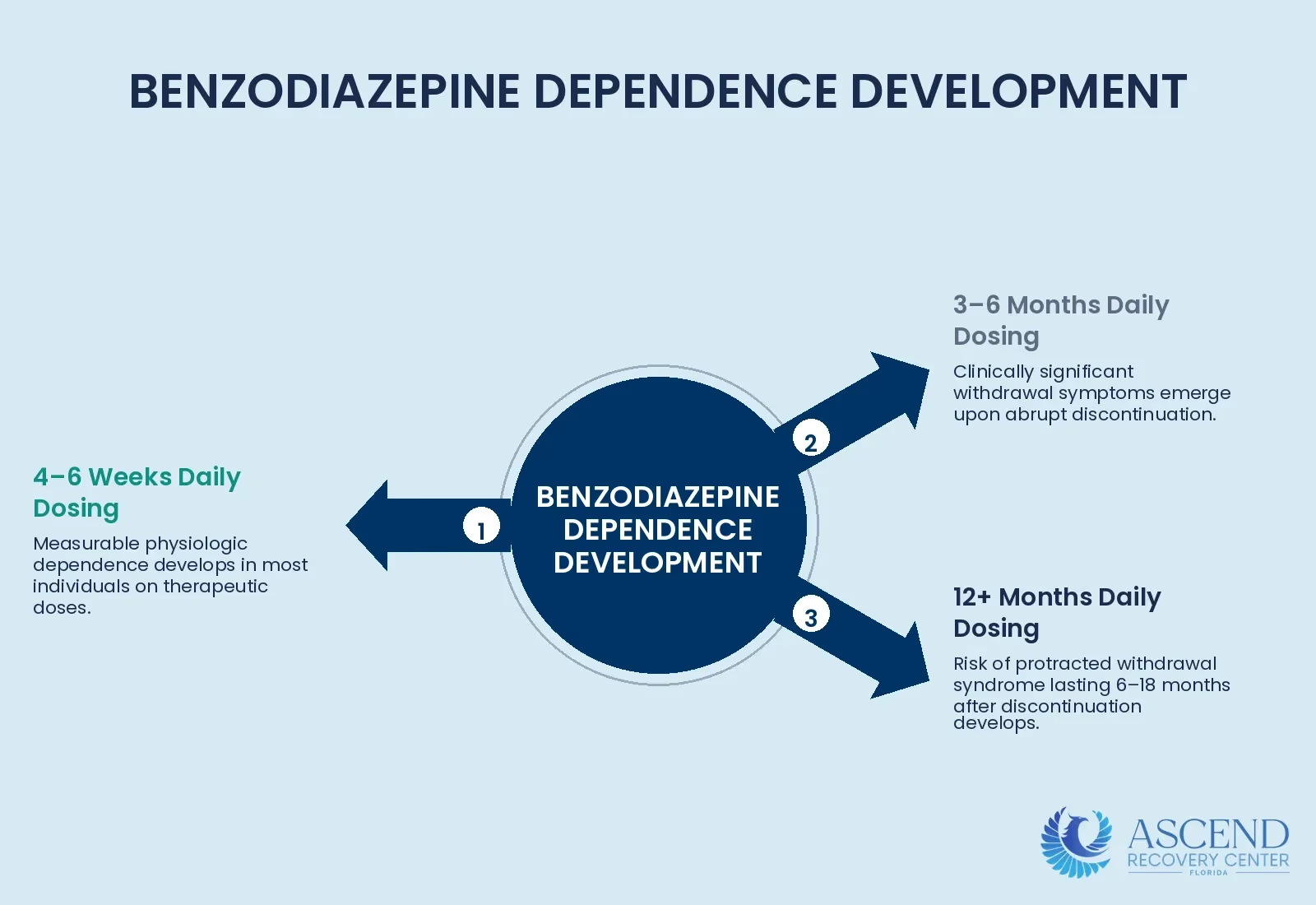
Dependence develops in a predictable timeframe with daily therapeutic use:
- 4–6 weeks of daily dosing — measurable physiologic dependence develops in most individuals on therapeutic doses
- 3–6 months of daily dosing — clinically significant withdrawal on abrupt discontinuation
- 12+ months of daily dosing — risk of protracted withdrawal syndrome lasting 6–18 months after discontinuation
Dependence is distinct from a substance use disorder. A patient prescribed clonazepam for panic disorder may develop physiologic dependence without ever meeting DSM-5 criteria for benzodiazepine use disorder. Both conditions require medically supervised tapering for discontinuation. Mixed-class dependence (benzodiazepines plus alcohol, benzodiazepines plus opioids) raises medical complexity and is the most common pattern seen at admission. Because both benzodiazepines and alcohol act on the GABA-A receptor, their withdrawal syndromes look similar yet differ in onset, duration, and protracted course, which the next section compares directly.
Do Z-drugs like Ambien and Lunesta require the same detox as benzodiazepines?
Z-drugs (zolpidem/Ambien, eszopiclone/Lunesta, zaleplon/Sonata) act on the same GABA-A receptor as benzodiazepines and require similar tapering for discontinuation after chronic use. Z-drug withdrawal produces rebound insomnia, anxiety, tremor, and seizure risk. The taper protocol substitutes a long-acting benzodiazepine (typically diazepam) for the Z-drug at an equivalent dose, then reduces by 10–25% per week. Z-drug dependence is frequently underrecognized because prescribers often consider these agents safer than traditional benzodiazepines. FDA labeling for all Z-drugs includes dependence and withdrawal warnings.
How does benzo withdrawal differ from alcohol withdrawal?
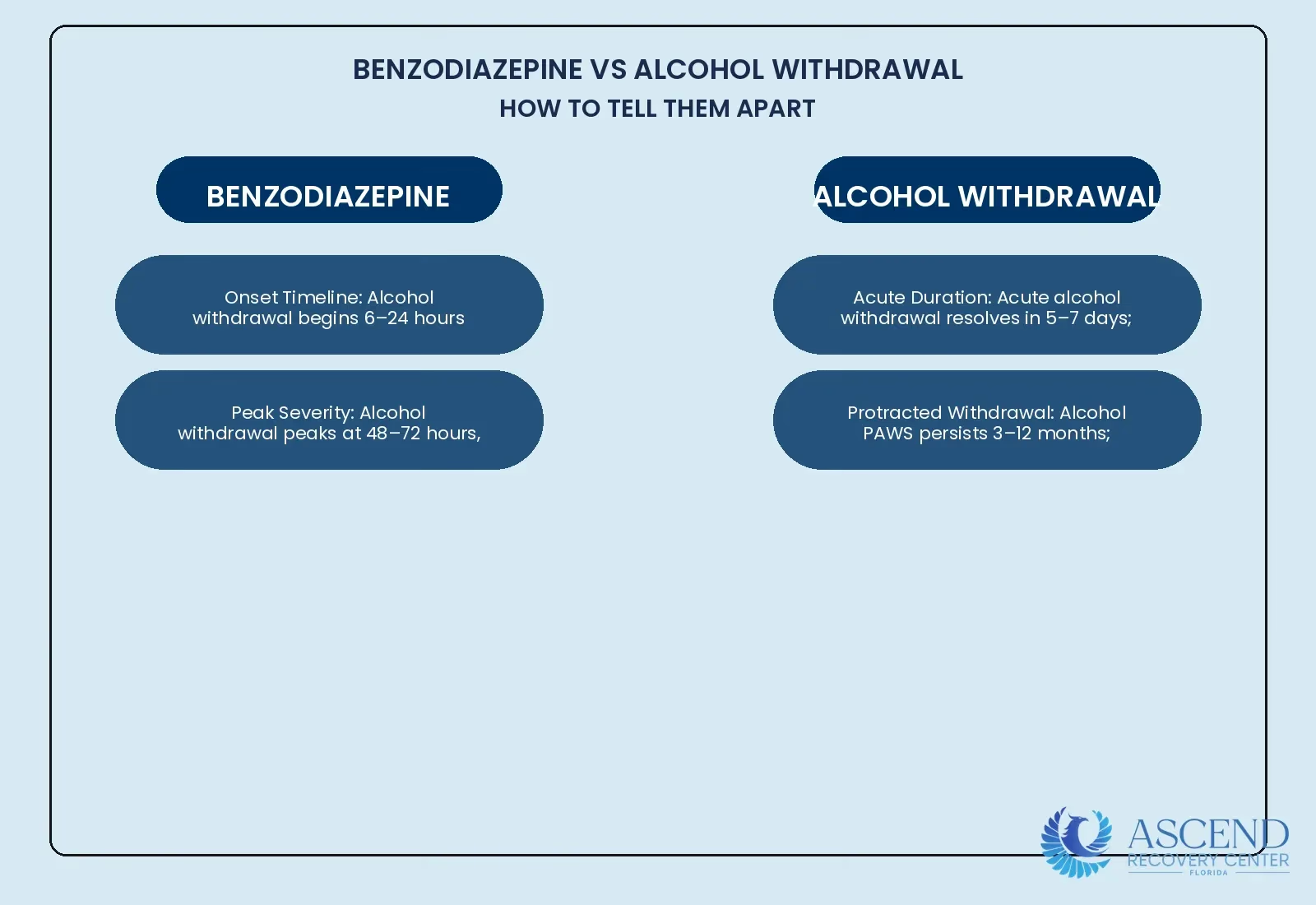
Benzodiazepine withdrawal differs from alcohol withdrawal in 3 ways: longer onset (1–7 days vs 6–24 hours), longer duration (4–12 weeks vs 5–7 days), and a higher rate of protracted symptoms persisting 6–18 months after discontinuation. Both syndromes act through GABA-A receptor mechanisms and both produce seizure risk.
Key clinical differences:
- Onset — alcohol withdrawal begins 6–24 hours after last drink. Short-acting benzodiazepine withdrawal (alprazolam, lorazepam) begins 1–2 days after last dose. Long-acting benzodiazepine withdrawal (diazepam, clonazepam) begins 3–7 days after last dose.
- Peak severity — alcohol withdrawal peaks at 48–72 hours. Benzodiazepine withdrawal peaks at 1–2 weeks.
- Duration — acute alcohol withdrawal resolves in 5–7 days. Acute benzodiazepine withdrawal resolves in 4–8 weeks for short-acting agents and 6–12 weeks for long-acting agents.
- Protracted withdrawal — alcohol PAWS persists 3–12 months. Benzodiazepine PAWS (PBWS) persists 6–18 months and is more clinically prominent.
- Symptom profile — both produce anxiety, tremor, insomnia, and seizures. Benzodiazepine withdrawal more frequently produces perceptual distortions, depersonalization, and psychotic features.
Polysubstance withdrawal involving both alcohol and benzodiazepines requires combined CIWA-Ar and CIWA-B scoring with simultaneous tapering protocols at ASAM Level 4.0. The longer, protracted benzodiazepine course makes the structure of the taper itself the central clinical decision, which the next section specifies step by step.
What if I am dependent on both benzodiazepines and alcohol?
Combined benzodiazepine and alcohol dependence requires simultaneous medical management at ASAM Level 4.0 (medically managed intensive inpatient) due to the additive seizure risk and autonomic instability. Both substances act on the GABA-A receptor, and concurrent withdrawal from both produces complex, severe symptoms. The treatment protocol substitutes a long-acting benzodiazepine for both the alcohol and short-acting benzodiazepine, manages acute alcohol withdrawal with CIWA-Ar scoring, and then conducts a 4–12 week taper of the long-acting benzodiazepine. Combined dependence is the most common pattern at admission and requires hospital-based detox.
What is the standard benzodiazepine taper protocol?
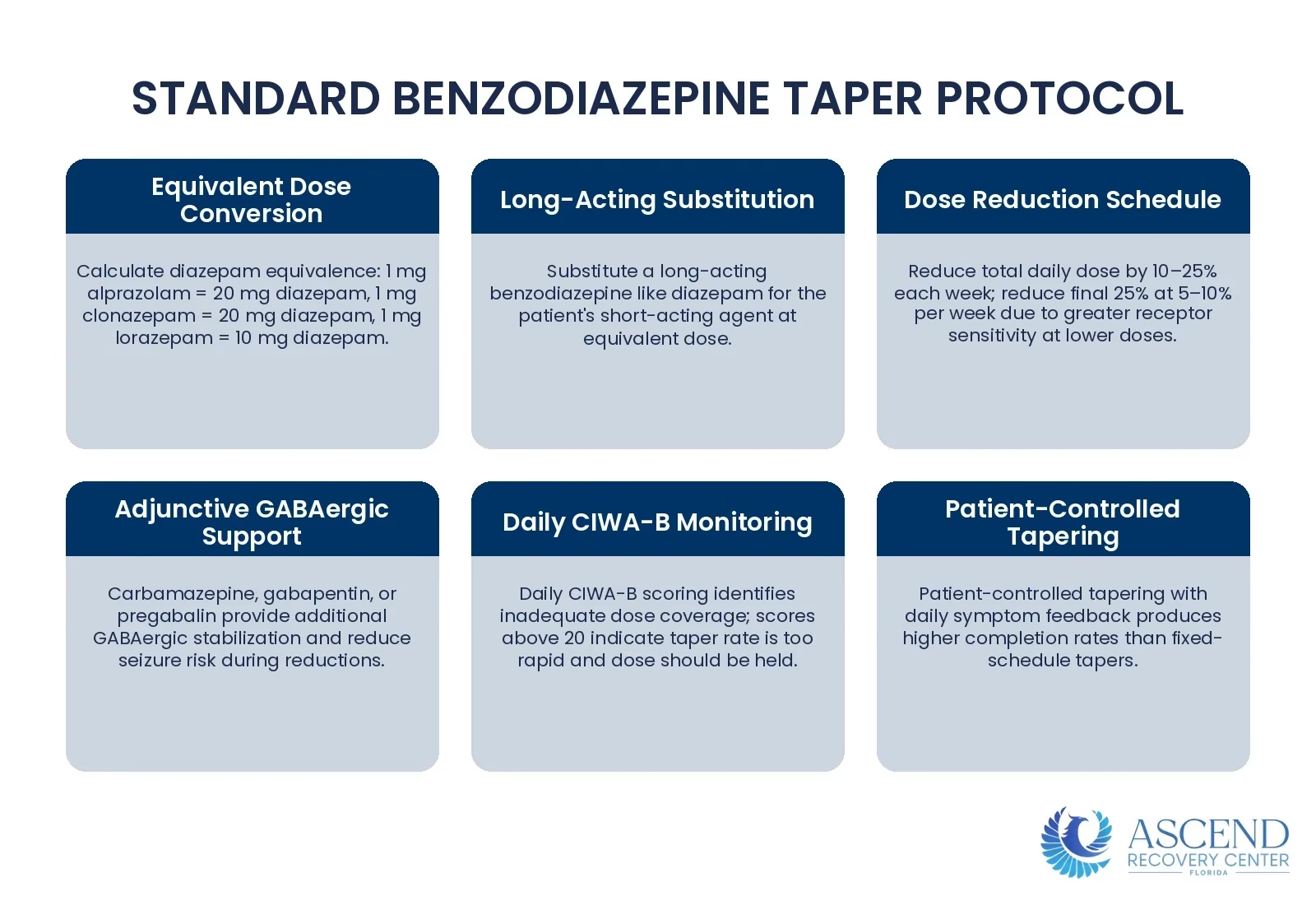
The standard benzodiazepine taper protocol substitutes a long-acting benzodiazepine (diazepam or chlordiazepoxide) for the patient's short-acting agent at an equivalent dose, then reduces the dose by 10–25% per week over 4–12 weeks under medical supervision. Slower tapers (5–10% reduction per week) are used for high-dose, long-duration dependence.
Steps in a medically supervised taper:
- Equivalent dose conversion — calculate diazepam equivalence: 1 mg alprazolam = 20 mg diazepam, 1 mg clonazepam = 20 mg diazepam, 1 mg lorazepam = 10 mg diazepam.
- Substitution — divide the diazepam-equivalent dose across 3–4 daily doses to stabilize plasma levels and eliminate inter-dose withdrawal symptoms experienced with short-acting agents.
- Dose reduction — reduce the total daily dose by 10–25% each week. The final 25% of the taper is reduced most slowly, often at 5–10% per week, because receptor sensitivity to dose reduction is greatest at the lowest doses.
- Adjunctive medications — carbamazepine, gabapentin, or pregabalin provide additional GABAergic stabilization and reduce seizure risk during dose reductions.
- CIWA-B monitoring — daily CIWA-B scoring identifies inadequate dose coverage. Persistent scores above 20 indicate the taper rate is too rapid and the dose should be temporarily held.
The Ashton Manual, the most widely cited outpatient protocol, converts patients to diazepam and reduces the dose by 5–10% every 2–4 weeks, stretching high-dose tapers across several months to minimize protracted symptoms. Patient-controlled tapering with daily symptom feedback produces higher completion rates than fixed-schedule tapers. The specific medications that make this substitution and stabilization possible are detailed in the next section.
Can benzodiazepine detox be done as an outpatient?
Outpatient benzodiazepine detox is appropriate for low-dose, short-duration dependence (less than 1 year of therapeutic dosing) in medically stable patients with strong social support and no prior complicated withdrawal episodes. Outpatient tapers use the same long-acting benzodiazepine substitution and weekly dose reduction but with weekly medical visits rather than 24-hour monitoring. High-dose dependence (alprazolam over 4 mg/day, clonazepam over 4 mg/day), use exceeding 5 years, prior seizures during withdrawal, polysubstance dependence, and unstable mental health all require inpatient detox at ASAM Level 3.7 or 4.0.
Can I drive during a benzodiazepine taper?
Driving during the acute phase of a benzodiazepine taper is not recommended due to impairments in attention, reaction time, and psychomotor coordination produced by both the substitution medication and withdrawal symptoms. Once the patient stabilizes on a long-acting benzodiazepine and dose reductions are tolerated without significant symptoms, driving may resume with physician approval. Concurrent use of adjunctive medications — gabapentin, pregabalin, trazodone — also impairs driving. Patients should not operate machinery during dose-reduction days when withdrawal symptoms are most pronounced.
What medications are used in benzo detox?
Medications used in benzodiazepine detox include long-acting benzodiazepines for substitution (diazepam, chlordiazepoxide, clonazepam), anticonvulsants for seizure prophylaxis (carbamazepine, gabapentin, pregabalin), and adjunctive agents for symptom-specific management (propranolol, hydroxyzine, trazodone).
Medication categories with clinical use:
- Long-acting benzodiazepine substitution — diazepam (half-life 20–80 hours) is the most common substitution agent. Chlordiazepoxide (half-life 5–30 hours, active metabolites with half-life 36–200 hours) is used for combined alcohol and benzodiazepine dependence. Clonazepam (half-life 18–50 hours) is an alternative for patients who cannot tolerate diazepam.
- Anticonvulsants — carbamazepine (200–800 mg/day) reduces seizure risk and lessens autonomic withdrawal symptoms. Gabapentin (900–2400 mg/day) reduces anxiety and improves sleep during the taper. Pregabalin (150–600 mg/day) reduces anxiety with rapid onset.
- Symptomatic management — propranolol (10–40 mg TID) for tachycardia and tremor. Hydroxyzine (25–50 mg every 6 hours) for anxiety and insomnia without GABAergic activity. Trazodone (50–150 mg at bedtime) for sleep without dependence risk. Ondansetron for nausea.
Flumazenil, a GABA-A antagonist, is contraindicated for routine detox in benzodiazepine-dependent patients because it precipitates acute withdrawal seizures. The rate at which these medications are reduced determines the total length of the taper, which the next section quantifies by clinical scenario.
The single most dangerous decision a benzodiazepine-dependent patient can make is to stop abruptly. Seizures from cold-turkey discontinuation are unpredictable in timing and severity. Every taper must be medically supervised.
Does Your Insurance Cover Medical Detox?
Free, confidential verification in under 15 minutes.
How long does benzodiazepine detox take?
Benzodiazepine detox takes 4–12 weeks for the acute taper, with timing determined by the duration of use, daily dose, specific agent, and individual physiologic response. Short-duration, low-dose dependence completes in 4–6 weeks. Long-duration, high-dose dependence requires 8–12 weeks. Protracted withdrawal symptoms persist 6–18 months beyond the acute taper.
Taper duration by clinical scenario:
- Around 3 to 6 months — therapeutic dose dependence (alprazolam 0.5–2 mg/day, clonazepam 0.5–2 mg/day) for less than 12 months
- Around 6 to 12 months — therapeutic dose dependence for 1–5 years
- 12 months or longer — high-dose dependence (alprazolam 4+ mg/day, clonazepam 4+ mg/day) or use exceeding 5 years
- Well beyond 12 months — high-dose, long-duration dependence with prior complicated withdrawal episodes
Most patients complete the inpatient stabilization phase of benzodiazepine detox at ASAM Level 3.7 or 4.0 in 7–14 days, then continue the taper at the PHP, IOP, or outpatient level with ongoing medical management. Same-week transition from inpatient detox to PHP or IOP is the clinical standard. The full taper rarely completes before discharge, so outpatient medication management of the remaining taper is the norm. Beyond the acute taper, a substantial share of long-term users face a prolonged symptom phase — protracted benzodiazepine withdrawal syndrome — which the next section defines.
These durations follow the 2025 ASAM-led Joint Clinical Practice Guideline on benzodiazepine tapering, which recommends reducing the total daily dose by 5% to 10% every 2 to 4 weeks and not exceeding 25% every 2 weeks. Faster schedules increase the risk of seizure and protracted withdrawal, so the taper is paced to symptom response rather than to a fixed calendar.
What does the 2025 joint clinical practice guideline recommend for benzodiazepine tapering?
The 2025 Joint Clinical Practice Guideline on Benzodiazepine Tapering recommends that clinicians reassess the risks and benefits of continued benzodiazepine prescribing every 3 months, and that a taper begin with a 5% to 10% reduction of the total daily dose every 2 to 4 weeks. The American Society of Addiction Medicine developed the guideline with nine partner medical societies and professional associations, using modified GRADE methodology, a systematic literature review, and external stakeholder review.
The guideline is titled Joint Clinical Practice Guideline on Benzodiazepine Tapering: Considerations When Risks Outweigh Benefits, and it exists because deprescribing had no comparable evidence-based standard while prescribing did. Four recommendations define its approach:
- Reassess every 3 months. The guideline opens with a strong recommendation that clinicians evaluate the risks and benefits of ongoing benzodiazepine prescribing at 3-month intervals for each patient, rather than renewing indefinitely.
- Start low and go slow. Tapers begin at a 5% to 10% reduction in total daily dose every 2 to 4 weeks, with monitoring for withdrawal and other negative taper-associated effects after each reduction.
- Adjust the pace to the patient. The schedule is revised based on each patient's response to the preceding reduction, which makes the taper an iterative clinical process rather than a fixed calendar.
- Taper most adults 65 and older. The guideline directs clinicians to taper benzodiazepines in most older adults unless there are compelling reasons for continuation, reflecting elevated fall, fracture, and cognitive risk in that population.
The guideline-recommended pace is substantially slower than the 10% to 25% weekly reductions described in older, largely inpatient protocols. Anyone comparing schedules should read the difference as a deliberate shift toward slower, response-guided deprescribing rather than as a contradiction, and should treat the taper schedule as a decision belonging to the prescribing clinician who is monitoring the response.
Pacing the taper to the patient's response is the principal lever clinicians hold for limiting the protracted symptoms that can follow a completed taper.
How slowly should you taper off benzodiazepines?
The 2025 Joint Clinical Practice Guideline on Benzodiazepine Tapering recommends starting with a 5% to 10% reduction in total daily dose every 2 to 4 weeks, then adjusting the pace based on how the patient responds to each reduction. A high-dose, long-duration dependence tapered at that rate runs for many months rather than weeks. The guideline treats the schedule as iterative: the clinician monitors for withdrawal and other negative taper-associated effects after each step and slows the taper when symptoms emerge. No taper schedule should be selected or altered without the prescribing clinician, because abrupt reduction of benzodiazepines can produce seizures.
How often should a benzodiazepine prescription be reviewed?
The 2025 Joint Clinical Practice Guideline on Benzodiazepine Tapering issues a strong recommendation that clinicians assess the risks and benefits of ongoing benzodiazepine prescribing every 3 months for each patient. The recommendation targets indefinite renewal, which is how short-term prescriptions become years-long dependence. The same guideline directs clinicians to use shared decision-making with patients and their care partners when considering a taper, rather than discontinuing unilaterally.
Should older adults stop taking benzodiazepines?
The 2025 Joint Clinical Practice Guideline on Benzodiazepine Tapering recommends tapering benzodiazepines in most adults aged 65 and older unless there are compelling reasons for continuation. Older adults face elevated fall, fracture, and cognitive risk from continued benzodiazepine use. Tapering in this population follows the same principle as in any other: a gradual, response-guided reduction managed by the prescribing clinician, never an abrupt stop.
What is protracted benzodiazepine withdrawal syndrome (PBWS)?
Protracted benzodiazepine withdrawal syndrome (PBWS) is a prolonged withdrawal phase persisting 6–18 months after taper completion, characterized by anxiety, insomnia, perceptual distortions, cognitive impairment, and intermittent return of acute withdrawal symptoms. PBWS reflects gradual GABA-A receptor resensitization after chronic benzodiazepine exposure. A 2023 survey published in PLOS ONE proposed the term benzodiazepine-induced neurological dysfunction (BIND) for this symptom cluster, drawing on responses from 1,207 benzodiazepine users, more than half of whom reported that symptoms including low energy, memory loss, and anxiety lasted a year or longer. That study was a self-selected internet survey recruited through support groups, with no control group and no independent psychiatric diagnoses, so it documents symptom duration within its sample and does not establish how often BIND occurs among benzodiazepine users generally.
Common PBWS symptoms:
- Anxiety and panic episodes — present in 60–80% of patients during the first 6 months post-taper
- Insomnia — disrupted sleep architecture with reduced slow-wave sleep, persisting 3–12 months
- Tinnitus, paresthesias, perceptual distortions — neurologic symptoms that wax and wane over 6–18 months
- Cognitive impairment — concentration and memory difficulties typically resolve within 6–12 months
- Depersonalization and derealization — sense of detachment from self or environment, more common in patients with high-dose dependence
- Episodic return of acute symptoms — brief recurrences of tremor, sweating, and severe anxiety, often triggered by stress or sleep deprivation
PBWS is not a relapse, a return of an underlying anxiety disorder, or a sign that the taper failed. Behavioral interventions — CBT, mindfulness-based stress reduction, sleep hygiene protocols — reduce symptom severity during PBWS. Reinstating benzodiazepines for PBWS reverses the taper and is not clinically appropriate. The gradual taper that prevents both acute and protracted harm stands in direct contrast to abrupt cessation, and the next section explains why stopping cold-turkey is dangerous.
What are the symptoms of protracted benzodiazepine withdrawal?
Protracted benzodiazepine withdrawal symptoms include persistent anxiety, insomnia, tinnitus, paresthesias, cognitive impairment, depersonalization, episodic return of acute withdrawal symptoms, and gastrointestinal disturbance, lasting 6–18 months after taper completion. Symptoms wax and wane rather than progress linearly. Approximately 10–15% of patients experience PBWS lasting beyond 12 months. Behavioral interventions including CBT, mindfulness-based stress reduction, sleep hygiene protocols, and gradual reactivation reduce symptom severity. Reinstating benzodiazepines for PBWS is not appropriate and reverses the work of the taper.
Protracted withdrawal is the rule, not the exception, for patients tapering off long-term benzodiazepine therapy. Counseling patients about the 6–18 month timeline before they begin the taper substantially improves completion rates.
Why can't benzodiazepines be stopped cold-turkey?
Benzodiazepines cannot be stopped cold-turkey because abrupt discontinuation produces grand mal seizures, status epilepticus, severe autonomic instability, delirium, and psychotic features. Cold-turkey benzodiazepine withdrawal carries a documented mortality risk in patients with high-dose, long-duration dependence. The FDA boxed warning explicitly states that benzodiazepine discontinuation should occur through a gradual taper.
The medical risks of abrupt discontinuation:
- Seizures — grand mal seizures are reported in roughly 3% to 10% of patients who abruptly discontinue therapeutic-dose benzodiazepines after 3+ months of daily use. Status epilepticus — continuous seizure activity — is a medical emergency carrying significant mortality.
- Delirium tremens-like syndrome — abrupt benzodiazepine discontinuation produces a clinical syndrome indistinguishable from alcohol withdrawal delirium, with autonomic instability, hyperthermia, and altered mental status.
- Psychotic features — visual and auditory hallucinations, paranoid delusions, and acute disorganization occur within 24–72 hours of abrupt discontinuation in high-dose dependence.
- Severe rebound anxiety and panic — drives immediate relapse, often to higher doses than baseline, in patients attempting unsupervised cessation.
- Cardiovascular complications — hypertensive crisis, tachyarrhythmias, and cardiac events occur in patients with preexisting cardiovascular disease.
Any patient on daily benzodiazepines for more than 30 days who wishes to discontinue requires medical evaluation and a supervised taper. Completing the acute inpatient phase safely is only the start, because the taper and the underlying anxiety disorder continue in structured outpatient care, which the next section outlines.
What happens after benzodiazepine detox?
After benzodiazepine detox, patients transition to structured outpatient treatment at the PHP, IOP, or outpatient level for ongoing medication management of the remaining taper, behavioral therapy for the underlying anxiety or substance use disorder, and management of protracted withdrawal symptoms. Same-week transition is the clinical standard.
Ascend Recovery Center provides 3 step-down levels following benzodiazepine detox:
- Partial Hospitalization Program (PHP) — ASAM Level 2.5. 5–6 days per week, 5–6 hours per day. Recommended initial step-down for patients completing the acute inpatient phase of a benzodiazepine taper. Includes psychiatric medication management of the ongoing taper, individual CBT for anxiety, group therapy, and trauma-informed care.
- Intensive Outpatient Program (IOP) — ASAM Level 2.1. 3–5 days per week, 3 hours per day. Step-down from PHP once the patient is at a stable dose and demonstrating clinical stability. CBT for anxiety, DBT skills, relapse prevention.
- Outpatient Program — ASAM Level 1. 1–2 sessions per week. Long-term medication management of the taper completion and ongoing therapy for PBWS symptom management.
Behavioral therapy is essential because the underlying anxiety, insomnia, or panic disorder that led to benzodiazepine prescription does not resolve through detox alone. CBT for panic disorder, exposure therapy for phobic anxiety, and behavioral sleep medicine produce durable improvement and reduce relapse risk. Call (561) 956-1082 to coordinate the transition.
Can you quit benzodiazepines cold turkey?
Common Misconception
"If you want off benzos, you should just stop taking them."
What the Evidence Shows
Abruptly stopping benzodiazepines can cause seizures, delirium, and death — benzo withdrawal is one of the few that can be fatal without medical supervision. The standard of care is a gradual, physician-supervised taper (often converting to a long-acting agent like diazepam), sometimes over weeks to months depending on dose and duration. Medically supervised detox monitors vital signs and manages withdrawal safely; cold-turkey cessation is dangerous and strongly discouraged.
Substance Abuse and Mental Health Services Administration (SAMHSA), benzodiazepine withdrawal management guidance.