


Referenced in this article
Key Takeaways
- Methamphetamine produces up to 1,300% more dopamine release in reward circuits than natural rewards — 4 times more than cocaine — through a dual mechanism of forced dopamine release AND reuptake blockade, producing the most intense reward and the most severe neurological disruption of any commonly used addictive substance.
- No FDA-approved medications exist for methamphetamine use disorder, making behavioral treatment intensity the primary determinant of outcomes; contingency management (CM) and CBT have the strongest evidence base.
- Meth withdrawal is not medically dangerous (no seizures or DTs) but is psychologically severe — profound depression, anhedonia, and intense cravings lasting weeks to months are the primary drivers of early relapse.
- Meth psychosis occurs in 26–46% of chronic users and requires antipsychotic treatment; it typically resolves within weeks of abstinence but may persist as a vulnerability to future psychotic episodes.
- NIDA neuroimaging research documents progressive restoration of dopamine transporter density over 1–2 years of sustained abstinence — neurological recovery from meth is real, measurable, and a clinically important motivator for long-term treatment engagement.
Why Is Methamphetamine So Addictive?
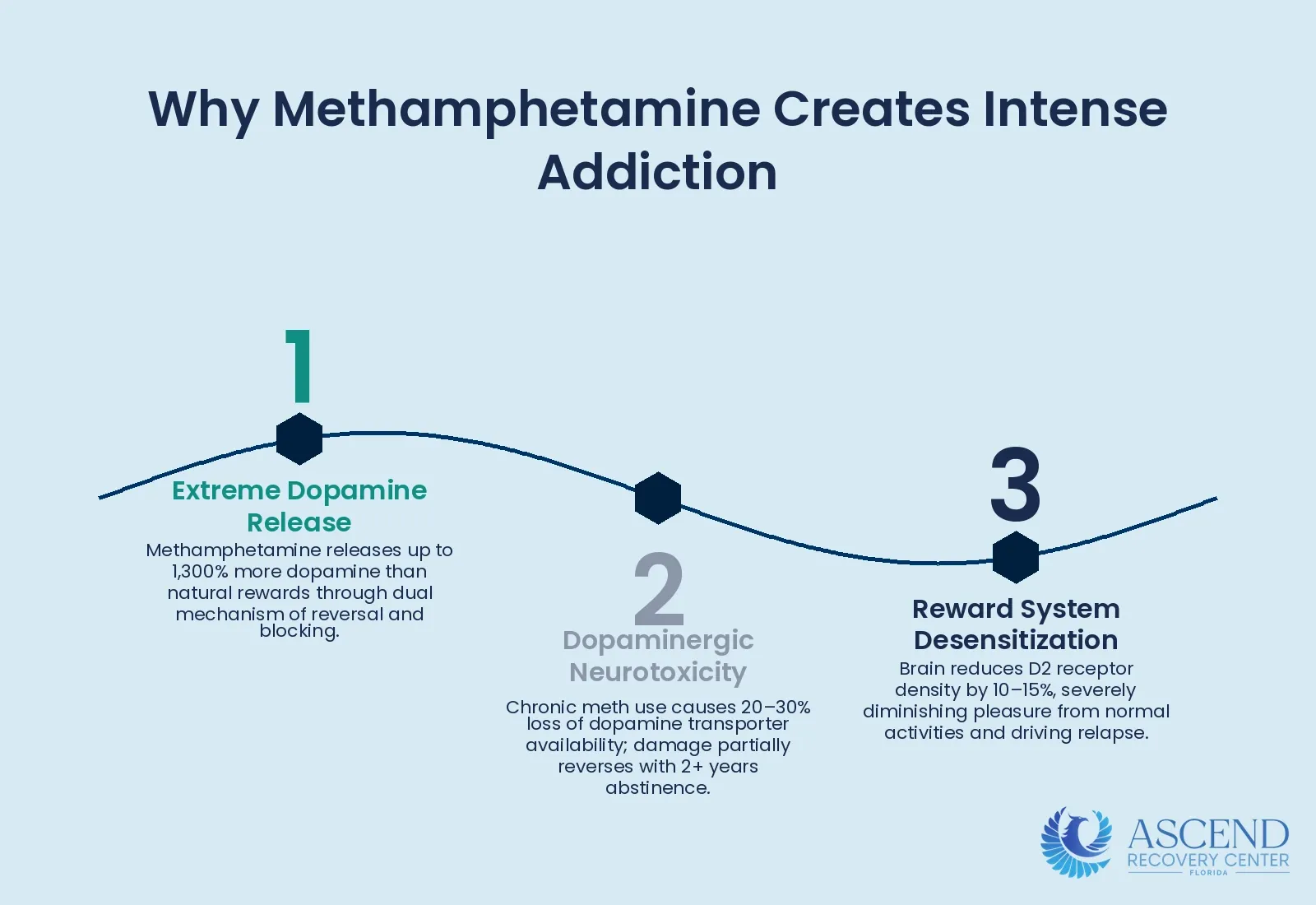
Methamphetamine produces the most intense and prolonged dopamine release of any commonly used addictive substance — releasing up to 1,300% more dopamine in the brain's reward center (nucleus accumbens) than natural rewarding activities, through a dual mechanism that distinguishes it from other stimulants. While cocaine blocks dopamine reuptake transporters (preventing dopamine from being cleared from the synapse), methamphetamine acts through two mechanisms simultaneously: it reverses dopamine transporters — forcing the active release of dopamine from neurons — AND blocks reuptake. The result is a dopamine surge up to 4 times more intense than cocaine, lasting 8–12 hours compared to cocaine's 20–40 minutes.
The neurological consequences of this intensity and duration determine the clinical challenges of meth addiction treatment:
- Dopaminergic neurotoxicity: the excessive dopamine release produced by methamphetamine is directly neurotoxic — it generates oxidative stress that damages and destroys dopamine-producing axon terminals in the striatum; NIDA neuroimaging research (Volkow et al., 2001) documents up to 20–30% loss of dopamine transporter availability in chronic meth users compared to controls; this damage is partially reversible with extended abstinence (typically 2+ years) but full recovery is not always achieved
- Reward system desensitization: following chronic meth use, dopamine D2 receptor density decreases by 10–15% (similar to changes seen in morbid obesity) — as the brain compensates for the excessive dopamine stimulation by reducing receptor expression; with fewer D2 receptors, the person's ability to experience pleasure from normal activities (food, sex, social connection) is severely diminished — producing the protracted anhedonia that characterizes meth recovery and drives relapse
- Duration-driven dependence: the 8–12 hour duration of methamphetamine's effects (vs 20–40 minutes for cocaine) means that meth users can maintain euphoria for an entire day from a single dose — which drives multi-day "tweaking" sessions, sleep deprivation, and hypersexual behavior; the physiological debt from these binges (sleep deprivation, dehydration, nutritional depletion) amplifies the severity of the subsequent crash

Dopamine Release: Meth vs. Natural Rewards
Normal dopamine release in the nucleus accumbens — approximately 100–200% above baseline; the body's reward system functions as intended
Approximately 350% above baseline; blocks dopamine reuptake; effects last 20–40 minutes; highly rewarding but shorter duration than meth
Up to 1,300% above baseline in the nucleus accumbens; both blocks reuptake AND forces massive dopamine release; effects last 8–12 hours; the most potent dopamine surge of any commonly used addictive substance

 FL DCF LicensedFARR Certified
What Are the Signs and Symptoms of Methamphetamine Addiction?
Methamphetamine addiction produces recognizable signs across behavioral, physical, and psychological domains — with physical changes becoming pronounced during active use (stimulant effects) and again during withdrawal (stimulant crash). The following are the primary signs and symptoms organized by category:
- Behavioral signs during active use: prolonged wakefulness (staying awake for 24–72+ hours during binges), hyperactivity and pressured speech, excessive focus on repetitive tasks ("tweaking" — hyperfocused, obsessive engagement in a single activity for hours), hypersexuality with impaired judgment, reduced appetite, and paranoia or suspiciousness that increases with duration of use
- Physical signs: dramatic weight loss (meth suppresses appetite and increases metabolic rate); "meth mouth" (severe dental decay and jaw clenching caused by dry mouth, bruxism, and poor oral hygiene during binges); skin picking wounds and sores (formication — the sensation of insects crawling under the skin — produces compulsive scratching); dilated pupils during use; extreme fatigue, hypersomnia, and pallor during the crash phase
- Psychological signs: meth-induced psychosis — paranoid delusions (being followed, surveilled, or targeted) and hallucinations (typically auditory or tactile) — occurs in 26–46% of chronic users and may persist for weeks to months after cessation; anxiety that escalates with use frequency; depressive episodes during and after crash that deepen with prolonged use
- Signs of methamphetamine use disorder (DSM-5): unable to stop using despite wanting to; spending most of daily time obtaining, using, or recovering from meth; continuing use despite job loss, relationship damage, arrest, or significant health consequences; escalating doses to achieve the same effect; intense cravings when not using
Meth psychosis is frequently confused with schizophrenia by emergency responders and family members — the paranoid delusions and hallucinations can be indistinguishable from a primary psychotic episode; the key distinguishing feature is temporal relationship to meth use and rapid (days to weeks) improvement with abstinence and antipsychotic treatment.
What Is Methamphetamine Withdrawal Like?
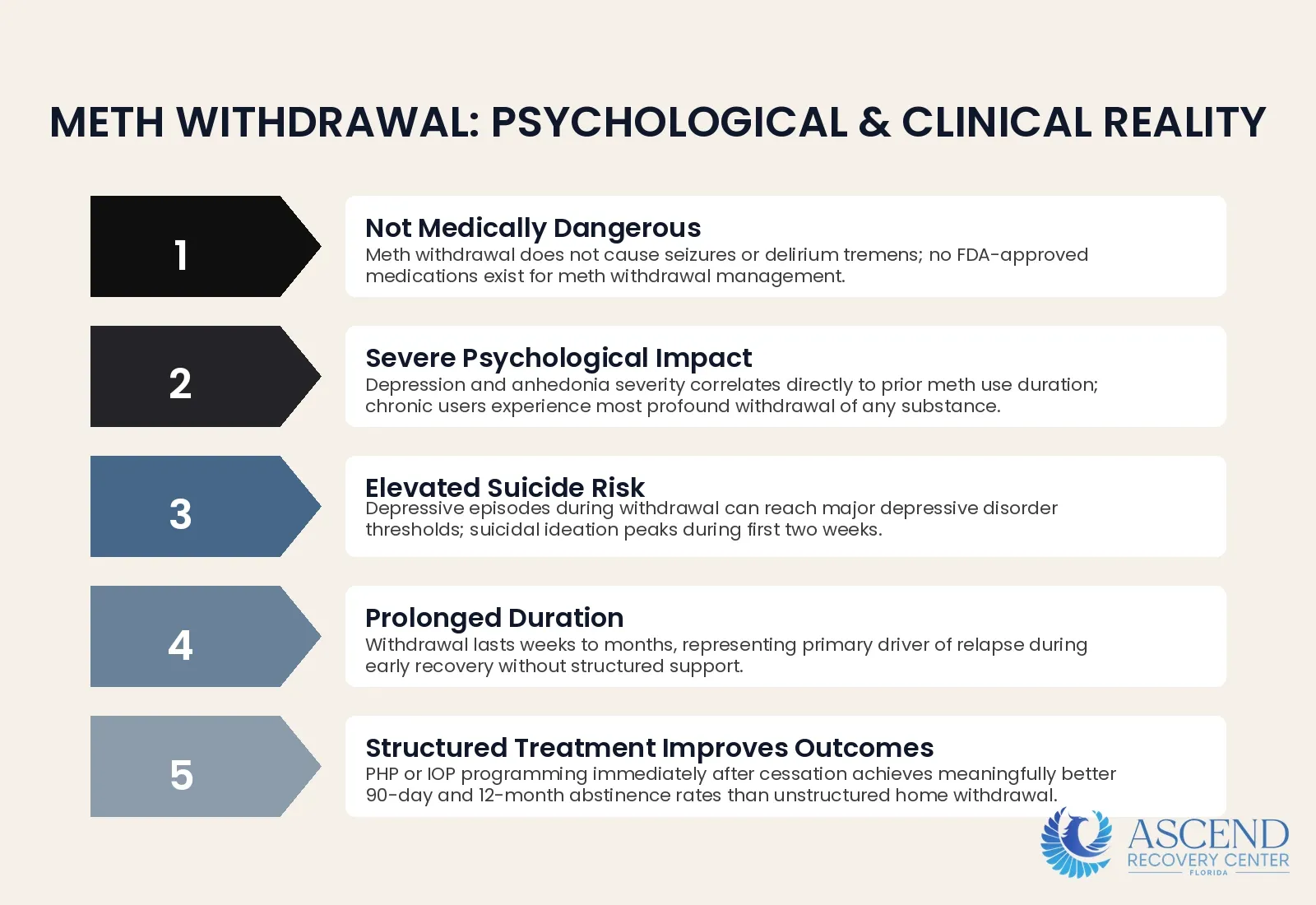
Methamphetamine withdrawal is not medically dangerous — unlike alcohol or benzodiazepine withdrawal, meth withdrawal does not cause seizures or delirium tremens requiring emergency hospitalization — but it is psychologically severe and profoundly uncomfortable, lasting weeks to months and representing the primary driver of relapse during early recovery.
Key clinical points about meth withdrawal:
- No life-threatening physical withdrawal: meth withdrawal does not require medically managed detox in the same sense as alcohol or opioids; there are no FDA-approved medications to manage meth withdrawal; supportive care — sleep management, nutrition, hydration, exercise — is the clinical framework during the acute phase
- Severity driven by dopamine depletion: the depth of depression and anhedonia during meth withdrawal is directly correlated to the severity and duration of prior meth use; individuals who have used heavily for years may experience the most severe and prolonged withdrawal depression of any substance use disorder — described by recovering meth users as feeling fundamentally unable to feel anything at all
- Suicidal risk during withdrawal: depressive severity during meth withdrawal can reach major depressive disorder clinical thresholds; suicidal ideation is elevated during the crash phase and the first two weeks of withdrawal; psychiatric assessment during early meth recovery is essential to identify and address depression and suicidal ideation that requires immediate clinical intervention
- Structured treatment improves outcomes: individuals who enter structured PHP or IOP programming immediately following meth cessation — rather than attempting unstructured home withdrawal — achieve meaningfully better 90-day and 12-month abstinence rates; the daily therapeutic contact, peer accountability, and psychiatric monitoring of structured programming address the depression, anhedonia, and craving management challenges of meth recovery most effectively
Meth Withdrawal and Recovery Timeline
- 1Hours 0–24: The Crash
Immediate onset of profound fatigue, hypersomnia (sleeping 16–20+ hours), increased appetite, and depressed mood as dopamine levels crash below baseline. Most meth users cannot stay awake during this phase.
- 2Days 1–5: Acute Withdrawal
Exhaustion, depression, anxiety, irritability, difficulty concentrating, and intense cravings. Anhedonia — the inability to experience pleasure from normal activities — emerges as dopamine systems remain depleted.
- 3Days 5–14: Subacute Phase
Continued depression and cravings; some sleep normalization; cognitive fog persists. Risk of relapse is extremely high during this window — the combination of dopamine depletion and environmental cues produces cravings that are difficult to manage without structured support.
- 4Weeks 2–8: PAWS Onset
Post-Acute Withdrawal Syndrome — depression, anhedonia, sleep disruption, low energy, and episodic intense cravings that may appear suddenly without obvious triggers. Structured PHP or IOP programming provides the clinical support needed to navigate this phase.
- 5Months 2–6: Gradual Recovery
Dopamine receptor density begins to recover; pleasure from normal activities gradually returns. Psychological craving triggers remain active — exposure to people, places, and things associated with meth use produces conditioned cravings requiring active relapse prevention.
- 6Months 6–24+: Neurological Restoration
NIDA neuroimaging shows progressive restoration of dopamine transporter density over 2+ years of abstinence. Not all individuals achieve full neurological recovery, but the trajectory is meaningfully positive with sustained sobriety and structured behavioral treatment.
FL DCF LicensedFARR Certified“Methamphetamine causes more damage to dopamine-producing neurons than any other commonly abused substance. But the brain has remarkable capacity for recovery — neuroimaging shows real restoration of dopamine transporter density over 2 years of abstinence.”
What Treatments Are Evidence-Based for Methamphetamine Addiction?
Methamphetamine use disorder has the weakest pharmacological treatment armamentarium of any major substance use disorder — there are currently no FDA-approved medications — making behavioral intervention the primary and most critical treatment component. The following are the evidence-based behavioral treatments for meth use disorder:
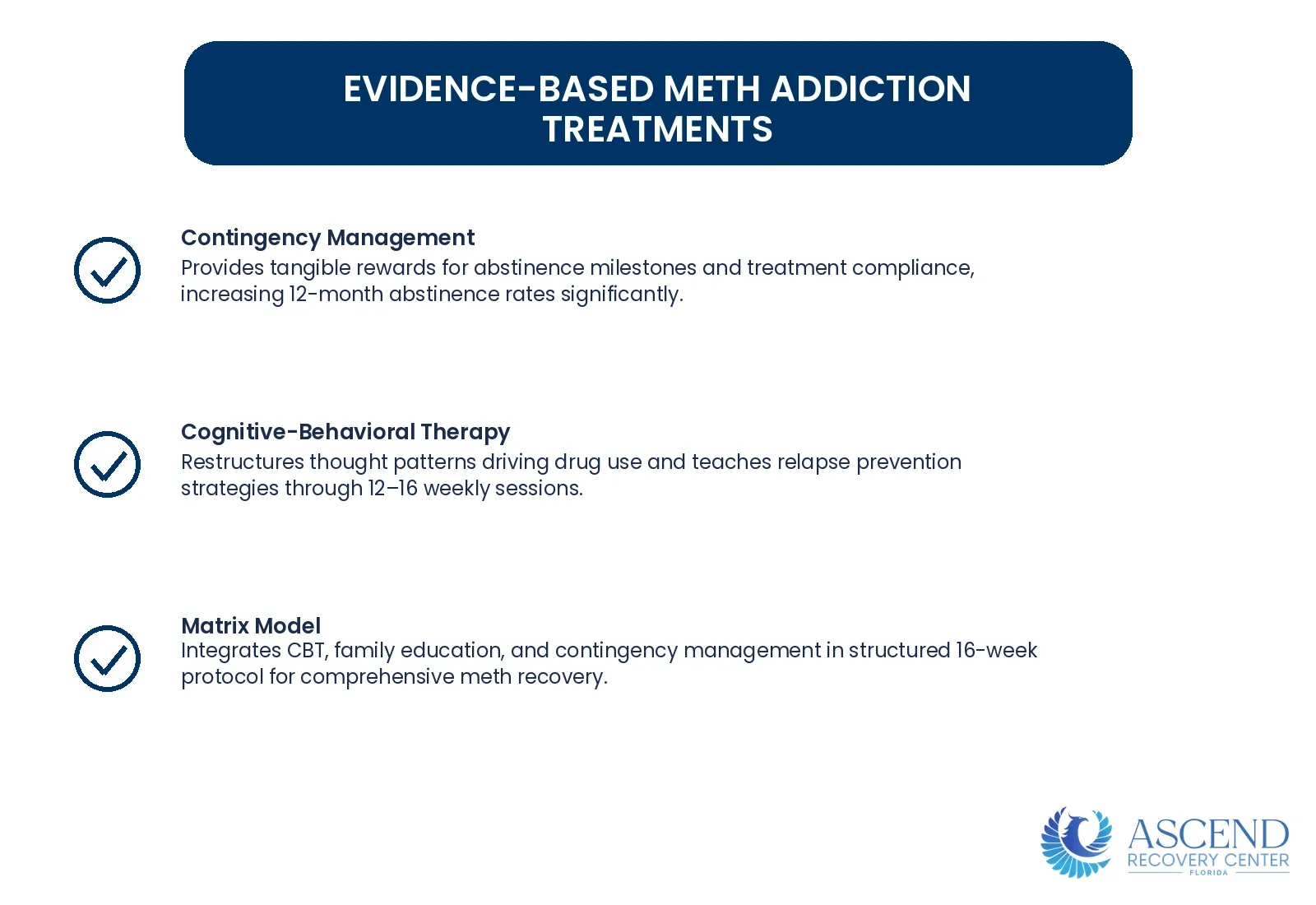
- Contingency management (CM): the most robustly evidence-based treatment for stimulant use disorders; uses systematic positive reinforcement — vouchers exchangeable for retail goods, or prize draws for escalating value — to reward confirmed abstinence on urine drug screens; works by providing concrete, immediate dopaminergic rewards that partially compensate for the blunted reward sensitivity of early meth recovery; a Cochrane review of 47 randomized controlled trials found CM produces the highest abstinence rates of any intervention for stimulant use disorder; CM is best implemented in structured programs where drug screens can be conducted 2–3 times per week
- Cognitive-behavioral therapy (CBT): addresses the thought patterns, high-risk situations, and behavioral triggers that maintain meth use; core components include functional analysis of use (identifying the triggers and consequences that maintain the behavior), coping skill development for high-risk situations, cognitive restructuring of meth-related thoughts, and relapse prevention planning; delivers durable skill-based relapse protection after treatment completion in a way that contingency management alone does not
- The Matrix Model: a structured 16-week intensive outpatient treatment model developed specifically for stimulant use disorders; integrates CBT, motivational interviewing, family education, social support, and 12-step facilitation in a highly structured format; used extensively in NIDA's Clinical Trials Network with evidence for reducing methamphetamine use and improving social functioning; the structure and predictability of the Matrix Model are particularly effective for meth users whose daily structure has been severely disrupted
- Motivational interviewing (MI): especially valuable during the precontemplation and contemplation stages when ambivalence about stopping meth is high; MI techniques (reflective listening, exploring discrepancy, rolling with resistance) address the "meth thinking" that minimizes consequences and amplifies perceived benefits; most effective as a standalone brief intervention in early-contact settings and as a complement to CBT in structured programming
Pharmacological research for meth use disorder is active: bupropion has modest evidence for reducing amphetamine use in low-to-moderate users; naltrexone shows preliminary evidence; methamphetamine vaccine development is in early clinical trials. None currently reach the evidence standard for clinical recommendation. The treatment of meth psychosis uses antipsychotic medications (olanzapine, risperidone, quetiapine) with generally good response — though meth psychosis that persists beyond 4–6 weeks of abstinence may reflect an underlying psychotic disorder that requires longer-term psychiatric management.

Ascend Recovery Center — Palm Beach Gardens, FL
Does Your Insurance Cover Drug Rehab Education?
Free, confidential verification in under 15 minutes.
What Level of Care Is Appropriate for Methamphetamine Treatment?
Methamphetamine use disorder treatment level of care is determined by ASAM Criteria across 6 dimensions — and most individuals with significant methamphetamine use disorder enter treatment at PHP (ASAM Level 2.5) or IOP (ASAM Level 2.1), which provide the therapeutic intensity needed to support early recovery from stimulant use disorder without the need for medical detox hospitalization.
The following considerations guide level-of-care placement for meth use disorder:
- Meth psychosis: active meth psychosis at presentation requires psychiatric stabilization before structured behavioral treatment can be effectively delivered; antipsychotic medications are initiated, and once the acute psychotic episode resolves (typically within days to 2 weeks), the client transitions to PHP or IOP; ongoing psychiatric monitoring is maintained throughout treatment
- Depression severity: major depressive episode severity during meth withdrawal influences level-of-care placement; individuals with suicidal ideation or severe functional impairment from depression may require brief psychiatric hospitalization or residential-level care before PHP; individuals with moderate depression are managed within PHP with psychiatric medication management and intensive therapy
- PHP for meth use disorder: the 4–6 hours of daily structure, peer community, psychiatric services, and concurrent CM implementation make PHP an optimal treatment setting for early meth recovery; the daily therapeutic contact addresses the relapse-risk window of the first 30–60 days with the highest appropriate clinical intensity available in an outpatient setting
- IOP for meth use disorder: appropriate as a step-down from PHP after neurological stabilization, or as a primary level of care for individuals with briefer use histories, more robust social supports, or stable psychiatric status; IOP's 9–15 hours per week allows work or family maintenance while providing clinical support above standard outpatient
Evidence-based stimulant addiction treatment programming integrates contingency management, CBT, psychiatric medication management for depression and psychosis, and ASAM Criteria-matched levels of care.
PHP and IOP for methamphetamine use disorder is available at DCF-licensed programs. for immediate assessment and level-of-care placement.
“Contingency management is the most evidence-supported behavioral intervention for stimulant use disorders. The science is clear — systematic positive reinforcement for abstinence works, and it works through the same dopaminergic pathways that methamphetamine hijacks.”
What Are the Co-Occurring Mental Health Conditions in Meth Users?
Methamphetamine use disorder has the highest rates of co-occurring psychiatric disorders of any major substance use disorder — reflecting both the neuropsychiatric toxicity of methamphetamine itself and the high proportion of individuals who began using meth as a form of self-medication for pre-existing psychiatric symptoms. The following are the most common co-occurring conditions in methamphetamine use disorder:
- Methamphetamine-induced depressive disorder: not a primary depressive disorder but a drug-induced mood disorder caused by dopaminergic depletion; characterized by profound anhedonia, hypersomnia, psychomotor retardation, and suicidal ideation that typically resolves within 2–4 weeks of abstinence, though severe presentations may persist for months; antidepressant therapy is sometimes initiated but evidence for efficacy during active meth withdrawal is limited; structured treatment and psychiatric monitoring are the primary interventions
- ADHD: research consistently documents elevated rates of ADHD diagnosis in methamphetamine users — 20–30% vs 5–10% in the general population; the self-medication hypothesis proposes that individuals with undiagnosed ADHD discover that stimulant drugs improve their attention, concentration, and mood (through the same dopaminergic mechanism as therapeutic stimulants), leading to misuse and dependence; during meth recovery, ADHD is reassessed and, when confirmed, treated with non-stimulant agents (atomoxetine, guanfacine) or carefully monitored stimulant prescribing
- Anxiety disorders and PTSD: trauma history is elevated in methamphetamine users — particularly among women who use meth; PTSD often precedes meth initiation, with meth initially providing dissociative and stimulant effects that reduce trauma symptom severity before ultimately exacerbating them; trauma-focused therapy (EMDR, CPT) is integrated into meth treatment programming to address underlying PTSD that contributes to relapse risk
- Methamphetamine-induced psychotic disorder: clinically indistinguishable from schizophrenia in the acute phase; resolves in the majority of cases within weeks of abstinence with antipsychotic treatment; a subset of individuals develop a persistent vulnerability to psychotic episodes with future stimulant exposure or stress — thought to reflect a lasting alteration in dopaminergic neurotransmission; these individuals may require longer-term antipsychotic maintenance
How Does Methamphetamine Recovery Differ from Recovery from Other Substances?
Methamphetamine recovery is distinguished from recovery from other substances by three factors: the depth and duration of dopamine system impairment, the absence of approved pharmacological treatment, and the prominence of meth-associated cognitive deficits and psychiatric symptoms that complicate behavioral therapy engagement in early recovery.
Clinically, the key differences that treatment teams address in meth recovery:
- Anhedonia as a primary relapse driver: unlike opioid recovery where cravings are prominent but reward system function largely recovers within months, meth recovery involves a prolonged period (often 3–12 months) where the person cannot reliably experience pleasure — food tastes flat, activities feel meaningless, social connections feel hollow; without clinical guidance framing this as neurological recovery rather than a permanent state, clients commonly relapse to feel "normal" again; contingency management provides concrete immediate rewards that partially bypass the impaired reward system during this period
- Cognitive rehabilitation need: neuropsychological testing of chronic meth users documents deficits in verbal learning, attention, executive function, and processing speed that persist for months after cessation; effective meth treatment programming accounts for these cognitive deficits in session design — using shorter group sessions, more repetition, visual materials, and concrete rather than abstract skill instruction during the early weeks of treatment
- Relapse pattern differences: meth relapse is more likely to trigger multi-day binging (in contrast to the more measured relapse pattern of alcohol) — when a person in meth recovery relapses, they frequently disappear for days; treatment plans address this pattern with emergency contact protocols, harm reduction planning, and rapid re-engagement pathways that minimize the gap between relapse and return to treatment
Recovery from methamphetamine use disorder is fully possible. NIDA longitudinal data shows progressive neurological recovery with sustained abstinence — dopamine transporter density recovers substantially over 1–2 years, reward circuit function improves, and the ability to experience pleasure from normal life gradually returns. The timeline is longer and the path more challenging than for some other substances, but the outcome data is meaningfully positive for individuals who engage with structured, evidence-based treatment.

Ascend Recovery Center — Palm Beach Gardens, FL