


Referenced in this article
Key Takeaways
- Benzodiazepine withdrawal is one of two life-threatening withdrawal syndromes in medicine — alongside alcohol withdrawal — because both substances produce GABA-A receptor downregulation that leaves the CNS in dangerous hyperexcitability when the drug is removed; unmanaged moderate-to-severe benzo withdrawal carries a 20–30% seizure risk and significant delirium risk.
- The duration and onset of benzodiazepine withdrawal is determined primarily by the half-life of the specific drug: short-acting agents (alprazolam/Xanax, lorazepam/Ativan) produce withdrawal onset within 12–24 hours with a compressed, intense acute course; long-acting agents (diazepam/Valium) produce delayed onset of 2–7 days with a more gradual, prolonged course.
- The medical standard of care for benzodiazepine detox is an equivalency-based conversion to diazepam (or phenobarbital) followed by a structured taper of 5–10% per week using the Ashton Protocol — never abrupt cessation, and never unsupervised in patients with significant dependence.
- Rebound anxiety (intense anxiety in the first 1–5 days of reduction, exceeding pre-treatment baseline) is a pharmacological withdrawal effect that patients frequently misidentify as needing more medication; protracted withdrawal syndrome (PAWS) affects 10–25% of long-term users and produces anxiety, insomnia, cognitive fog, and sensory hypersensitivity lasting weeks to months.
- Medical detox treats only the physical dependence component — PHP or IOP following detox is essential to address the underlying anxiety disorders, trauma, insomnia, and behavioral patterns driving benzodiazepine dependence and to navigate the protracted withdrawal period with the clinical support needed to prevent relapse.
Why Is Benzodiazepine Withdrawal Medically Dangerous?
Benzodiazepine withdrawal is medically dangerous because the drug's mechanism of action — enhancing inhibitory GABA-A receptor activity throughout the central nervous system — produces a profound physiological rebound when the drug is abruptly removed, leaving the CNS in a state of unchecked hyperexcitability that can escalate to seizures, delirium, and life-threatening cardiovascular instability.
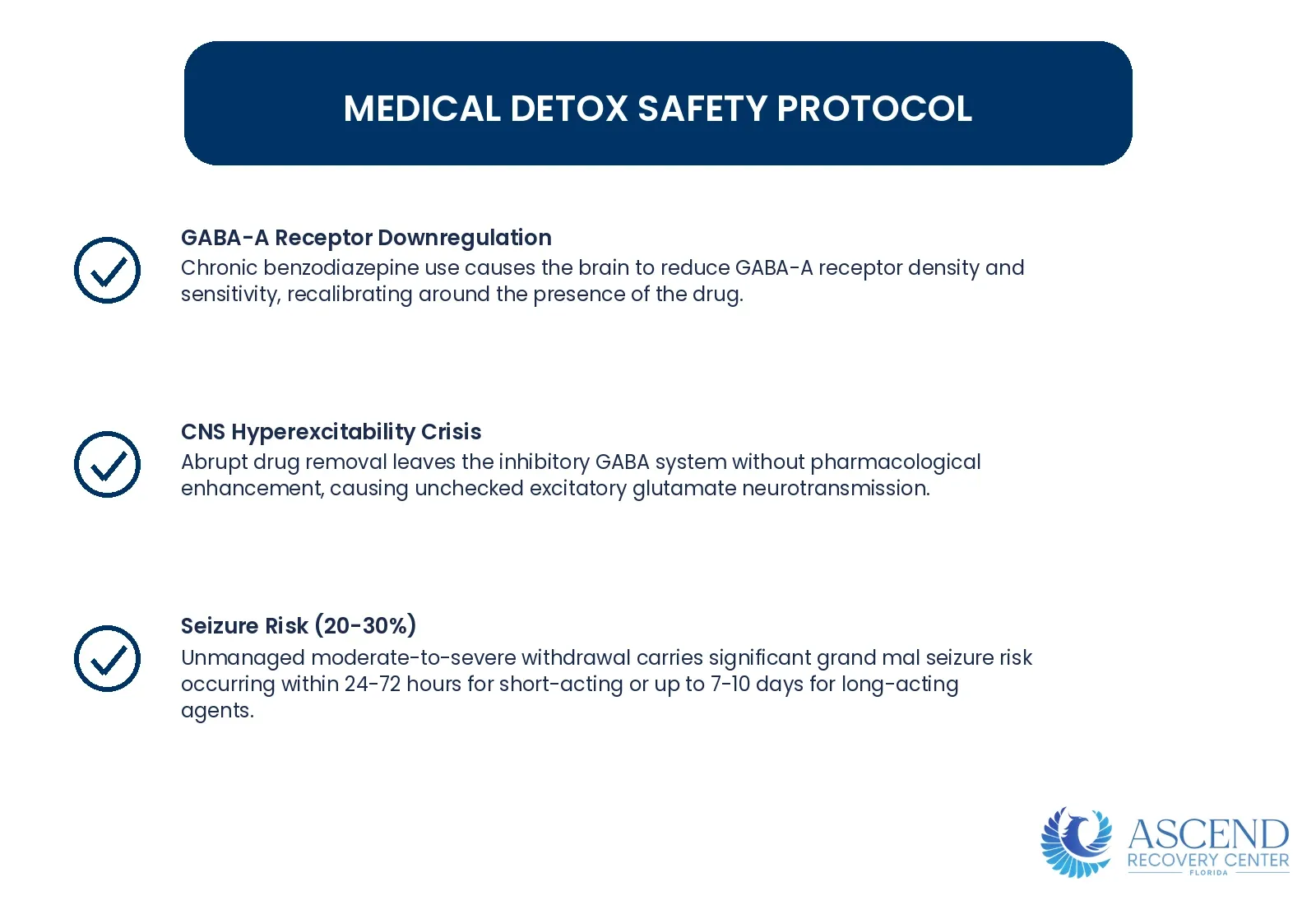
Understanding the neurological mechanism clarifies why this withdrawal is categorically different from opioid or stimulant withdrawal:
- GABA-A receptor upregulation: benzodiazepines bind to GABA-A receptors and potentiate the action of GABA (gamma-aminobutyric acid) — the brain's primary inhibitory neurotransmitter — by increasing the frequency of chloride ion channel opening; with chronic benzo use, the brain compensates by reducing GABA-A receptor density and sensitivity (downregulation) to offset the constant enhancement; the system recalibrates around the presence of the drug
- CNS hyperexcitability on cessation: when benzodiazepines are abruptly removed after physical dependence has developed, the downregulated GABA system is suddenly left without its pharmacological enhancement; the result is CNS hyperexcitability — the inhibitory brake on neuronal firing has been removed, leaving excitatory glutamate neurotransmission to go unopposed; this is the identical mechanism driving alcohol withdrawal seizures and delirium tremens
- Seizure risk: unmanaged moderate-to-severe benzodiazepine withdrawal carries a 20–30% risk of grand mal (tonic-clonic) seizures; seizures can occur in the first 24–72 hours after cessation for short-acting benzos, or delayed up to 7–10 days for long-acting agents; benzo withdrawal seizures can cluster and progress to status epilepticus, a neurological emergency
- Delirium risk: severe benzodiazepine withdrawal can produce a delirium clinically equivalent to alcohol withdrawal delirium tremens — characterized by profound confusion, disorientation, visual hallucinations, autonomic instability (fever, diaphoresis, tachycardia, hypertension), and agitation; delirium carries significant mortality risk without prompt medical management
- Fatality without medical management: benzodiazepine withdrawal, like alcohol withdrawal, can be fatal — respiratory failure during prolonged seizure, cardiovascular events during severe autonomic instability, and aspiration during delirium represent life-threatening complications of unmanaged withdrawal; this is not a theoretical risk but a documented clinical reality
The shared mechanism with alcohol withdrawal has an important clinical implication: individuals with concurrent alcohol and benzodiazepine dependence face a compounded withdrawal risk, as both substances act on the GABA system; polysubstance detox from alcohol plus benzos requires the most intensive medical supervision.
DCF-licensed detox facilities coordinate medically supervised benzodiazepine detox placement and step patients directly into PHP or IOP treatment. to confirm benefits.
Learn more about alcohol withdrawal and how it compares clinically.
Medically Supervised Benzodiazepine Detox Protocol
- 1Step 1: Assessment & CIWA-B Scoring
Comprehensive medical intake including vital signs, lab work, psychiatric history, and benzodiazepine use history (dose, duration, frequency, last use). Clinical Institute Withdrawal Assessment for Benzodiazepines (CIWA-B) scoring establishes baseline severity and guides treatment intensity.
- 2Step 2: Equivalent Dose Calculation
All benzodiazepines the patient is taking are converted to a diazepam (Valium) equivalent dose using established cross-tolerance tables. This standardizes treatment planning regardless of which benzo or combination was used, and accounts for polysubstance use including alcohol cross-dependence.
- 3Step 3: Long-Acting Benzo Stabilization
Transition to a long-acting agent — typically diazepam or phenobarbital — to provide stable blood levels without the peaks and troughs of short-acting benzos. Long half-life agents self-taper more gradually and reduce the risk of seizure breakthrough between doses.
- 4Step 4: Structured Taper 5–10% per Week
Once the patient is stabilized, the diazepam equivalent dose is reduced by 5–10% every 1–2 weeks (Ashton Protocol). Slower tapers are used for high-dose, long-duration, or complex cases. Taper speed is individualized based on symptom response and CIWA-B scores.
- 5Step 5: Symptom Monitoring & Medication Adjustment
Vital signs monitored every 4–8 hours during acute detox. CIWA-B reassessment guides PRN (as-needed) dosing for breakthrough withdrawal symptoms. Adjunct medications added as indicated: propranolol for autonomic symptoms, carbamazepine for seizure prevention, gabapentin for PAWS management.
- 6Step 6: Transition to PHP/IOP Behavioral Treatment
Medical detox addresses only the physical dependence component. After stabilization, patients transition to PHP or IOP programming to treat the underlying anxiety, trauma, insomnia, and behavioral patterns driving benzodiazepine dependence — the critical second phase of recovery.

 FL DCF LicensedFARR Certified
What Are the Symptoms of Benzodiazepine Withdrawal?
Benzodiazepine withdrawal produces one of the most complex and potentially dangerous symptom profiles of any substance withdrawal — spanning physical, neurological, psychological, and cognitive domains simultaneously — with symptom severity dependent on the specific drug, dose, duration of use, and speed of cessation.
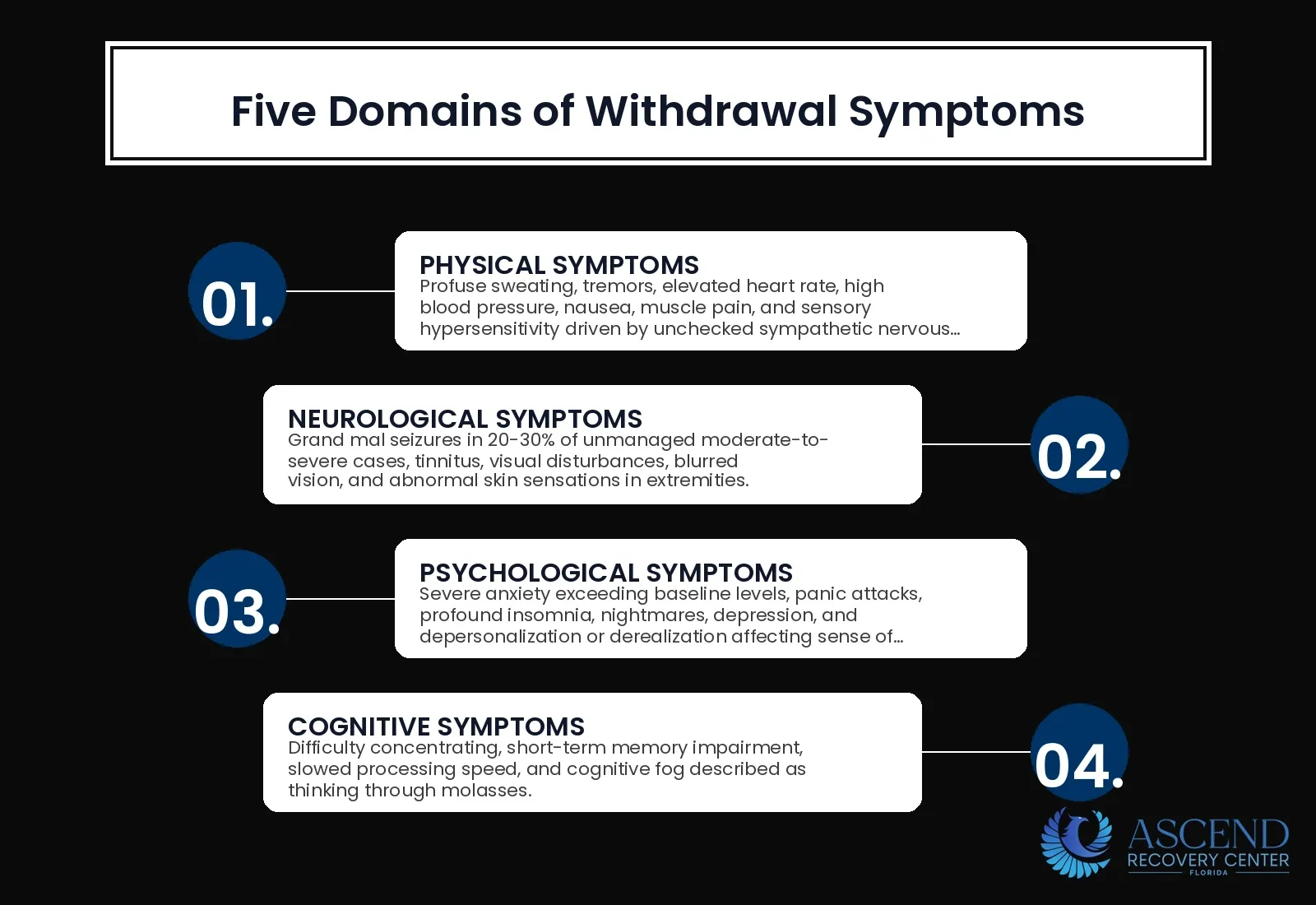
The following are the primary withdrawal symptoms organized by category:
- Physical symptoms: diaphoresis (profuse sweating), tremors (typically starting in the hands and progressing to full-body shaking with increasing severity), tachycardia (elevated resting heart rate), hypertension, nausea and vomiting, headaches, muscle pain and stiffness, generalized sensory hypersensitivity (ordinary sounds and light become intensely uncomfortable), and photophobia; these autonomic symptoms are mediated by the unchecked sympathetic nervous system activation that occurs when GABAergic inhibition is removed
- Neurological symptoms: grand mal (tonic-clonic) seizures in 20–30% of unmanaged moderate-to-severe cases; tinnitus (persistent ringing in the ears) — often one of the most distressing and persistent withdrawal symptoms; visual disturbances including blurred vision, visual snow, and perceptual distortions; paresthesia (abnormal burning, prickling, or tingling sensations in the skin and extremities); in severe cases, grand mal seizures may cluster or progress to status epilepticus
- Psychological symptoms: severe anxiety that characteristically exceeds pre-treatment baseline (a clinical finding important to recognize — patients often interpret this rebound anxiety as evidence they need more benzodiazepines, when it is the withdrawal syndrome); panic attacks; insomnia and sleep disruption that can be profound and prolonged; nightmares and disturbing dreams; depression ranging from mild dysphoria to clinical major depression; depersonalization (feeling detached from one's body or identity) and derealization (the environment feels unreal or dreamlike) — symptoms that can be extremely disturbing to patients who have not been warned to expect them
- Cognitive symptoms: difficulty concentrating and sustaining attention; short-term memory impairment; processing speed slowing; cognitive fog described by patients as "thinking through molasses"; these symptoms reflect the widespread impact of GABA-A receptor disruption on cortical and hippocampal function
- Severe and protracted presentations: delirium (confusion, disorientation, visual hallucinations, agitation) in the most severe cases; in protracted cases, psychosis with paranoid features; post-acute withdrawal syndrome (PAWS) with cognitive, anxiety, and sensory symptoms persisting months beyond acute withdrawal
The CIWA-B (Clinical Institute Withdrawal Assessment for Benzodiazepines) scoring tool allows clinicians to objectively quantify withdrawal severity across 10 domains and guide medication management decisions. Scores below 15 are generally managed with careful outpatient monitoring; scores above 25 indicate severe withdrawal requiring inpatient-level medical supervision.
Benzodiazepine Withdrawal Severity Levels
Anxiety, insomnia, irritability, tremor — managed with taper and monitoring; outpatient medical detox may be appropriate
Elevated vitals, pronounced tremor, significant anxiety, sweating — requires supervised taper; medical oversight essential
Seizure risk elevated, delirium precursors, agitation — requires medically supervised inpatient or intensive detox
Active seizure, delirium, cardiovascular instability — emergency medical treatment required; ICU-level care may be indicated
FL DCF LicensedFARR CertifiedHow Long Does Benzodiazepine Withdrawal Last?
The duration of benzodiazepine withdrawal is determined primarily by the pharmacokinetic half-life of the specific benzodiazepine used — with short-acting agents producing an earlier and more acute withdrawal syndrome, and long-acting agents producing a delayed, more prolonged course — making half-life the single most important variable in predicting withdrawal timeline.
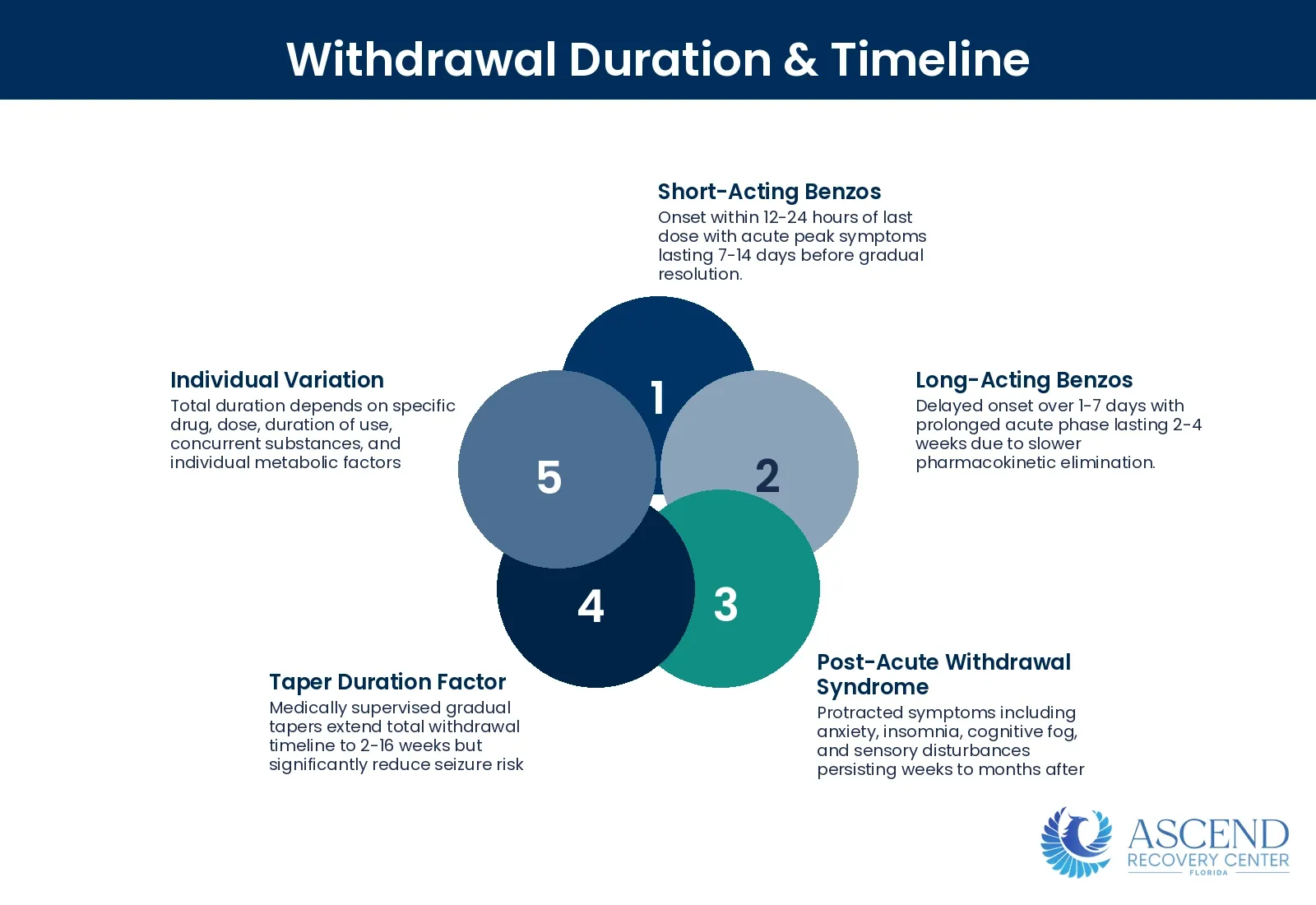
The clinical withdrawal timelines by benzodiazepine category:
- Short-acting benzodiazepines (alprazolam/Xanax, lorazepam/Ativan, triazolam): withdrawal onset 12–24 hours after last dose; peak severity at 24–72 hours; acute phase lasts 4–7 days; these agents produce the most abrupt and intense withdrawal onset because their short half-lives (6–12 hours for alprazolam, 10–20 hours for lorazepam) mean plasma levels fall rapidly after the last dose, with no built-in tapering effect; alprazolam withdrawal is particularly severe, as its high potency and short half-life combine to produce an especially compressed and intense withdrawal curve
- Intermediate-acting benzodiazepines (clonazepam/Klonopin, temazepam): withdrawal onset 1–4 days after last dose; peak severity at 3–7 days; acute phase lasts 1–2 weeks; the longer half-life of clonazepam (18–50 hours) provides a partial self-taper effect that smooths but does not eliminate the withdrawal syndrome
- Long-acting benzodiazepines (diazepam/Valium, chlordiazepoxide/Librium, clorazepate): withdrawal onset 2–7 days after last dose; peak severity at 5–14 days; acute phase lasts 2–4 weeks; diazepam's active metabolites (including desmethyldiazepam with a half-life of 36–200 hours) extend the effective drug exposure significantly, delaying but prolonging withdrawal; patients prescribed diazepam for detox from short-acting benzos benefit from this same extended self-taper pharmacology
Additional factors that influence withdrawal duration and severity:
- Dose: higher doses produce more extensive GABA-A receptor downregulation and more severe, prolonged withdrawal; someone stopping 10mg/day diazepam equivalent typically has a milder course than someone stopping 100mg/day equivalent
- Duration of use: prolonged use (months to years) produces deeper receptor adaptation and a more extended withdrawal course; the FDA-recommended prescribing guideline of limiting benzodiazepine use to 2–4 weeks for insomnia reflects the known risk of dependence development with longer courses
- Polysubstance dependence: concurrent alcohol or opioid dependence complicates and may extend the withdrawal timeline
Post-Acute Withdrawal Syndrome (PAWS): approximately 10–25% of long-term benzodiazepine users experience a protracted withdrawal syndrome lasting weeks to months beyond the resolution of acute withdrawal. PAWS symptoms — persistent anxiety, insomnia, cognitive fog, depression, sensory hypersensitivity, and intermittent tinnitus — reflect ongoing GABA receptor system reorganization. PAWS is most common after high-dose, long-duration use of short-acting agents, and following rapid taper. Structured PHP and IOP treatment provides the clinical framework — medication management, daily therapeutic support, sleep hygiene protocols, and mindfulness-based interventions — for navigating protracted withdrawal. Learn more at the PHP program page.
“The benzodiazepine withdrawal syndrome can be life-threatening in severe cases, producing a clinical picture indistinguishable from alcohol withdrawal delirium tremens. The mechanism — GABA-A receptor downregulation followed by abrupt removal of pharmacological support — is identical. Medically supervised taper is the standard of care, not a clinical preference.”
What Is the Medical Protocol for Benzodiazepine Detox?
The medical protocol for benzodiazepine detox is built around a single foundational principle: abrupt cessation must never occur after physical dependence has developed; instead, a systematic equivalency-based substitution and gradual taper replaces the patient's current benzo use with a long-acting agent, then reduces the dose slowly enough to allow GABA-A receptor density to normalize without triggering seizures or delirium.
The clinical components of evidence-based benzo detox:
- Equivalency conversion to diazepam (Valium): all benzodiazepines have established diazepam-equivalent conversion ratios — for example, 1mg alprazolam is approximately equivalent to 20mg diazepam, and 1mg lorazepam is equivalent to approximately 10mg diazepam; converting the patient's total current benzo load to a diazepam equivalent dose provides a standardized baseline; diazepam is preferred as the substitution agent because its long half-life (20–100 hours) and active metabolites (desmethyldiazepam, half-life 36–200 hours) create stable plasma levels that self-taper gradually and reduce the risk of withdrawal spikes between doses
- Phenobarbital as alternative stabilizing agent: for patients where diazepam substitution is clinically contraindicated (significant liver disease, severe polysubstance dependence) or in specialized detox settings, phenobarbital is used as the stabilizing agent; phenobarbital is not cross-tolerant with benzodiazepines but powerfully suppresses the CNS hyperexcitability driving withdrawal; it has an extremely long half-life (80–120 hours), providing very gradual self-tapering; phenobarbital protocols require close monitoring and experienced clinical management
- Ashton Protocol — structured taper: the Ashton Protocol, developed by Professor Heather Ashton at Newcastle University and published in 2002, is the foundational clinical framework for benzodiazepine taper; the protocol recommends switching to diazepam (if not already being used) and reducing the dose by approximately 5–10% every 1–2 weeks, slower if symptoms emerge; for high-dose users, initial reductions may be larger; the total taper duration ranges from several weeks for low-dose short-term users to 12–24 months for high-dose long-term users requiring very slow reductions
- Adjunct medications: beta-blockers (propranolol 10–40mg every 6–8 hours) for autonomic symptoms — tachycardia, hypertension, diaphoresis; carbamazepine (Tegretol) for seizure prophylaxis, particularly when the benzo taper cannot be as gradual as desired; gabapentin (Neurontin) or pregabalin (Lyrica) for PAWS management — these agents modulate the alpha-2-delta subunit of voltage-gated calcium channels and provide symptom relief for anxiety, insomnia, and sensory hypersensitivity in protracted withdrawal
- Medical monitoring intensity: vital signs every 4–8 hours during acute detox; CIWA-B reassessment with each nursing contact; intravenous access maintained for seizure emergency protocol (lorazepam IV for breakthrough seizure); cardiac monitoring in high-risk patients (prior seizure, severe autonomic instability, significant cardiac history)
- Duration of medical detox: typically 7–14 days for short-acting benzo users at moderate doses; 14–28+ days for long-acting or high-dose cases; high-dose long-duration users (e.g., greater than 40mg diazepam equivalent per day for multiple years) may require extended outpatient supervised taper of several months after acute detox stabilization
For information about medical detox placement and the transition to structured outpatient treatment, see what is drug detox and detox placement services.
FL DCF LicensedFARR Certified
Ascend Recovery Center — Palm Beach Gardens, FL
Does Your Insurance Cover Drug Rehab Education?
Free, confidential verification in under 15 minutes.
What Are Rebound Anxiety and Protracted Withdrawal Syndrome?
Two withdrawal phenomena specific to benzodiazepine dependence — rebound anxiety and protracted withdrawal syndrome — are clinically important to distinguish from each other and from the underlying condition that may have originally prompted benzo prescribing, because misidentifying them as a return of the underlying disorder leads to re-prescribing that perpetuates dependence rather than treating it.
Rebound anxiety:
- Definition and mechanism: rebound anxiety is an intense recurrence of anxiety symptoms — typically exceeding the patient's pre-treatment baseline anxiety level — that occurs in the first 1–5 days after stopping a benzodiazepine; it is caused by the abrupt removal of the drug's GABA-A enhancement, producing a transient state of CNS hyperexcitability that manifests as anxiety, hyperarousal, insomnia, and irritability before the receptor system begins to readjust
- Clinical significance: rebound anxiety is particularly prominent and intense with short-acting, high-potency benzodiazepines — especially alprazolam (Xanax), which has a very steep plasma level decline after a dose; the intensity of rebound anxiety commonly leads patients to self-administer more benzodiazepine, interpreting the withdrawal-induced anxiety as evidence that they need the medication — a pharmacological trap that is one of the primary drivers of continued benzo dependence and dose escalation
- Patient education as treatment: informing patients in advance that the intense anxiety they will experience in the first days of reduction or cessation is a temporary pharmacological withdrawal effect — not evidence that they cannot function without benzos, and not a return of their underlying disorder — is a critical component of successful taper; cognitive-behavioral therapy for benzodiazepine discontinuation specifically addresses this catastrophizing about withdrawal symptoms
Protracted Withdrawal Syndrome (PAWS):
- Prevalence and definition: approximately 10–25% of long-term benzodiazepine users experience protracted withdrawal syndrome — a prolonged constellation of symptoms that persists beyond acute withdrawal resolution, lasting weeks to many months; PAWS represents the extended timeline required for GABA-A receptor density, sensitivity, and neuroplasticity to normalize after long-term pharmacological disruption
- PAWS symptom profile: anxiety (often intermittent and episodic rather than constant); insomnia and sleep architecture disruption; cognitive symptoms — brain fog, memory impairment, concentration difficulties; depression, low mood, emotional blunting; sensory hypersensitivity (light, sound, touch); tinnitus; episodic tremor; depersonalization/derealization that may wax and wane; symptoms often fluctuate over weeks, with "windows" of feeling better followed by "waves" of symptom return
- Risk factors for PAWS: high dose (greater than 40mg diazepam equivalent per day); long duration (greater than 1 year of daily use); use of short-acting, high-potency agents (alprazolam, lorazepam); rapid taper; concurrent psychiatric conditions; prior history of alcohol or benzo withdrawal
- PAWS management: structured PHP/IOP programming that provides daily therapeutic contact, peer support, and clinical monitoring during the high-risk PAWS period; antidepressants (SSRIs, SNRIs) for the depressive component when clinically significant; gabapentin or pregabalin for anxiety, insomnia, and sensory symptoms; sleep hygiene protocols and CBT for insomnia; mindfulness-based stress reduction (MBSR) to develop non-pharmacological anxiety management; regular aerobic exercise, which has documented GABA-modulatory effects and positive impact on neuroplasticity
PAWS is not permanent. Research consistently shows that GABA-A receptor normalization continues over months of abstinence, and the vast majority of patients experience resolution of protracted symptoms within 6–24 months with appropriate clinical support.
PHP and IOP programming is specifically designed to provide the structured support framework for navigating PAWS after acute detox stabilization. to confirm benefits.
“Benzodiazepines can produce physical and psychological dependence even when taken in therapeutic doses over relatively short periods. There is no sharp dose threshold below which withdrawal does not occur — individual variation in GABA-A receptor sensitivity means that even patients at low prescribed doses may experience clinically significant withdrawal on cessation.”
What Level of Care Is Required for Benzodiazepine Detox?
Level-of-care determination for benzodiazepine withdrawal and treatment requires clinical assessment of dependence severity, medical and psychiatric comorbidity, and social support — with the guiding principle that anyone stopping benzodiazepines after prolonged use requires medical supervision, because the consequences of inadequate monitoring are potentially fatal.
The spectrum of clinically appropriate care levels:
- Emergency department (immediate): anyone experiencing seizures, confusion, severe agitation, hallucinations, or cardiovascular instability during benzodiazepine withdrawal should be transported to an emergency department immediately; these presentations represent life-threatening complications requiring IV benzodiazepine administration, seizure management, and intensive medical monitoring; do not attempt to manage these presentations in an outpatient setting — call 911
- Inpatient medically supervised detox (most severe cases): clinical indications include high-dose dependence (greater than 40mg diazepam equivalent per day); prior history of withdrawal seizure or delirium; significant medical comorbidity (cardiac, hepatic, or pulmonary disease that complicates detox management); concurrent alcohol dependence requiring simultaneous detox; severe psychiatric instability (active suicidal ideation, major depressive episode, comorbid psychotic disorder); inadequate social support for outpatient monitoring; failure of prior outpatient detox attempt
- Medically supervised outpatient detox (moderate cases): therapeutic-dose dependence (less than 20mg diazepam equivalent per day) without prior seizure history, significant medical comorbidity, or concurrent alcohol dependence; stable living situation with reliable social support; CIWA-B score below 15 at intake; ability to attend daily or every-other-day monitoring appointments; appropriate for patients with shorter use duration, lower doses, and strong motivation for structured outpatient care
- The clinical rule for unassisted withdrawal: anyone who has taken a benzodiazepine daily for more than 4 weeks at therapeutic doses should not stop abruptly without medical guidance; the standard prescribing recommendation is a supervised taper even for patients at prescribed doses — patients who have been on therapeutic alprazolam for anxiety for 6 months typically require a 4–12 week supervised taper to avoid significant withdrawal symptoms
After detox stabilization — transitioning to PHP or IOP:
- Why PHP/IOP is essential after benzo detox: medical detox addresses only the physical component of benzodiazepine dependence; it does not treat the anxiety disorder, trauma, insomnia, or behavioral patterns that led to benzo use and that will drive relapse without structured behavioral treatment; the majority of people detoxed from benzodiazepines without subsequent behavioral treatment relapse within weeks to months — the same pharmacological effect that drove dependence (immediate anxiety relief) is powerfully reinforcing in the presence of ongoing anxiety symptoms
- PHP for post-benzo detox: PHP (Partial Hospitalization Program) provides 5–6 hours of daily programming, 5 days per week, including individual therapy, group therapy, psychiatric medication management, and family programming; the therapeutic intensity of PHP is particularly well-matched to the post-benzo detox period, when anxiety, insomnia, cognitive impairment, and emotional dysregulation are most pronounced and relapse risk is highest
- IOP for step-down or primary treatment: Intensive Outpatient Program (IOP) provides 9–15 hours of programming per week for patients who have completed PHP or who present at a lower severity level; IOP allows patients to maintain work or family responsibilities while receiving clinical support above standard outpatient therapy
For detox placement coordination and PHP/IOP admission following detox, online. See also detox placement services and the PHP program.
Can You Stop Benzodiazepines Cold Turkey?
No — stopping benzodiazepines cold turkey after physical dependence has developed is one of the clearest medical contraindications in addiction medicine, not a judgment call or a matter of personal determination; abrupt benzodiazepine cessation in a dependent individual carries a documented 20–30% risk of seizure and a significant risk of life-threatening delirium that are preventable with medically supervised detox.
The contrast with other substances makes the clinical uniqueness of benzo and alcohol withdrawal clear:
- Why benzos and alcohol are categorically different from other substances: opioid withdrawal is intensely uncomfortable and potentially dangerous in specific circumstances (cardiac events during precipitated withdrawal, dehydration in vulnerable patients) but does not carry the same immediate seizure and delirium risk as benzo or alcohol withdrawal in otherwise healthy adults; stimulant withdrawal (methamphetamine, cocaine) is psychologically severe but produces no seizures from the withdrawal itself; nicotine and cannabis withdrawal produce discomfort with no life-threatening acute complications; benzodiazepines and alcohol are the two substances where the withdrawal itself — not the drug — can kill
- Therapeutic-dose users are not exempt from risk: a critical misconception is that cold turkey withdrawal is only dangerous for recreational high-dose users; in fact, anyone who has taken a benzodiazepine at a standard therapeutic dose (e.g., alprazolam 0.5mg three times daily for anxiety) for more than 4–6 weeks has developed sufficient physiological dependence to experience significant withdrawal symptoms with abrupt cessation; seizure risk exists on a dose-dependent spectrum, but even therapeutic-dose users face anxiety, insomnia, and autonomic symptoms severe enough to require medical management
- The appropriate taper duration for therapeutic-dose alprazolam: a patient on prescribed alprazolam 1–2mg daily for a general anxiety disorder for 6–12 months typically requires a 4–12 week supervised taper to successfully discontinue; attempting to stop in 1–2 weeks (even with a taper) is associated with significantly higher rates of withdrawal distress and treatment failure; slow is not a sign of weakness — it is good medicine
- For high-dose, long-duration recreational or dependent use: individuals who have been using benzodiazepines at high doses (greater than 40mg diazepam equivalent per day) for more than a year require a medically supervised inpatient or intensive outpatient detox of typically 14–21 days to achieve safe stabilization on a long-acting agent, followed by continued gradual outpatient taper under medical supervision; total taper duration for this population may be 6–12 months or longer using the Ashton Protocol
- What to do if someone is currently in benzo withdrawal without medical supervision: if someone has stopped benzodiazepines abruptly and is experiencing tremors, significant anxiety, elevated heart rate, or confusion — do not wait to see how things progress; these are early warning signs of potentially escalating withdrawal; they should be evaluated by a medical provider immediately; if they experience a seizure or significant confusion, call 911
The bottom line: benzodiazepine withdrawal requires medical supervision. DCF-licensed detox facilities coordinate same-day medical detox placement and manage the step-down transition into PHP and IOP treatment.
to confirm benefits for medically supervised benzodiazepine detox and PHP/IOP treatment.
See also what is drug detox and alcohol withdrawal for related clinical information.
Ascend Recovery Center — Palm Beach Gardens, FL