


Referenced in this article
Key Takeaways
- IOP (ASAM Level 2.1) provides a minimum of 9 hours of structured treatment per week across 3–5 days — Florida AHCA mandates this 9-hour minimum for licensed IOP providers
- IOP includes group therapy, individual therapy, relapse prevention skills, urine drug screening 1–2 times per week, psychiatric medication management, and family therapy
- IOP serves as a step-down from PHP (ASAM Level 2.5) or a direct entry point for individuals with moderate substance use disorder and stable housing
- Nationally, 60–65% of individuals complete a full IOP course (SAMHSA); NIDA research establishes 90 days of total treatment engagement as the minimum threshold for meaningful long-term outcomes
- DCF-licensed IOP programs offer morning and afternoon tracks with 3-hour sessions, enabling clients to maintain employment, family responsibilities, and community connections throughout treatment
What Is an Intensive Outpatient Program (IOP)?
An intensive outpatient program (IOP) is a structured, multidisciplinary addiction treatment program classified as ASAM Level 2.1, requiring a minimum of 9 hours and a maximum of 19 hours per week of clinical programming. IOP combines group therapy, individual therapy, psychoeducation, and psychiatric services in a non-residential setting. Clients attend IOP 3–5 days per week in sessions lasting 3 hours each. IOP is one of 3 levels within outpatient rehab for addiction in Florida. The following are the 4 defining characteristics of IOP:
- Minimum 9 hours per week: the ASAM Criteria mandates at least 9 structured clinical hours per week to qualify as Level 2.1, per Florida AHCA licensing requirements
- Non-residential: clients return home or to a recovery residence after each session
- Multidisciplinary treatment team: licensed clinicians (LMHC, LCSW, LMFT), certified addiction professionals (CAP), and psychiatric providers deliver services
- Evidence-based modalities: cognitive behavioral therapy (CBT), dialectical behavior therapy (DBT), motivational interviewing (MI), EMDR for trauma, and 12-step facilitation form the therapeutic foundation — CBT and DBT have the strongest evidence base for substance use disorder treatment per NIDA
SAMHSA TIP 47 (Substance Abuse: Clinical Issues in Intensive Outpatient Treatment) codifies the national clinical standards for IOP. IOP operates as the middle tier of outpatient treatment — more intensive than standard outpatient (Level 1.0, fewer than 9 hours per week) and less intensive than partial hospitalization (Level 2.5, 20+ hours per week). The comparison between IOP and PHP determines initial placement for most clients entering outpatient treatment.

IOP Structure and Weekly Hours
9 hours per week is the ASAM Level 2.1 minimum.
3-4 days per week supports work, school, and family schedules.
Up to 19 hours per week before PHP-level intensity begins.

 FL DCF LicensedFARR Certified
IOP vs PHP: What Is the Difference?
IOP and PHP differ in 5 clinical dimensions: weekly hours, daily session length, treatment duration, clinical intensity, and cost. Both programs are outpatient — clients do not reside at the treatment facility — but PHP provides significantly more structured clinical contact per week. The following are the 5 differences between IOP and PHP:
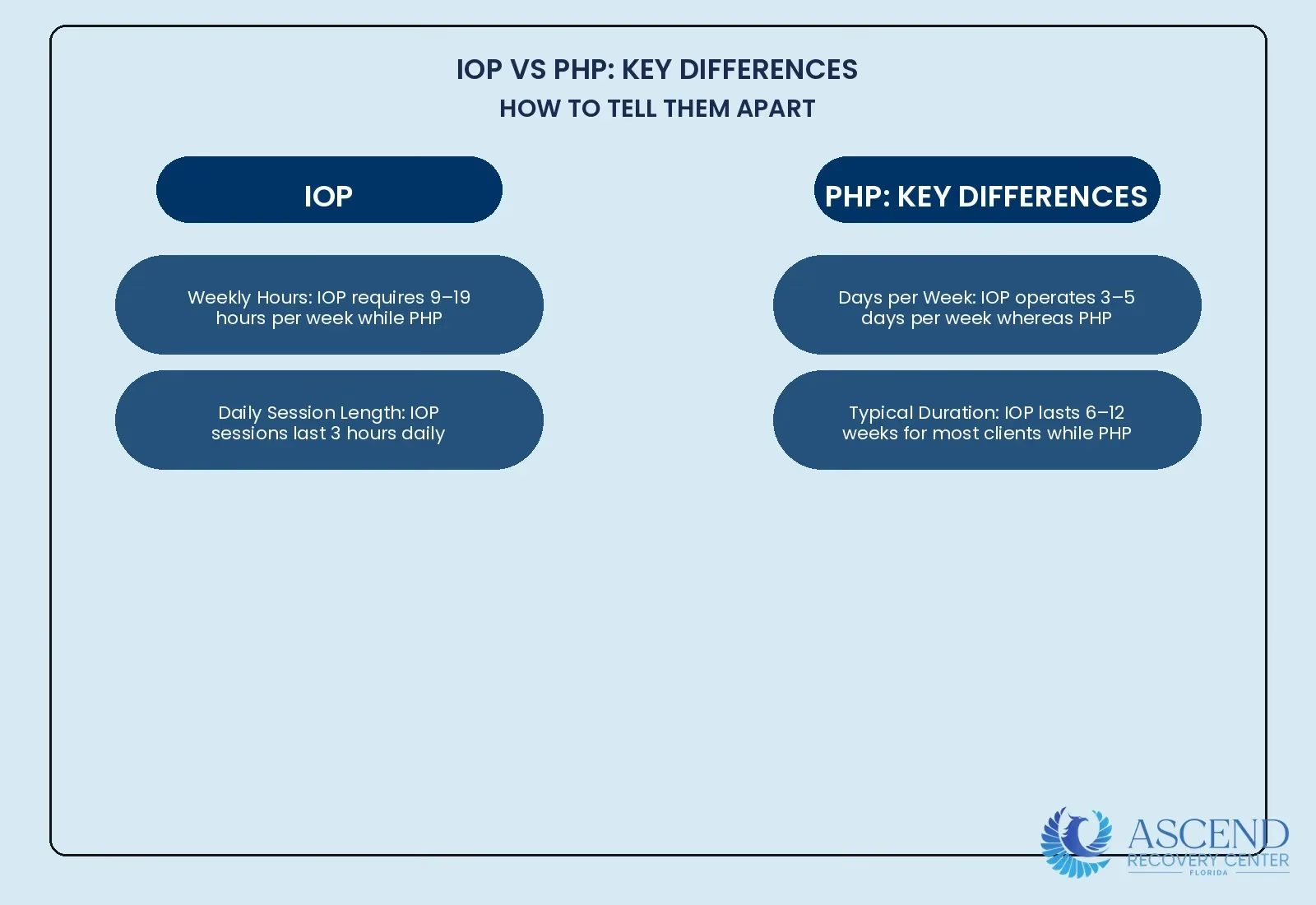
- Weekly hours: IOP requires 9–19 hours per week; PHP (ASAM Level 2.5) requires 20+ hours per week
- Daily session length: IOP sessions last 3 hours per day; PHP sessions last 4–6 hours per day
- Days per week: IOP operates 3–5 days per week; PHP operates 5–6 days per week
- Typical duration: IOP lasts 6–12 weeks; PHP lasts 4–6 weeks
- Monthly cost before insurance: IOP costs $4,000–$10,000 per month; PHP costs $8,000–$15,000 per month
PHP is appropriate for clients stepping down from residential treatment or medical detox who require near-daily clinical structure. IOP is appropriate for clients stepping down from PHP or entering treatment with moderate substance use severity and stable housing. ASAM-certified programs providing both PHP (ASAM Level 2.5) and IOP under one roof enable step-down transitions without provider change. Whichever level a client enters, the same 7 clinical components structure what IOP includes.
What Does IOP Include?
IOP includes 7 clinical components: group therapy, individual therapy, relapse prevention training, drug screening, psychiatric medication management, family therapy, and life skills development. Each component targets specific recovery dimensions identified in the client's individualized treatment plan. The following are the 7 clinical components of IOP:
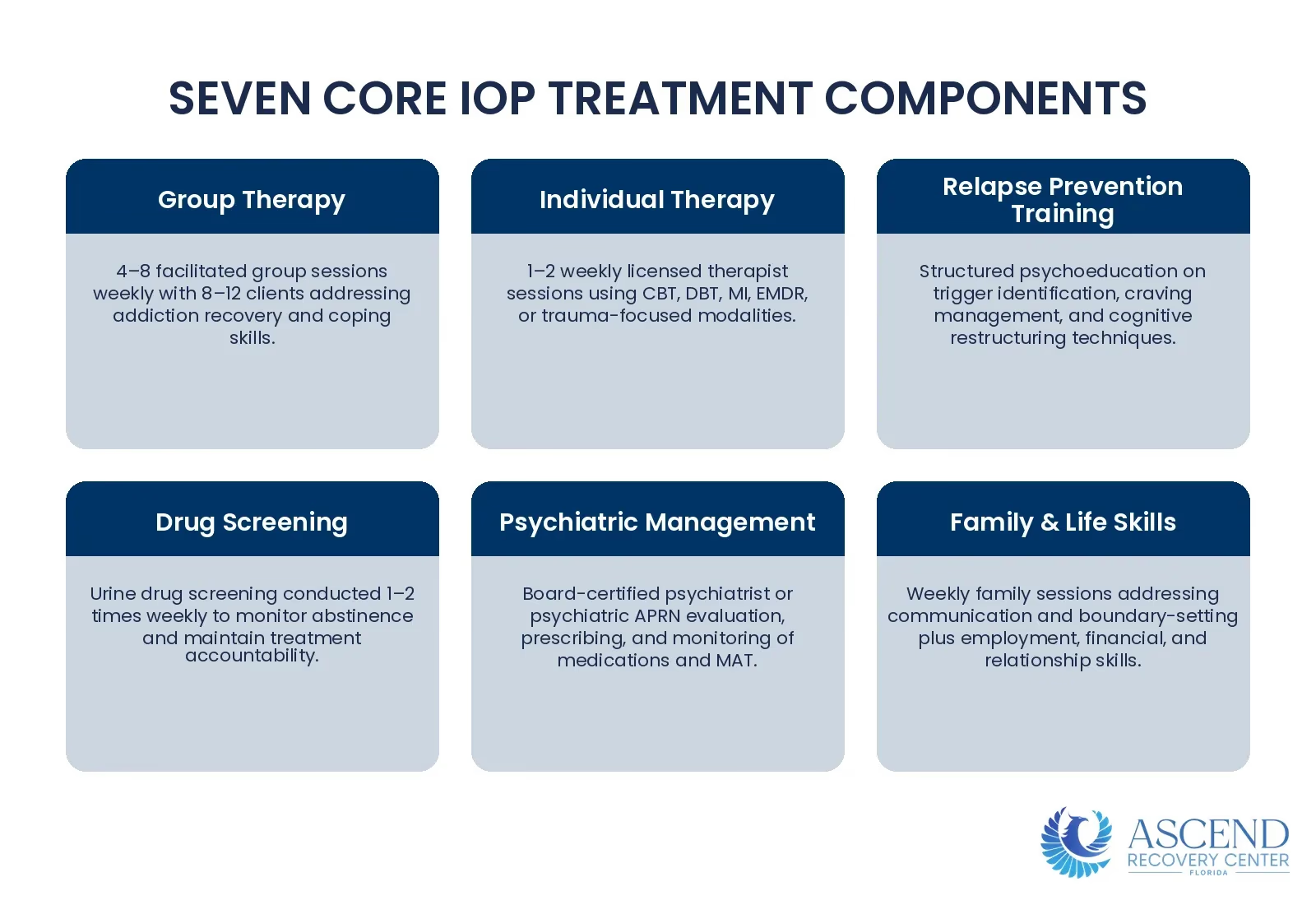
- Group therapy: 4–8 facilitated group sessions per week addressing addiction recovery, coping skills, interpersonal dynamics, and trauma processing — group size of 8–12 clients per session
- Individual therapy: 1–2 weekly sessions with a licensed therapist using CBT, DBT, MI, or trauma-focused modalities including EMDR and CPT
- Relapse prevention training: structured psychoeducation on trigger identification, craving management, high-risk situation planning, and cognitive restructuring
- Drug screening: urine drug screening (UDS) conducted 1–2 times per week; Florida AHCA mandates random drug testing in licensed IOP programs to maintain accountability and monitor abstinence
- Psychiatric medication management: evaluation, prescribing, and monitoring by a board-certified psychiatrist or psychiatric APRN for co-occurring mental health disorders and medication-assisted treatment (MAT)
- Family therapy: weekly or biweekly sessions involving family members in the recovery process, addressing communication, codependency, and boundary-setting
- Life skills development: structured programming on employment readiness, financial management, time management, and healthy relationship building
ASAM-certified IOP programs integrate all 7 components into a structured schedule designed around each client's individualized treatment plan. The ASAM Criteria assessment determines who qualifies for this level of programming.
IOP Program Components
CBT, DBT, MI, EMDR, CPT modalities
8-12 clients per facilitated session
Medication evaluation and monitoring
Randomized urine drug screens — Florida AHCA mandates random testing
Communication, codependency, boundaries
Housing, employment, legal coordination
FL DCF LicensedFARR CertifiedWho Qualifies for an Intensive Outpatient Program?
Individuals with moderate substance use severity, stable medical status, safe housing, and sufficient motivation for outpatient-level treatment qualify for IOP at ASAM Level 2.1. The ASAM Criteria evaluates 6 dimensions to determine IOP eligibility. The following are the 3 primary client profiles appropriate for IOP:
- Step-down from PHP or residential: clients who completed 4–6 weeks of PHP (ASAM Level 2.5) or residential treatment and demonstrate clinical readiness for reduced intensity — the client maintains sobriety, attends all programming, and demonstrates effective coping skill use in daily life
- Direct entry: clients assessed at ASAM Level 2.1 who present with moderate substance use severity, no active withdrawal risk, stable psychiatric symptoms, and a substance-free living environment
- Step-up from standard outpatient: clients in Level 1.0 treatment who experience increased substance use, psychiatric destabilization, or insufficient progress at the lower intensity level
Clients who require medical detoxification, 24-hour psychiatric monitoring, or lack stable housing do not qualify for IOP and require placement at a higher ASAM level. ASAM-certified programs conduct an ASAM Criteria assessment for every client prior to IOP admission to confirm clinical appropriateness. to confirm benefits for IOP at a licensed facility. The same admission assessment establishes how long IOP lasts for each client.
IOP at ASAM Level 2.1 delivers 9–19 hours of structured clinical treatment per week while preserving the client's connection to work, family, and community — the 3 environments where sustained recovery is built.
Does Your Insurance Cover Drug Rehab Education?
Free, confidential verification in under 15 minutes.
How Long Does IOP Last?
IOP lasts 6–12 weeks for the majority of clients, with a NIDA-recommended minimum of 90 days of total treatment engagement across all levels of care. The clinical team adjusts IOP duration every 30 days based on ASAM Criteria reassessment. The following are the 5 factors that determine IOP duration:
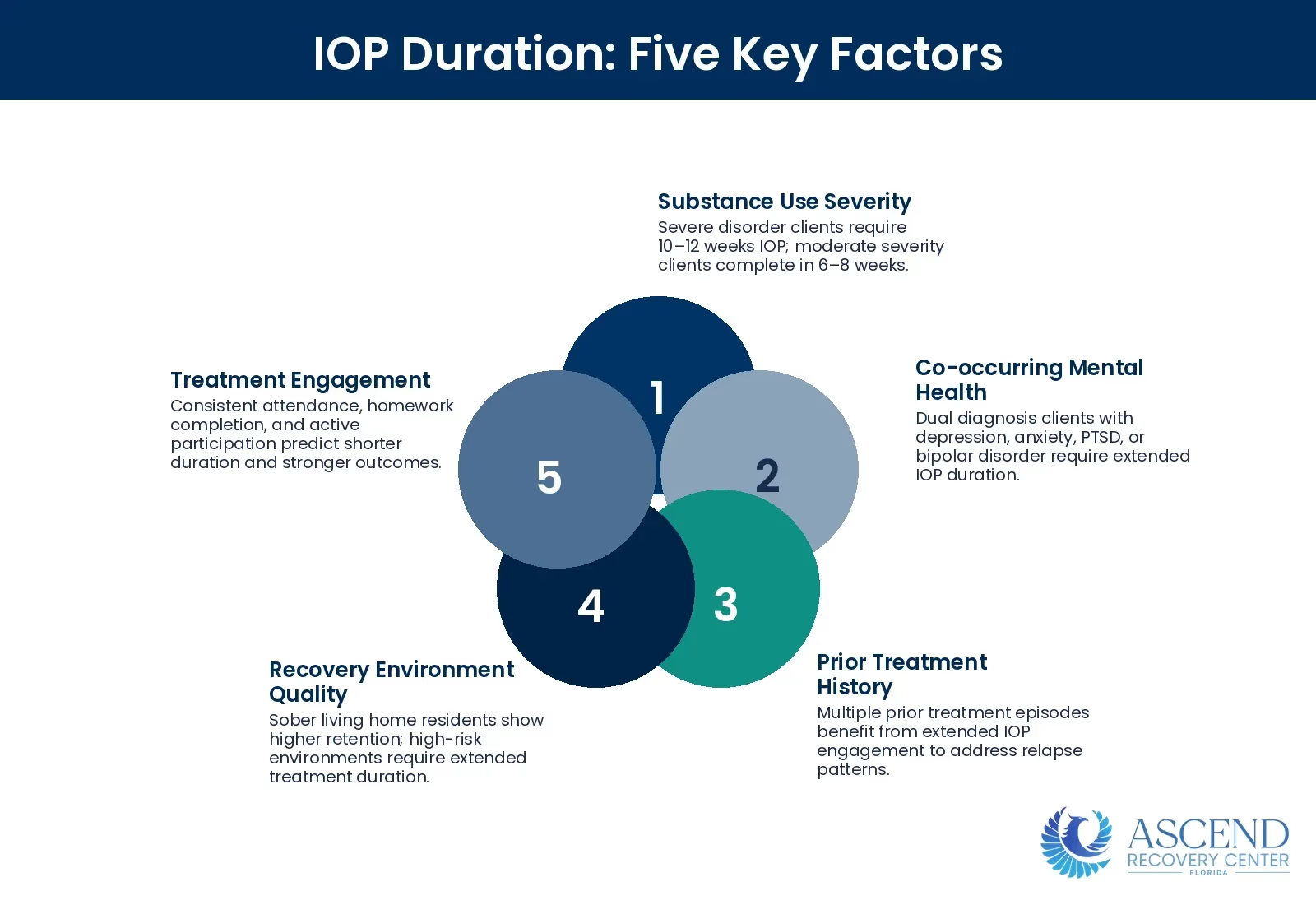
- Substance use severity: clients with severe substance use disorders require 10–12 weeks of IOP; clients with moderate severity complete IOP in 6–8 weeks
- Co-occurring mental health diagnoses: dual diagnosis clients — substance use disorder plus depression, anxiety, PTSD, or bipolar disorder — require extended IOP duration for psychiatric stabilization
- Prior treatment history: clients with multiple prior treatment episodes benefit from extended IOP engagement to address relapse patterns and reinforce behavioral skills
- Recovery environment quality: clients in FARR-certified sober living homes in Florida demonstrate higher treatment retention and complete IOP at standard timeframes; clients in high-risk environments require extended treatment duration
- Treatment engagement: consistent attendance, homework completion, and active participation in group and individual therapy predict shorter IOP duration and stronger long-term outcomes
Whatever the total duration, each week of IOP follows a predictable schedule of group, individual, family, and psychoeducation sessions.
What Determines IOP Duration?
- 1Substance Severity Assessment
Severe substance use disorders require 10–12 weeks; moderate severity clients complete IOP in 6–8 weeks
- 2Dual Diagnosis Review
Co-occurring depression, anxiety, PTSD, or bipolar disorder extends IOP duration for concurrent psychiatric stabilization
- 3Treatment Engagement Evaluation
30-day ASAM reassessment — consistent attendance and active participation predict standard IOP timeframes
- 4Recovery Environment Check
FARR-certified sober living home placement improves retention and step-down timing vs. high-risk environments
FL DCF LicensedFARR CertifiedWhat Is a Typical IOP Schedule?
IOP operates in 2 scheduling tracks — morning and afternoon — to accommodate clients' employment, education, and family responsibilities. Each track delivers the same clinical curriculum and therapeutic modalities. The following are the 2 standard IOP scheduling tracks:
- Morning track: 9:00 AM–12:00 PM, Monday through Friday (15 hours per week)
- Afternoon track: 1:00 PM–4:00 PM, Monday through Friday (15 hours per week)
Clients attend 3–5 days per week based on the clinical team's assessment of treatment needs. A standard IOP week includes 4 group therapy sessions, 1 individual therapy session, 1 psychoeducation session, and 1 family therapy session (weekly or biweekly). Urine drug screening occurs 1–2 times per week on a randomized schedule, consistent with Florida AHCA standards. Psychiatric medication management appointments are scheduled individually with the psychiatric provider based on clinical need.
Clients who require scheduling adjustments due to employment or childcare obligations discuss alternative arrangements with the clinical team during the admissions process. This schedule density — 12–15 structured clinical hours per week — is the mechanism behind IOP's documented evidence base.
IOP Weekly Schedule
4 sessions/week, 1.5-2 hrs each
1 session/week, 60 min
1 session/week, 90 min
Weekly or biweekly, 60-90 min
FL DCF LicensedFARR CertifiedWhat Is the Evidence Base for IOP?
NIDA research shows IOP produces comparable outcomes to residential treatment for persons with substance use disorder who meet ASAM Criteria for outpatient placement, when stable housing is available. NIDA identifies treatment duration — not treatment setting — as the strongest predictor of long-term recovery outcomes. The following are the 4 key research findings that support IOP effectiveness:
- Comparable outcomes to residential: a Cochrane Systematic Review (McCarty et al., 2014) found no statistically significant difference in substance use outcomes between outpatient and residential treatment at 12-month follow-up for clients appropriately matched by ASAM Criteria
- Treatment completion rates: nationally, 60–65% of individuals in IOP complete a full course of treatment (SAMHSA), compared to lower residential completion rates attributed to higher treatment burden
- 90-day threshold: NIDA documents that 90 or more days of continuous treatment engagement produces the greatest reduction in substance use and relapse probability, regardless of treatment setting
- Cost-effectiveness: IOP delivers clinical outcomes comparable to residential treatment at 40–60% lower cost, increasing access for individuals whose insurance covers outpatient but not residential levels of care
ASAM-certified IOP programs track client outcomes including treatment completion rates, 30/60/90-day sobriety milestones, and post-discharge engagement in continuing care programming. Outcomes strengthen further when IOP treats co-occurring mental health disorders through integrated dual diagnosis care.
Integrated dual diagnosis treatment within IOP eliminates the treatment gap where substance use and mental health disorders are addressed by separate providers who do not coordinate care — a gap that SAMHSA identifies as a primary driver of treatment failure.
How Does IOP Address Dual Diagnosis?
IOP addresses dual diagnosis through integrated treatment — simultaneous treatment of the substance use disorder and the co-occurring mental health disorder by the same clinical team within the same program. SAMHSA documents that 9.2 million adults in the United States have co-occurring substance use and mental health disorders (SAMHSA NSDUH, 2022). The following are the 4 clinical elements of integrated dual diagnosis treatment in IOP:
- Comprehensive psychiatric evaluation: a board-certified psychiatrist or psychiatric APRN conducts a full diagnostic assessment at admission, identifying co-occurring conditions — major depressive disorder, generalized anxiety disorder, PTSD, bipolar disorder, ADHD, and personality disorders
- Medication management: psychotropic medications — SSRIs, SNRIs, mood stabilizers, antipsychotics — are prescribed and monitored alongside MAT medications, with coordinated dose adjustments
- Trauma-focused therapy: evidence-based trauma modalities — EMDR (eye movement desensitization and reprocessing) and CPT (cognitive processing therapy) — address PTSD and complex trauma that co-occur with substance use disorders in 40–60% of treatment-seeking individuals
- Integrated group programming: dual diagnosis-specific groups address the interaction between mental health symptoms and substance use patterns, teaching clients to manage both conditions simultaneously rather than sequentially
ASAM-certified IOP programs provide integrated dual diagnosis treatment; the clinical team coordinates psychiatric and addiction services to prevent the fragmented care that results when mental health and substance use disorders are treated by separate providers who do not communicate. Federal parity law requires insurers to cover this integrated IOP treatment on the same terms as medical benefits.
Does Insurance Cover IOP?
Most PPO insurance plans cover IOP under the Mental Health Parity and Addiction Equity Act (MHPAEA, 2008), which requires commercial insurance plans that cover behavioral health to apply no greater restrictions to substance use disorder treatment than to medical and surgical benefits. Florida Medicaid covers IOP under the Statewide Medicaid Managed Care (SMMC) behavioral health carve-out. The following are the 4 factors that determine insurance coverage amounts for IOP:
- Plan type: PPO plans provide broader provider access and higher out-of-network benefits than HMO or EPO plans
- Network status: in-network providers result in lower copays, coinsurance, and deductible application compared to out-of-network providers
- Prior authorization: many insurance plans require prior authorization for IOP; the treatment provider submits clinical documentation to the insurance company to obtain approval before treatment begins
- Utilization review: insurance companies conduct concurrent utilization reviews every 7–14 days during IOP to determine continued medical necessity based on ASAM Criteria progress
Insurers reimburse IOP under HCPCS billing code H0015 on a per diem basis, and the Consolidated Appropriations Act of 2021 requires insurers to document that prior authorization rules for SUD treatment are no more restrictive than those for comparable medical care. Major commercial carriers including Aetna, Cigna, Blue Cross Blue Shield, United Healthcare, and Humana cover IOP for SUD. to confirm benefits, copay, coinsurance, deductible, and authorization requirements at a licensed IOP program.
Is IOP only for mild cases?
Common Misconception
"IOP is for people who aren't that serious — real problems need inpatient."
What the Evidence Shows
Intensive outpatient (ASAM Level 2.1) serves moderate-to-severe presentations effectively when the home environment is stable and the client has adequate support. Level of care is matched to clinical need, not severity alone — outcomes at the appropriate level are comparable to more restrictive settings, and IOP's advantage is that clients practice recovery skills in their real environment while staying engaged with work and family.
The ASAM Criteria, 3rd Edition; SAMHSA outpatient treatment outcomes.
What Level of Care Do I Need?
Answer 8 questions about the current situation. A clinical assessment determines the final recommendation.
How would you describe current substance use frequency?
Confidential · Not a clinical diagnosis · Your answers stay in your browser


