


Referenced in this article
Key Takeaways
- Opioid use disorder killed over 81,000 Americans in 2023 — the majority from illicit fentanyl — yet fewer than 20% of the 6.1 million Americans with OUD receive any treatment, despite FDA-approved medications that reduce overdose mortality by 50–70%.
- Medication for opioid use disorder (MOUD) — buprenorphine, methadone, or naltrexone — is the evidence-based standard of care endorsed by SAMHSA, ASAM, NIDA, and the CDC; MOUD combined with intensive behavioral therapy in PHP or IOP represents the gold standard for outpatient OUD treatment.
- Physical dependence on opioids (tolerance and withdrawal in a patient taking prescribed medication) is not the same as opioid use disorder, which requires the behavioral criteria of loss of control, compulsive use, and continued use despite consequences — a distinction with direct clinical implications for treatment planning.
- The opioid supply in Florida is now predominantly contaminated with illicit fentanyl — individuals purchasing any street opioid, including counterfeit pills, face substantial risk of a lethal fentanyl dose regardless of what they believe they are taking; naloxone (Narcan) should be accessible to anyone at risk.
- Long-term MOUD is the clinical recommendation for most individuals with moderate-to-severe OUD — overdose mortality among people on MOUD is 5–8 times lower than in untreated OUD, and the decision to remain on MOUD indefinitely is a life-saving medical choice, not evidence of incomplete recovery.
What Is Opioid Use Disorder (OUD)?
Opioid use disorder is a chronic, relapsing-remitting brain disorder defined by the DSM-5 as the presence of at least 2 of 11 specific criteria within a 12-month period — criteria that collectively capture the hallmarks of addiction: loss of control, compulsive use despite consequences, and persistent craving. The word "opioid" encompasses a broad pharmacological class including natural opioids (morphine, codeine), semi-synthetic opioids (oxycodone, hydrocodone, heroin), and fully synthetic opioids (fentanyl, tramadol, methadone when misused). All act on mu-opioid receptors in the brain and body, producing analgesia, euphoria, and — with repeated use — physical dependence and, in individuals with OUD, addiction.
A critical clinical distinction underpins effective treatment planning: physical dependence is not the same as opioid use disorder. A patient who takes prescribed opioids for chronic pain may develop physical dependence — tolerance and withdrawal symptoms upon cessation — without any of the behavioral components that define OUD. OUD requires the loss-of-control and consequence-despite-use behavioral criteria. This distinction matters because it determines who needs MOUD for addiction versus who may need a medically supervised taper for dependence management — two different clinical problems with different treatment pathways.
The opioid crisis in Florida is not historical — it is ongoing. Fentanyl now contaminates the majority of the illicit drug supply in Florida, including pills pressed to resemble prescription opioids, meaning that anyone purchasing opioids on the street risks receiving a potentially lethal dose of synthetic fentanyl regardless of what they believe they are taking. Palm Beach County has been an epicenter of the opioid crisis since the pill mill era of the mid-2000s, and the county continues to experience among the highest per-capita opioid overdose rates in Florida. Effective, accessible treatment — provided without stigma and grounded in evidence — is the direct clinical response to this ongoing public health emergency.

The Opioid Crisis: By the Numbers (2023)
CDC provisional data; synthetic opioids (primarily illicit fentanyl) account for approximately 73% of all opioid-involved overdose deaths
SAMHSA NSDUH 2022; includes prescription opioid misuse, heroin, and illicit fentanyl use disorder
Only 1 in 5 Americans with OUD receives any treatment; MOUD (buprenorphine, methadone, naltrexone) reaches even fewer — approximately 11%
Buprenorphine and methadone maintenance reduce opioid-related overdose mortality by 50–70% compared to untreated OUD

 FL DCF LicensedFARR Certified
What Are the Signs of Opioid Addiction?
Opioid addiction is diagnosed using the DSM-5 criteria for opioid use disorder — at least 2 of the following 11 criteria within the same 12-month period, with severity classified as mild (2–3 criteria), moderate (4–5), or severe (6+). Recognizing these signs — in yourself or someone you care about — is the first step toward getting the appropriate level of help:
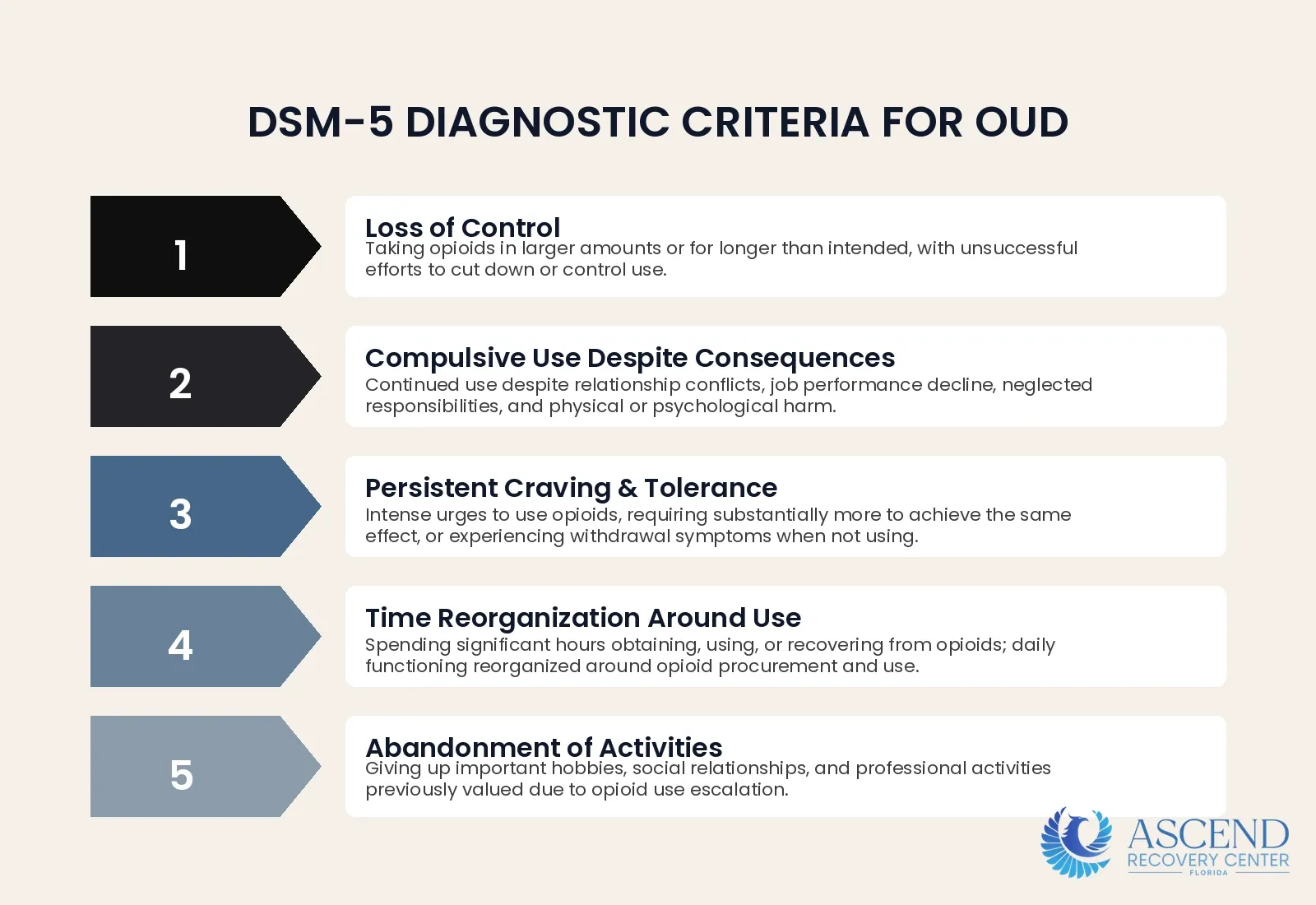
- Taking opioids in larger amounts or for longer than intended — starting a prescription at a therapeutic dose and finding that the amount needed escalates, or using for longer than the clinical scenario warrants
- Persistent desire or unsuccessful efforts to cut down or control opioid use — repeated attempts to stop or reduce, followed by return to prior use levels
- Spending significant time obtaining, using, or recovering from opioids — hours each day dedicated to procurement, use, and recovery from effects; daily functioning is reorganized around opioid use
- Craving — an intense urge or desire to use opioids, particularly in contexts previously associated with use
- Failure to fulfill major role obligations — job performance decline, missed work, neglected parenting responsibilities, academic failure
- Continued use despite social or interpersonal problems caused or worsened by opioids — relationship conflicts about use that do not lead to cessation
- Giving up important activities — abandoning hobbies, social relationships, or professional activities that were previously important
- Using in hazardous situations — driving while impaired, using in occupational settings where impairment creates safety risk
- Continuing use despite physical or psychological harm — using despite an opioid-related medical condition, worsening depression or anxiety, or direct clinical advice to stop
- Tolerance — requiring substantially more opioids to achieve the same effect, or noticeably diminished effect with the same dose
- Withdrawal — experiencing opioid withdrawal symptoms when not using, or using opioids to prevent withdrawal
Behavioral signs of opioid addiction — beyond the DSM-5 criteria — include "prescription shopping" (visiting multiple prescribers to obtain opioids), purchasing opioids illicitly, concealing use from family members or employers, progressive financial problems related to drug costs, and withdrawal from previously enjoyed social activities.
Physical signs during active opioid use include pinpoint (miotic) pupils, drowsiness and "nodding" (sedated head-drooping), slowed or shallow breathing (respiratory depression), constipation, itching, and — in individuals who inject — track marks or venous scarring at injection sites. Physical signs progress with dose escalation and can include significant weight loss and pronounced functional decline.
Overdose recognition is life-saving knowledge. Signs of opioid overdose include unresponsiveness to stimulation, cyanosis (blue lips, fingernails, or skin), extremely slow, shallow, or absent breathing, and gurgling or snoring sounds. If you observe these signs, administer naloxone (Narcan) immediately if available, call 911, and do not leave the person alone. Florida's Good Samaritan Law provides immunity from prosecution for individuals who call 911 to report an overdose.
Confidential same-day clinical assessments are available at DCF-licensed PHP and IOP programs. or visit the to begin.
What Are All the Types of Opioids That Cause Addiction?
The opioid class includes dozens of compounds across three chemical categories — natural, semi-synthetic, and synthetic — each with different potency, onset, duration, and overdose risk profiles, but all sharing the common mechanism of mu-opioid receptor agonism that drives addiction and respiratory depression in overdose. Understanding the opioid landscape matters for treatment, because the type of opioid used affects withdrawal timing, MOUD dosing considerations, and overdose risk from relapse.
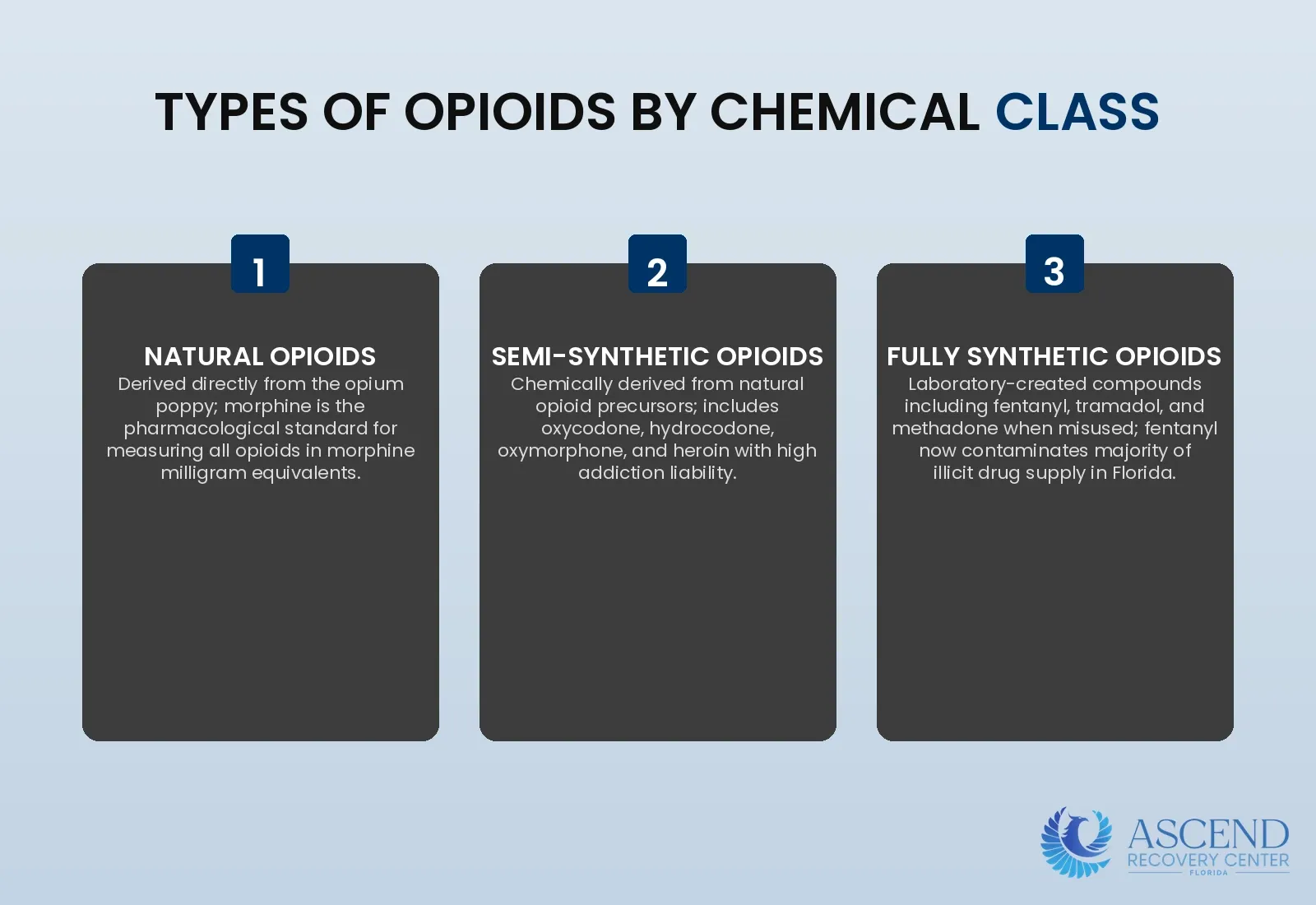
Natural opioids are derived directly from the opium poppy (Papaver somniferum). Morphine is the prototypical natural opioid — the pharmacological standard against which all other opioids are measured in morphine milligram equivalents (MME). Codeine, also a natural opioid, is found in cough preparations and combination analgesics and is often the first opioid encountered in misuse, despite a relatively low addiction liability compared to more potent opioids.
Semi-synthetic opioids are chemically derived from natural opioid precursors. Oxycodone (Percocet, OxyContin), hydrocodone (Vicodin), oxymorphone, and heroin fall into this category. Oxycodone and hydrocodone drove the first wave of the opioid crisis — the aggressive prescribing of extended-release oxycodone formulations in the late 1990s and 2000s, combined with misleading pharmaceutical marketing minimizing addiction risk, seeded widespread opioid use disorder across the United States. Heroin, also semi-synthetic, is now rarely a "pure" substance in the U.S. market — laboratory testing consistently identifies fentanyl or fentanyl analogues in samples sold as heroin, dramatically elevating the overdose risk for individuals who believe they are using a substance they are tolerant to.
Synthetic opioids are fully lab-synthesized and represent the most potent and most clinically dangerous category. Fentanyl, 50–100 times more potent than morphine by weight, exists in both pharmaceutical (Duragesic patches, Sublimaze) and illicit forms. Illicit fentanyl — pressed into counterfeit pills that visually resemble Xanax, Percocet, or other medications — is responsible for the third wave of the opioid crisis and accounts for approximately 73% of all opioid overdose deaths in 2023. Tramadol, an atypical synthetic opioid with additional serotonin and norepinephrine reuptake inhibiting properties, has a historically underestimated addiction and overdose risk — including seizure risk in overdose that is not seen with pure opioid agonists.
The three waves of the opioid crisis reflect the evolution of the opioid supply: prescription opioid overdose deaths peaked around 2011; heroin deaths rose from 2010 to 2016 as prescribing declined and individuals with OUD transitioned to a cheaper, more accessible illicit supply; synthetic opioid deaths began rising in 2013 and continue accelerating in 2023, with illicit fentanyl now the dominant driver of overdose mortality. Each wave shaped a different population of people with OUD — and effective treatment must meet each of them where they are, without requiring a single defined "pathway" into opioid use disorder as a prerequisite for compassionate, evidence-based care.
Opioid Types by Potency and Overdose Risk
Atypical opioid with serotonin/norepinephrine reuptake inhibition; 0.1 MME but seizure risk in overdose; historically under-appreciated addiction and OD risk
Weakest common opioid (0.15 MME); found in cough syrups and some combination analgesics; addiction risk lower but real; often a first opioid of misuse
1 MME (equivalent to morphine); primary prescription opioids driving the first wave of the opioid crisis; Vicodin, Percocet, OxyContin
2 MME; rapid onset, short duration; illicit only; rapidly contaminated with fentanyl in current U.S. drug supply — most users unknowingly using fentanyl-adulterated heroin
50–100× more potent than morphine; licit (cancer pain patches, surgical analgesia) and illicit; illicit fentanyl pressed into counterfeit pills drives the current overdose crisis
FL DCF LicensedFARR Certified“Medications for opioid use disorder save lives. Withholding or restricting these medications in the name of 'true abstinence' is not evidence-based medicine — it is ideology that kills people. Buprenorphine and methadone reduce opioid overdose mortality by 50–70%. That is the number that matters.”
What Is the Evidence-Based Treatment for Opioid Use Disorder?
Medication for opioid use disorder (MOUD) — specifically buprenorphine, methadone, and naltrexone — is the evidence-based standard of care for opioid use disorder, endorsed by SAMHSA, ASAM, NIDA, the CDC, and the U.S. Surgeon General as first-line treatment for moderate to severe OUD. The evidence for MOUD is among the strongest in all of addiction medicine: randomized controlled trials, systematic reviews, and real-world outcome data consistently show that MOUD reduces overdose mortality by 50–70%, improves treatment retention, reduces illicit opioid use, and decreases the social and criminal consequences of untreated OUD.
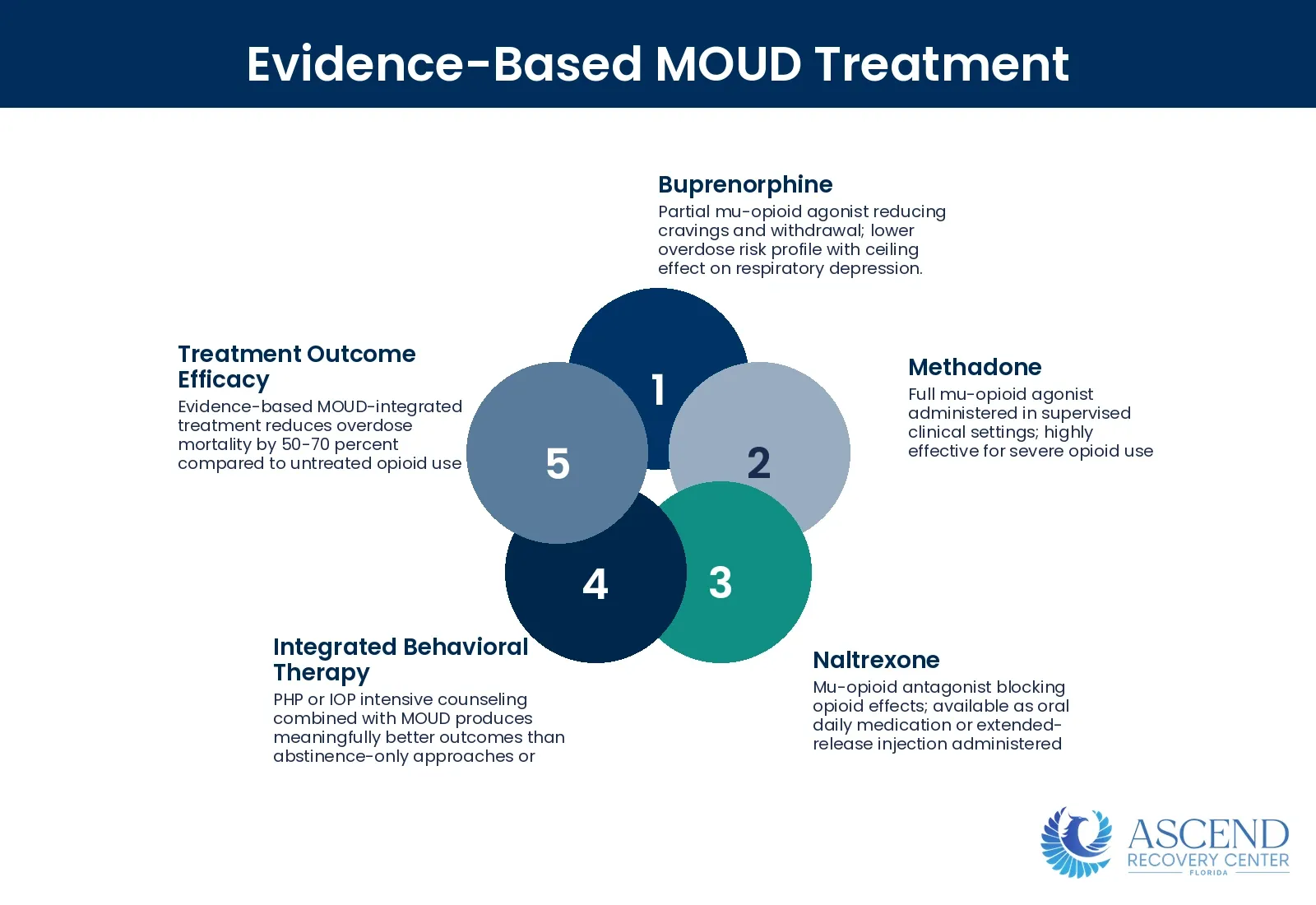
Buprenorphine is a partial opioid agonist — it activates the mu-opioid receptor, eliminating withdrawal and craving, but with a ceiling effect that reduces overdose risk compared to full agonists. It is prescribed in office-based settings (since the DATA 2000 Act removed the requirement for specialized clinic dispensing), meaning any licensed prescriber can provide it in standard outpatient or PHP/IOP programming. The most common formulation is sublingual buprenorphine/naloxone (Suboxone), though extended-release injectable buprenorphine (Sublocade, monthly injection) is increasingly available and removes the daily dosing compliance requirement. Buprenorphine reduces opioid-related overdose mortality by 50–70% and significantly improves treatment retention compared to placebo or behavioral-only treatment. It is the MOUD most accessible through integrated PHP and IOP programming.
Methadone is a full opioid agonist with the highest treatment retention rates in severe OUD — particularly for individuals with long use histories, prior treatment failures, or high-dose opioid use. Because methadone for OUD is dispensed through federally licensed Opioid Treatment Programs (OTPs), it requires daily clinic attendance initially — a barrier for some but a source of structure and accountability for others. PHP and IOP programs refer individuals appropriate for methadone maintenance to licensed OTP partners.
Naltrexone (Vivitrol) is a pure opioid antagonist — it blocks all opioid effects at the receptor level and produces no opioid agonist activity. The extended-release injectable formulation (Vivitrol, monthly injection) is particularly useful for individuals who prefer full opioid blockade, work in safety-sensitive occupations, or are in settings where buprenorphine diversion is a concern. The critical requirement: naltrexone induction requires a minimum 7–14 days of opioid abstinence to prevent precipitated withdrawal. Head-to-head trials show lower retention with naltrexone compared to buprenorphine in community settings, though outcomes in highly motivated patients with supported induction are comparable.
Behavioral therapy as co-treatment with MOUD is associated with better outcomes than MOUD alone — and is required by most commercial insurance plans as a concurrent treatment condition for MOUD coverage. Cognitive-behavioral therapy (CBT), motivational interviewing, contingency management, and process groups delivered in PHP and IOP settings provide the behavioral skill-building and therapeutic support that makes MOUD most effective. The combination of MOUD plus intensive behavioral treatment at the PHP or IOP level represents the evidence-based gold standard for outpatient OUD care. Learn more about medication-assisted treatment.
A note on abstinence-only treatment approaches: programs that refuse MOUD or require individuals to discontinue MOUD as a condition of treatment — including some 12-step-only residential programs and faith-based recovery communities — have substantially worse outcomes in moderate-to-severe OUD and are associated with significantly higher post-discharge overdose mortality. This reflects both the loss of opioid tolerance during treatment and the absence of the mortality-reducing pharmacological protection of MOUD. Evidence-based MOUD-affirming programs do not require discontinuation of clinically indicated medications as a condition of participation.
FL DCF LicensedFARR Certified
Ascend Recovery Center — Palm Beach Gardens, FL
Does Your Insurance Cover Drug Rehab Education?
Free, confidential verification in under 15 minutes.
What Does Opioid Withdrawal Treatment Look Like?
Opioid withdrawal is medically significant — while rarely directly fatal in otherwise healthy adults, the severity of opioid withdrawal drives the majority of early treatment dropout and is the primary cause of relapse during the acute cessation period, making clinical management of withdrawal the critical first step in opioid addiction treatment.
The COWS (Clinical Opioid Withdrawal Scale) is the clinical instrument used to quantify opioid withdrawal severity: an 11-item assessment scoring items including resting pulse rate, sweating, restlessness, pupil size, bone or joint aches, runny nose, GI symptoms, tremor, yawning, anxiety, and gooseflesh. Scores are interpreted as: less than 5 — no significant withdrawal; 5–12 — mild withdrawal; 13–24 — moderate withdrawal; 25–36 — moderately severe withdrawal; greater than 36 — severe withdrawal. Buprenorphine induction is initiated when the COWS score reaches 8 or higher — initiating buprenorphine before sufficient withdrawal onset risks precipitated withdrawal, an abrupt and severe worsening of withdrawal symptoms caused by buprenorphine displacing full agonist opioids from the receptor at a higher affinity.
The timeline of opioid withdrawal varies by opioid type and half-life. Short-acting opioid withdrawal (heroin, oxycodone, hydrocodone) typically begins 8–24 hours after last use, peaks at 36–72 hours with flu-like symptoms (muscle aches, nausea, vomiting, diarrhea, insomnia, anxiety, diaphoresis, dilated pupils), and largely resolves within 5–7 days without MOUD. Long-acting opioid withdrawal (methadone misuse) has a delayed onset — symptoms may not begin for 36–48 hours — and can persist for 2–3 weeks. Fentanyl withdrawal, despite fentanyl's long tissue half-life, tends to have a faster onset than heroin due to the speed of receptor clearance when fentanyl is no longer being actively dosed. Acute withdrawal in all forms is dramatically shortened and blunted by buprenorphine induction.
Post-acute withdrawal symptoms (PAWS) — including insomnia, anxiety, dysphoria, and episodic cravings — can persist for weeks to months following the acute withdrawal phase in individuals with longer opioid use histories. MOUD effectively suppresses these post-acute symptoms, which is one of the clinical rationales for extended (often indefinite) MOUD rather than time-limited detox-and-stop approaches. For more detail on the full opioid withdrawal timeline, see our dedicated opioid detox timeline guide. If you need help accessing detox before PHP or IOP admission, detox placement coordination is available through ASAM-certified admissions teams.
Opioid Withdrawal and MOUD Treatment Timeline
- 1Assessment (Day 1)
ASAM Criteria evaluation across 6 dimensions; COWS (Clinical Opioid Withdrawal Scale) scoring to quantify withdrawal severity; determination of opioid type, dose, and duration of use; comprehensive medical and psychiatric assessment to identify co-occurring conditions requiring concurrent treatment.
- 2MOUD Induction (Day 1–3)
Buprenorphine first dose when COWS score reaches ≥8 (mild withdrawal) to prevent precipitated withdrawal; dose titration to 16–24mg/day over 3–5 days. Alternatively, naltrexone induction can begin after a minimum 7–14 days of confirmed opioid abstinence for patients choosing that pathway.
- 3Stabilization (Week 1–2)
Dose optimization to eliminate withdrawal symptoms and cravings; acute withdrawal resolves; initiation of PHP or IOP programming; concurrent behavioral therapy begins. Medical monitoring continues for any co-occurring withdrawal syndromes (alcohol, benzodiazepines) requiring additional management.
- 4Early Recovery — PHP (Weeks 2–8)
Daily PHP programming (25–35 hrs/week, Monday–Friday); MOUD continuation with prescriber monitoring; CBT, process groups, psychiatric services, family therapy; relapse prevention skill building; urine drug screens to monitor progress and identify any relapse for immediate clinical response.
- 5Strengthening — IOP (Weeks 8–16)
Step-down to IOP (9–15 hrs/week) as stabilization is achieved; occupational and social reintegration with clinical support; ongoing MOUD management; individual and group therapy continuation; sober living transition planning for individuals without a safe home environment.
- 6Continuing Care (Months 4+)
Regular outpatient prescriber visits for MOUD continuation — ASAM recommends indefinite MOUD for most individuals with OUD; monthly therapy; alumni peer support programming; peer recovery coach connection; community recovery support (NA, SMART Recovery, medication-friendly recovery communities).
FL DCF LicensedFARR Certified“Retention in opioid agonist treatment — buprenorphine or methadone — is associated with substantial reductions in all-cause mortality, criminal behavior, and illicit opioid use. The evidence base is among the strongest in all of addiction pharmacotherapy.”
What Level of Care Is Appropriate for Opioid Addiction Treatment?
Level-of-care placement for opioid use disorder treatment is determined by ASAM Criteria assessment across 6 clinical dimensions — and the majority of individuals with OUD who are medically stable are best served by PHP (ASAM Level 2.5) or IOP (ASAM Level 2.1), which provide sufficient clinical intensity for MOUD initiation and behavioral treatment without the costs and disruption of residential care.
The 6 ASAM Dimensions evaluated at intake:
- Dimension 1 — Acute Intoxication and Withdrawal Potential: the most proximate factor in initial placement; active severe opioid withdrawal, polysubstance withdrawal with seizure risk (alcohol, benzodiazepines), or significant medical instability from withdrawal complications may require inpatient medically managed detox before outpatient programming; most individuals with uncomplicated opioid withdrawal can safely begin buprenorphine induction in a PHP or IOP setting
- Dimension 2 — Biomedical Conditions and Complications: opioid-related medical complications (endocarditis, wound infections, hepatitis C, HIV in people who inject drugs) that require concurrent medical management may influence placement toward higher-level care; stable chronic medical conditions are managed concurrently with outpatient OUD treatment
- Dimension 3 — Emotional, Behavioral, and Cognitive Conditions: co-occurring psychiatric disorders (major depression, PTSD, bipolar disorder, anxiety disorders) are extremely common in OUD — 50–70% prevalence — and require concurrent psychiatric treatment; active suicidal ideation with plan or intent may require brief psychiatric hospitalization before PHP admission
- Dimension 4 — Readiness to Change: individuals in precontemplation or ambivalence benefit from motivational interviewing-intensive programming; PHP's daily contact provides maximum motivational engagement; lower-readiness OUD is not a contraindication for PHP but informs the therapeutic approach
- Dimension 5 — Relapse, Continued Use, or Continued Problem Potential: high relapse risk (multiple prior treatment episodes, strong environmental triggers, active opioid cravings) supports PHP over IOP initially; prior overdose history markedly elevates risk and supports the highest appropriate outpatient level of care
- Dimension 6 — Recovery/Living Environment: unstable housing, active use in the home, or high-availability drug environments support PHP with concurrent transition planning to FARR-certified sober living homes
Medically managed intensive inpatient (ASAM Level 4) is rarely required for OUD in isolation — it is indicated for severe medical or psychiatric instability that cannot be managed in less restrictive settings.
Medically managed detox (ASAM Level 3.7) is appropriate for high-dose or polysubstance opioid withdrawal, prior seizure history, or clinical presentations where outpatient buprenorphine induction is not feasible; typically 3–7 days with transition directly to PHP. Detox placement coordination is available for individuals who need detox before stepping into outpatient programming.
PHP (ASAM Level 2.5) — Partial Hospitalization Program — provides MOUD induction and management, daily group and individual therapy, psychiatric services, and case management at 25–35 hours per week, Monday through Friday.
IOP (ASAM Level 2.1) — Intensive Outpatient Program — serves as either a step-down from PHP after stabilization or as a primary level of care for lower-acuity OUD with a stable home environment; 9–15 hours per week with continued MOUD management, group therapy, and prescriber monitoring.
ASAM Criteria assessments and same-day admissions are available at DCF-licensed PHP and IOP programs. to begin level-of-care determination.
What Is Recovery from Opioid Addiction Like Long-Term?
Recovery from opioid use disorder is a long-term process — OUD is a chronic, relapsing-remitting condition comparable in its disease trajectory to type 2 diabetes or hypertension — and the clinical goal is not short-term abstinence from both opioids and medication, but sustained functional recovery and reduced risk of the catastrophic consequence of untreated OUD: overdose death.
Long-term MOUD is the clinical recommendation of ASAM and SAMHSA for the majority of individuals with moderate-to-severe OUD. There is no evidence-based timeframe after which MOUD should be discontinued in someone who is stable and benefiting from it — just as there is no defined endpoint for antihypertensive treatment in a patient whose blood pressure is well-controlled. The decision to taper MOUD should always be patient-initiated, developed collaboratively with the prescribing clinician, and implemented gradually with close monitoring for return of cravings or use. The most dangerous moment in MOUD treatment is premature discontinuation — opioid tolerance returns to zero within days of stopping buprenorphine or methadone, meaning a person who relapses has dramatically elevated overdose risk from a previously tolerated dose.
Long-term recovery outcomes with MOUD plus behavioral treatment are meaningfully positive. Five-year follow-up studies show that 40–60% of individuals with OUD achieve sustained remission with MOUD-integrated treatment — compared to typically less than 15% sustained 5-year remission in untreated OUD. These numbers are not causes for pessimism about OUD treatment efficacy; they are causes for sustained clinical engagement. The majority of people who achieve long-term remission do so after multiple treatment episodes — the trajectory of OUD recovery is rarely linear, and early episodes often build the insight and relapse prevention capacity that supports eventual sustained remission.
Relapse as part of recovery: NIDA defines relapse not as treatment failure but as a clinical signal that the current treatment plan needs adjustment — a change in MOUD dose, an increase in behavioral treatment intensity, or an evaluation of untreated co-occurring psychiatric conditions that are fueling use. The 40–60% of individuals with SUD who experience at least one relapse during recovery is evidence of the chronicity of the disease, not evidence of a character deficiency. The clinically critical variable is not whether relapse occurs, but the response to relapse — immediate return to treatment rather than shame-driven avoidance is the single most important determinant of long-term outcomes.
Community and peer support amplify the outcomes achieved through clinical treatment. Narcotics Anonymous (NA) provides a 12-step fellowship model; SMART Recovery offers a non-12-step, CBT-informed peer support framework; medication-friendly recovery communities are growing in visibility and are particularly important for individuals on MOUD who may encounter stigma in traditional 12-step settings. Peer recovery coaches — individuals with lived experience of OUD and recovery who provide community-based support — are an evidence-supported adjunct to clinical care. Alumni programming at evidence-based PHP and IOP programs connects graduates with ongoing peer support in recovery communities.
Overdose mortality in long-term perspective: individuals with OUD who remain on MOUD have 5–8 times lower overdose mortality than those with untreated OUD. Remaining on buprenorphine or methadone is not a sign of weakness, incomplete recovery, or "not really sober" — it is a life-saving medical decision supported by the strongest evidence in addiction medicine. Evidence-based MOUD-affirming programs work actively to counter the harmful stigma that discourages individuals from remaining on clinically indicated medications.
MOUD-integrated PHP and IOP treatment is available at DCF-licensed programs. or visit the for confidential assessment and same-day admission support.

Ascend Recovery Center — Palm Beach Gardens, FL