


Referenced in this article
Key Takeaways
- Dual diagnosis — co-occurring substance use disorder and mental health disorder — affects more than 9.2 million Americans and represents the clinical majority of individuals presenting for addiction treatment; over 50% of people with serious mental illness have a co-occurring SUD, and over 53% of people with drug use disorder have a serious mental illness.
- The self-medication hypothesis explains a primary mechanism of dual diagnosis: individuals with undiagnosed or undertreated psychiatric disorders use specific substances to manage specific psychiatric symptoms — alcohol for social anxiety, opioids for PTSD hyperarousal, stimulants for depression — creating both chemical dependence and an ongoing psychiatric disorder that drives relapse if left untreated.
- Integrated dual diagnosis treatment — addressing both the SUD and the psychiatric disorder concurrently in the same clinical program by the same team — is the evidence-based standard (SAMHSA TIP 42); sequential or parallel treatment approaches produce significantly worse outcomes than integrated care.
- Evidence-based therapies for dual diagnosis include CBT adapted for co-occurring presentations, Dialectical Behavior Therapy (DBT) for emotional dysregulation, EMDR for co-occurring PTSD-SUD, Motivational Interviewing for treatment engagement and medication adherence, and addiction psychiatry-directed medication management tailored to the specific co-occurring diagnoses.
- Most individuals with dual diagnosis do not self-identify as having a psychiatric disorder — comprehensive psychiatric assessment at admission is essential to identify, diagnose, and begin integrated treatment of co-occurring conditions that, if left unaddressed, will continue to drive relapse regardless of the quality of SUD-focused treatment.
What Is Dual Diagnosis?
Dual diagnosis — also called co-occurring disorders (COD) or comorbidity — is the simultaneous presence of a substance use disorder (SUD) and one or more mental health disorders in the same person. Dual diagnosis describes the majority of individuals presenting for addiction treatment at programs that conduct comprehensive psychiatric assessment.
The epidemiological data from SAMHSA's 2022 National Survey on Drug Use and Health is striking in its clinical implications:
- Over 50% of people with a serious mental health disorder have a co-occurring substance use disorder — meaning that a treatment program without integrated psychiatric services is categorically unable to address the clinical reality of more than half its potential population
- Over 37% of people with alcohol use disorder have at least one serious mental illness — this co-occurrence is so common that alcohol use disorder treatment without psychiatric assessment can no longer be considered adequate clinical practice
- Over 53% of people with drug use disorder have a serious mental illness — the majority, not a minority, of drug use disorder presentations involve co-occurring psychiatric pathology
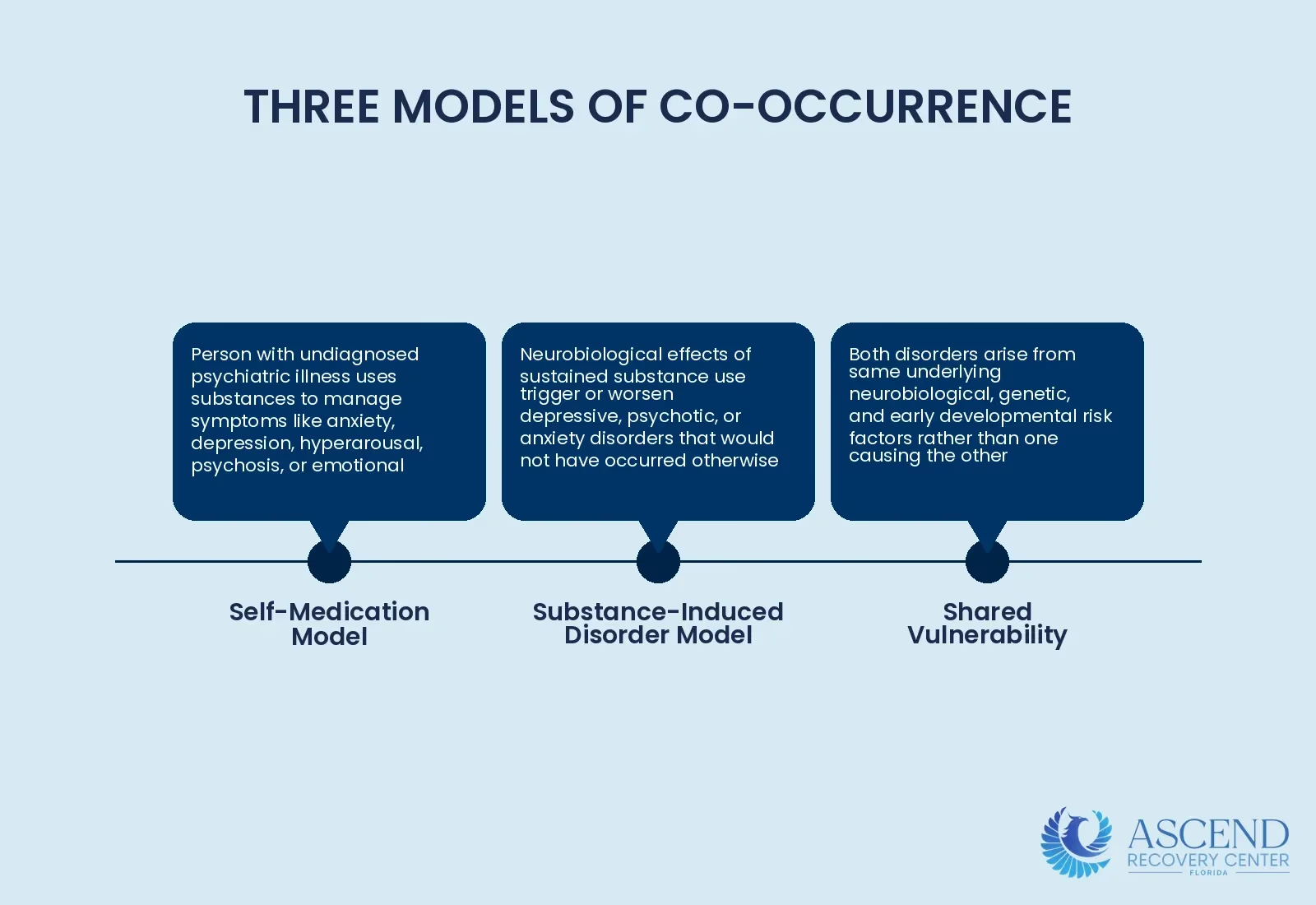
The mechanism of co-occurrence is described by three overlapping models. In the self-medication model, a person with undiagnosed or undertreated psychiatric illness uses substances to manage psychiatric symptoms they cannot otherwise control — anxiety, depression, hyperarousal, psychosis, emotional dysregulation. In the substance-induced psychiatric disorder model, the neurobiological effects of sustained substance use trigger or worsen depressive, psychotic, or anxiety disorders that would not have occurred in the absence of substance use. In the shared vulnerability model, both disorders arise from the same underlying neurobiological, genetic, and early developmental risk factors — making the temporal question of which came first clinically less important than integrated treatment that addresses both simultaneously.
Why separate treatment consistently fails: when only the SUD is treated, the unmanaged psychiatric disorder continues to drive cravings, emotional dysregulation, and relapse. When only the psychiatric disorder is treated, continued substance use undermines medication effectiveness and disrupts therapeutic progress. SAMHSA TIP 42, the federal evidence standard for dual diagnosis treatment, concludes that integrated treatment — addressing both disorders concurrently, in the same clinical setting, by the same team — produces substantially better outcomes than sequential or parallel treatment models. Integrated treatment begins by identifying which mental health conditions most commonly co-occur with substance use disorders.


 FL DCF LicensedFARR Certified
What Are the Most Common Co-Occurring Mental Health Conditions?
The most common co-occurring mental health conditions in substance use disorder populations are PTSD (roughly 50% lifetime co-occurrence), major depressive disorder (roughly 40%), anxiety disorders (roughly 36%), bipolar disorder (roughly 20%), and ADHD (roughly 20%). These conditions precede addiction onset in most cases and drive relapse when left untreated.
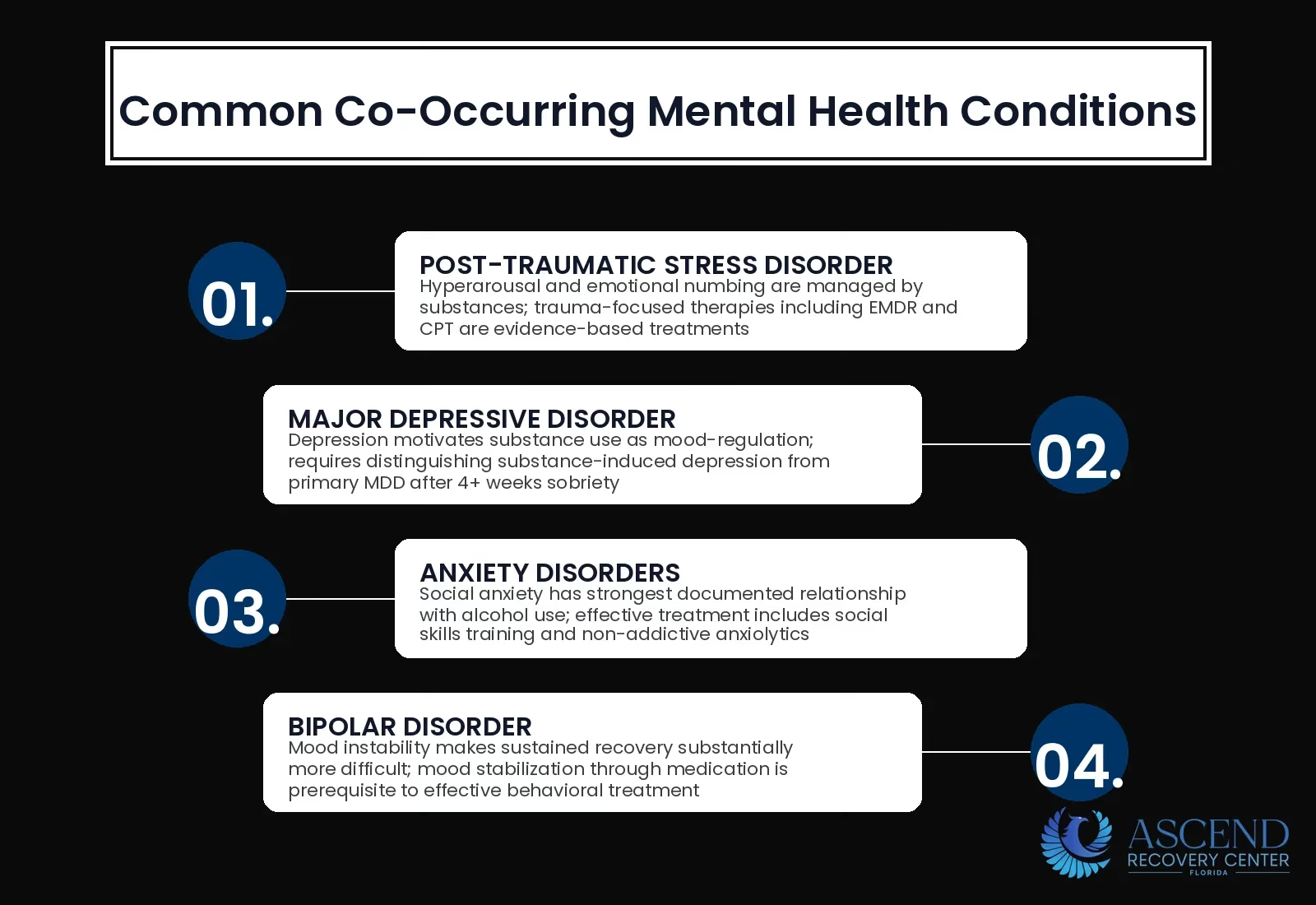
Understanding the specific co-occurring disorders in a person's clinical presentation is not academic — it directly shapes the treatment modalities, medication management decisions, and level-of-care recommendations that determine treatment outcomes. The most clinically significant conditions in dual diagnosis treatment include:
- Post-Traumatic Stress Disorder (PTSD): trauma is arguably the most underdiagnosed condition in addiction treatment; the hyperarousal, avoidance, and emotional numbing of PTSD are powerfully managed by substances in the short term, creating an extremely common self-medication pathway; trauma-focused therapies including EMDR and Cognitive Processing Therapy (CPT) are evidence-based for co-occurring PTSD-SUD and address the root condition driving substance use
- Major Depressive Disorder (MDD): the relationship between depression and SUD is bidirectional; depression motivates substance use as a mood-regulation strategy, and substance use — particularly alcohol, which is a CNS depressant — directly worsens depressive symptoms; treatment requires distinguishing between substance-induced depression (resolves with abstinence) and primary MDD (requires antidepressant pharmacotherapy), which typically becomes clear after 4 or more weeks of confirmed sobriety
- Anxiety Disorders: social anxiety disorder has one of the strongest documented relationships with alcohol use disorder of any psychiatric-SUD pairing; the pharmacological reduction of social inhibition and anxiety symptoms from alcohol provides immediate relief that reinforces continued drinking; effective dual diagnosis treatment for co-occurring anxiety and AUD includes social skills training, exposure therapy, and non-addictive anxiolytic medications
- Bipolar Disorder: among the most clinically complex dual diagnosis presentations; the mood instability of bipolar disorder makes sustained recovery from SUD substantially more difficult; substances are frequently used to manage manic energy or depressive crashes; mood stabilization through psychiatric medication management is a prerequisite to effective behavioral SUD treatment
- ADHD and Stimulant Use Disorder: the concentration-enhancing and mood-elevating effects of stimulants (cocaine, methamphetamine, prescription amphetamines) overlap with the therapeutic effects of ADHD medications; individuals with undiagnosed ADHD may develop stimulant use disorder through self-medication; non-stimulant ADHD medications are used during early recovery to address the underlying condition without addiction risk
Each of these pairings shares one explanatory mechanism — the self-medication hypothesis.
Most Common Mental Health Disorders in SUD Populations
Among individuals with SUD, approximately 50% meet criteria for PTSD at some point; trauma history precedes SUD onset in the majority of cases. EMDR and trauma-focused CBT are evidence-based for co-occurring PTSD-SUD and are integrated into comprehensive dual diagnosis programming.
MDD is the most common co-occurring disorder with alcohol use disorder (AUD) and opioid use disorder (OUD). Both substance-induced depression (typically resolving with abstinence) and primary MDD (requiring antidepressant treatment) occur; clinical differentiation requires 4+ weeks of abstinence for accurate diagnosis.
Generalized anxiety disorder, panic disorder, and social anxiety disorder frequently co-occur with AUD — self-medication for social anxiety is among the most well-documented SUD onset pathways. Dual diagnosis treatment includes exposure-based therapies and non-addictive anxiolytics (buspirone, SSRIs, hydroxyzine).
Bipolar I and II co-occur with SUD at 2–3 times the general population rate. Substance use dramatically worsens bipolar course and destabilizes mood episode frequency. Mood stabilizers (lithium, valproate, lamotrigine) are treatment mainstays; PHP or residential-level care is often required for initial stabilization.
Elevated ADHD rates are consistently documented in SUD populations. The self-medication hypothesis proposes that stimulant misuse and cannabis use represent attempts to manage undiagnosed ADHD symptoms. Non-stimulant treatment (atomoxetine, guanfacine) is preferred in early recovery; structured dual diagnosis assessment is required.
Methamphetamine-induced psychotic disorder occurs in 26–46% of chronic methamphetamine users and is clinically indistinguishable from schizophrenia in the acute phase. It typically resolves with abstinence and antipsychotic medication; persistent psychosis beyond 4–6 weeks of abstinence may indicate an underlying schizophrenia spectrum disorder.
FL DCF LicensedFARR CertifiedWhat Is the Self-Medication Hypothesis?
The self-medication hypothesis, articulated by Harvard psychiatrist Edward Khantzian in 1985, states that individuals with undiagnosed or undertreated psychiatric disorders use specific substances — not random ones — to regulate the psychiatric symptoms and neurobiological dysregulation they cannot otherwise manage. The hypothesis carries substantial empirical support and directly informs integrated dual diagnosis treatment design.
The clinical evidence for specific self-medication patterns is compelling across multiple psychiatric-SUD pairings:
- Social anxiety and alcohol use disorder: alcohol reliably reduces social anxiety by enhancing GABAergic inhibition; social anxiety disorder is documented to precede alcohol use disorder onset in the majority of cases where both are present; the initial reinforcement of social anxiety relief by alcohol is a primary mechanism in AUD development in this population; social anxiety predicts relapse after SUD treatment when left untreated
- PTSD and CNS depressants: the hyperarousal symptoms of PTSD — hypervigilance, insomnia, intrusive thoughts, emotional reactivity — are acutely blunted by alcohol, opioids, and benzodiazepines; trauma survivors frequently discover that CNS depressants enable sleep and reduce intrusive symptoms in ways that feel immediately therapeutic, creating a powerful reinforcement cycle that evolves into physical dependence; the self-medication of PTSD with alcohol or opioids is among the most clinically significant dual diagnosis presentations in addiction treatment
- Depression and stimulants: individuals with major depression may discover that cocaine, methamphetamine, or prescription stimulants temporarily resolve the anhedonia, low energy, and negative affect of depression through dopamine release; the initial response can feel like the first relief from depressive symptoms the person has experienced — creating a powerful reinforcement of stimulant use that escalates into stimulant use disorder; the depressive crash following stimulant use then deepens the original depression, driving repeated use
- ADHD and stimulants: individuals with undiagnosed ADHD experience the concentration-enhancing and mood-normalizing effects of stimulants as profoundly therapeutic; the self-medicating use of cocaine or methamphetamine for ADHD symptoms is distinct from recreational stimulant use and responds to different treatment approaches — specifically, accurate ADHD diagnosis and non-stimulant pharmacological management
- Psychosis and cannabis: the relationship between cannabis and psychosis is complex and bidirectional; high-THC cannabis dramatically increases the risk of psychotic episodes in genetically vulnerable individuals; individuals in early psychosis sometimes use cannabis in an attempt to manage positive symptoms, while the cannabis use simultaneously worsens the underlying condition; this self-medication pattern dramatically worsens schizophrenia prognosis and requires integrated psychiatric and SUD treatment
The critical clinical implication of the self-medication hypothesis is that treating the underlying psychiatric disorder reduces the neurobiological and psychological "need" for substance use. However, clinicians must account for the diagnostic challenge of substance-induced psychiatric symptoms: substance use can mimic nearly every psychiatric condition, and accurate diagnosis of primary versus substance-induced disorders typically requires a period of confirmed abstinence — usually 4 or more weeks — before the psychiatric picture stabilizes enough for definitive diagnosis and pharmacological intervention. This diagnostic sequencing is one reason dual diagnosis is treated through a single integrated clinical model.
People with substance use disorders use their preferred substances to cope with disturbing affects. They choose specific substances because of a psychopharmacological interaction between specific affects they experience and specific drug effects. Self-medication motivations are not random.
How Is Dual Diagnosis Treated?
Dual diagnosis is treated through integrated treatment: the substance use disorder and the co-occurring psychiatric disorder are addressed simultaneously, within the same program, by the same multidisciplinary team — the model SAMHSA TIP 42 defines as the standard of care.
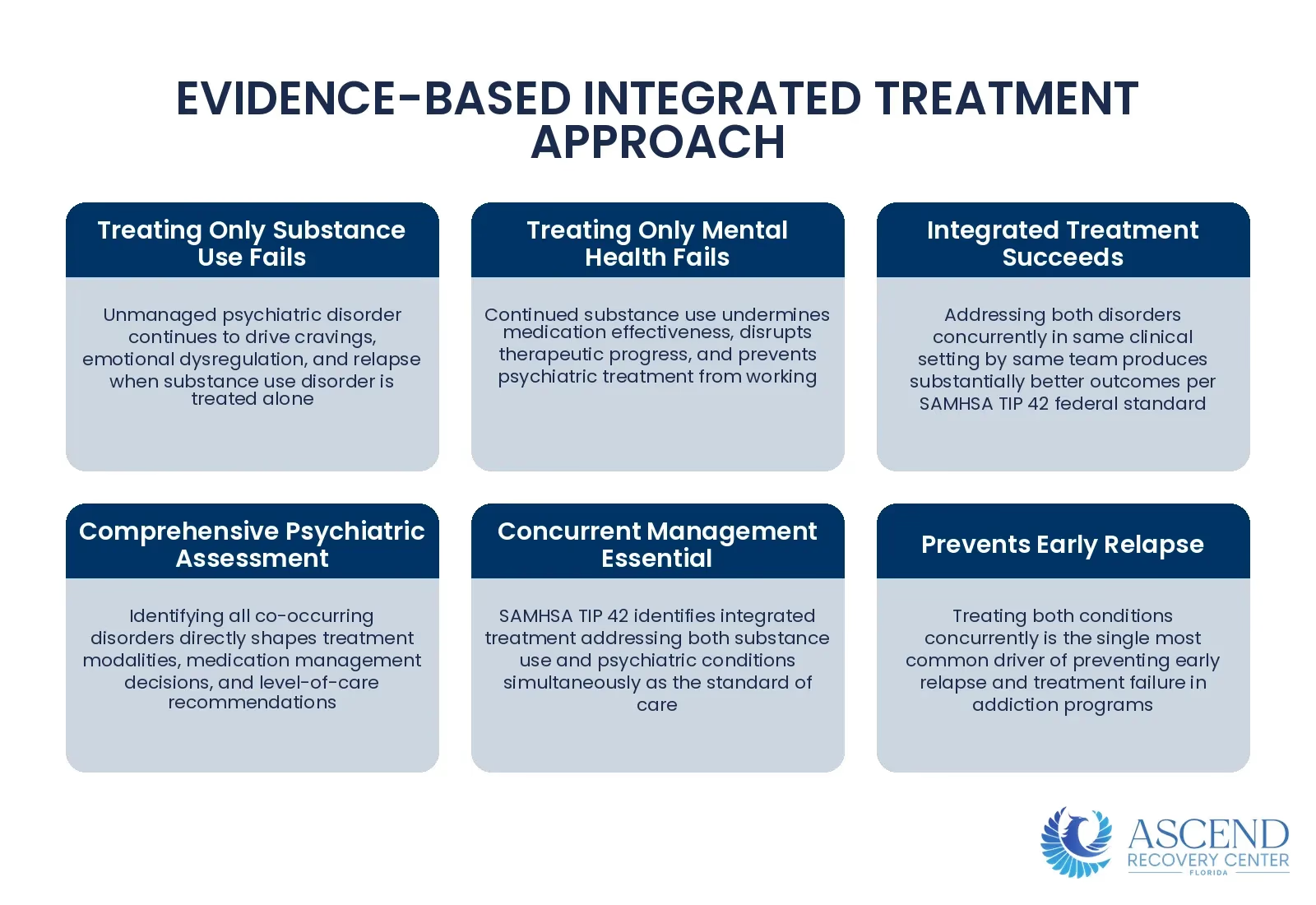
SAMHSA TIP 42 (2005), the federal standard for dual diagnosis treatment, makes a decisive finding: integrated treatment is superior to sequential treatment (treat the SUD first, then address mental health) and to parallel treatment (separate SUD and mental health programs operating independently). The reason is mechanistic — the two disorders are not independent pathologies; they are mutually reinforcing conditions that must be addressed as a unified clinical picture. TIP 42 also codifies the four-quadrant model of co-occurring disorder severity — classifying each presentation from Quadrant I (low SUD severity, low psychiatric severity) to Quadrant IV (high severity in both) — which directs level-of-care placement.
The components of integrated dual diagnosis treatment at the PHP and IOP level include:
- Addiction psychiatry integration: a board-certified addiction psychiatrist evaluates each client at admission, diagnoses both the SUD and co-occurring psychiatric disorder(s), initiates medication management, and remains actively involved in the treatment team throughout — this is the cornerstone of real dual diagnosis care and the element most commonly absent from standard addiction programs
- MOUD for opioid and alcohol use disorder: medications for opioid use disorder (buprenorphine, naltrexone) and alcohol use disorder (naltrexone, acamprosate) are integrated into the treatment plan where clinically indicated, not siloed in a separate program — a client with OUD and depression receives both buprenorphine and antidepressant management from the same psychiatric team
- Concurrent behavioral treatment: group and individual therapy sessions address both the SUD and the psychiatric disorder in each clinical contact; dual diagnosis-adapted CBT links the cognitive distortions of the psychiatric disorder to the substance use behavior; functional analysis identifies how psychiatric symptoms trigger substance use and how substance use worsens psychiatric symptoms
- Psychiatric monitoring and medication adjustment: the PHP setting allows daily clinical contact that enables rapid detection of medication response and adjustment — a clinical advantage that standard outpatient psychiatric care (monthly appointments) cannot provide during the critical early stabilization period
These structural components are delivered through specific evidence-based therapies validated for co-occurring presentations.
DCF-licensed programs offering integrated dual diagnosis treatment combine addiction psychiatry services, evidence-based behavioral therapies, and MOUD management. to confirm benefits for PHP or IOP dual diagnosis programming.
Integrated Dual Diagnosis Treatment Process
- 1Comprehensive Assessment
Psychiatric evaluation by an addiction psychiatrist; DSM-5 diagnosis of both the SUD and co-occurring psychiatric disorder(s); ASAM Criteria placement to determine appropriate level of care; clinical differentiation between substance-induced and primary psychiatric disorders using structured diagnostic interviews (MINI, SCID).
- 2Medical Stabilization
Medication management for acute psychiatric symptoms — antidepressants, mood stabilizers, antipsychotics, and non-addictive anxiolytics as clinically indicated; Medications for Opioid Use Disorder (MOUD) initiation for OUD; supervised withdrawal management for alcohol, benzodiazepine, or other physiological dependence.
- 3PHP Integrated Treatment
Concurrent SUD and mental health treatment within the same clinical program, delivered by the same multidisciplinary team; CBT adapted for dual diagnosis; trauma-focused therapy including EMDR and CPT; DBT for emotional dysregulation; group process therapy with peers sharing co-occurring disorder presentations.
- 4Trauma Processing
Once acute psychiatric stabilization is achieved, trauma-focused modalities address the underlying PTSD driving self-medication patterns; EMDR, Cognitive Processing Therapy, and somatic-based approaches; pacing is determined by psychiatric stability — trauma processing before stabilization can destabilize the clinical picture.
- 5Relapse Prevention and Coping Skills
Integrated relapse prevention planning that simultaneously addresses SUD triggers AND psychiatric symptom management; DBT skills training for emotional dysregulation; mindfulness-based relapse prevention (MBRP); individualized safety planning for psychiatric symptom escalation as a relapse risk.
- 6Continuing Care
Step-down from PHP to IOP to standard outpatient; ongoing psychiatric medication management with the same prescriber for continuity; regular individual therapy; peer support communities (SMART Recovery, 12-step); family psychoeducation about dual diagnosis to reduce enabling and support recovery.
FL DCF LicensedFARR CertifiedDoes Your Insurance Cover Addiction Education?
Free, confidential verification in under 15 minutes.
What Specific Therapies Are Used in Dual Diagnosis Treatment?
Dual diagnosis treatment uses five evidence-based modalities: CBT adapted for co-occurring disorders, dialectical behavior therapy (DBT), EMDR, motivational interviewing (MI), and psychiatric medication management — each validated to treat the substance use disorder and the psychiatric condition as one integrated clinical target.
The core therapies used in integrated dual diagnosis programming include:
- Cognitive-Behavioral Therapy (CBT) adapted for dual diagnosis: standard CBT is modified for co-occurring presentations through dual-focused functional analysis — identifying how psychiatric symptoms (anxiety, depressive cognitions, hyperarousal) trigger substance use, and how substance use reinforces and worsens psychiatric symptoms; cognitive restructuring addresses both maladaptive psychiatric thought patterns and the cognitive distortions that maintain substance use (rationalization, minimization, craving-driven thinking); behavioral activation strategies address the anhedonia of depression while building recovery-supportive activities
- Dialectical Behavior Therapy (DBT): originally developed by Marsha Linehan for borderline personality disorder, DBT is highly effective across the range of emotional dysregulation presentations common in dual diagnosis — impulsive substance use, self-harm, interpersonal volatility, and distress intolerance; the four DBT skill modules (mindfulness, distress tolerance, emotional regulation, and interpersonal effectiveness) provide a concrete behavioral toolkit for managing the emotional states that drive self-medication; DBT skills groups are frequently integrated into PHP dual diagnosis programming
- EMDR (Eye Movement Desensitization and Reprocessing): EMDR is endorsed by the World Health Organization and the American Psychological Association as a first-line treatment for PTSD; in co-occurring PTSD-SUD presentations, EMDR directly processes the traumatic memories and associated body-based responses that drive hyperarousal, avoidance, and self-medication with substances; DCF-licensed programs with specialized trauma clinicians integrate EMDR into dual diagnosis programming for clients with documented trauma histories and PTSD diagnoses
- Motivational Interviewing (MI): addresses the ambivalence that is particularly pronounced in dual diagnosis — ambivalence about psychiatric diagnosis ("I'm not mentally ill, I just drink too much"), medication adherence ("I don't want to be dependent on pills"), and treatment engagement; MI's core techniques (reflective listening, exploring discrepancy between values and current behavior, rolling with resistance rather than confronting it) are essential when working with clients who minimize their psychiatric diagnosis or resist antidepressant and mood stabilizer treatment
- Psychiatric medication management: the pharmacological component of dual diagnosis treatment is an essential — not optional — element of integrated care; SSRIs and SNRIs are prescribed for depression and PTSD; mood stabilizers (lithium, valproate, lamotrigine) for bipolar disorder; non-addictive anxiolytics (buspirone, hydroxyzine, SSRIs) for anxiety disorders; antipsychotics for psychotic disorders; MOUD (buprenorphine, naltrexone) for OUD and AUD; importantly, benzodiazepines are avoided except in specific, time-limited medical withdrawal contexts due to their high abuse potential in SUD populations
When these modalities are delivered without integration — or when one disorder is treated alone — dual diagnosis treatment fails in specific, predictable ways.
Why Does Dual Diagnosis Treatment Fail?
Dual diagnosis treatment fails for five documented, preventable reasons: treating only one disorder, sequencing treatment instead of integrating it, unsupervised medication discontinuation, insurance-driven premature discharge, and stigma-driven underreporting of psychiatric symptoms.
The most common mechanisms of treatment failure in dual diagnosis include:
- Treating only one disorder: the most prevalent and consequential failure mode is treating the SUD without concurrent psychiatric care, or initiating psychiatric treatment without addressing active substance use; the majority of standard addiction treatment programs do not employ addiction psychiatrists or maintain integrated psychiatric services; a 28-day residential program that provides no psychiatric assessment and no medication management is structurally unable to achieve durable outcomes for the majority of clients presenting with co-occurring disorders
- Sequential treatment sequencing: the sequential model — complete SUD treatment first, then address mental health — fails because untreated psychiatric symptoms are among the primary triggers for relapse; a person who leaves SUD treatment with active, unmedicated depression or untreated PTSD hyperarousal returns to the same neurobiological conditions that drove self-medication in the first place; the disorders must be addressed simultaneously, not in sequence
- Medication non-adherence: individuals with dual diagnosis frequently discontinue psychiatric medications without clinical supervision — motivated by stigma ("I don't want to be on pills forever"), side effect burden, or the cognitive distortions that accompany both psychiatric disorders and early recovery; unsupervised medication discontinuation triggers psychiatric symptom recurrence, which drives relapse; motivational interviewing focused specifically on medication adherence and psychoeducation about the neurobiological rationale for psychiatric pharmacotherapy address this failure mode
- Insurance-driven premature discharge: dual diagnosis presentations require longer treatment engagement than SUD without psychiatric comorbidity — the stabilization of co-occurring disorders, the processing of underlying trauma, and the building of sufficient coping skill for self-management take time that managed care organizations frequently attempt to curtail; discharge before psychiatric stabilization is achieved leaves the client in a condition of high relapse risk; clinical advocacy for medically necessary extended treatment is a component of quality dual diagnosis care
- Stigma and psychiatric disclosure barriers: individuals frequently withhold psychiatric history, trauma exposure, and symptoms of psychosis, paranoia, or suicidal ideation due to anticipated stigma from both clinical staff and peers; treatment programs without explicitly trauma-informed, non-judgmental clinical cultures see systematic underreporting of co-occurring psychiatric symptoms; the clinical consequence is missed diagnoses and inadequate treatment of conditions that are driving the presenting addiction
Evidence-based integrated programs address these failure modes through concurrent dual diagnosis treatment from admission, addiction psychiatry services, psychiatric medication management throughout the clinical episode, clinical advocacy for medically necessary levels of care, and a trauma-informed treatment culture that normalizes co-occurring psychiatric diagnosis. Recognizing addiction signs and symptoms alongside psychiatric symptoms raises the next question: how do you know if you have a dual diagnosis?
Integrated treatment for persons with co-occurring disorders has been found to be more effective than either non-integrated approaches or sequential or parallel treatment. Clients receive more consistent messages, experience fewer gaps in service, and encounter fewer contradictions between the SUD and mental health components of their treatment.
How Do I Know If I Have a Dual Diagnosis?
You identify a dual diagnosis through comprehensive psychiatric assessment at treatment admission — most individuals with co-occurring disorders do not self-identify, because substance use masks the psychiatric disorder, mimics its symptoms, or absorbs the blame for them. The psychiatric disorder frequently goes undiagnosed because the person never received adequate psychiatric evaluation.
Clinical indicators of a co-occurring psychiatric disorder include:
- Mood symptoms that persist beyond acute withdrawal: depression, anxiety, paranoia, or emotional dysregulation that continues 4 or more weeks after stopping substance use is a strong indicator of a primary psychiatric disorder rather than a substance-induced disorder; acute substance-induced mood disturbances typically resolve within 2–4 weeks of abstinence
- Psychiatric hospitalization history: any prior inpatient psychiatric admission — including involuntary admissions under Florida's Baker Act (Statute 394.463) for "drug-induced psychosis" or "substance use" — is a significant red flag for underlying psychiatric pathology that warrants comprehensive reassessment
- Pre-existing trauma and PTSD symptoms: childhood adverse experiences (ACEs), combat exposure, sexual assault, domestic violence, or other trauma with ongoing intrusive thoughts, avoidance, hyperarousal, and negative cognitions indicates likely PTSD co-occurrence
- Mood episodes — both high and low: history of periods of grandiosity, decreased sleep need, racing thoughts, impulsivity, and high-energy behavior alternating with depressive crashes is a clinical signature of bipolar disorder; this pattern is frequently attributed to stimulant use or alcohol bingeing when it reflects an underlying bipolar spectrum disorder requiring mood stabilizer treatment
- Psychotic symptoms: hearing voices, seeing things, paranoid beliefs, or disorganized thinking — whether attributed to substance use or not — require psychiatric evaluation to distinguish substance-induced psychotic disorder from primary psychotic disorders (schizophrenia, schizoaffective disorder)
- Pre-addiction psychiatric medication prescriptions: if a person was prescribed antidepressants, mood stabilizers, anxiolytics, or antipsychotics before the onset of significant substance use, this is direct evidence of a pre-existing psychiatric disorder that requires ongoing integrated treatment
The following validated assessment tools are used in dual diagnosis evaluation: the MINI (Mini International Neuropsychiatric Interview) and SCID (Structured Clinical Interview for DSM-5) for psychiatric diagnosis; the PCL-5 for PTSD screening; the PHQ-9 and GAD-7 for depression and anxiety severity; the AUDIT and DAST-10 for substance use severity; and the ASAM Criteria multidimensional assessment for level-of-care placement.
Assessment also settles the sequencing question that stalls many families before admission: whether addiction should be treated before mental health.
Comprehensive dual diagnosis assessment at admission — including psychiatric evaluation, concurrent disorder diagnosis, and integrated treatment beginning from day one — is the clinical standard for co-occurring disorder care. Florida residents in crisis can access statewide mental health resources including 988 Suicide and Crisis Lifeline and DCF treatment locators. to confirm benefits for an integrated dual diagnosis program.
Should addiction be treated before mental health?
Common Misconception
"You have to get sober first, then deal with the mental health problems."
What the Evidence Shows
SAMHSA TIP 42 (Updated 2020) established integrated, concurrent treatment — not sequential — as the federal standard of care for co-occurring disorders. Untreated psychiatric symptoms predict relapse during early sobriety, and active substance use prevents psychiatric medication from reaching therapeutic effect. Treating both conditions together, by the same clinical team, produces superior retention and abstinence outcomes versus treating one and then the other.
SAMHSA, TIP 42: Substance Use Disorder Treatment for People with Co-Occurring Disorders (Updated 2020).
Ascend Recovery Center in Palm Beach Gardens, Florida delivers integrated dual diagnosis treatment at the PHP and IOP levels — contact the admissions team for a comprehensive co-occurring disorder assessment.


