


Referenced in this article
Key Takeaways
- Recovery unfolds across 5 stages (Prochaska & DiClemente's TTM): precontemplation, contemplation, preparation, action, and maintenance — each requiring different clinical approaches and support.
- The first 90 days carry the highest relapse risk; Post-Acute Withdrawal Syndrome (PAWS) — insomnia, anxiety, mood instability, and cravings — is a leading driver of early relapse, and per SAMHSA its duration is substance-specific: up to roughly 6 months after opioid use, 1–2 months after stimulant use.
- NIDA puts relapse in substance use disorders at 40–60%, against 50–70% for hypertension and 50–70% for asthma — which is why relapse signals that treatment needs resuming, modifying, or changing, not that it failed.
- NIDA research documents that 90+ days of continuous treatment engagement is the minimum duration associated with substantially better 12-month sobriety outcomes compared to shorter courses.
- Long-term recovery is supported by four pillars beyond formal treatment: peer support (AA, NA, SMART Recovery), continuing care relationships, recovery-supportive housing environments, and development of personal meaning and purpose.
What Are the 5 Stages of Addiction Recovery?
The Transtheoretical Model (TTM) — developed by Prochaska and DiClemente in 1983 through research on how people change addictive behaviors — remains the most widely applied framework for understanding recovery motivation and tailoring interventions to readiness level. The model's central insight is that behavior change is not a binary event (ready or not ready) but a process of gradual motivational shifts across stages, each requiring different clinical approaches. Pushing a person in precontemplation toward action without first addressing ambivalence routinely fails — not because of willpower deficits, but because the motivational architecture of that stage doesn't support sustained behavior change.
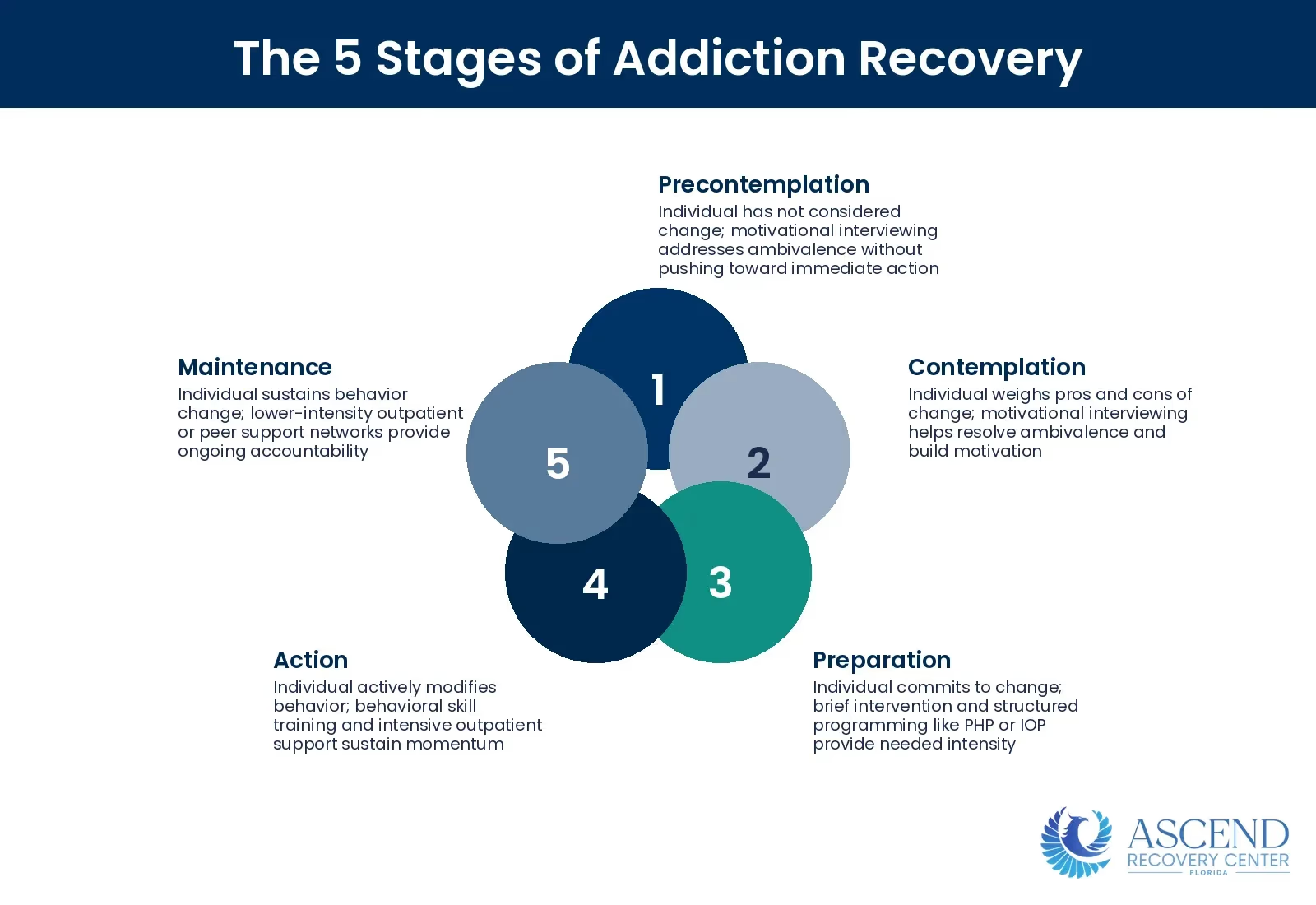
The following are the 3 clinical applications of the stages of change model in addiction treatment:
- Matching intervention to stage: motivational interviewing (MI) is the evidence-based approach for precontemplation and contemplation stages; behavioral skill training is appropriate for action and maintenance stages; brief intervention is effective for preparation stage individuals; matching intervention to stage improves treatment retention and outcomes
- Relapse reframing: the TTM conceptualizes relapse not as treatment failure but as movement from a later stage (maintenance or action) back to an earlier stage (contemplation or preparation); this framing reduces shame and supports rapid re-engagement with treatment rather than abandonment
- Treatment setting alignment: individuals in the preparation and early action stages typically require structured programming (PHP or IOP) to provide sufficient therapeutic intensity; individuals in middle to late maintenance stages typically require lower-intensity support (standard outpatient or peer support networks)
SAMHSA's recovery definition adds four dimensions to recovery that extend beyond abstinence: health (managing physical and mental health conditions), home (stable housing), purpose (meaningful daily activities and financial independence), and community (supportive social relationships). These four dimensions guide the life-area recovery work that continues in the maintenance stage long after acute treatment ends.
What is the difference between recovery and sobriety?
Sobriety refers specifically to abstinence from substances; recovery is a broader concept encompassing physical health, mental health, meaningful relationships, employment, and purpose. SAMHSA's recovery definition requires four dimensions: health (managing co-occurring conditions), home (stable housing), purpose (meaningful daily activities and financial independence), and community (supportive social connections). Many individuals achieve sobriety without achieving full recovery — addressing only the substance use without rebuilding the life dimensions that support long-term wellness. This is why structured treatment focuses on all four dimensions, not just abstinence.

Prochaska & DiClemente's Stages of Change
- 1Stage 1: Precontemplation
The individual is not yet considering change and may deny or minimize the problem. Motivation for treatment is absent. External pressure (family, legal, employment) is the most common pathway into the next stage. ~40% of people with SUD are in this stage at any given time.
- 2Stage 2: Contemplation
The individual acknowledges the problem and is ambivalent — simultaneously aware of the costs of continued use and the costs of change. This ambivalence is normal, not resistance. Motivational interviewing is the evidence-based clinical tool designed specifically for this stage.
- 3Stage 3: Preparation
The individual is committed to change and taking small steps — researching treatment, telling family, calling an admissions line. This stage is often brief (days to weeks). Acting quickly matters: motivation during the preparation stage is fragile and time-limited.
- 4Stage 4: Action
Active engagement in treatment — detox, PHP, IOP, or outpatient programming. The highest-intensity clinical support period. Relapse risk is elevated in early action; structured programming provides the framework, accountability, and coping skill development that stabilize this stage.
- 5Stage 5: Maintenance
Sustaining gains from the action stage while building a recovery lifestyle — employment, relationships, housing, and identity that support long-term sobriety. This stage lasts years, not months. Relapse risk decreases with time but never reaches zero.

 FL DCF LicensedFARR Certified
What Is Early Recovery (0–90 Days)?
The first 90 days of recovery — the early recovery period — represent the highest-risk window for relapse, the peak intensity of Post-Acute Withdrawal Syndrome (PAWS), and the phase when structured clinical programming provides the most critical support. The following are the 4 defining features of early recovery:
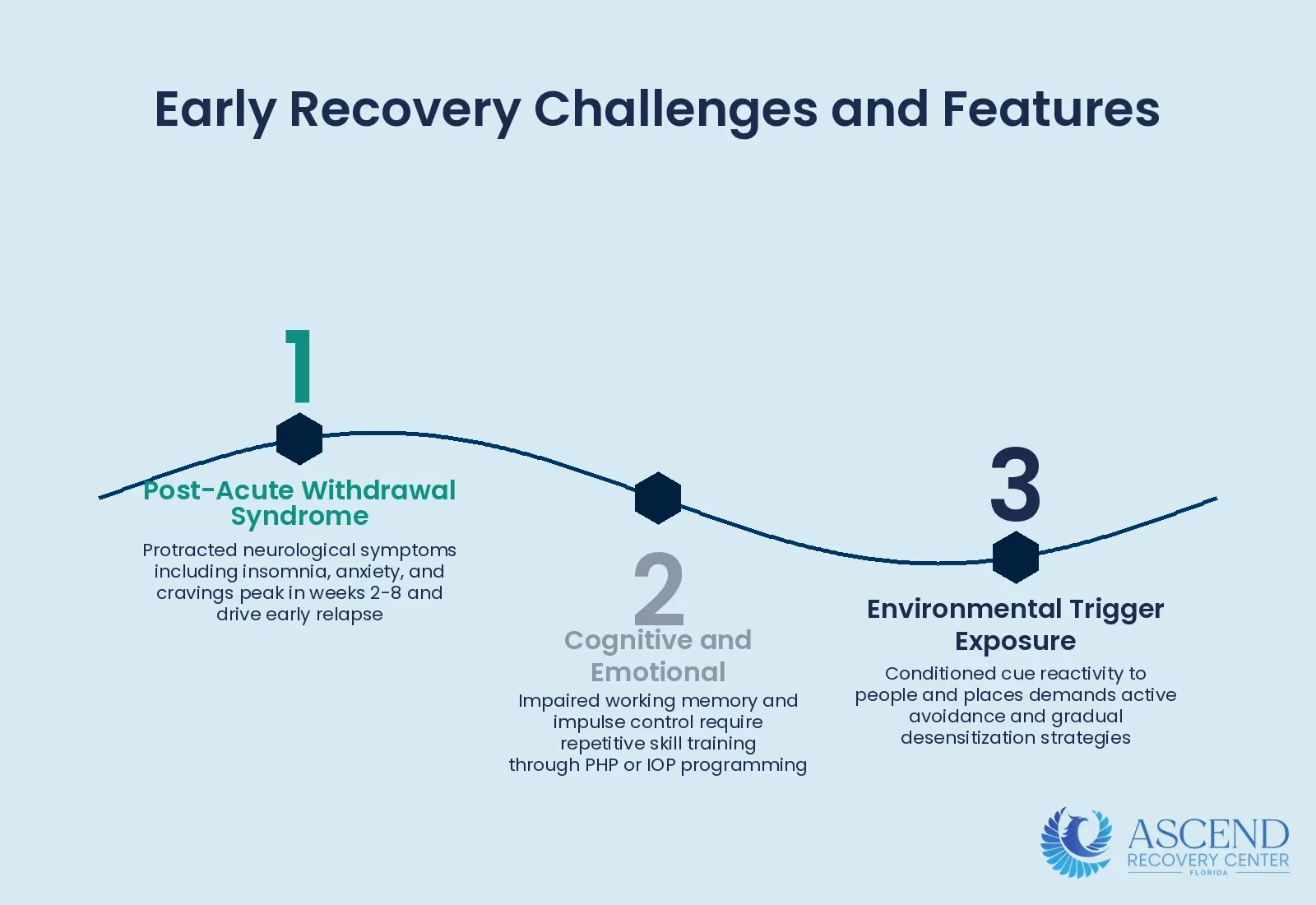
- Post-Acute Withdrawal Syndrome (PAWS): following acute physical withdrawal, the neurological adaptation that built over months or years of substance use continues to normalize — producing a protracted withdrawal state of insomnia, anxiety, irritability, depressed mood, difficulty concentrating, and intense substance cravings that peaks in weeks 2–8 and may persist for 2–6 months. PAWS is the primary driver of early relapse — individuals who don't understand that these symptoms are temporary neurological normalization often interpret them as evidence that sobriety "doesn't work."
- Cognitive and emotional dysregulation: early recovery impairs working memory, emotional regulation, and impulse control — the same prefrontal cortex functions that addiction damages; clients in early recovery struggle to learn and retain new coping skills precisely when clinical instruction is most intensive, which is why PHP and IOP programming uses repetition, skills practice, and multiple modalities to build retention
- Environmental trigger exposure: people, places, and things associated with substance use produce conditioned cue reactivity — a neurologically mediated craving response to environmental stimuli — that is strongest in early recovery and requires active avoidance, stimulus control, and gradual desensitization as part of relapse prevention planning
- Identity transition: early recovery requires the construction of a new identity not centered on substance use — relationships change, social environments shift, and sources of meaning and purpose must be rebuilt; the work of AA and NA sponsorship, 12-step identity development, and SMART Recovery self-management tools address this dimension directly
PHP (Partial Hospitalization Program) at ASAM Level 2.5 and IOP (Intensive Outpatient Program) at ASAM Level 2.1 provide the appropriate clinical intensity for early recovery — typically 4–6 hours of programming per day for PHP clients and 9–15 hours per week for IOP clients — delivering the therapeutic frequency needed to support neurological recovery while allowing community reintegration.
What is post-acute withdrawal syndrome (PAWS)?
Post-Acute Withdrawal Syndrome (PAWS) is a prolonged neurological recovery state that follows acute physical withdrawal — characterized by insomnia, anxiety, irritability, depressed mood, cognitive difficulties, and substance cravings that persist weeks to months after the physical withdrawal resolves. PAWS is caused by the slow normalization of GABA, glutamate, and dopaminergic systems after prolonged substance use. Duration is substance-specific rather than uniform. SAMHSA's protracted withdrawal advisory documents a protracted phase lasting up to roughly 6 months after opioid use, 1 to 2 months after stimulant use, and — following alcohol use — symptoms that can persist for weeks, months, or longer. PAWS is a leading driver of early relapse — understanding it as a temporary neurological process, not a permanent state, is critical to getting through it.
FL DCF LicensedFARR CertifiedWhat Is Middle Recovery (90 Days to 1 Year)?
Middle recovery — approximately 90 days to one year of continuous sobriety — is characterized by the gradual resolution of PAWS, the rebuilding of relationships and functional life structures, the development of stable recovery identity, and decreasing (but still elevated) relapse risk compared to early recovery. NIDA research identifies treatment duration as the strongest predictor of long-term recovery outcomes, with 90 or more continuous days of engagement producing substantially better 12-month outcomes than shorter courses.
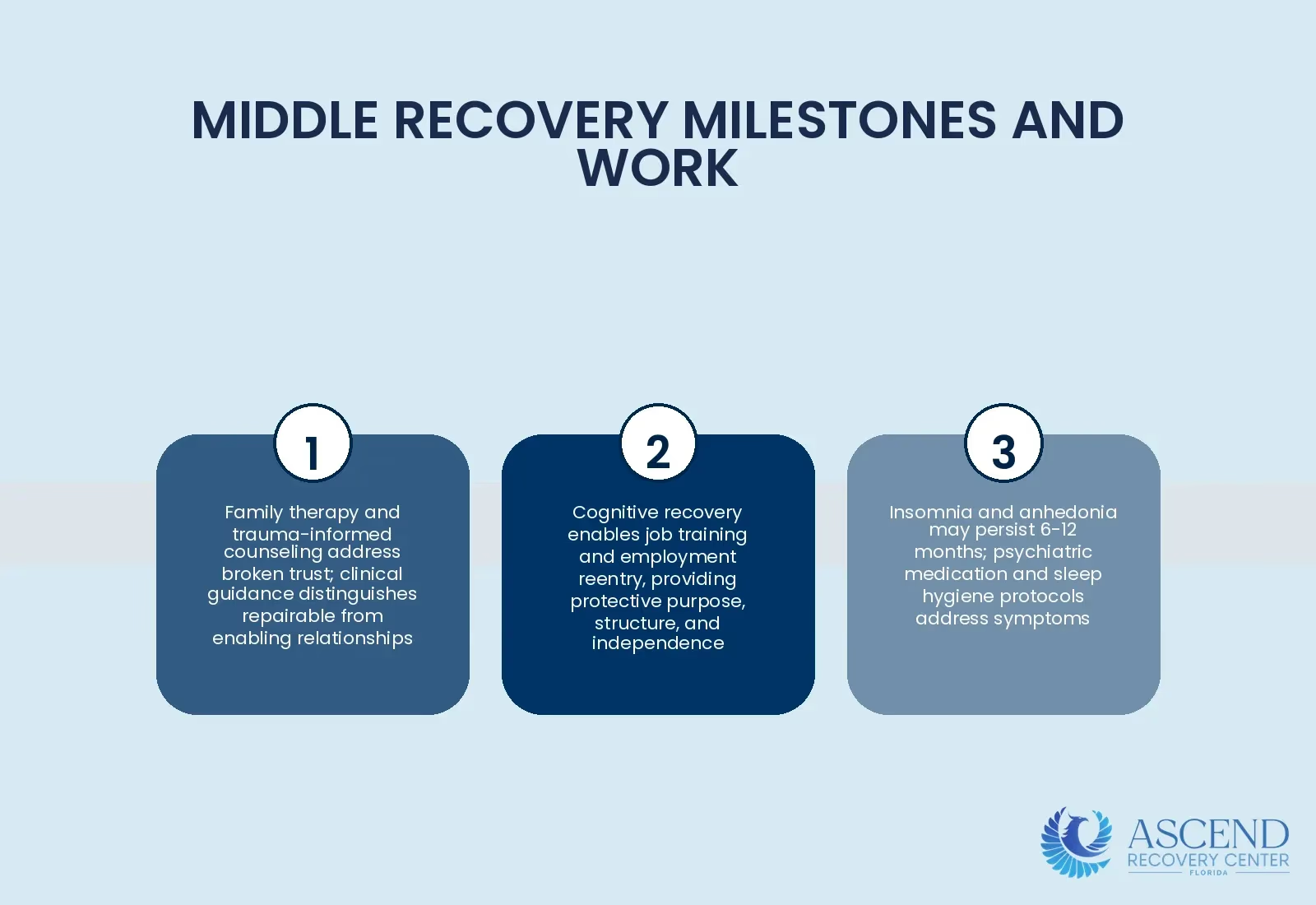
The following are the 4 primary challenges and milestones of middle recovery:
- Relationship repair and rebuilding: the consequences of active addiction — broken trust, estranged family, lost friendships — become fully visible in middle recovery; family therapy, couples counseling, and structured communication work (including trauma-informed family systems approaches) address this dimension; some relationships are repairable, some are not, and clinical guidance helps distinguish productive repair from re-exposure to enabling patterns
- Employment and financial stabilization: middle recovery is when occupational rehabilitation becomes possible — cognitive function has improved enough to support job training, education, or employment reentry; employment provides purpose, structure, and financial independence that are independently protective against relapse; case management and vocational support are included in comprehensive PHP and IOP programs
- Residual PAWS management: while peak PAWS resolves by months 2–3 for most people, residual insomnia, mood lability, and anhedonia (inability to feel pleasure) may persist for 6–12 months in some individuals, particularly those with long histories of heavy alcohol or opioid use; psychiatric medication management and sleep hygiene protocols address these residual symptoms
- Overconfidence and complacency risk: the "pink cloud" phenomenon — a period of elevated mood and confidence in early-middle recovery that leads to reduced treatment engagement and relaxed relapse prevention discipline — is a recognized clinical risk period; structured continuing care check-ins and peer accountability reduce this risk
Recovery is not the absence of addiction; it is the presence of a life worth living. Our job in treatment is not just to remove the addiction but to help people build the life that makes recovery sustainable.
What Is Long-Term Recovery (1 Year and Beyond)?
Long-term recovery — one or more years of continuous sobriety — is associated with progressively decreasing relapse risk, substantially improved neurological function, restored interpersonal functioning, and the development of a stable recovery identity that defines life purpose beyond addiction. SAMHSA's research documents that individuals with 4–5 or more years of recovery show relapse rates approaching those of the general population for many substance use disorders.
The following are the 3 defining features of long-term recovery:
- Neurological restoration: the prefrontal cortex, dopaminergic reward circuits, and stress systems substantially normalize over 1–5 years of sustained sobriety — NIDA neuroimaging research shows measurable recovery of gray matter volume and dopamine receptor density; cognitive function (working memory, inhibitory control, emotional regulation) continues to improve for years beyond the acute withdrawal period; this neurological restoration is one of the most underappreciated and clinically meaningful aspects of long-term recovery
- Recovery capital accumulation: William White's concept of recovery capital describes the internal (self-efficacy, resilience, coping skills) and external (supportive relationships, housing, employment, community connections) resources that make sustained recovery possible; long-term recovery involves progressive accumulation of recovery capital — each year of sobriety typically adds to the resource base that protects against relapse
- Post-traumatic growth: clinical research documents that many individuals in long-term recovery report personal growth, increased empathy, deeper relationships, and greater life meaning compared to their pre-addiction baseline — not merely a return to a prior functional state; 12-step facilitation, peer recovery support work, and meaning-centered therapy approaches address this dimension
Continuing care — ongoing therapeutic contact after completing intensive treatment — substantially improves long-term outcomes. NIDA documents that continuing care, including outpatient therapy, peer support, and recovery coaching, maintains and extends the gains from acute treatment. Continuing care does not require weekly therapy indefinitely; it may involve monthly check-ins, peer support meetings, or telephone-based monitoring — any structured point of contact that maintains recovery accountability.
How long does recovery from addiction take?
Recovery is a lifelong process, but clinical risk decreases substantially over time. The first 90 days carry the highest relapse risk; by the one-year mark, most PAWS symptoms have resolved and relapse risk is significantly lower. SAMHSA research shows that individuals with 4–5 years of sustained sobriety have relapse rates approaching those of the general population for many substance use disorders. NIDA's research shows that 90+ days of continuous treatment engagement is the minimum duration associated with substantially better 12-month outcomes compared to shorter courses.
Does Your Insurance Cover Addiction Education?
Free, confidential verification in under 15 minutes.
What Is the Role of Relapse in Recovery?
Relapse — a return to substance use after a period of abstinence — occurs in approximately 40–60% of individuals during the first year of recovery and does not indicate treatment failure; it indicates that the treatment plan requires adjustment and that additional support is needed. NIDA puts the relapse rate for substance use disorders at 40–60%, against 50–70% for hypertension and 50–70% for asthma — the comparison is the argument, because a condition that recurs at a lower rate than asthma is not a condition anyone calls a treatment failure. The American Society of Addiction Medicine frames relapse the same way: a component of the chronic disease process, indicating that treatment should be resumed, modified, or changed.
The following are the 3 clinical realities about relapse that every person in recovery and their family should understand:
- Relapse is often preceded by warning signs: the "relapse process" begins weeks before the first drink or use — progressive disengagement from recovery activities, social isolation, returning stress, resumption of addictive thinking patterns, and erosion of coping skill use are the behavioral warning signs that precede physical relapse; clinical relapse prevention training (a core component of PHP and IOP programming) teaches clients to recognize and intervene on these early warning signs before substance use occurs
- Relapse risk is highest in specific contexts: high-risk situations include: negative emotional states (anger, anxiety, loneliness, boredom), social pressure (being offered substances by peers), positive emotional states in triggering environments (parties, celebrations), and physical states (pain, illness, fatigue); structured relapse prevention planning creates specific coping responses for each high-risk situation identified in treatment
- Response to relapse determines outcome: the most significant clinical predictor of long-term recovery following relapse is how quickly the individual re-engages with treatment; each day between relapse and treatment re-engagement is associated with worsening outcomes; ASAM Level of Care Guidelines recommend returning to the level of care at which recovery was previously maintained, or a higher level if relapse occurred during treatment
If you or a family member has experienced a relapse, immediate re-engagement with treatment — not shame or delay — is the clinically appropriate response. Partial hospitalization and intensive outpatient programming provide the clinical intensity to restabilize after relapse, and the speed of that re-engagement is the variable most under a family's control.
to confirm benefits for re-enrollment in PHP or IOP.
What Does Recovery Look Like During Active Treatment?
Active treatment — Partial Hospitalization (PHP), Intensive Outpatient (IOP), or standard outpatient programming — corresponds to the Action Stage of the Transtheoretical Model and provides the structured environment, therapeutic intensity, and clinical accountability that translate motivation into durable behavioral change. The following is what recovery looks like across each structured treatment level:
- During PHP (ASAM Level 2.5 — typically first 4–6 weeks): 4–6 hours of daily group and individual therapy, Monday through Friday; psychiatric evaluation and medication management; neurological and medical stabilization from withdrawal; intensive skill development in emotional regulation, relapse prevention, and communication; the most cognitively demanding recovery period because PAWS remains active while new coping skills must be learned
- During IOP (ASAM Level 2.1 — typically weeks 4–12+): 9–15 hours per week of structured programming; integration of recovery skills into daily life; re-engagement with family, social networks, and work; individual therapy addresses trauma, co-occurring mental health conditions, and the psychological roots of substance use; peer community in group therapy provides accountability and connection
- During standard outpatient (ASAM Level 1.0 — typically months 3–12+): 1–4 individual therapy sessions per week; focus on long-term skill consolidation, relationship repair, and meaning-making; psychiatric medication management continues if prescribed; peer support (AA, NA, SMART Recovery) transitions from a clinical recommendation to a personal recovery practice
The key clinical principle across all treatment levels is continuity of care — moving smoothly between levels as clinical needs change rather than stopping treatment abruptly. NIDA research consistently shows that longer treatment duration produces better long-term outcomes; the goal of each level is not graduation but clinical readiness for a lower level of care with appropriate ongoing support.
What is the most effective treatment for addiction recovery?
The most effective treatment matches evidence-based intervention to the individual's clinical needs, using ASAM Criteria to determine the appropriate level of care. For opioid and alcohol use disorders, medication-assisted treatment (MAT) combined with structured behavioral therapy in PHP or IOP represents the gold standard — producing outcomes substantially better than either medication or therapy alone. For stimulant and cannabis use disorders without an approved MAT medication, structured behavioral therapy (CBT, contingency management, motivational interviewing) in PHP or IOP is the standard of care. Duration matters: NIDA consistently identifies 90+ days of treatment engagement as the threshold for substantially better long-term outcomes.
People don't need to 'hit rock bottom' to get help. The earlier in the addiction process someone enters treatment, the more resources they have available — more intact relationships, less neurological damage, more career and financial stability.
What Supports Long-Term Recovery After Treatment?
Long-term recovery is supported by four evidence-based pillars beyond formal treatment: peer support, continuing care relationships, recovery-supportive environments, and personal purpose and meaning — each of which addresses a distinct dimension of what SAMHSA defines as sustained recovery.
The following are the 4 pillars of long-term recovery support:
- Peer support networks: 12-step programs (AA, NA, CA) and alternative peer support (SMART Recovery, Refuge Recovery, LifeRing) provide the community, accountability, and shared experience that clinical treatment cannot replicate; NIDA research documents that AA attendance after completing treatment doubles 3-year abstinence rates compared to no peer support; the relationship with a sponsor provides individualized guidance navigating recovery challenges between therapy appointments
- Continuing care relationships: regularly scheduled therapy (monthly or biweekly after intensive treatment completes), recovery coaching, and peer support specialist check-ins maintain accountability and provide early intervention when warning signs emerge; continuing care does not need to be intensive to be effective — consistent connection over time matters more than session frequency
- Recovery-supportive housing and environments: for individuals whose home environments are not supportive of recovery (family members who use, drug-accessible neighborhoods, prior trauma associations), recovery residences (sober living homes) provide a structured, substance-free living environment with peer accountability; SAMHSA data documents 68% abstinence rates at 12-month follow-up for individuals in recovery residences for 6+ months
- Meaning and purpose: Viktor Frankl's clinical observation — that people endure extraordinary hardship when they have a "why" — maps directly to addiction recovery research: employment, education, creative pursuits, spirituality, and relationships that provide purpose are independently associated with sustained recovery; meaning-centered therapy and values clarification work in PHP and IOP explicitly address purpose-building as a clinical priority, not a luxury
Recovery is not a destination but an ongoing process of growth. The stages model is not linear — people move back and forth, revisit earlier challenges, and continuously deepen their understanding of their own recovery. Every stage has value, and every setback carries the possibility of insight that strengthens the next phase of the journey.
Can family members help with a loved one's recovery?
Yes — significantly. Research documents that family involvement in addiction treatment substantially improves outcomes: family therapy increases treatment retention, reduces relapse risk, and improves family system functioning post-treatment. Practical family support includes: maintaining non-enabling boundaries (not protecting the person from consequences of their use), engaging in their own recovery support (Al-Anon, family therapy), learning about addiction neuroscience (reducing blame and shame), and providing consistent, expressed support for treatment participation rather than ultimatums tied to specific behavior changes. ASAM-certified PHP and IOP programs include family therapy as a standard component — family engagement is incorporated into treatment planning from the first week of programming.
Does relapse mean treatment failed?
Common Misconception
"If someone relapses, treatment didn't work and they're back to square one."
What the Evidence Shows
Relapse is a recognized feature of a chronic-disease course, not treatment failure. NIDA reports addiction relapse rates of 40–60% — comparable to relapse rates for type 1 diabetes, hypertension, and asthma, where no one calls a flare 'failure.' A relapse signals that treatment should be resumed, adjusted, or intensified — not abandoned. Recovery is rarely linear, and each treatment engagement builds skills that carry forward.
National Institute on Drug Abuse, Treatment and Recovery — relapse rates compared with other chronic illnesses.


