


Referenced in this article
Key Takeaways
- Sober living homes are structured, substance-free residential environments — not licensed treatment facilities — regulated in Florida through FARR voluntary certification; Florida has 600+ FARR-certified homes as of 2024, approximately 300 in Palm Beach County
- NARR defines 4 levels of sober living: Level 1 (peer-run), Level 2 (monitored with house manager — most common in Florida), Level 3 (supervised with paid staff), and Level 4 (service provider with clinical services)
- Florida sober living costs range from $500–$2,000 per month depending on NARR level, location, and amenities — insurance does not cover housing costs; SAMHSA documents $4,200 average annual healthcare cost savings per resident in recovery housing
- SAMHSA documents 68% abstinence rates at 12-month follow-up for individuals in recovery residences for 6+ months; Oxford House research (Jason et al., 2006) documents 50% reduction in relapse and 37% reduction in incarceration at 2-year follow-up
- Florida Statute 817.505 prohibits patient brokering — paying or receiving kickbacks for referrals to treatment facilities or sober living homes is a third-degree felony; Florida Statute 397.487 governs voluntary certification of recovery residences rather than tenancy, and subsection (11) permits a certified residence to discharge a resident immediately
What Are Sober Living Homes?
Sober living homes are peer-based, substance-free residential environments where individuals in addiction recovery live together under structured house rules while participating in outpatient treatment, employment, or education. Sober living homes are distinct from licensed treatment facilities — sober living homes do not provide clinical services on-site. Clinical treatment occurs at a separate outpatient provider, such as an intensive outpatient program (IOP) or outpatient rehab facility.
The 5 defining characteristics of sober living homes are:
- Substance-free environment: all residents maintain total abstinence from alcohol and drugs as a condition of residency
- Peer accountability: residents support each other's recovery through shared experience, house meetings, and mutual encouragement
- Structured house rules: curfews, chore assignments, mandatory drug testing, and participation requirements create daily structure
- Voluntary participation: residents choose to live in sober living homes — placement is not court-mandated in most cases, though courts and probation officers recommend sober living as a condition of supervision
- Transitional purpose: sober living homes bridge the gap between intensive treatment — including drug and alcohol detoxification and structured outpatient programming — and fully independent living, lasting 3–12 months in standard practice
NARR classifies sober living homes into 4 levels based on the intensity of structure and support provided. NARR Level 2 (monitored, with a house manager) is the most common type in Florida. Florida layers its own regulatory framework — FARR certification under Florida Statute 397.487 — on top of the NARR model.

Sober Living vs PHP, IOP, and Residential Care
Structured housing without on-site clinical treatment.
9-19 clinical hours per week with community living.
20+ clinical hours per week with evening return to housing.
24-hour treatment setting with overnight residence.

 FL DCF LicensedFARR Certified
How Does Florida Regulate Sober Living Homes?
Florida regulates sober living homes through FARR voluntary certification, DCF oversight authority, and state legislation including Florida Statute 397.487. Florida does not require licensure for sober living homes — FARR certification is voluntary but serves as the primary quality standard. Florida Statute 397.487 sets the voluntary certification framework rather than tenancy protections — subsection (11) expressly permits a certified residence to discharge or transfer a resident immediately, so standard landlord-tenant expectations do not automatically and establishes certification standards.
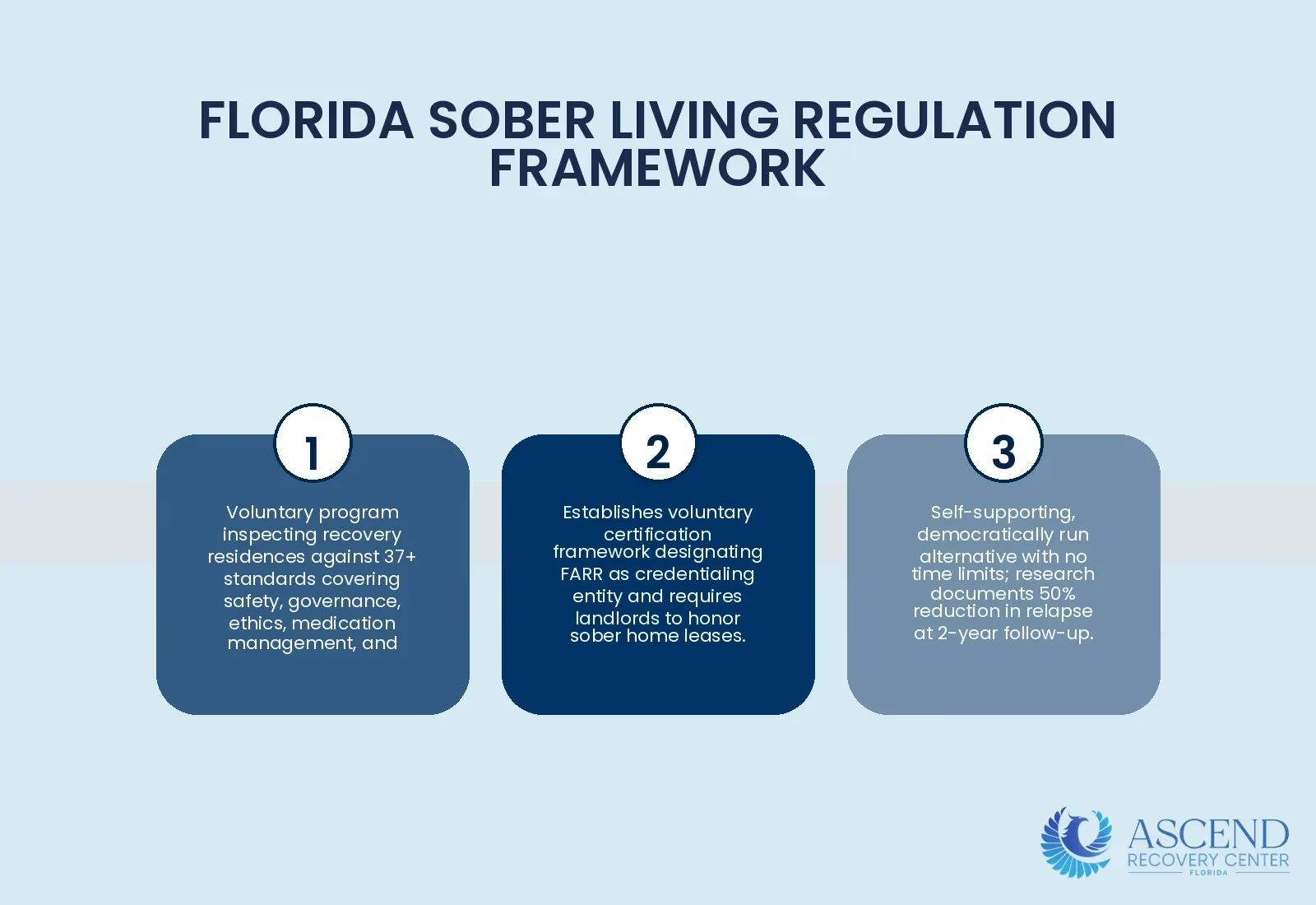
The 4 regulatory mechanisms for Florida sober living homes are:
- FARR certification: the Florida Association of Recovery Residences (FARR) operates a voluntary certification program that inspects recovery residences against 37+ standards covering safety, governance, ethics, medication management, drug testing, and resident rights — FARR-certified homes undergo annual re-inspection
- Florida Statute 397.487: establishes the voluntary certification framework for recovery residences in Florida, designating FARR as the credentialing entity to set standards and conduct inspections; it does not create tenancy protections, and subsection (11) permits immediate discharge or transfer of a resir home leases
- Oxford House model: Oxford Houses operate as a self-supporting, democratically run alternative with no time limits — 28,000+ residents in 3,200+ Oxford Houses nationally; Oxford House research (Jason et al., 2006, American Journal of Community Psychology) documents a 50% reduction in relapse and a 37% reduction in incarceration at 2-year follow-up
- County and municipal ordinances: Palm Beach County, Delray Beach, and other Florida municipalities maintain zoning regulations, occupancy limits, and operational standards for recovery residences that apply alongside state requirements
Florida Statute 397.4873 prohibits DCF-licensed treatment providers from referring clients to non-certified recovery residences — making FARR certification a de facto requirement for any home that receives treatment referrals. The U.S. Supreme Court's decision in City of Edmonds v. Oxford House (1995) confirmed that people in recovery are protected under the Fair Housing Act, which limits how far municipal zoning can restrict recovery residences. FARR certification remains the single most reliable indicator of sober living home quality in Florida — non-certified homes operate without external oversight — and FARR certifies homes against the 4 NARR support levels.
FL DCF LicensedFARR CertifiedWhat Are the 4 Levels of Sober Living?
NARR (National Alliance for Recovery Residences) classifies recovery residences into 4 levels based on the structure, staffing, and clinical services provided at each level. NARR, founded in 2011, publishes the national standard against which state affiliates like FARR certify recovery residences. Florida sober living homes operate primarily at NARR Levels 1 and 2. NARR Level 2 (monitored, peer-run with house managers) is the most common type in Florida.
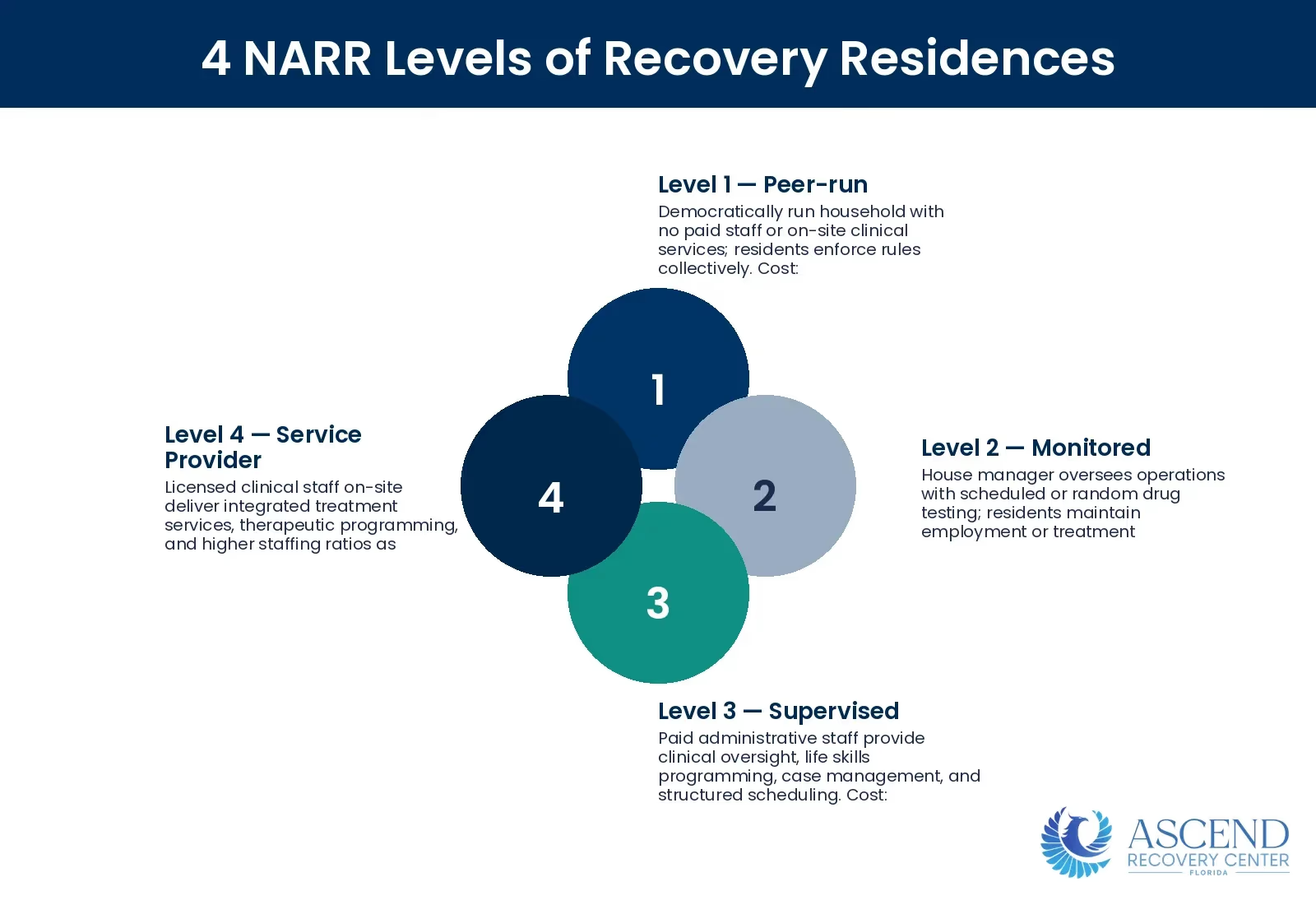
The 4 NARR levels of recovery residences are:
- Level 1 — Peer-run: democratically run household with shared responsibilities — no paid staff, no on-site clinical services, residents hold house meetings and enforce rules collectively — cost: $500–$1,000 per month
- Level 2 — Monitored: a house manager oversees operations, drug testing is conducted on a scheduled or random basis, residents participate in house meetings and maintain employment or treatment participation — cost: $800–$1,500 per month
- Level 3 — Supervised: paid administrative staff, clinical oversight, life skills programming, case management, and structured scheduling — residents participate in outpatient treatment and house-based programming — cost: $1,200–$2,000 per month
- Level 4 — Service provider: licensed clinical staff on-site, integrated treatment services, structured therapeutic programming, and higher staffing ratios — functions as a step-down from residential treatment — cost: $1,500–$2,500 per month
DCF-licensed outpatient programs coordinate placement with NARR Level 2 and Level 3 recovery residences for clients who need structured housing during IOP and outpatient treatment. Daily life inside these homes follows a standard set of house rules and resident expectations.
Sober Living Structure Levels
Peer-run, democratic, minimal structure
House manager, curfew, drug testing — most common in Florida
Clinical oversight, treatment coordination
Licensed, staffed 24/7, integrated services
FL DCF LicensedFARR CertifiedWhat Should I Expect in a Florida Sober Living Home?
Florida sober living home residents follow 8 standard house rules: maintain sobriety, submit to drug testing, observe curfew, complete chores, attend house meetings, participate in treatment or employment, pay rent on time, and respect fellow residents. SAMHSA documents that individuals in recovery residences for 6+ months have 68% abstinence rates at 12-month follow-up. These rules create the daily structure that supports early recovery.
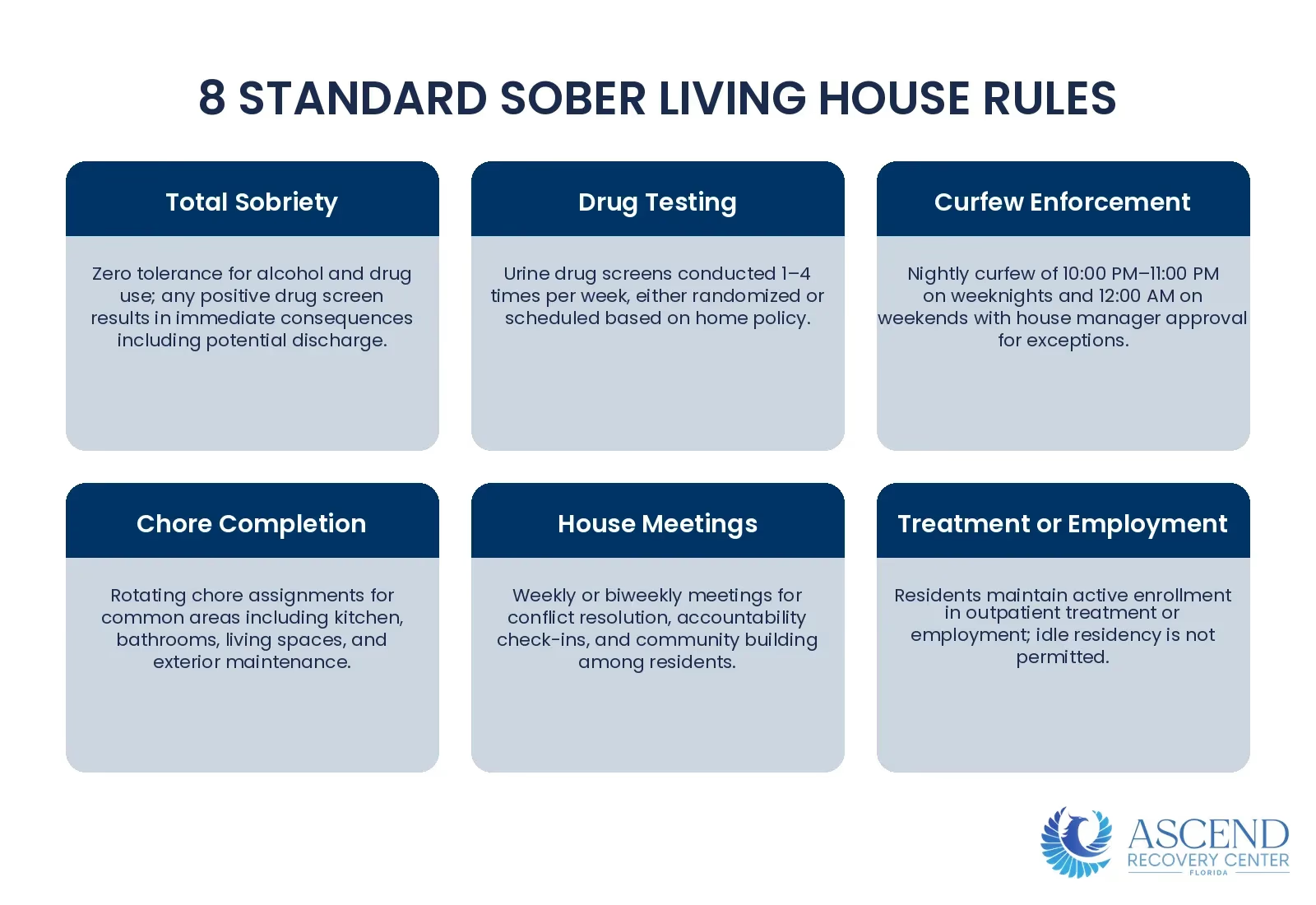
The 8 standard expectations in Florida sober living homes are:
- Total sobriety: zero tolerance for alcohol and drug use — any positive drug screen or evidence of substance use results in immediate consequences, including potential discharge
- Drug testing: urine drug screens (UDS) conducted 1–4 times per week, randomized or scheduled depending on the home's policy
- Curfew: nightly curfew of 10:00 PM–11:00 PM on weeknights and 12:00 AM on weekends, with exceptions approved by the house manager
- Chore completion: rotating chore assignments for common areas — kitchen, bathrooms, living spaces, exterior maintenance
- House meetings: weekly or biweekly house meetings for conflict resolution, accountability check-ins, and community building
- Treatment or employment participation: residents maintain active enrollment in outpatient treatment (PHP, IOP, or standard outpatient) or employment — no idle residency
- Rent payment: weekly or monthly rent paid on schedule — late payment results in written warnings and potential discharge
- Community respect: no violence, theft, sexual conduct between residents, or disruptive behavior — violations result in progressive disciplinary action
Residents share bedrooms (2–4 residents per room in most homes) and common living spaces. Private rooms are available at higher-cost homes — room configuration is one of the 4 variables that determine how much sober living costs in Florida.
Sober Living House Rules
Randomized urine drug screens
10-11 PM weeknights, 12 AM weekends
Accountability and conflict resolution
Work or active treatment participation
Varies by NARR level and location
SAMHSA: 6+ months in recovery residences produces 68% abstinence rate at 12-month follow-up
FL DCF LicensedFARR CertifiedSAMHSA documents that individuals in recovery residences for 6+ months have 68% abstinence rates at 12-month follow-up — recovery housing provides the structured, substance-free environment that reinforces clinical treatment gains from PHP and IOP.
Does Your Insurance Cover Drug Rehab Education?
Free, confidential verification in under 15 minutes.
How Much Does Sober Living Cost in Florida?
Sober living in Florida costs $500–$2,000 per month, depending on NARR level, location, amenities, and private versus shared room configuration. Insurance does not cover sober living home rent directly — SAMHSA documents average healthcare cost savings of $4,200 per year per resident in recovery housing versus the untreated population. Some IOP and outpatient insurance benefits cover clinical treatment that residents attend while living in a sober living home.
Florida sober living cost ranges by NARR level are:
- Level 1 (peer-run): $500–$1,000 per month — shared rooms, minimal amenities, no staff
- Level 2 (monitored): $800–$1,500 per month — shared rooms, house manager, drug testing, basic amenities
- Level 3 (supervised): $1,200–$2,000 per month — shared or private rooms, paid staff, life skills programming, transportation
- Level 4 (service provider): $1,500–$2,500 per month — private or semi-private rooms, clinical staff, therapeutic programming, comprehensive amenities
Palm Beach County sober living homes average $1,200–$1,800 per month for Level 2 monitored homes. Cost depends on 4 variables: geographic location (coastal Palm Beach County is more expensive than inland areas), room configuration (private rooms cost $400–$800 more per month than shared rooms), amenities (pool, gym, private bathroom), and included services (transportation, meals, laundry).
Payment methods for sober living homes include personal funds, family support, employment income, and scholarships or sliding-scale arrangements offered by some home operators. Cost is 1 of 7 selection criteria — choosing a sober living home in Florida requires evaluating 6 more.
How Do I Choose a Sober Living Home in Florida?
Choosing a sober living home in Florida requires evaluation of 7 factors: FARR certification, proximity to treatment, drug testing frequency, house manager credentials, peer community quality, house rules enforcement, and cost transparency. FARR certification is the single most important selection criterion — Florida does not mandate certification, so non-certified homes operate without external oversight.
The 7 evaluation criteria for Florida sober living homes are:
- FARR certification: FARR-certified homes meet 37+ standards for safety, governance, ethics, and operations — non-certified homes operate without external inspection
- Proximity to treatment: the sober living home is located within 15–30 minutes of the client's outpatient treatment provider — distance reduces treatment attendance compliance
- Drug testing frequency: homes that conduct 2–4 random drug screens per week provide higher accountability than homes testing 1 time per week or less
- House manager credentials: a qualified house manager holds a Certified Recovery Residence Manager (CRRM) credential through FARR and has personal recovery experience and training in crisis response
- Peer community quality: the home houses residents at similar stages of recovery — a home mixing individuals in early recovery (under 30 days) with long-term residents (6+ months) creates peer dynamic challenges
- House rules enforcement: the home enforces sobriety requirements, curfew, and participation rules consistently — inconsistent enforcement undermines recovery structure
- Cost transparency: the home provides a written financial agreement specifying rent amount, due dates, deposit requirements, and refund policy before move-in
DCF-licensed outpatient programs maintain relationships with FARR-certified recovery residences and provide placement coordination for enrolled clients. That coordination between the sober living home and the outpatient treatment provider is itself a structured clinical process.
How to Evaluate a Florida Sober Living Home
- 1Verify FARR Certification
FARR-certified homes meet 37+ standards — non-certified homes operate without external inspection or oversight
- 2Confirm Proximity to Treatment
Home within 15–30 minutes of outpatient provider — distance reduces treatment attendance compliance
- 3Check Drug Testing Frequency
2–4 random drug screens per week provide stronger accountability than once-weekly or scheduled testing
- 4Review House Rules Enforcement
Consistent enforcement of sobriety, curfew, and participation requirements is the foundation of effective sober living structure
- 5Get Cost Transparency in Writing
Written financial agreement specifying rent, due dates, deposits, and refund policy required before move-in
FL DCF LicensedFARR CertifiedHow Does Sober Living Coordinate with Outpatient Treatment?
Sober living homes coordinate with outpatient treatment providers to create a recovery environment where clinical treatment and structured housing reinforce each other. Individuals in recovery residences for 6+ months demonstrate 68% abstinence rates at 12-month follow-up (SAMHSA). Clients living in sober living homes attend PHP, IOP, or standard outpatient programming at a licensed treatment facility during the day and return to the sober living home in the evening.
The 4 coordination points between sober living and outpatient treatment are:
- Treatment attendance verification: the sober living home confirms the client's daily attendance at outpatient programming — non-attendance triggers corrective action from the house manager
- Drug testing coordination: drug screen results are shared between the sober living home and the treatment provider (with client consent under 42 CFR Part 2) to maintain a unified accountability system
- Clinical communication: the treatment provider and house manager communicate weekly regarding client progress, behavioral concerns, and treatment plan adjustments
- Discharge planning: the treatment provider and sober living home coordinate transition timing — clients step down from IOP to standard outpatient while remaining in sober living, then transition to independent living when clinically appropriate
DCF-licensed outpatient programs coordinate all 4 elements with partner recovery residences. Clinical staff communicate directly with house managers to ensure continuity of care between treatment and housing environments. A sober living home that refuses this coordination displays the first of several red flags.
Oxford House research (Jason et al., 2006, American Journal of Community Psychology) documents that Oxford House residents reduce relapse by 50% and incarceration by 37% at 2-year follow-up compared to matched controls — the peer accountability model extends the treatment episode into independent living.
What Are Red Flags in Florida Sober Living Homes?
Red flags in Florida sober living homes include 8 warning signs: patient brokering, kickback arrangements, no FARR certification, no drug testing, no house rules enforcement, overcrowding, unlicensed clinical services on-site, and financial exploitation. Florida Statute 817.505 prohibits patient brokering — the practice of paying or receiving payment for referring individuals to treatment providers or recovery residences is a third-degree felony.
The 8 red flags to identify problematic sober living homes in Florida are:
- Patient brokering: the home receives payment from a treatment provider for each resident referred — this practice violates Florida Statute 817.505 and is a third-degree felony
- Kickback arrangements: the home offers free or reduced rent in exchange for the resident attending a specific treatment provider — this arrangement indicates a financial relationship that prioritizes revenue over clinical appropriateness
- No FARR certification: the home operates without FARR certification and is not subject to inspection, standards enforcement, or ethical oversight
- No drug testing: the home does not conduct regular drug screening — absence of drug testing eliminates the primary accountability mechanism
- No house rules enforcement: the home does not enforce curfew, sobriety requirements, or participation expectations — residents use substances without consequences
- Overcrowding: the home houses more residents than the square footage and bathroom facilities support — fire code and occupancy limit violations indicate poor management
- Unlicensed clinical services: the home provides therapy, counseling, or psychiatric services without AHCA licensure — clinical services require state licensure under Florida Chapter 397
- Financial exploitation: the home charges excessive fees for services not provided, requires large non-refundable deposits, or imposes hidden costs after move-in
Prospective residents verify FARR certification at the FARR website (farronline.org) before committing to any sober living home in Florida. A DCF-licensed outpatient program coordinates placement with vetted, FARR-certified homes as part of admissions planning — contact the treatment provider before signing any housing agreement.
Are sober living homes just unregulated flophouses?
Common Misconception
"Sober living homes are unregulated — they're basically just cheap shared housing."
What the Evidence Shows
Reputable sober living residences operate under standards — in Florida through FARR (Florida Association of Recovery Residences) certification — with house rules, drug testing, peer accountability, and structure. Research on structured recovery residences (including the Oxford House model) associates them with higher abstinence rates, employment, and reduced incarceration. A certified recovery residence is a clinical asset in the continuum of care, not just housing.
Florida Association of Recovery Residences (FARR); Jason LA et al., Oxford House outcome research.


