


Referenced in this article
Key Takeaways
- Heroin addiction (opioid use disorder involving heroin) is a chronic brain disease defined by 11 DSM-5 diagnostic criteria across a mild-moderate-severe spectrum
- 3 FDA-approved medications treat opioid use disorder: buprenorphine, naltrexone, and methadone — each targets mu-opioid receptors through different mechanisms
- Heroin withdrawal onset occurs 6-12 hours after last use, peaks at 1-3 days, and resolves within 5-7 days for acute symptoms
- Medication-assisted treatment (MAT) combined with behavioral therapy reduces opioid relapse rates by 50-60% compared to behavioral therapy alone
- Ascend Recovery Center provides PHP, IOP, outpatient, and telehealth programming for opioid use disorder in Palm Beach Gardens, FL
What Is Heroin and How Is Heroin Classified?
Heroin (diacetylmorphine) is a semi-synthetic opioid derived from morphine, classified as a Schedule I controlled substance by the U.S. Drug Enforcement Administration (DEA). Schedule I classification indicates heroin has a high potential for abuse and no currently accepted medical use. Heroin is synthesized from morphine, which is extracted from the seed pod of opium poppy plants (Papaver somniferum). Street heroin appears in 3 primary forms: white powder, brown powder, and black tar heroin. According to the DEA's 2022 National Drug Threat Assessment, the majority of heroin in the eastern United States originates from South American sources, while black tar heroin predominates in western states. Fentanyl contamination of the heroin supply has become a critical public health emergency — the CDC reported that synthetic opioids (primarily fentanyl) were involved in 73,654 overdose deaths in 2022.
How Does Heroin Affect the Brain?
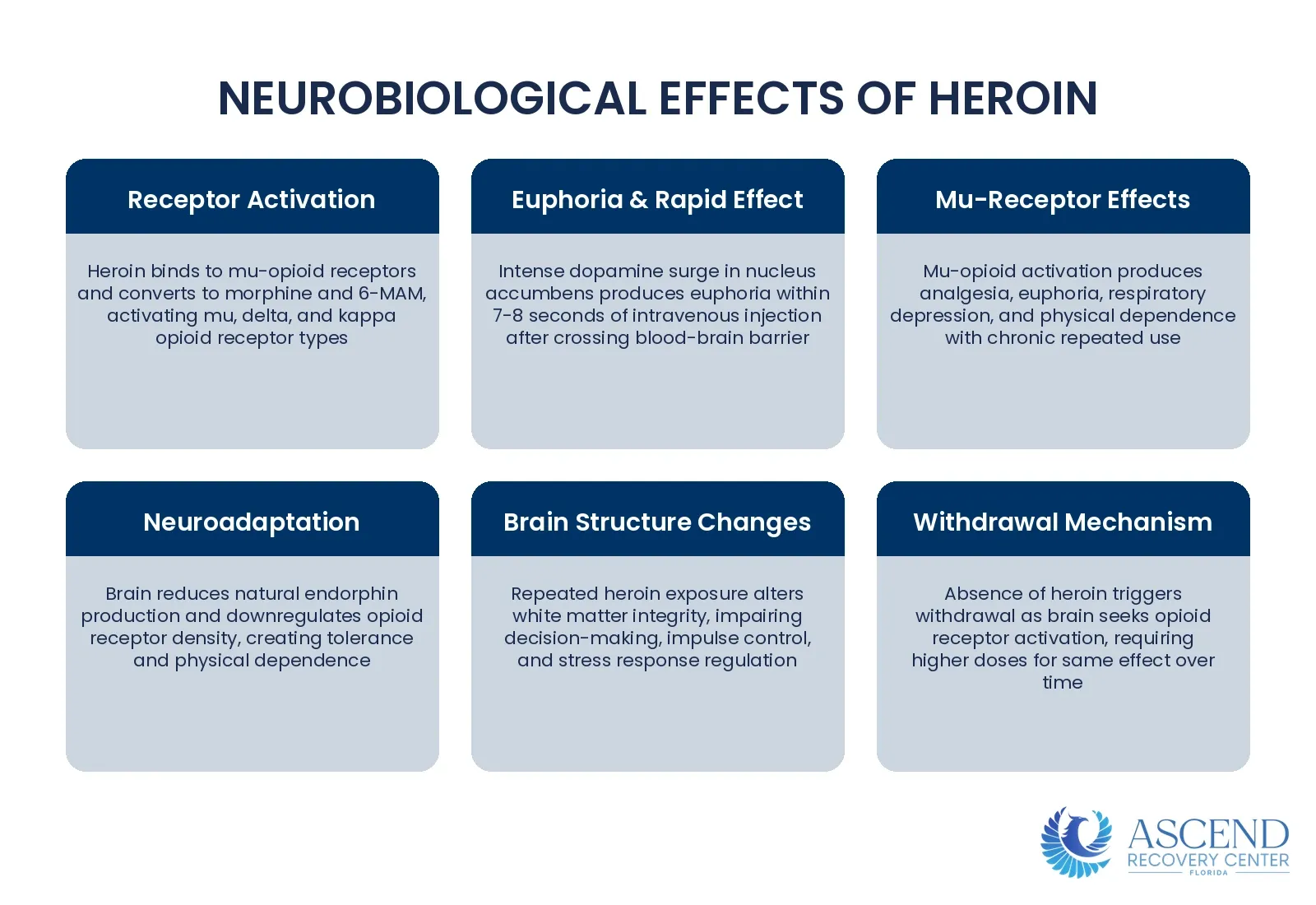
Heroin binds to mu-opioid receptors in the brain, triggering a rapid surge of dopamine in the nucleus accumbens that produces intense euphoria within 7-8 seconds of intravenous injection. After crossing the blood-brain barrier, heroin is converted to morphine and 6-monoacetylmorphine (6-MAM), both of which activate opioid receptors. The 3 primary opioid receptor types affected by heroin are mu, delta, and kappa receptors. Mu-opioid receptor activation produces 4 key effects: analgesia, euphoria, respiratory depression, and physical dependence. Chronic heroin use causes neuroadaptation — the brain reduces natural endorphin production and downregulates opioid receptor density. Neuroadaptation creates tolerance (requiring higher doses for the same effect) and physical dependence (experiencing withdrawal when heroin is absent). According to NIDA's 2023 research review, repeated heroin exposure alters white matter integrity in the brain, impairing decision-making, impulse control, and stress response regulation.
What Are the 11 DSM-5 Criteria for Opioid Use Disorder?
The DSM-5-TR defines opioid use disorder using 11 diagnostic criteria, and a diagnosis requires meeting 2 or more criteria within a 12-month period. Severity is graded on 3 levels: mild (2-3 criteria), moderate (4-5 criteria), and severe (6 or more criteria). The following are the 11 DSM-5-TR diagnostic criteria for opioid use disorder:
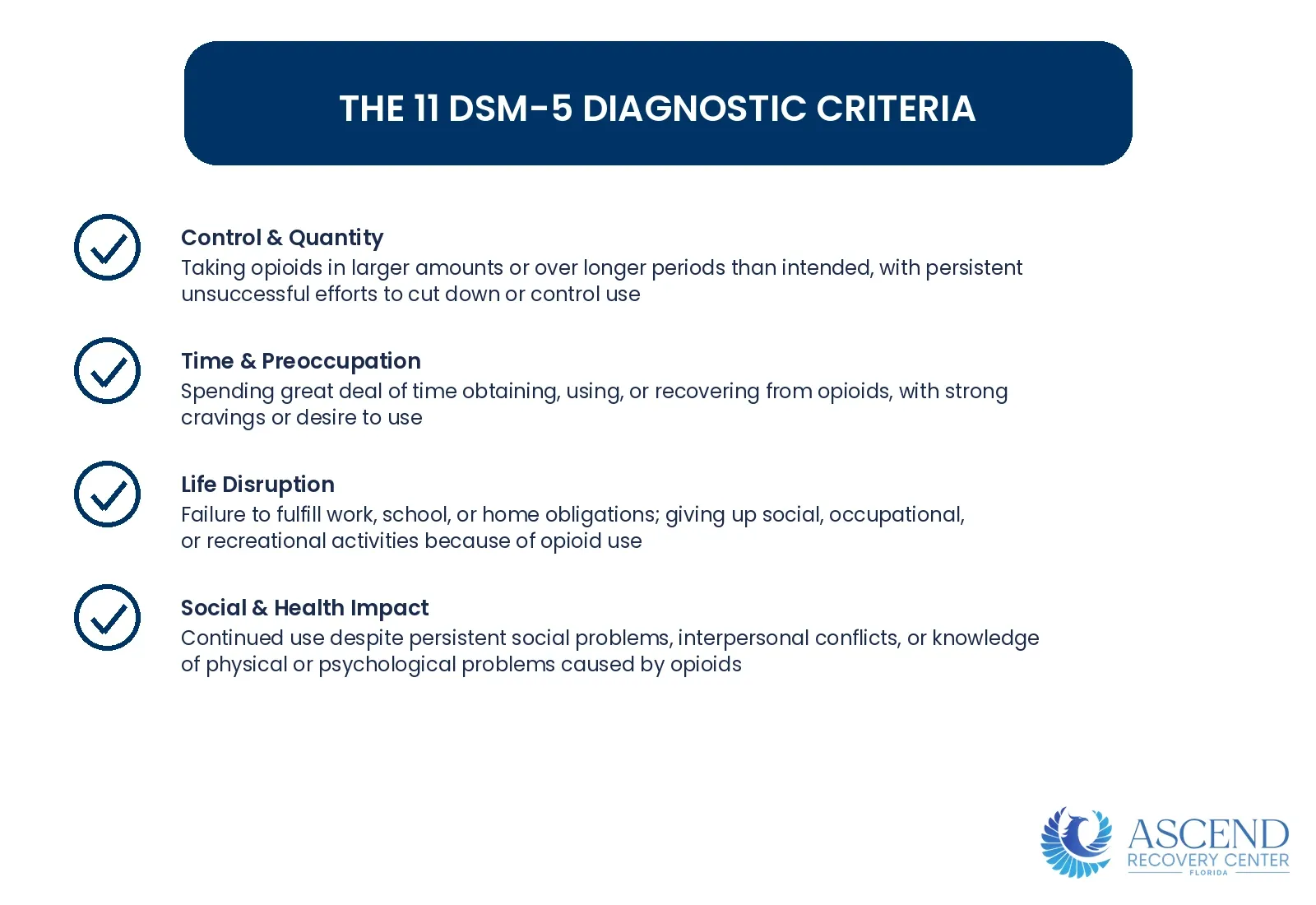
- Taking opioids in larger amounts or over a longer period than intended
- Persistent desire or unsuccessful efforts to cut down or control opioid use
- Spending a great deal of time obtaining, using, or recovering from opioids
- Craving or a strong desire to use opioids
- Recurrent opioid use resulting in failure to fulfill major obligations at work, school, or home
- Continued opioid use despite persistent social or interpersonal problems caused or worsened by opioid effects
- Giving up or reducing important social, occupational, or recreational activities because of opioid use
- Recurrent opioid use in situations in which opioid use is physically hazardous
- Continued opioid use despite knowledge of a persistent physical or psychological problem caused or exacerbated by opioids
- Tolerance — needing markedly increased amounts of opioids to achieve the desired effect, or markedly diminished effect with continued use of the same amount
- Withdrawal — experiencing the characteristic opioid withdrawal syndrome, or taking opioids (or a closely related substance) to relieve or avoid withdrawal symptoms
According to the American Psychiatric Association, severe opioid use disorder involving heroin carries the highest risk of overdose death among all substance use disorders.
“Medication-assisted treatment for opioid use disorder saves lives. Buprenorphine and methadone reduce overdose mortality, decrease illicit opioid use, and improve long-term recovery outcomes when combined with behavioral therapy.”
What Medications Are Used in MAT for Heroin Addiction?
Three FDA-approved medications form the basis of medication-assisted treatment for heroin addiction: buprenorphine, naltrexone, and methadone. Each medication targets opioid receptors through a different mechanism of action. According to NIDA's 2023 treatment research findings, MAT reduces opioid overdose deaths by 50%, decreases illicit opioid use, and improves treatment retention rates by 60% compared to abstinence-only approaches.
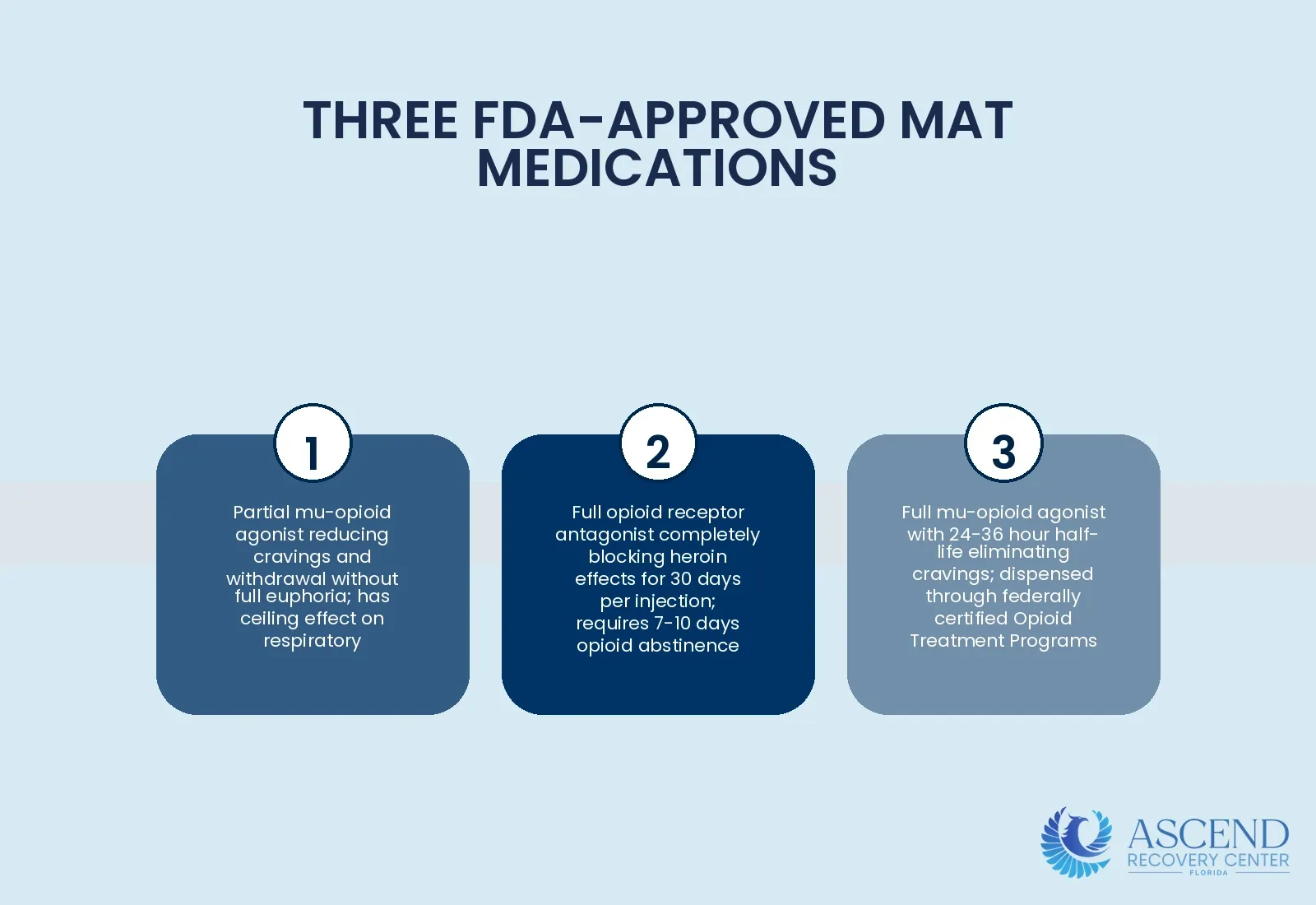
The following are the 3 FDA-approved medications for opioid use disorder:
- Buprenorphine (Suboxone, Sublocade) — a partial mu-opioid receptor agonist that reduces cravings and blocks withdrawal symptoms without producing full opioid euphoria. Buprenorphine has a ceiling effect on respiratory depression, making overdose less likely. Sublingual buprenorphine/naloxone (Suboxone) is the most commonly prescribed formulation. Sublocade is a monthly injectable buprenorphine formulation that eliminates daily dosing compliance concerns.
- Naltrexone (Vivitrol) — a full opioid receptor antagonist that completely blocks the effects of heroin and other opioids for 30 days per injection. Naltrexone requires 7-10 days of opioid abstinence before initiation to prevent precipitated withdrawal. Vivitrol (extended-release injectable naltrexone) is administered once monthly.
- Methadone — a full mu-opioid receptor agonist with a long half-life (24-36 hours) that eliminates cravings and withdrawal symptoms. Methadone is dispensed exclusively through federally certified Opioid Treatment Programs (OTPs). Methadone maintenance reduces heroin use, criminal activity, and HIV transmission.
Ascend Recovery Center coordinates MAT prescribing and monitoring as part of PHP and IOP treatment tracks. Individuals receiving MAT participate in the same therapeutic programming — including EMDR Therapy, group therapy, and relapse prevention — as all other clients.

Ascend Recovery Center — Palm Beach Gardens, FL
Does Your Insurance Cover Drug Rehab Education?
Free, confidential verification in under 15 minutes.
What Is the Heroin Withdrawal Timeline?
Heroin withdrawal symptoms begin 6-12 hours after the last dose, peak in intensity at 1-3 days, and resolve within 5-7 days for acute physical symptoms. Post-acute withdrawal symptoms (PAWS) — including insomnia, dysphoria, and cravings — persist for weeks to months in some individuals. Heroin's short half-life (approximately 30 minutes) produces a faster withdrawal onset compared to longer-acting opioids like methadone.
The following are the 4 phases of heroin withdrawal:
- Phase 1 (6-12 hours after last use) — anxiety, muscle aches, restlessness, lacrimation (watery eyes), rhinorrhea (runny nose), yawning, and sweating
- Phase 2 (12-48 hours) — insomnia, dilated pupils, piloerection (goosebumps), nausea, vomiting, diarrhea, abdominal cramping, and increased heart rate
- Phase 3 (48-72 hours, peak intensity) — severe muscle spasms, bone pain, elevated blood pressure, intense cravings, and inability to sleep
- Phase 4 (4-7 days, gradual resolution) — decreasing physical symptoms, persistent fatigue, reduced appetite, and continued psychological cravings
Heroin withdrawal is rarely life-threatening in otherwise healthy adults, but dehydration from vomiting and diarrhea requires medical monitoring. Ascend Recovery Center does not provide on-site medical detox but coordinates with licensed detoxification facilities to ensure clients complete medically supervised withdrawal before transitioning to structured outpatient treatment. The opioid detox timeline varies based on individual physiology, duration of heroin use, and whether fentanyl is involved. For a comprehensive overview of the detoxification process across all substance classes, see drug and alcohol detoxification and withdrawal management.
How Is Heroin Addiction Treated in PHP and IOP Programs?
Heroin addiction treatment in PHP and IOP programs combines medication-assisted treatment with evidence-based behavioral therapies delivered across 5-6 hours per day (PHP) or 3 hours per day (IOP). PHP operates 5 days per week and provides the highest level of outpatient clinical intensity. IOP operates 3-5 days per week and allows individuals to maintain employment, housing, and family responsibilities during treatment.
The following are 6 core components of heroin addiction treatment at Ascend Recovery Center:
- MAT coordination — ongoing buprenorphine or naltrexone prescribing and monitoring integrated with therapeutic programming
- Cognitive-behavioral therapy (CBT) — identifying and restructuring thought patterns that trigger heroin cravings and relapse behaviors
- Trauma-informed therapy — addressing underlying trauma using EMDR Therapy and other evidence-based trauma modalities, given that 60-80% of individuals with opioid use disorder report significant trauma histories
- Group therapy — peer-supported skill building in relapse prevention, emotional regulation, and interpersonal effectiveness
- Individual therapy — one-on-one clinical sessions focused on personal recovery planning, co-occurring mental health conditions, and life goals
- Family therapy — structured sessions that rebuild family communication, establish boundaries, and educate family members on opioid use disorder and recovery support
Clients step down from PHP to IOP to outpatient care as clinical progress allows. Treatment duration for heroin addiction ranges from 90 days to 12 months depending on severity, co-occurring conditions, and individual recovery trajectory.
“Individuals receiving medication-assisted treatment for opioid use disorder should remain on medication for a minimum of 12 months, and many individuals benefit from indefinite maintenance treatment to prevent relapse and overdose.”
What Are Effective Relapse Prevention Strategies for Heroin Addiction?
Effective relapse prevention for heroin addiction requires a combination of continued MAT, cognitive-behavioral skill development, structured peer support, and environmental modification. According to NIDA, 40-60% of individuals treated for substance use disorders experience relapse, a rate comparable to relapse rates for chronic medical conditions like hypertension (50-70%) and asthma (50-70%). Relapse is a clinical event, not a moral failure, and requires treatment plan adjustment rather than treatment termination.
The following are 7 evidence-based relapse prevention strategies for heroin addiction:
- Continued MAT adherence — maintaining buprenorphine or naltrexone reduces relapse risk by 50% or more compared to medication discontinuation
- Naloxone (Narcan) access — carrying naloxone provides a critical safety net against fatal overdose, especially given fentanyl contamination of the drug supply
- Trigger identification and management — recognizing and avoiding 3 categories of relapse triggers: environmental cues (people, places, paraphernalia), emotional states (stress, anger, loneliness), and social pressure
- 12-step or mutual-aid participation — regular attendance at Narcotics Anonymous (NA) or SMART Recovery meetings provides peer accountability and recovery community connection
- Ongoing therapy — continuing individual or group therapy addresses emerging stressors and maintains coping skill development
- Sober living structure — transitioning to sober living homes in Florida provides a drug-free environment with peer support during early recovery
- Lifestyle restructuring — building daily routines around exercise, nutrition, sleep hygiene, and meaningful activities reduces idle time and associated craving patterns

Ascend Recovery Center — Palm Beach Gardens, FL
How Does Family Involvement Support Heroin Addiction Recovery?
Family involvement in heroin addiction treatment improves treatment retention by 20-30% and reduces relapse rates, according to a 2021 meta-analysis published in the Journal of Substance Abuse Treatment. Opioid use disorder affects the entire family system — family members frequently experience secondary trauma, enabling behaviors, financial strain, and disrupted attachment patterns. Structured family therapy addresses these dynamics while building a supportive recovery environment.
The following are 5 ways family involvement supports heroin addiction recovery:
- Family education sessions — teaching family members about the neuroscience of opioid addiction, the role of MAT, and evidence-based communication strategies
- Boundary setting — helping family members establish and maintain healthy boundaries that support recovery without enabling continued substance use
- Communication repair — rebuilding trust and open dialogue damaged by active addiction through structured therapeutic exercises
- Codependency awareness — identifying and modifying codependent patterns that inadvertently sustain addictive behaviors
- Aftercare coordination — involving family in discharge planning, relapse response planning, and ongoing recovery support
Ascend Recovery Center includes family therapy sessions within PHP and IOP programming. Family members also receive referrals to Al-Anon, Nar-Anon, and family-specific support resources. To discuss family involvement in heroin addiction treatment, contact at (561) 956-1082.
Opioid/Heroin Use Self-Assessment
1 / 11Answer 11 questions based on DSM-5 substance use disorder diagnostic criteria. This provides general guidance — a clinical evaluation determines diagnosis.
Using opioids in larger amounts or for longer periods than intended?
Confidential · Not a clinical diagnosis · HIPAA protected