


Referenced in this article
Key Takeaways
- Illicit fentanyl — 50 to 100 times more potent than morphine — is now present in virtually every segment of the illicit drug supply, killing 73,838 Americans in 2022 and representing the single greatest overdose risk in the history of the opioid epidemic; a dose the size of a few grains of salt is potentially lethal, and non-uniform mixing in counterfeit pills makes every exposure unpredictable.
- Medications for Opioid Use Disorder (MOUD) — primarily buprenorphine (Suboxone) in the outpatient setting — is the evidence-based standard of care for fentanyl addiction; it reduces overdose mortality by 50–70%, eliminates acute withdrawal, suppresses cravings, and dramatically improves treatment retention compared to behavioral treatment alone or abstinence-based approaches.
- Overdose risk is highest in the first 30 days after leaving treatment or stopping MOUD — not during treatment — because opioid tolerance reverses rapidly during abstinence and a person who relapses with reduced tolerance using their prior dose of illicit fentanyl faces a potentially lethal exposure; naloxone for patients and families is a non-negotiable component of fentanyl treatment.
- Buprenorphine induction can be safely performed in the PHP/IOP setting by timing the first dose to a COWS score of 8 or above to prevent precipitated withdrawal; once stable, patients engage fully in CBT, contingency management, and group therapy — MOUD and behavioral therapy combined produce significantly better outcomes than either alone.
- MOUD is not 'trading one addiction for another' — this harmful misconception has no scientific basis and is explicitly refuted by SAMHSA, ASAM, and every major addiction medicine organization; buprenorphine-maintained patients taking medication as prescribed are receiving evidence-based medical treatment for a chronic disease, and SAMHSA recommends indefinite MOUD continuation for most patients.
Why Is Fentanyl So Dangerous?
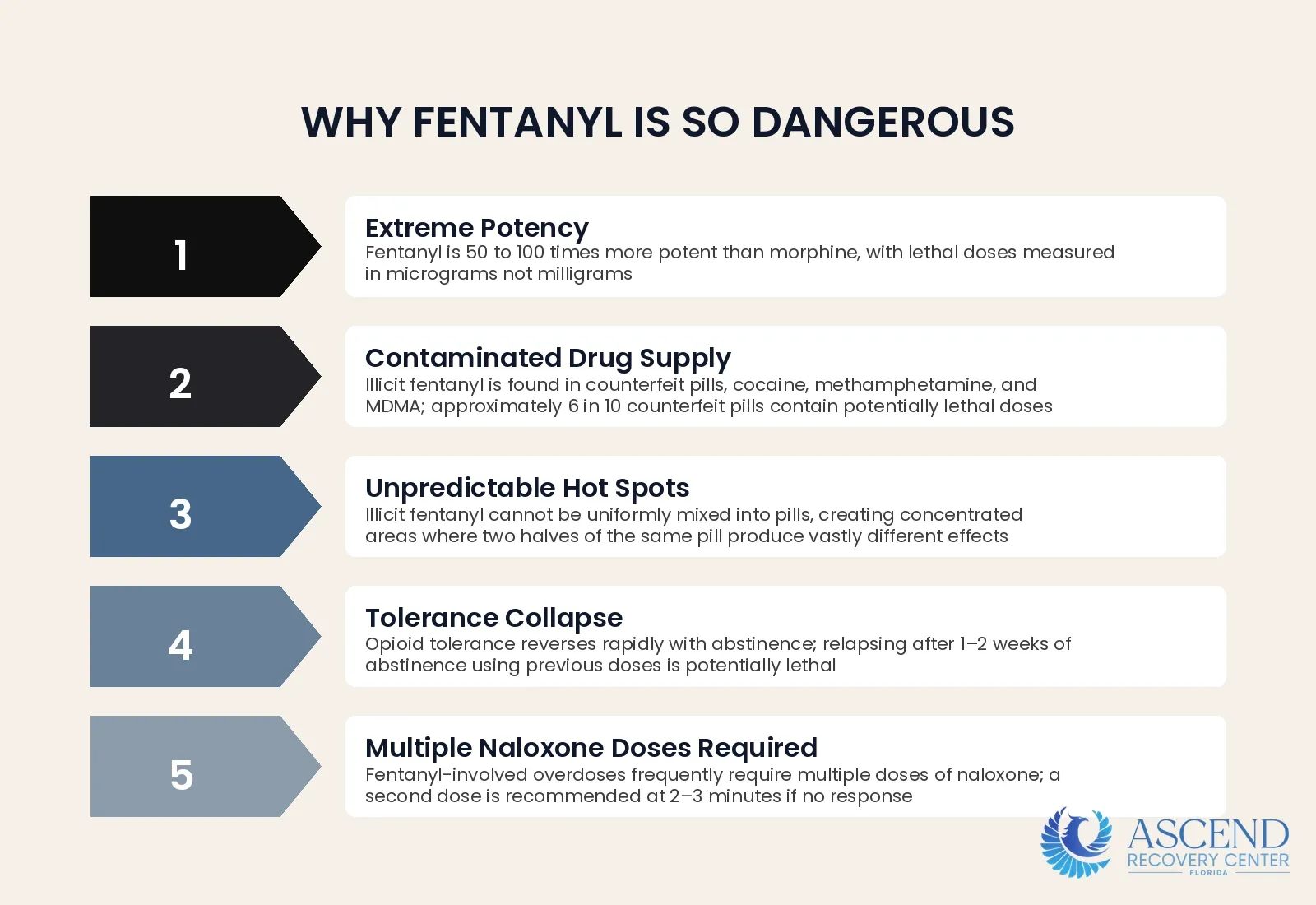
Fentanyl is 50 to 100 times more potent than morphine by weight, making it categorically different from other opioids in its overdose risk — a lethal dose is measured in micrograms, not milligrams, and illicit manufacturing introduces fatal inconsistencies that make every exposure unpredictable. Understanding why fentanyl is so uniquely dangerous requires understanding both its pharmacology and the specific ways illicit production amplifies that danger.
From a pharmacological standpoint, fentanyl's extreme potency is a function of its lipid solubility and binding affinity for the mu-opioid receptor. It crosses the blood-brain barrier faster than morphine and binds with greater affinity — producing rapid respiratory depression that can render a person unconscious and stop their breathing within minutes of exposure. Pharmaceutical fentanyl is used in carefully controlled medical settings for severe pain management and surgical anesthesia precisely because of this rapid, powerful effect. In those settings, doses are measured with precision instruments and patients are monitored. Illicit use has none of these safeguards.
The specific dangers of illicit fentanyl that drive the current overdose crisis:
- Contamination of the entire drug supply: illicit fentanyl is no longer simply "heroin's replacement" — it is found in counterfeit oxycodone pills, counterfeit Xanax, cocaine, methamphetamine, and MDMA; many users have no idea they are consuming fentanyl; DEA analysis of seized counterfeit pills found that approximately 6 in 10 contain a potentially lethal dose; a person who has never used an opioid can be fatally exposed through a pressed counterfeit pill that looks identical to a pharmaceutical product
- Hot spots in pressed pills: illicit fentanyl cannot be uniformly mixed into a pill at the concentrations being used; the result is "hot spots" — areas of the pill where fentanyl is concentrated far above the average; this means two halves of the same pill can produce wildly different effects, and even experienced users who believe they know their tolerance cannot predict the dose they receive
- Tolerance collapse after abstinence: opioid tolerance is physiological and reverses rapidly with abstinence; a person who used fentanyl heavily and then stopped — even for 1–2 weeks — has dramatically reduced tolerance; if they relapse and use the same amount they used before, it is now potentially lethal; this is the mechanism behind the dramatic overdose risk in the first 30 days post-discharge from treatment or jail/prison
- Naloxone requirements: fentanyl-involved overdoses frequently require multiple doses of naloxone (Narcan) to reverse due to fentanyl's potency and the speed of respiratory depression; the standard recommendation is to administer a second dose if there is no response within 2–3 minutes; calling 911 is always essential even if naloxone appears effective, because naloxone wears off faster than fentanyl — a person who appears to revive can re-enter respiratory depression; Florida's harm reduction infrastructure includes free naloxone at every pharmacy without a prescription

Opioid Potency Comparison (Morphine Equivalents)
The baseline reference opioid — 1 morphine equivalent; used clinically for moderate to severe pain; standard against which all opioid potency is measured
Approximately 1.5x more potent than morphine; widely prescribed for pain management; diversion of prescription oxycodone has historically been a major driver of opioid use disorder
Approximately 2x more potent than morphine by weight; rapidly metabolized to morphine; historically the primary driver of opioid overdose deaths before illicit fentanyl displaced it
50–100x more potent than morphine; pharmaceutical fentanyl is used in controlled medical settings for severe pain and anesthesia; illicit fentanyl analogs including carfentanil reach up to 10,000x morphine potency — a dose invisible to the naked eye can be lethal

 FL DCF LicensedFARR Certified
What Are the Signs of Fentanyl Addiction?
Fentanyl addiction is diagnosed as opioid use disorder (OUD) under the DSM-5 — a chronic medical condition characterized by compulsive opioid use despite significant harm, physical dependence, and tolerance that develops rapidly given fentanyl's potency. Recognizing fentanyl addiction across behavioral, physical, and overdose-risk domains is critical for early intervention, because the progression from first use to overdose risk is compressed relative to other opioids.
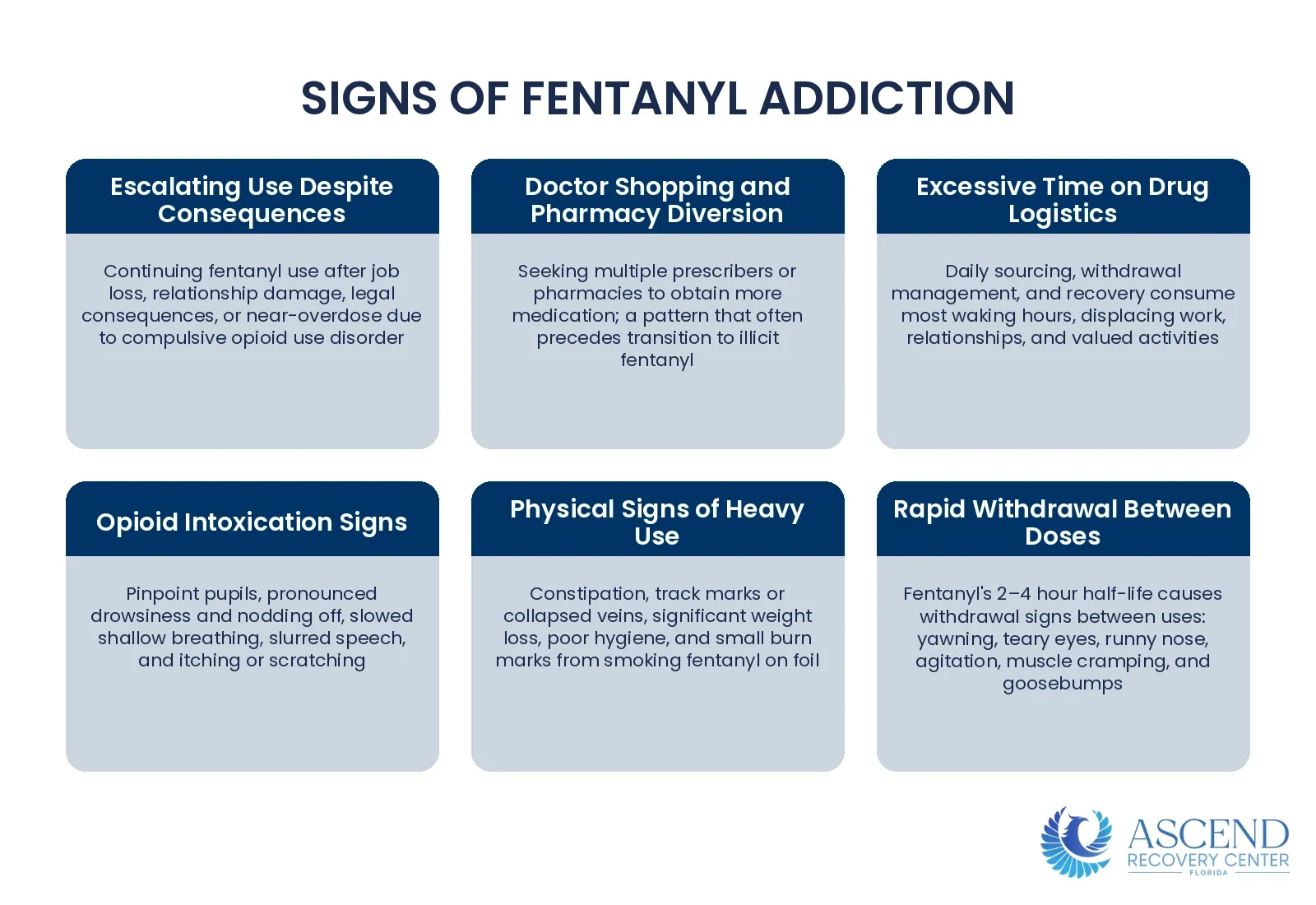
Behavioral signs of fentanyl addiction:
- Escalating use despite consequences: continuing to use fentanyl after experiencing job loss, relationship damage, legal consequences, or a near-overdose; the compulsive nature of opioid use disorder means these consequences do not function as deterrents the way they might for someone without the disorder
- Doctor shopping and pharmacy diversion: for individuals whose fentanyl addiction began with pharmaceutical opioids, seeking multiple prescribers or using multiple pharmacies to obtain more medication; this pattern precedes many transitions to illicit fentanyl when prescriptions become unavailable
- Excessive time spent using, obtaining, and recovering: the daily logistics of maintaining fentanyl use — sourcing supply, managing withdrawal, recovering from use — can consume most waking hours, displacing work, relationships, and previously valued activities
- Social withdrawal and secrecy: progressive isolation from family and friends as addiction advances; lying about drug use, missing family events, or disappearing for periods; financial problems related to drug procurement — unexplained withdrawal of funds, missing valuables, borrowing money
Physical signs of fentanyl use and addiction:
- Opioid intoxication signs: pinpoint (constricted) pupils even in dim light; pronounced drowsiness or "nodding off" — falling asleep mid-sentence or mid-activity; slowed, shallow breathing; slurred speech; slowed reaction time; itching or scratching (opioids cause histamine release)
- Signs of heavy use or addiction: constipation that resists normal remedies; track marks, bruising, or collapsed veins if injecting; significantly reduced appetite and weight loss; poor hygiene and personal neglect as the focus on drug use crowds out self-care; small burn marks on fingers or lips from smoking fentanyl on foil
- Withdrawal signs between doses: fentanyl's short half-life (2–4 hours) means withdrawal begins quickly between doses; individuals in fentanyl dependence may appear fine shortly after a dose and profoundly uncomfortable a few hours later — yawning, teary eyes, runny nose, agitation, muscle cramping, and goosebumps between uses are withdrawal signs, not illness
Overdose signs requiring immediate Narcan and 911: blue or grayish lips and fingernails (cyanosis from hypoxia); unresponsive to voice or sternal rub; gurgling or slow, labored breathing (the "death rattle"); limp body; pinpoint pupils. Administer naloxone nasally or intramuscularly, call 911 immediately, place the person in the recovery position, and administer a second naloxone dose at 2–3 minutes if no response. Florida's Good Samaritan law provides protection from arrest for drug-related offenses for people who call 911 during an overdose.
One clinically important distinction: physical dependence is not the same as addiction. Patients prescribed opioids for chronic pain may develop physical dependence — their body adapts to the presence of the opioid and withdrawal occurs upon discontinuation — without developing the behavioral hallmarks of addiction (compulsive use, loss of control, use despite harm). Both physical dependence and addiction are within the scope of treatment, but they require different clinical approaches. MOUD treats both.
What Does Fentanyl Withdrawal Feel Like?
Fentanyl withdrawal is medically non-lethal in isolation — unlike alcohol and benzodiazepine withdrawal, opioid withdrawal does not cause seizures or cardiac events — but it is one of the most acutely uncomfortable medical experiences a person can endure, and the combination of physical agony and psychological desperation it produces makes unmanaged withdrawal both deeply inhumane and clinically counterproductive.
Several features of fentanyl withdrawal distinguish it from other opioid withdrawal:
- Earlier onset than heroin: fentanyl has a plasma half-life of 2–4 hours in the immediate-release illicit form, compared to 8–12 hours for heroin (after conversion to morphine); this means fentanyl withdrawal can begin within 4–6 hours of last use, compared to 8–24 hours for heroin; daily fentanyl users may begin experiencing withdrawal before they even realize their last use has worn off, contributing to continuous dosing patterns and difficulty stopping without medical support
- Severity at peak: the Clinical Opioid Withdrawal Scale (COWS) — a validated 11-item clinical tool assessing pulse, sweating, restlessness, pupil size, bone and joint aches, GI symptoms, anxiety, goosebumps, and tremor — is used to objectively measure withdrawal severity and guide treatment; scores above 12 indicate moderate-severe withdrawal; fentanyl withdrawal, particularly from high-dose or long-duration use, frequently reaches severe COWS scores
- Buprenorphine induction timing: buprenorphine must be initiated when the patient has a COWS score of 8 or above (indicating moderate withdrawal) to prevent precipitated withdrawal — the paradoxical worsening of withdrawal symptoms that occurs when buprenorphine's partial agonist activity displaces remaining fentanyl from opioid receptors before the person is sufficiently withdrawn; clinical staff at ASAM-certified programs monitor COWS scores to time induction precisely and safely
The clinical evidence on unmanaged vs. medically-managed opioid withdrawal is unambiguous: attempting to "tough out" fentanyl withdrawal without MOUD is associated with treatment dropout rates exceeding 90% in most studies and dramatically elevated overdose risk during and after the attempt. The standard of care is buprenorphine or methadone induction, which eliminates acute withdrawal symptoms entirely and provides the neurological stabilization required for behavioral treatment to engage. This is not a comfort measure — it is the primary medical treatment for fentanyl use disorder.
Fentanyl Withdrawal Timeline
- 1Hours 0–12: Onset
Anxiety, restlessness, yawning, runny nose, watery eyes, and sweating begin within 4–8 hours of last use — significantly faster than heroin withdrawal (8–24 hours) due to fentanyl's shorter half-life. The 4-hour onset catches clients off guard.
- 2Hours 12–24: Intensification
Muscle aches and cramps emerge; insomnia begins; abdominal cramping and early nausea; goosebumps and skin hypersensitivity; escalating anxiety and agitation. The COWS (Clinical Opioid Withdrawal Scale) score is used to assess severity and guide treatment decisions.
- 3Days 1–3: Peak Withdrawal
Severe muscle and bone pain — described by patients as feeling like the flu multiplied tenfold; nausea, vomiting, diarrhea; profuse sweating; insomnia; profound anxiety and dysphoria; intense, overwhelming cravings. The combination of physical pain and psychological desperation makes peak withdrawal the highest relapse risk period.
- 4Days 3–5: Gradual Improvement
Acute physical symptoms begin to subside. GI symptoms improve. However, emotional dysregulation, insomnia, and significant cravings persist — this is not yet comfort. Clients commonly relapse during this phase believing they can tolerate "just a little" and underestimating their lost tolerance.
- 5Days 5–10: Subacute Phase
Most acute physical symptoms resolved. Fatigue, mood instability, sleep disruption, and episodic cravings continue. Cognitive function improves. MAT with buprenorphine eliminates the entire acute withdrawal phase — a patient properly inducted on buprenorphine does not experience this timeline.
- 6Weeks 2–12+: PAWS
Post-Acute Withdrawal Syndrome — anxiety, depression, sleep disruption, difficulty concentrating, and episodic cravings that may appear without obvious triggers. PAWS is the most common driver of long-term relapse and responds best to MOUD continuation, structured behavioral treatment, and time.
FL DCF LicensedFARR Certified“Buprenorphine maintenance is associated with significant reductions in illicit opioid use, overdose mortality, criminal activity, and transmission of infectious disease. The evidence for its clinical benefit is among the strongest in addiction medicine. Withholding it on ideological grounds is not treatment — it is harm.”
What Are the Evidence-Based Treatments for Fentanyl Addiction?
Medications for Opioid Use Disorder (MOUD) is the standard of care for fentanyl addiction — not an optional addition, not a crutch, and not "trading one addiction for another." The clinical evidence across decades and thousands of randomized controlled trials is unambiguous: MOUD reduces overdose mortality by 50–70%, reduces illicit opioid use, improves treatment retention, and dramatically improves social and vocational functioning compared to abstinence-only or behavioral-only approaches. The three FDA-approved MOUD medications have distinct mechanisms, clinical profiles, and appropriate patient populations:
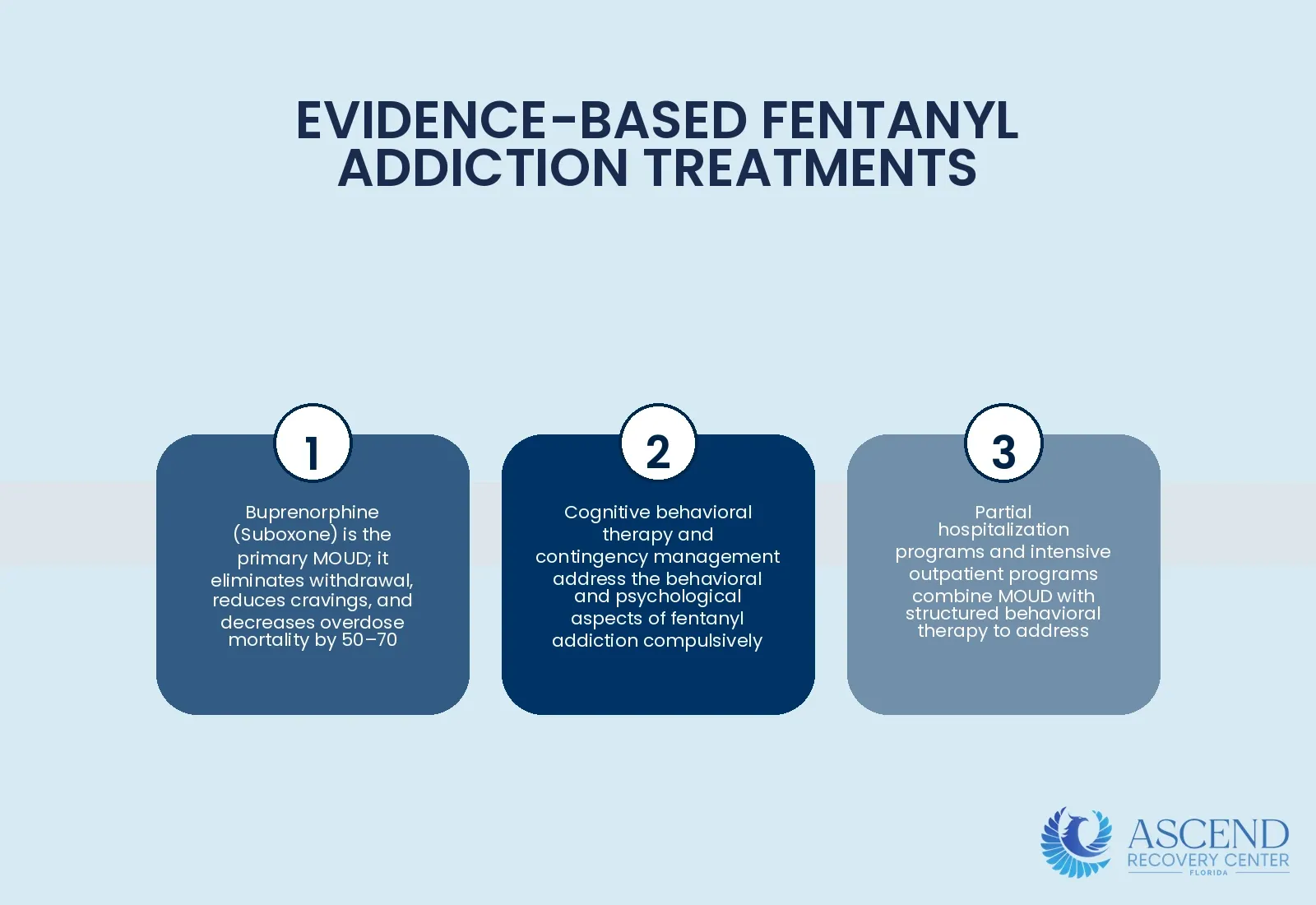
- Buprenorphine (Suboxone, Subutex, Sublocade): the primary MOUD for PHP and IOP settings; buprenorphine is a partial opioid agonist — it activates opioid receptors sufficiently to eliminate withdrawal and cravings without producing euphoria at therapeutic doses; its ceiling effect on respiratory depression makes it dramatically safer than full opioid agonists in overdose; Suboxone (buprenorphine/naloxone sublingual film) is the most commonly prescribed formulation; Sublocade is an extended-release monthly injectable — valuable for adherence; the DEA X-waiver requirement for prescribing buprenorphine was removed by the Consolidated Appropriations Act of 2023, allowing any DEA-registered provider to prescribe; this significantly expands access — and under Florida's telehealth statute (456.47), buprenorphine can be prescribed via telehealth to established patients; buprenorphine can be initiated in the PHP/IOP setting after COWS ≥8 confirmation and continued throughout outpatient treatment
- Methadone: a full opioid agonist dispensed exclusively through licensed Opioid Treatment Programs (OTPs); patients initially attend the clinic daily for observed dosing, with take-home doses earned through demonstrated compliance; methadone achieves the highest treatment retention rates among the most severe OUD presentations and has decades of mortality-reduction data; the regulatory burden and daily attendance requirement make it less suitable for working individuals or those with transportation barriers, but for the right patient profile — particularly those with prior failed buprenorphine trials or high-dose, long-duration opioid dependence — it remains the most effective option
- Naltrexone (Vivitrol): an opioid antagonist that blocks all opioid receptor activity; it produces no opioid effect and is not a controlled substance; the monthly injectable formulation eliminates adherence concerns; the critical requirement is complete opioid detoxification — minimum 7 days opioid-free for short-acting opioids, 10–14 days for long-acting opioids — before initiation; administering naltrexone too soon causes precipitated withdrawal; head-to-head trials show lower treatment retention with naltrexone compared to buprenorphine, but for individuals who strongly prefer complete opioid blockade, have completed detox, and have robust social support, Vivitrol is an effective option
Behavioral therapies as MOUD complements:
- Cognitive-behavioral therapy (CBT): addresses opioid-related thought patterns, high-risk situations, and the behavioral triggers that maintain fentanyl use; core components include functional analysis of use, coping skill development, cognitive restructuring, and relapse prevention planning; CBT delivers durable skill-based relapse protection that persists after treatment completion in ways that pharmacotherapy alone cannot
- Contingency management (CM): systematic positive reinforcement of confirmed abstinence — the most consistently evidence-supported behavioral adjunct across substance use disorders; in fentanyl treatment, CM incentivizes treatment attendance, medication adherence, and opioid-negative urine screens
- Motivational interviewing (MI): essential during early engagement when ambivalence about MOUD is high; addresses common resistance to medication treatment, stigma-driven refusal of buprenorphine, and the patient's readiness for the commitment of long-term MOUD; the evidence is clear that combined MOUD plus behavioral treatment produces significantly better outcomes than either alone
The SAMHSA and ASAM clinical guidelines are explicit: withholding MOUD from a patient with fentanyl use disorder on the basis of a "drug-free" treatment philosophy is not evidence-based and exposes patients to preventable overdose risk. Any treatment program that categorically prohibits MOUD should not be treating fentanyl use disorder.
MOUD-integrated PHP and IOP treatment is available at DCF-licensed programs. online to confirm coverage for MOUD-integrated treatment.
FL DCF LicensedFARR Certified
Ascend Recovery Center — Palm Beach Gardens, FL
Does Your Insurance Cover Drug Rehab Education?
Free, confidential verification in under 15 minutes.
What Level of Care Is Appropriate for Fentanyl Addiction Treatment?
The appropriate level of care for fentanyl addiction treatment is determined by ASAM Criteria across six clinical dimensions — including withdrawal risk, medical and psychiatric comorbidities, prior treatment history, and psychosocial environment — with most fentanyl-dependent individuals entering treatment at either a medically managed detoxification level or directly into PHP (ASAM Level 2.5) with concurrent buprenorphine induction.
When medically managed detox (ASAM Level 3.7) is indicated:
- Fentanyl combined with alcohol or benzodiazepine dependence — polysubstance withdrawal creates life-threatening seizure risk that requires 24-hour medical monitoring; fentanyl-only withdrawal, while severe, is not life-threatening in isolation, but adding alcohol or benzo withdrawal changes the clinical equation entirely
- Significant medical comorbidity (cardiac, respiratory, hepatic disease) requiring close monitoring during withdrawal
- Prior overdose events suggesting high instability during withdrawal periods
- Severe psychiatric comorbidity requiring stabilization before PHP engagement
- Unstable housing or social environment incompatible with PHP-level outpatient treatment
- Prior failed outpatient attempts with repeated relapse during withdrawal management
For individuals who do not meet criteria for medically managed detox, buprenorphine induction can be safely performed in the PHP/IOP setting:
- The clinical team assesses COWS score at intake and throughout early PHP attendance
- First buprenorphine dose is administered when COWS reaches ≥8 — moderate withdrawal confirmed — to prevent precipitated withdrawal
- Sublingual Suboxone is titrated over the first 3 to 7 days to the minimum effective dose that eliminates withdrawal and cravings without sedation
- Once stabilized on buprenorphine (typically within 3–7 days), the patient can fully engage with behavioral therapy components
- Sublocade (monthly injectable buprenorphine) may be initiated after several weeks of stable sublingual dosing for patients who prefer the simplicity and adherence assurance of a once-monthly injection
PHP (ASAM Level 2.5) for fentanyl addiction: the gold standard outpatient level of care for fentanyl use disorder following buprenorphine stabilization; 4–6 hours of daily structured programming Monday through Friday (and sometimes Saturday) integrates MOUD continuation, individual CBT, group therapy, contingency management, psychiatric medication management, and family education; the daily contact provides maximum therapeutic intensity while allowing clients to maintain housing and family connections; PHP is structured to initiate buprenorphine during the program for appropriate candidates
IOP (ASAM Level 2.1) for fentanyl addiction: appropriate as a step-down from PHP after neurological stabilization, or as a primary level of care for individuals with briefer fentanyl use histories, robust social support, stable housing, and established MOUD; IOP provides 9–15 hours per week of clinical services, allowing work and family obligations to continue; MOUD is continued and managed throughout IOP
For individuals who need help accessing medically managed detox placement before beginning PHP, DCF-licensed admissions teams can coordinate direct placement referrals. or visit the for same-day assessment.
“Fentanyl analogs now contaminate virtually every segment of the illicit drug supply. This is no longer a crisis affecting only people who seek opioids — it is a population-level threat that requires population-level responses including naloxone access, fentanyl test strips, and dramatically expanded MOUD access.”
What Is the Overdose Risk During Fentanyl Treatment?
One of the most important clinical facts about fentanyl addiction treatment — and one that is frequently misunderstood by patients, families, and even providers — is that overdose risk is highest not during active addiction, but in the first 30 days after leaving treatment without MOUD continuation or stopping MOUD. Understanding the mechanism behind this overdose window is essential for safe treatment transitions and for communicating the non-negotiable importance of MOUD to patients and families.
The tolerance collapse mechanism:
- Opioid tolerance is a physiological adaptation — the brain reduces receptor sensitivity and alters receptor expression in response to chronic opioid exposure; this is why a fentanyl-dependent person can take doses that would be lethal to an opioid-naive person
- When opioid use stops — through treatment, incarceration, or hospitalization — tolerance reverses rapidly; within 5–7 days of abstinence, opioid tolerance has decreased substantially; within 2–4 weeks, it may be near-baseline
- A person who relapses after 30 days of abstinence and uses the same dose they used before that abstinence period may receive 5–10 times more opioid effect than they anticipate — because their tolerance no longer exists at the level it was when they established that dose as "their normal"
- With illicit fentanyl, this tolerance collapse occurs in the context of a drug supply where dosing is completely unpredictable; the combination of reduced tolerance and variable-potency illicit fentanyl is the mechanism behind the high post-treatment overdose death rate
Naloxone for every patient and family member:
- Every patient entering fentanyl addiction treatment should receive naloxone at the time of admission — and their household members should receive it and know how to administer it
- In Florida, naloxone is available without a prescription at every pharmacy statewide under the standing order system; it is also available free through community health organizations and harm reduction programs
- Standard intranasal naloxone (Narcan 4mg) is the most common formulation; higher-strength naloxone (8mg) may be appropriate given fentanyl's potency; for known high-risk individuals, NEXT Distro and other programs provide free naloxone by mail
- Families should be taught that fentanyl overdoses may require 2–3 doses of naloxone; administering a single dose and leaving the scene is dangerous because naloxone's duration (30–90 minutes) is shorter than fentanyl's effect duration
Fentanyl test strips: a harm reduction tool for individuals actively using who are not yet ready for treatment; fentanyl test strips can detect fentanyl in a drug sample dissolved in water; BTNX fentanyl test strips are widely available and can provide warning about fentanyl presence, though they cannot quantify concentration or detect all fentanyl analogs; harm reduction counseling addresses test strip use and other risk-reduction strategies for patients with significant ambivalence about abstinence
Why MOUD continues to prevent overdose beyond acute withdrawal: buprenorphine-maintained patients have 50–70% lower overdose mortality compared to untreated OUD, a mortality reduction that is maintained throughout the duration of treatment; this benefit disappears rapidly upon MOUD discontinuation; the mortality data is the primary clinical reason that SAMHSA and ASAM recommend continuing MOUD indefinitely rather than tapering after a set time period
What Does Recovery from Fentanyl Addiction Look Like?
Recovery from fentanyl addiction is not only possible — it is the most likely outcome for individuals who engage with evidence-based treatment including MOUD, with 5-year remission rates of 40–60% for those who maintain MOUD with behavioral support, compared to typical remission rates below 20% for untreated opioid use disorder. Understanding what recovery looks like — and dismantling the misconceptions that interfere with treatment engagement — is as important as the clinical intervention itself.
Addressing the "trading one addiction for another" misconception:
- The most common and most damaging misconception about buprenorphine and methadone treatment is that it constitutes substitution of one addiction for another — that a person on buprenorphine is not "really" in recovery
- This view has no scientific basis and is explicitly contradicted by every major medical organization including SAMHSA, ASAM, the American Society of Addiction Medicine, the American Medical Association, and the National Institute on Drug Abuse
- Physical dependence on buprenorphine — meaning the body has adapted to its presence and would experience withdrawal upon abrupt discontinuation — is not addiction; addiction is defined by compulsive use despite harm, loss of control, and functional impairment; a person taking prescribed buprenorphine who goes to work, maintains relationships, and is not seeking euphoria is not addicted — they are being effectively treated for a chronic medical condition
- This misconception has killed people; patients who internalize the stigma around MOUD stop their medication against medical advice, lose their tolerance, relapse, and overdose; addressing this directly and explicitly in clinical education is a treatment responsibility
Duration of MOUD — the chronic disease model:
- SAMHSA and ASAM recommend indefinite MOUD continuation for most patients with opioid use disorder — the same way a cardiologist would recommend indefinite statin therapy for a patient with cardiovascular disease rather than stopping after 6 months of good lab values
- The data on MOUD discontinuation is consistent: relapse rates are high after tapering, and the relapse-to-overdose pathway is direct and rapid; the decision to taper should be patient-initiated, medically supervised, and occur only after sustained remission and robust psychosocial stabilization
- Duration of MOUD is not a sign of treatment failure; it is a sign that the medication is working and the patient is protected from overdose mortality
The recovery timeline on MOUD:
- Weeks 1–2: acute withdrawal eliminated or dramatically reduced by MOUD; sleep begins improving; physical comfort restored; ability to participate in therapy begins
- Weeks 2–8: psychological stability improves; mood stabilizes as opioid system normalizes under MOUD; cognitive function improves; engagement with PHP therapy deepens; early identification of relapse triggers and development of coping strategies
- Months 2–6: opioid cravings reduce substantially; sleep normalized; emotional regulation improves; social and vocational rehabilitation begins; peer community through PHP/IOP provides sober social connection
- Months 6–12: most patients report minimal cravings; mood and cognitive function near baseline; transition to step-down levels of care; MOUD continued; sober living integration for those who benefit from structured environment during vocational reestablishment
Sober living and continuing care: for patients completing PHP or IOP, FARR-certified sober living in Palm Beach County provides accountability, peer support, and structured environment during the vocational re-establishment period; MOUD is continued with outpatient prescriber through sober living stay; the combination of structured housing, ongoing outpatient therapy, and MOUD continuation represents the optimal post-PHP/IOP recovery architecture
The long view: fentanyl addiction is a chronic, relapsing medical condition — not a moral failing and not a permanent state. The neuroscience of opioid use disorder documents changes in reward circuitry, stress response systems, and prefrontal executive function that normalize progressively with sustained treatment and abstinence. Relapse, when it occurs, is a medical event requiring clinical response — not a reason to abandon treatment. The goal is not a perfect, linear path to abstinence; it is building the clinical foundation — MOUD, behavioral tools, community connection, and stable environment — from which durable recovery becomes not just possible but probable.
MOUD-integrated PHP and IOP programs at DCF-licensed facilities provide the full clinical framework for fentanyl addiction recovery. to confirm coverage and begin assessment.

Ascend Recovery Center — Palm Beach Gardens, FL