


Referenced in this article
Key Takeaways
- Outpatient rehab in Florida spans 3 ASAM levels: Level 1.0 (fewer than 9 hours per week), Level 2.1 IOP (9–19 hours per week), and Level 2.5 PHP (20+ hours per week) — Florida AHCA licenses all 3 categories separately
- Florida has 847 AHCA-licensed outpatient SUD treatment facilities as of 2024, including 94 in Palm Beach County — SAMHSA 2022 data shows 73% of all US SUD treatment occurs at the outpatient level
- Florida SAMHSA ATR data shows 58% of patients completing 90+ days of outpatient treatment remain abstinent at 6 months — average outpatient treatment episode is 90–120 days (SAMHSA)
- Federal law shapes what Florida plans must offer: ACA essential health benefits require substance use disorder coverage in individual and small-group plans, and MHPAEA requires any plan that covers it to do so at parity; Florida Medicaid covers IOP under the SMMC behavioral health carve-out
- AHCA-licensed programs offering all 3 outpatient levels — PHP, IOP, and standard outpatient — enable clinical step-down within a single program without requiring clients to change providers or re-establish therapeutic relationships
What Is Outpatient Rehab?
Outpatient rehab is a category of addiction treatment that includes 3 distinct ASAM levels of care — Level 1.0 (outpatient), Level 2.1 (intensive outpatient), and Level 2.5 (partial hospitalization) — each defined by weekly hours of clinical contact. Florida AHCA licenses outpatient SUD facilities under 3 corresponding categories: OP, IOP, and PHP. The following are the 3 ASAM outpatient levels and their Florida AHCA licensing categories:
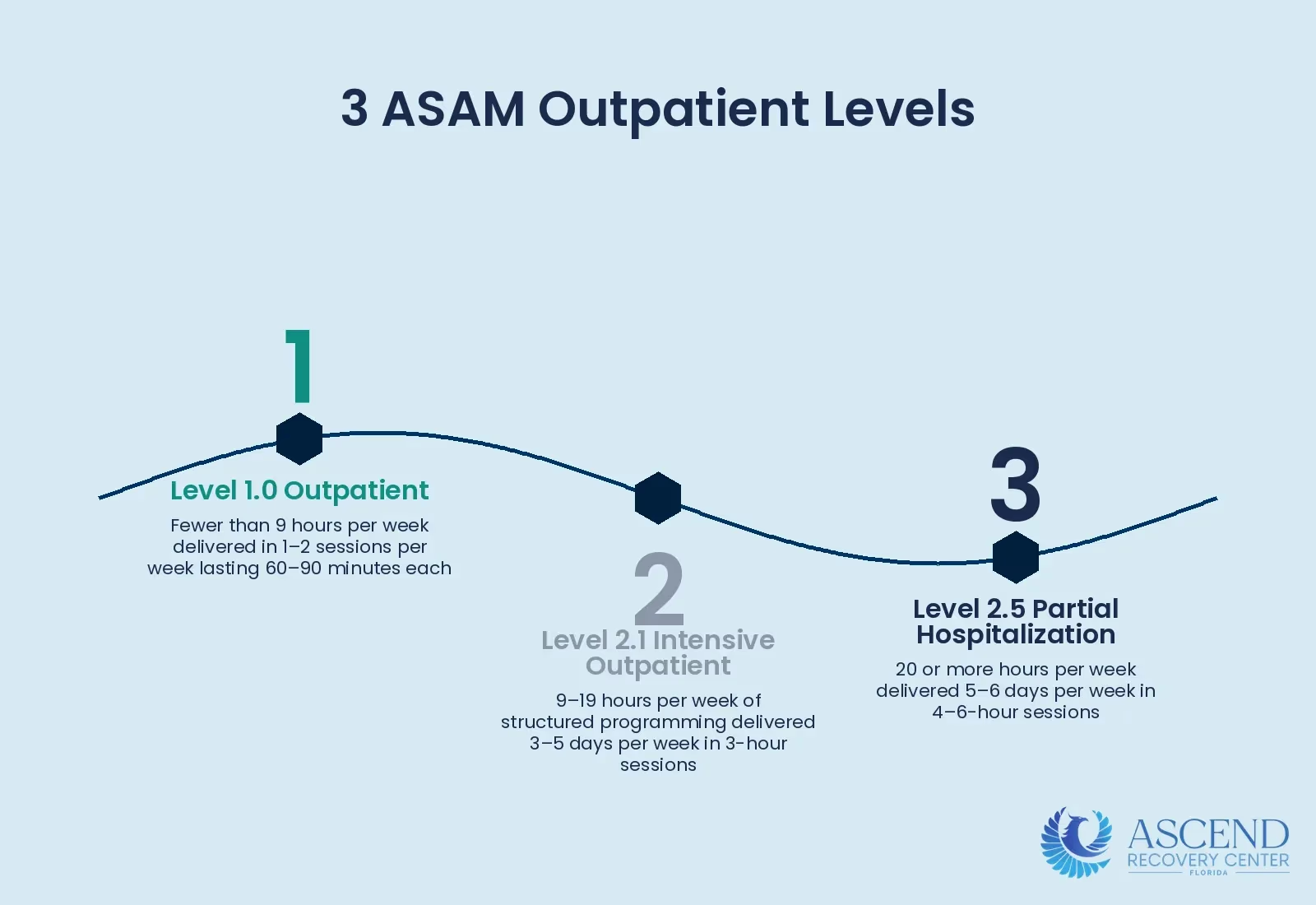
- Level 1.0 — Outpatient (OP): fewer than 9 hours per week of structured programming, delivered in 1–2 sessions per week lasting 60–90 minutes each — licensed by AHCA as outpatient
- Level 2.1 — Intensive Outpatient (IOP): 9–19 hours per week of structured programming, delivered 3–5 days per week in 3-hour sessions — licensed by AHCA as intensive outpatient
- Level 2.5 — Partial Hospitalization (PHP): 20 or more hours per week of structured programming, delivered 5–6 days per week in 4–6-hour sessions — licensed by AHCA as partial hospitalization
All 3 outpatient levels allow the client to return home or to a sober living home in Florida after each session. Outpatient rehab does not include residential or inpatient services. Clients in outpatient rehab maintain employment, attend school, and fulfill family responsibilities during treatment. The ASAM Criteria Fourth Edition, published in 2023, retains all 3 outpatient levels as the national placement standard — and an ASAM Criteria assessment determines who qualifies for each level.

Outpatient Levels Comparison
20+ clinical hours per week at ASAM Level 2.5.
9-19 clinical hours per week at ASAM Level 2.1.
Fewer than 9 clinical hours per week at ASAM Level 1.0.

 FL DCF LicensedFARR Certified
Who Qualifies for Outpatient Rehab?
Individuals who demonstrate medical stability, safe housing, a supportive social environment, and moderate-to-low addiction severity with no active medical or psychiatric crisis requiring 24-hour supervision qualify for outpatient rehab. The ASAM Criteria evaluates 6 dimensions to determine the appropriate level of care for each client. The following are the 6 ASAM Criteria dimensions evaluated at admission:
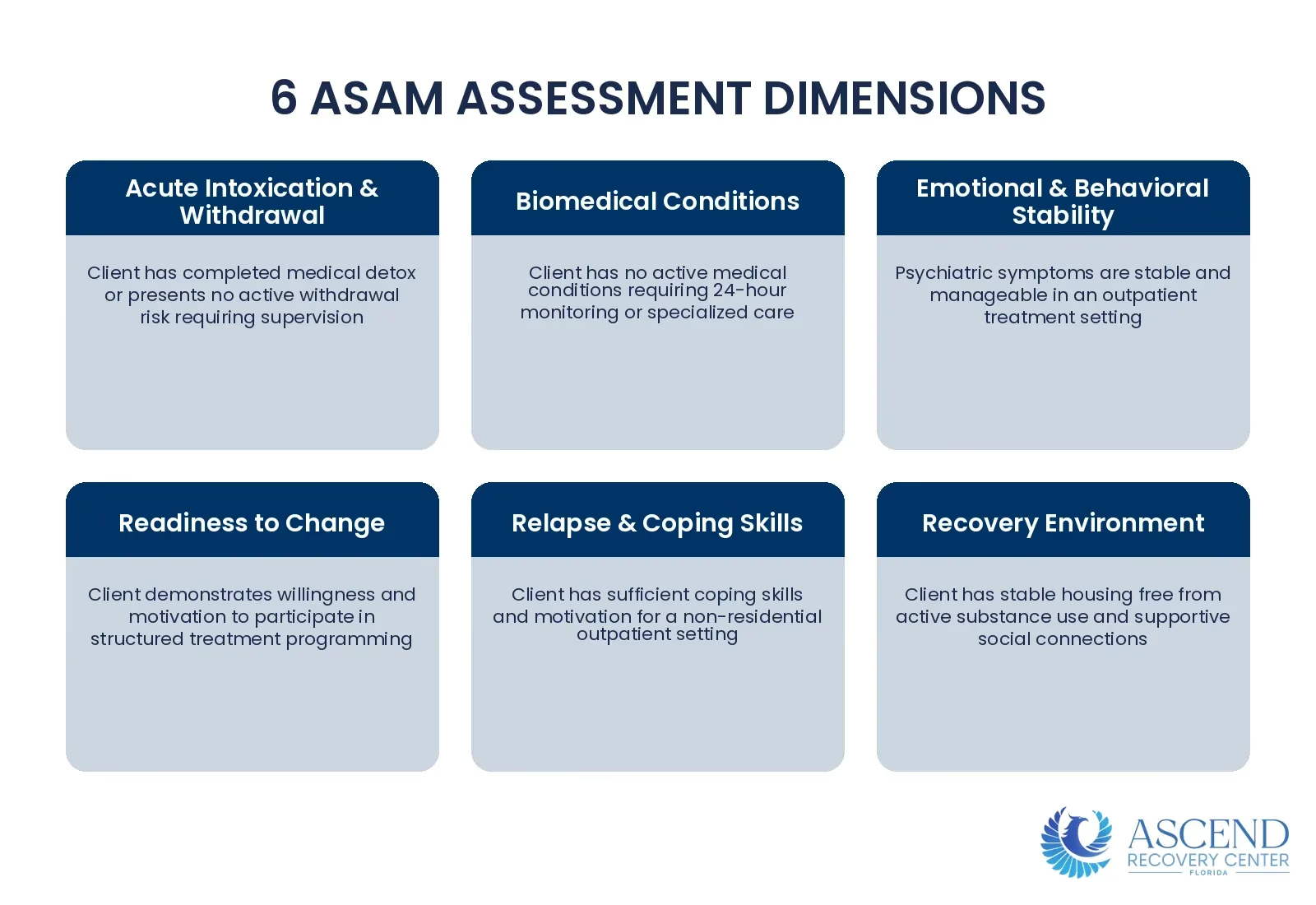
- Dimension 1: Acute intoxication and withdrawal potential — the client has completed medical detox or presents no active withdrawal risk
- Dimension 2: Biomedical conditions — the client has no active medical conditions requiring 24-hour monitoring
- Dimension 3: Emotional, behavioral, or cognitive conditions — psychiatric symptoms are stable for outpatient management
- Dimension 4: Readiness to change — the client demonstrates willingness to participate in structured treatment
- Dimension 5: Relapse, continued use, or continued problem potential — the client has sufficient coping skills for a non-residential setting
- Dimension 6: Recovery environment — the client has stable housing free from active substance use
Outpatient rehab is appropriate for clients stepping down from residential treatment or medical detoxification, clients with mild-to-moderate substance use disorders, and clients whose work or family obligations prevent residential placement. ASAM-certified programs conduct a comprehensive clinical assessment using ASAM Criteria to match each client to the correct outpatient level. Florida's Marchman Act sets the criteria for involuntary admission in Florida Statute 397.675 and provides the family-member petition mechanism in Florida Statute 397.681, permitting a petition to the court for involuntary assessment when a person with substance use disorder cannot self-refer. Once the level is set, the same 7 clinical components define what outpatient rehab includes.
FL DCF LicensedFARR CertifiedWhat Does Outpatient Rehab Include?
Outpatient rehab includes 7 core clinical components: individual therapy, group therapy, psychoeducation, psychiatric services, drug screening, family therapy, and case management. Each component addresses a specific dimension of the client's substance use disorder and co-occurring conditions. The following are the 7 core components of outpatient rehab:
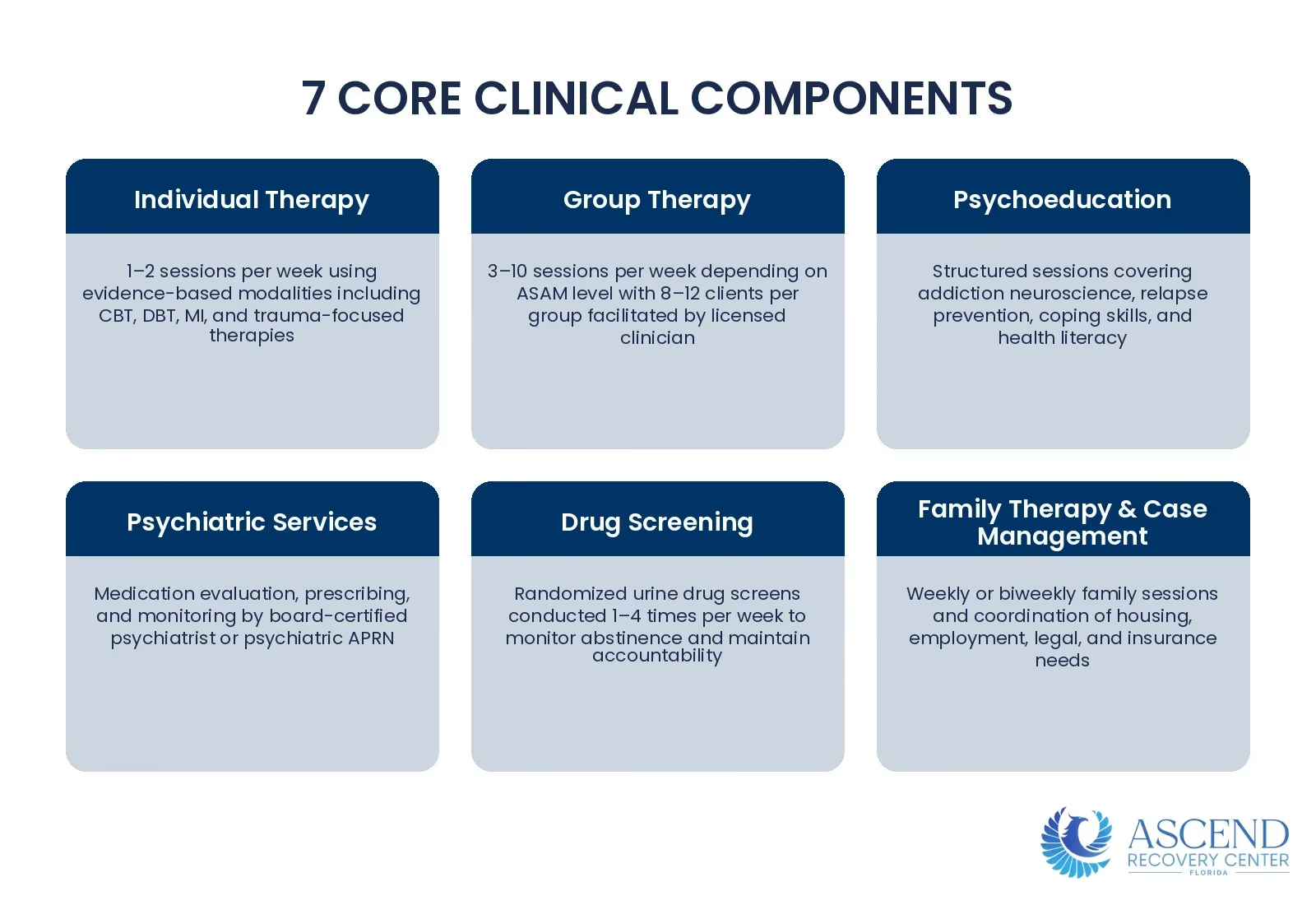
- Individual therapy: 1–2 sessions per week using evidence-based modalities — cognitive behavioral therapy (CBT), dialectical behavior therapy (DBT), motivational interviewing (MI), and trauma-focused therapies including EMDR and CPT
- Group therapy: 3–10 sessions per week depending on ASAM level, with 8–12 clients per group facilitated by a licensed clinician
- Psychoeducation: structured sessions covering addiction neuroscience, relapse prevention, coping skills, and health literacy
- Psychiatric services: medication evaluation, prescribing, and monitoring by a board-certified psychiatrist or psychiatric APRN for co-occurring mental health conditions and MAT
- Drug screening: randomized urine drug screens (UDS) conducted 1–4 times per week; Florida AHCA mandates random drug testing in licensed IOP programs to monitor abstinence and maintain accountability
- Family therapy: weekly or biweekly sessions involving family members in the treatment process, addressing codependency, communication, and boundary-setting
- Case management: coordination of housing, employment, legal, and insurance needs through a dedicated case manager
SAMHSA TIP 47 (Substance Abuse: Clinical Issues in Intensive Outpatient Treatment) codifies these components as the national clinical standard for structured outpatient SUD care. DCF-licensed programs deliver all 7 components across PHP, IOP, and standard outpatient levels, including via telehealth under Florida Statute Section 456.47 for eligible clients. The dose of each component — hours per week, days per week, and total duration — is what separates PHP, IOP, and standard outpatient.
PHP vs IOP vs Standard Outpatient: How Do the 3 Levels Compare?
PHP (ASAM Level 2.5), IOP (ASAM Level 2.1), and standard outpatient (ASAM Level 1.0) differ in 5 dimensions: hours per week, days per week, typical duration, clinical intensity, and cost. The following comparison outlines the structural differences between the 3 ASAM outpatient levels.
Partial Hospitalization Program (PHP) — ASAM Level 2.5:
- Hours per week: 20+ hours
- Days per week: 5–6 days
- Session length: 4–6 hours per day
- Typical duration: 4–6 weeks
- Intensity: highest outpatient level, closest to residential without overnight stay
- Appropriate for: clients stepping down from residential or detox, clients with co-occurring disorders requiring intensive daily stabilization
Intensive Outpatient Program (IOP) — ASAM Level 2.1:
- Hours per week: 9–19 hours
- Days per week: 3–5 days
- Session length: 3 hours per day
- Typical duration: 6–12 weeks
- Intensity: moderate, allows part-time or full-time work
- Appropriate for: clients stepping down from PHP, clients with moderate substance use disorders, clients needing flexible scheduling around employment or family
Standard Outpatient (OP) — ASAM Level 1.0:
- Hours per week: fewer than 9 hours
- Days per week: 1–2 days
- Session length: 60–90 minutes per session
- Typical duration: 3–12 months
- Intensity: lowest, maintenance-focused
- Appropriate for: clients completing IOP, clients with mild substance use disorders, clients in long-term recovery maintenance
DCF-licensed programs offering all 3 AHCA outpatient levels enable clients to step down through the continuum without changing providers or treatment teams. Florida AHCA licensure defines and enforces these 3 categories under Florida Statute Chapter 397.
Weekly Hours by ASAM Level
5-6 days/week, 4-6 hrs/day
3-5 days/week, 3 hrs/day
1-2 days/week, 60-90 min
FL DCF LicensedFARR CertifiedOutpatient treatment places persons with substance use disorder in their recovery environment from day one — behavioral skills are applied in the real-world context where relapse risk is highest, reinforcing gains that residential treatment cannot replicate.
Does Your Insurance Cover Drug Rehab Education?
Free, confidential verification in under 15 minutes.
How Is Outpatient Rehab Licensed in Florida?
Florida AHCA (Agency for Health Care Administration) licenses outpatient SUD treatment facilities under 3 categories — outpatient (OP), intensive outpatient (IOP), and partial hospitalization (PHP) — under Florida Statute Chapter 397. Florida has 847 AHCA-licensed outpatient SUD treatment facilities as of 2024, including 94 in Palm Beach County. The following are the 4 core Florida outpatient rehab licensing requirements:
- AHCA licensure: every outpatient provider in Florida obtains and maintains an AHCA license, renewed annually and subject to unannounced inspections at any time
- Clinical staffing ratios: licensed clinicians (LMHC, LCSW, LMFT) and certified addiction professionals (CAP) deliver all clinical services under the supervision of a qualified professional with a master's degree and appropriate licensure
- Individualized treatment planning: each client receives a written treatment plan within 7 days of admission, reviewed every 30 days, based on ASAM Criteria assessment across 6 clinical dimensions
- Client rights protections: Florida law guarantees the right to informed consent, confidentiality under 42 CFR Part 2 and HIPAA, grievance procedures, and discharge planning services
Accreditation by The Joint Commission or CARF International demonstrates a standard of care beyond state minimum requirements. Joint Commission accreditation requires compliance with 250+ performance standards covering safety, infection control, medication management, and outcomes measurement. Within this licensed structure, how long outpatient rehab lasts follows clinical benchmarks rather than a fixed calendar.
How Long Does Outpatient Rehab Last?
Outpatient rehab lasts 90–120 days on average (SAMHSA), with PHP running 4–6 weeks, IOP running 6–12 weeks, and standard outpatient running 3–12 months. NIDA recommends a minimum of 90 days — approximately 13 weeks — of total treatment engagement for meaningful outcomes in substance use disorder recovery. Florida SAMHSA ATR data shows 58% of patients completing 90+ days of outpatient treatment remain abstinent at 6 months. The following are the typical durations for each outpatient level:
- PHP (Level 2.5): 4–6 weeks, with 20+ hours per week of programming
- IOP (Level 2.1): 6–12 weeks, with 9–19 hours per week of programming
- Standard outpatient (Level 1.0): 3–12 months, with fewer than 9 hours per week of programming
A client entering PHP and stepping down through IOP to standard outpatient completes 13–30 weeks of continuous treatment. Treatment duration depends on 4 factors: substance use severity, co-occurring mental health diagnoses, recovery environment stability, and client engagement in the treatment process. The clinical team reviews each client's treatment plan every 30 days and adjusts the level of care based on ASAM Criteria reassessment. Discharge from the final level begins the continuing care phase that follows outpatient rehab.
FL DCF LicensedFARR CertifiedWhat Happens After Outpatient Rehab?
After outpatient rehab, clients transition to a continuing care plan that includes alumni programming, mutual support groups, ongoing individual therapy, and recovery residence coordination. Continuing care reduces relapse risk by 30–50% compared to treatment without aftercare planning (SAMHSA, 2021). The following are the 5 core components of post-outpatient continuing care:
- Alumni programming: weekly or monthly meetings, sober social events, and peer check-ins organized by the treatment provider to maintain accountability and community connection
- Mutual support groups: 12-step programs (Alcoholics Anonymous, Narcotics Anonymous) and non-12-step alternatives (SMART Recovery, Refuge Recovery) provide ongoing peer accountability in Palm Beach County and statewide
- Ongoing individual therapy: weekly or biweekly sessions with a licensed therapist addressing relapse prevention, life transitions, and trauma processing in the post-treatment period
- Recovery residence coordination: placement in a FARR-certified sober living home provides structured, substance-free housing during the transition from intensive treatment to independent living
- Medication management: continued psychiatric medication monitoring for co-occurring disorders and medication-assisted treatment (MAT) for opiate addiction or alcohol addiction
DCF-licensed programs develop an individualized continuing care plan for every client 30 days before discharge. The continuing care plan identifies specific providers, meeting schedules, and accountability structures for the 12 months following treatment completion. Cost and insurance coverage determine how families plan for each phase of that continuum.
Delivering all 3 ASAM outpatient levels at a single facility eliminates the treatment disruption that occurs when clients transfer between providers at each level transition — the 847 AHCA-licensed outpatient facilities in Florida vary significantly in whether they offer this continuity.
How Much Does Outpatient Rehab Cost in Florida?
Outpatient rehab in Florida costs $2,000–$15,000 per month depending on ASAM level, with PHP at the highest cost and standard outpatient at the lowest. Federal law shapes what Florida plans must offer: ACA essential health benefits require substance use disorder coverage in individual and small-group plans, and MHPAEA requires any plan that covers it to do so at parity. Florida Medicaid covers IOP under the Statewide Medicaid Managed Care (SMMC) behavioral health carve-out. The following are the estimated monthly costs by outpatient level in Florida:
- PHP (Level 2.5): $8,000–$15,000 per month (before insurance)
- IOP (Level 2.1): $4,000–$10,000 per month (before insurance)
- Standard outpatient (Level 1.0): $2,000–$5,000 per month (before insurance)
Insurance coverage for outpatient rehab depends on 3 factors: plan type (PPO plans provide broader provider access than HMO plans), network status (in-network providers reduce out-of-pocket costs), and prior authorization requirements. The Consolidated Appropriations Act of 2021 strengthened MHPAEA enforcement by requiring insurers to document that prior authorization rules for SUD care are no more restrictive than those for comparable medical care. Major commercial carriers including Aetna, Cigna, Blue Cross Blue Shield, United Healthcare, and Humana cover outpatient SUD treatment. to determine coverage, copay, and deductible amounts at a licensed outpatient program. Price and coverage are only 2 considerations — 6 program features separate strong outpatient rehab providers from weak ones.
What Should I Look for in an Outpatient Rehab in Florida?
An outpatient rehab in Florida should hold AHCA licensure for all 3 levels of care — PHP, IOP, and standard outpatient — and deliver dual diagnosis treatment, flexible scheduling, telehealth access, recovery residence coordination, and verified insurance acceptance at a single location. The following are the 6 features to evaluate when selecting an outpatient rehab program in Florida:
- 3 AHCA-licensed levels of outpatient care: PHP, IOP, and standard outpatient delivered at one facility by the same clinical team
- Flexible scheduling: morning and afternoon programming tracks accommodate work, school, and family obligations
- Dual diagnosis treatment: integrated treatment for co-occurring substance use and mental health disorders by licensed clinicians and psychiatric providers
- Telehealth option: virtual programming available under Florida Statute Section 456.47 for established patients who require remote participation
- Recovery residence coordination: partnership with FARR-certified sober living homes in Palm Beach County for clients who need structured housing during treatment
- Insurance accepted: Aetna, Cigna, Blue Cross Blue Shield, United Healthcare, and Humana with free
DCF-licensed programs providing all 3 ASAM outpatient levels deliver the continuity of care that ASAM step-down guidelines recommend. to confirm benefits for outpatient rehab at a licensed facility.
3 Steps to Start Outpatient Rehab
- 1Insurance Verification
Free, confidential verification in 15 minutes
- 2Clinical Assessment
ASAM Criteria evaluation determines appropriate outpatient level
- 3Program Placement
Same-day admission available at most DCF-licensed programs
FL DCF LicensedFARR CertifiedIs outpatient rehab too unstructured to actually work?
Common Misconception
"Outpatient rehab is just weekly check-ins — you need to be away from the world to really recover."
What the Evidence Shows
Structured outpatient rehab delivers intensive, evidence-based clinical programming — and keeping clients in their real environment is a treatment advantage, not a weakness. Partial hospitalization (25–30 hrs/week) and intensive outpatient (9–15 hrs/week) provide group therapy, individual counseling, psychiatry, and family work matched to clinical need under the ASAM Criteria. Clients practice coping skills against real triggers and keep work and family ties intact — which research links to durable recovery.
The ASAM Criteria, 3rd Edition (American Society of Addiction Medicine); SAMHSA outpatient outcomes.
What Level of Care Do I Need?
Answer 8 questions about the current situation. A clinical assessment determines the final recommendation.
How would you describe current substance use frequency?
Confidential · Not a clinical diagnosis · Your answers stay in your browser


