


Referenced in this article
Key Takeaways
- PHP is ASAM Level 2.5 — the highest-intensity outpatient level of care — delivering 25–35 hours per week of structured clinical programming (5–7 hours per day, Monday through Friday) with full psychiatric services, individual therapy, group therapy, medication management, case management, and family programming, while clients return home or to sober living each evening.
- PHP is appropriate for individuals stepping down from medically managed detox or residential treatment, for first-time treatment seekers presenting with moderate-to-severe SUD who meet ASAM 2.5 placement criteria, and for individuals with co-occurring psychiatric conditions (PTSD, MDD, bipolar disorder, anxiety disorder) who need psychiatric services and clinical intensity that standard outpatient cannot provide.
- PHP provides residential-equivalent clinical intensity at substantially lower cost ($600–1,200 per day vs. $1,500–2,500 per day for residential) with the added benefit of real-world evening reintegration practice that residential settings cannot replicate.
- Most commercial insurance plans cover PHP for substance use disorder under the Mental Health Parity and Addiction Equity Act (MHPAEA); ASAM-certified programs manage prior authorization, concurrent reviews, and insurance appeals as part of the admissions process.
- Continuing care engagement after PHP — step-down to IOP, sober living placement, and individualized discharge planning — is the strongest single predictor of 12-month abstinence outcomes; DCF-licensed programs offering full continuum care allow clinical step-down without requiring clients to change providers or re-establish therapeutic relationships.
What Is a Partial Hospitalization Program?
A partial hospitalization program (PHP) is classified as ASAM Level 2.5 — the highest-intensity outpatient level of care in the American Society of Addiction Medicine's placement criteria — and provides hospital-equivalent clinical intensity (5–7 hours per day, five days per week) without requiring the client to sleep at the facility. PHP clients attend structured clinical programming Monday through Friday and return home or to a FARR-certified sober living residence each evening. This combination of intensive daytime treatment and real-world evening reintegration distinguishes PHP from residential treatment and makes it the optimal first outpatient level of care after detox or residential discharge.
PHP programming includes the following core clinical components delivered by a full multidisciplinary team:
- Individual therapy: 2–3 individual sessions per week with a primary therapist who tracks clinical progress, manages safety planning, and conducts ongoing ASAM assessments
- Group therapy: 3–5 groups per day — including process groups (peer emotional exploration and feedback) and psychoeducational groups (CBT skills, relapse prevention, family systems, trauma awareness)
- Psychiatric services: board-certified addiction psychiatrist available for medication evaluation and management of co-occurring mental health conditions
- Medication management: medication-assisted treatment (MAT) including buprenorphine for opioid use disorder; psychiatric medications for depression, anxiety, PTSD, and ADHD
- Case management: insurance coordination, prior authorization, sober living placement, and individualized discharge planning
- Family programming: family therapy sessions, family psychoeducation groups, and communication coaching
PHP is appropriate for three primary populations: individuals stepping down from medically managed detox (ASAM 3.7) or residential treatment who need to maintain clinical intensity before transitioning to IOP; first-time treatment seekers presenting with moderate-to-severe substance use disorder who meet ASAM 2.5 placement criteria; and individuals with active co-occurring psychiatric conditions — PTSD, major depressive disorder, bipolar disorder, anxiety disorder — who need psychiatric services and therapeutic intensity that standard outpatient cannot provide.
Learn how PHP compares to intensive outpatient (IOP). to confirm benefits for PHP treatment at a DCF-licensed facility.

Levels of Care: Weekly Hours and Structure
1–3 hours per week; weekly individual therapy sessions; appropriate for mild SUDs with strong home support and high motivation
9–15 hours per week (3–5 days × 3 hours); group + individual therapy; step-down from PHP or primary care for moderate SUD
25–35 hours per week (5 days × 5–7 hours); full clinical team; equivalent to inpatient intensity without overnight stay
24/7 on-site; room and board at facility; appropriate for severe SUD requiring removal from home environment and 24-hour supervision

 FL DCF LicensedFARR Certified
What Does a Typical Day in PHP Look Like?
PHP runs Monday through Friday with a structured daily schedule that delivers the full clinical dosage of ASAM Level 2.5 care — clients arrive in the morning, participate in an organized sequence of individual and group clinical programming, and return home or to sober living each evening. The daily structure is intentional: it provides the predictability and routine that early recovery requires while building the skills and peer community that sustain sobriety after discharge.
The schedule above is representative of a standard PHP day. The specific therapeutic content rotates throughout the week to ensure full coverage of evidence-based modalities including cognitive-behavioral therapy (CBT), dialectical behavior therapy (DBT) skills, relapse prevention, trauma-informed care, family systems work, and 12-step facilitation. Specialty sessions — EMDR, expressive arts therapy, trauma processing groups — are scheduled on rotating days based on clinical team assignments.
Several structural elements of the daily PHP schedule are clinically intentional:
- Morning check-in and vitals: daily clinical contact at the start of each session allows staff to identify any overnight events — relapse, mental health crisis, unsafe housing situations — before the therapeutic day begins; early identification enables immediate clinical response
- Process group before psychoeducation: emotional processing and peer community-building are scheduled before didactic content because emotional activation and honest disclosure require a warm clinical container — starting with group process builds the relational safety that makes psychoeducational content more effectively internalized
- Evening return to real-world environment: unlike residential treatment, PHP clients practice the skills they learn each day in the actual environment where they will eventually maintain sobriety; evening real-world exposure with same-day clinical support is a structural advantage of PHP over 24-hour residential programming for individuals with stable housing
DCF-licensed PHP programs accept clients directly from detox, residential discharge, or as a primary level of care for appropriate presentations. to confirm benefits for PHP at a licensed facility.
A Typical Day in PHP
- 1Morning Check-In (8:30–9:00 AM)
Vitals and medication administration, brief individual check-in with counselor, set daily therapeutic goals. Staff assess overnight mood, sleep quality, and any events that occurred outside the program.
- 2Group Therapy — Process Group (9:00–10:30 AM)
60–90 minute clinician-facilitated group. Members share current challenges, triggers, and progress. Builds peer accountability and honest self-examination in a supported clinical environment.
- 3Psychoeducational Group (10:30–12:00 PM)
Structured clinical topic — CBT skills, relapse prevention, emotional regulation, family systems, trauma awareness. Didactic instruction followed by applied skills practice. Provides cognitive tools clients use after discharge.
- 4Lunch Break & Peer Community Time (12:00–1:00 PM)
Unstructured peer connection. Group members build the recovery community and interpersonal relationships that support long-term sobriety outside structured programming.
- 5Specialty Therapy or Skills Group (1:00–2:30 PM)
EMDR, expressive arts therapy, DBT skills, family therapy, or trauma processing — varies by weekly schedule. Addresses individualized clinical needs beyond standard group programming.
- 6Individual Therapy & Discharge (2:30–3:30 PM)
Individual session with primary therapist. Discharge planning review, homework assignment, family communication, and preparation for the evening outside the program.
FL DCF LicensedFARR CertifiedWhat Clinical Services Are Included in PHP?
PHP includes a full multidisciplinary clinical service package that distinguishes it from lower levels of care — the combination of psychiatric services, case management, family programming, and daily therapeutic contact within a single integrated program is what makes PHP clinically distinct from IOP or standard outpatient.
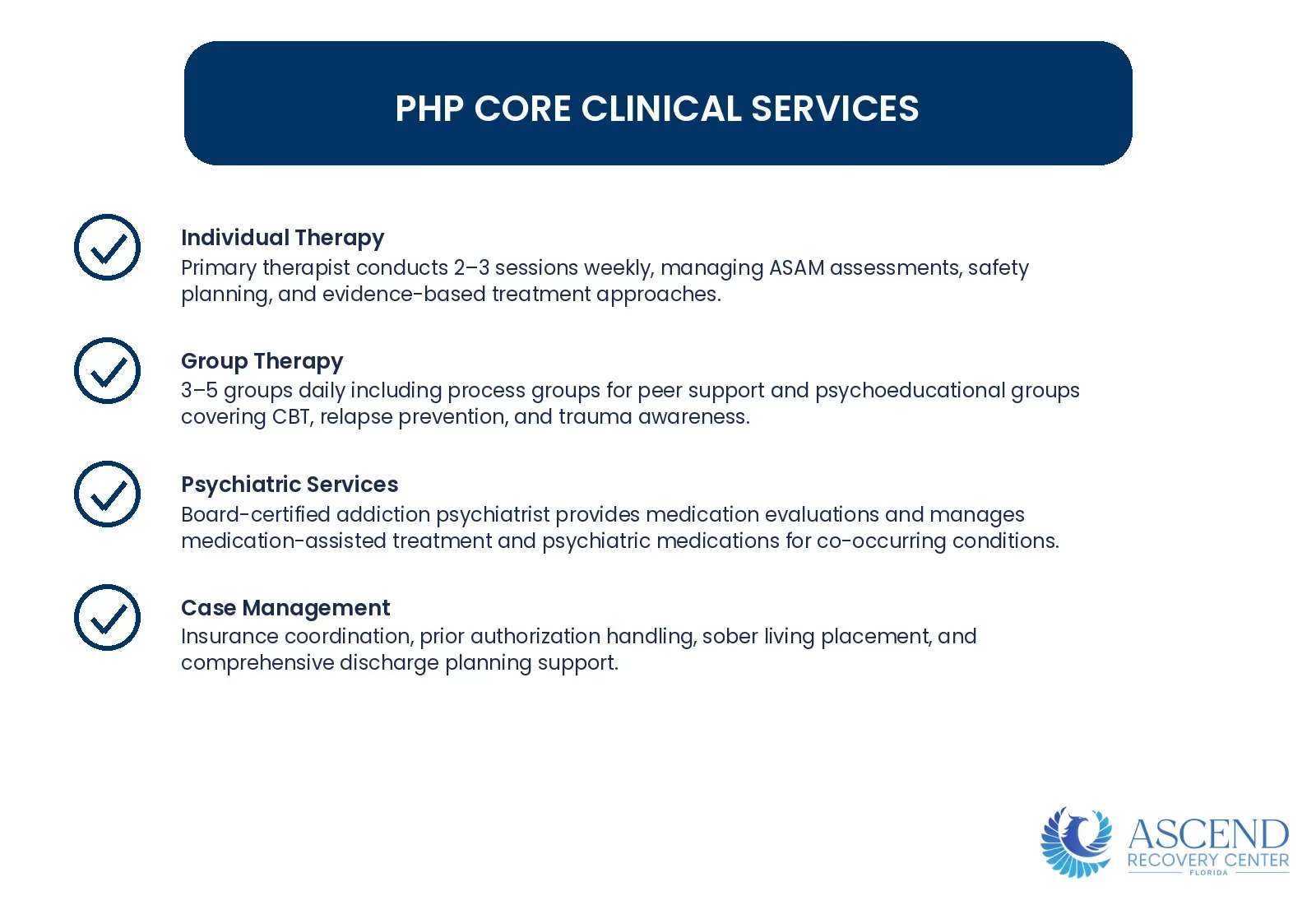
The following clinical services are included in PHP at ASAM Level 2.5:
- Individual therapy (2–3 sessions per week): the primary therapist is the clinical anchor of PHP — conducting ongoing ASAM assessments, tracking clinical progress across dimensions, managing safety planning, providing evidence-based individual therapy (CBT, motivational interviewing, trauma-informed approaches), and serving as the family and case management coordinator; higher individual therapy frequency in PHP (vs. typically 1 session per week in IOP) allows for more granular clinical monitoring during the highest-risk early recovery period
- Group therapy (3–5 groups per day): process groups provide a structured space for emotional exploration and peer feedback — members challenge each other, offer support, and build the interpersonal honesty that sustains recovery; psychoeducational groups deliver structured clinical content (CBT skills, relapse prevention planning, emotional regulation, family systems, trauma awareness) in a didactic-plus-practice format; skill-building groups (DBT, mindfulness, emotion regulation) provide concrete behavioral tools
- Psychiatric services: board-certified addiction psychiatrist conducts medication evaluations and manages pharmacological treatment — including medication-assisted treatment (buprenorphine for opioid use disorder) and psychiatric medications for co-occurring conditions (antidepressants for MDD, mood stabilizers for bipolar disorder, non-stimulant medications for ADHD, prazosin or sertraline for PTSD); psychiatric monitoring throughout PHP ensures medications are titrated appropriately during the biologically dynamic early recovery period
- Case management: insurance authorization management (submitting prior authorization requests, managing concurrent reviews, appealing denials), coordination with referring detox or residential facilities, sober living placement and coordination, vocational and legal referrals, and individualized discharge planning to ensure a seamless step-down to IOP or continuing care
- Family programming: addiction is a family disease — PHP includes structured family therapy sessions with the primary therapist, multi-family psychoeducation groups, and communication coaching; family engagement during PHP is one of the strongest predictors of sustained recovery outcomes; family members also receive psychoeducation about enabling behaviors, boundaries, and their own mental health needs
- Drug testing (urine drug screens): 2–3 UDS per week confirms abstinence, identifies relapse early for clinical intervention, and provides the accountability structure that supports early recovery; a positive UDS triggers an immediate clinical conversation — not automatic discharge — and an ASAM reassessment to determine whether a higher level of care is clinically indicated
The integration of these services within a single program — rather than requiring clients to coordinate separately between a psychiatrist, therapist, and group program — is a structural advantage of PHP that reduces the coordination burden on individuals and families navigating early recovery.
PHP Clinical Services
Monday through Friday programming; clients return home or to sober living each evening
ASAM Level 2.5 intensity; equivalent to inpatient clinical dosage without overnight stay
Most PHP episodes last 4–6 weeks before step-down to IOP; determined by ASAM re-assessment
PHP's daily contact and peer community builds the 30–60 day foundation that significantly lowers first-year relapse rates
FL DCF LicensedFARR CertifiedThe ASAM criteria establish Level 2.5 partial hospitalization as appropriate when a patient's problems are serious enough to require structured programming of 20 or more hours per week, but the patient does not require 24-hour medical or nursing supervision. PHP provides intensive services in a less restrictive setting while patients apply recovery skills in real-world contexts each evening.
Who Is PHP Appropriate For?
PHP placement is determined by ASAM Criteria across six clinical dimensions — and ASAM Level 2.5 criteria specify that the individual's acute intoxication or withdrawal risk is low or managed, biomedical conditions are stable, emotional and behavioral conditions need structured support but not 24-hour supervision, and the recovery environment is insufficient without daily clinical contact.
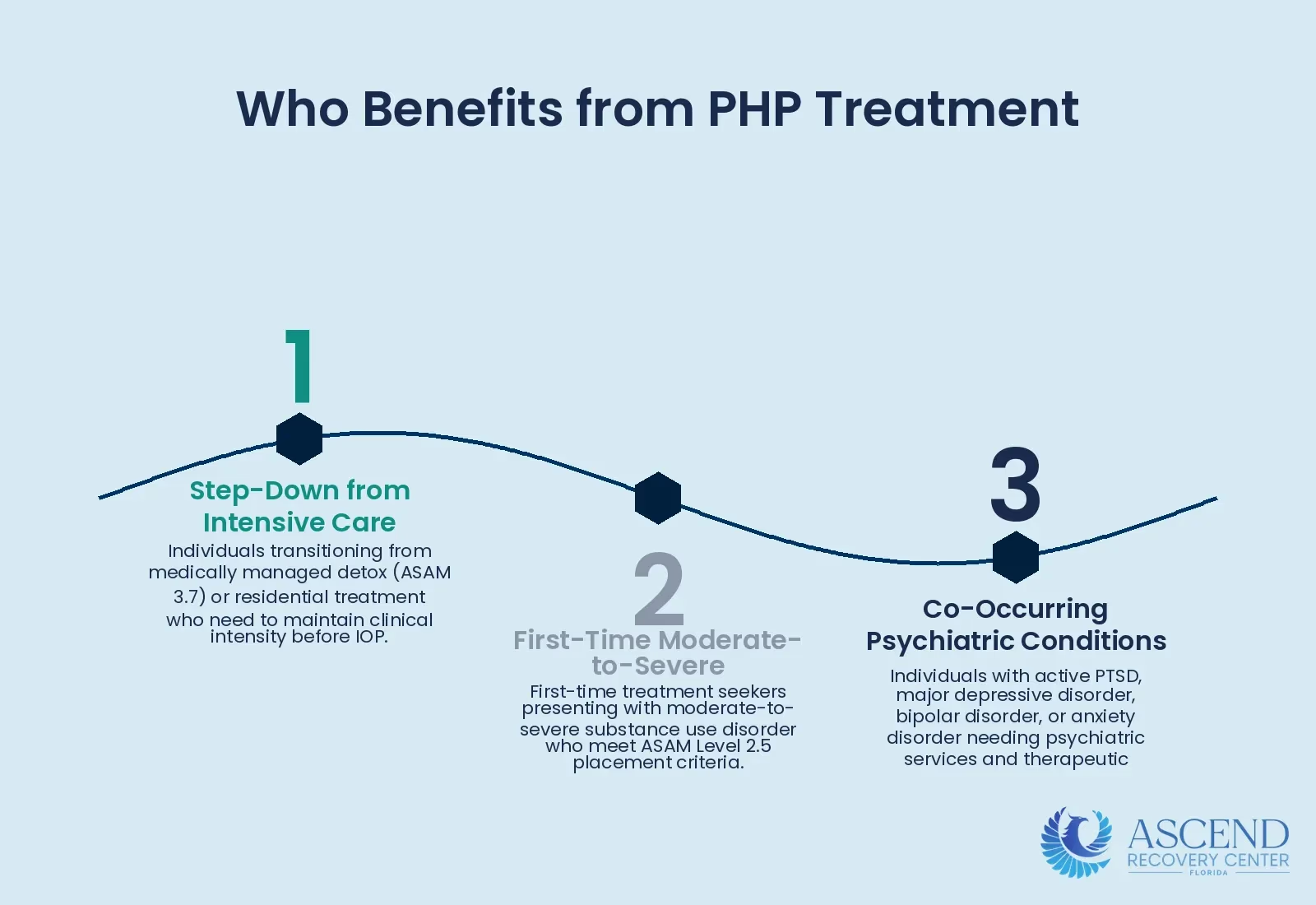
The following clinical presentations are appropriate for PHP at ASAM Level 2.5:
- Step-down from medically managed detox (ASAM 3.7): the majority of individuals who complete medically supervised detoxification — for alcohol use disorder, opioid use disorder, benzodiazepine dependence, or polysubstance dependence — are clinically appropriate for PHP as the first outpatient level of care; detox addresses the acute physiological withdrawal; PHP addresses the behavioral, psychiatric, and psychological dimensions of addiction that determine long-term recovery
- Step-down from residential treatment (ASAM 3.5): individuals completing residential programming transition to PHP to maintain clinical intensity while beginning the practical process of community reintegration; the daily structure of PHP during the transition period significantly reduces the relapse risk associated with abrupt discharge to lower levels of care
- Primary treatment for moderate-to-severe SUD: individuals presenting with moderate-to-severe opioid use disorder (OUD), alcohol use disorder (AUD), stimulant use disorder, or polysubstance dependence who meet ASAM 2.5 placement criteria — and whose withdrawal has been medically managed or does not require medical management — may begin treatment directly at PHP
- Co-occurring mental health conditions: individuals with SUD and active PTSD, major depressive disorder, bipolar disorder, generalized anxiety disorder, panic disorder, or personality disorders require the psychiatric services and therapeutic intensity of PHP; standard outpatient (1–3 hours per week) is insufficient to address the clinical complexity of moderate-to-severe dual diagnosis presentations; PHP's daily psychiatric monitoring and therapeutic contact is the appropriate level of care
- High relapse potential with insufficient recovery environment: ASAM Dimension 6 (recovery environment) is a key driver of PHP vs. IOP placement; individuals returning to home environments with active substance use, limited social support, high-stress triggers, or insufficient sober structure meet criteria for PHP even when clinical acuity in other dimensions would otherwise support IOP
ASAM-certified programs conduct comprehensive clinical assessments to determine the appropriate level of care. to confirm benefits for PHP at a DCF-licensed facility.
Does Your Insurance Cover Drug Rehab Education?
Free, confidential verification in under 15 minutes.
How Does PHP Differ from Residential Treatment and IOP?
PHP sits at the intersection of residential and intensive outpatient care — it delivers residential-equivalent clinical intensity during daytime hours while preserving the real-world reintegration and lower cost structure of outpatient care; understanding these differences is essential for matching individuals to the right level of care.
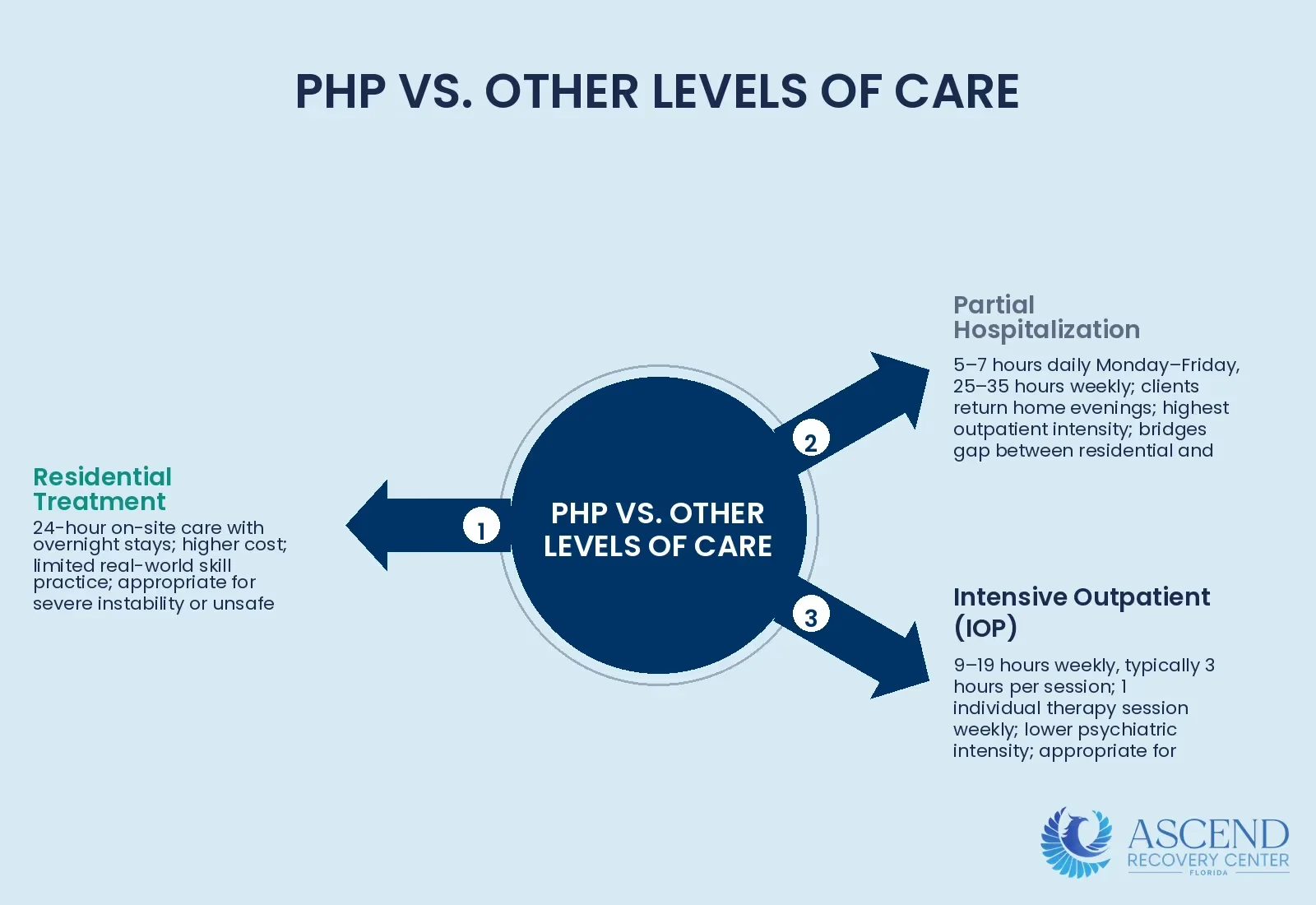
The following comparison clarifies the clinical and practical distinctions across levels of care:
- PHP vs. residential treatment (ASAM 3.5): PHP does not include an overnight stay — clients return home or to sober living each evening; residential treatment provides 24-hour on-site supervision, room and board at the facility, and removal from the home environment; residential is clinically indicated when the home environment contains active substance use, severe triggers, unsafe conditions, or when 24-hour supervision is required for psychiatric or medical safety; PHP is clinically preferable when the client has stable housing (own home or FARR-certified sober living), because the real-world evening exposure provides active recovery skill practice that residential cannot replicate; PHP costs $600–1,200 per day vs. $1,500–2,500 per day for residential treatment — a meaningful difference for out-of-pocket costs after insurance
- PHP vs. intensive outpatient (IOP, ASAM 2.1): PHP provides 25–35 hours per week vs. IOP's 9–15 hours per week; PHP typically includes on-site psychiatric services and daily case management that standard IOP programs may not offer; PHP is clinically appropriate when moderate-to-high relapse risk requires daily clinical contact and psychiatric monitoring; IOP is appropriate after clinical stabilization in PHP (typically 4–6 weeks), as a step-down that maintains therapeutic structure while allowing increased vocational, family, and social reintegration; IOP may also serve as a primary level of care for lower-acuity presentations that meet ASAM 2.1 but not 2.5 criteria
- PHP vs. standard outpatient (ASAM 1, weekly therapy): standard outpatient — 1–3 hours per week of individual or group therapy — is appropriate for mild SUD, long-term maintenance after PHP/IOP completion, or monitoring in stable long-term recovery; it is clinically insufficient for active moderate-to-severe SUD, for presentations with active psychiatric co-occurring conditions, or for individuals in the first 60–90 days of recovery where relapse risk is highest; individuals who attempt to manage moderate-to-severe SUD at the standard outpatient level of care have significantly higher 12-month relapse rates than those who receive appropriate PHP or IOP intensity
DCF-licensed programs offer a full continuum — PHP, IOP, and standard outpatient — enabling clinical step-down without requiring clients to change providers or re-establish therapeutic relationships. to confirm benefits for PHP.
How Does Insurance Cover PHP?
PHP for substance use disorder is a covered benefit under federal mental health parity law — commercial insurance plans are legally required to cover PHP at parity with medical and surgical benefits — and most PPO and HMO plans provide meaningful coverage that significantly reduces out-of-pocket costs for clients and families.
The following framework covers the key insurance concepts for PHP:
- Mental Health Parity and Addiction Equity Act (MHPAEA): the MHPAEA requires that commercial insurance plans — including employer-sponsored plans, individual market plans, and Medicaid managed care — cover behavioral health benefits (including PHP for SUD) at parity with medical and surgical benefits; this means that if a plan covers 80% of a medical procedure after deductible, it must cover 80% of PHP after deductible; plans cannot impose stricter prior authorization, visit limits, or cost-sharing requirements on behavioral health benefits than on comparable medical benefits
- ACA marketplace plans: Affordable Care Act marketplace plans are required to cover substance use disorder treatment as an essential health benefit in all states; PHP is explicitly included within the behavioral health EHB category
- Prior authorization: most commercial insurance plans require prior authorization before PHP begins; prior authorization reviews clinical necessity using ASAM Criteria; the treating program's admissions team manages the prior authorization process — submitting clinical documentation, communicating with utilization review departments, and typically completing authorization same-day or next-business-day; clients are not required to manage insurance paperwork
- Typical coverage structures: PPO plans typically cover PHP at 70–100% of allowed charges after the annual deductible is met; HMO plans require in-network providers and may require a referral from a primary care physician; out-of-pocket costs typically take the form of a daily copay or a per-session copay rather than a percentage of total charges
- Insurance appeals: insurance companies frequently issue initial denials for PHP on medical necessity grounds — often citing that IOP is "sufficient" for the presented clinical needs; these denials are often overturned on appeal with ASAM-based clinical justification documentation
- Common insurance carriers: major commercial carriers including Aetna, Cigna, Blue Cross Blue Shield, United Healthcare, Humana, Beacon Health Options, and Magellan cover PHP for SUD; benefits are verified before admission so clients know their coverage, copay, and out-of-pocket responsibility before the first day of treatment
Most commercial insurance plans cover PHP at parity with medical benefits under MHPAEA. to confirm benefits for PHP treatment at a licensed facility.
Addiction is a chronic medical illness. Like other chronic conditions, optimal management requires ongoing, continuing care — not a single acute episode of treatment. The data are clear: patients who remain engaged in structured continuing care after their initial treatment episode have significantly better one-year outcomes.
What Happens After PHP?
PHP is the beginning of a structured recovery continuum — not a standalone episode of care — and the clinical outcome data consistently shows that continuing care engagement after PHP completion is the strongest single predictor of 12-month abstinence rates; individualized step-down and after-care plans are completed for every PHP client before discharge.
The following describes the typical continuing care pathway after PHP:
- Step-down to IOP (ASAM Level 2.1): after clinical stabilization in PHP — typically 4–6 weeks, determined by ASAM re-assessment rather than a fixed calendar — clients transition to intensive outpatient (IOP) (9–15 hours per week, 3–5 days); IOP maintains structured therapeutic programming while allowing increased time for vocational, family, and social reintegration; the ability to step down within the same program — with the same clinical team — eliminates the therapeutic relationship disruption that occurs when clients must transfer to a new provider at each level of care transition
- Sober living placement: clients without a safe, drug-free recovery home environment are connected to FARR-certified sober living homes, which provide structured house rules, random drug testing, peer accountability, and a drug-free living environment that substantially improves outcomes for clients attending PHP/IOP; case management coordinates sober living placement prior to PHP discharge to eliminate housing gaps
- Individualized discharge plan: every client leaves PHP with a documented individualized after-care plan that includes: a prescriber for ongoing medication management (MAT continuation, psychiatric medication management); an outpatient therapist for weekly individual sessions; a 12-step or SMART Recovery meeting schedule with recommended home group; sober living placement if clinically indicated; and vocational and family support referrals as needed
- Alumni programming and long-term recovery support: alumni programming maintains peer community connection after formal treatment ends; ongoing alumni events, peer support, and family support groups provide the long-term recovery network that sustains sobriety beyond the structured treatment period
- PHP outcomes and continuing care evidence: national study data consistently demonstrates that PHP completion followed by IOP step-down produces significantly better 12-month abstinence outcomes than premature discharge to lower levels of care or no continuing care; research by Moos and Moos (2006) documents that continuing care engagement — the duration and consistency of structured clinical contact after initial treatment — is the strongest predictor of one-year outcomes across substance use disorders; the step-down model built into ASAM-certified program continuums is designed to deliver the continuing care engagement that the outcome evidence supports
DCF-licensed programs offering PHP, IOP, and standard outpatient provide full continuum step-down care. to confirm benefits for PHP treatment.
Does 'partial hospitalization' mean being hospitalized?
Common Misconception
"PHP means you're admitted to a hospital around the clock."
What the Evidence Shows
Partial hospitalization is the most intensive OUTPATIENT level of care (ASAM Level 2.5) — clients attend 25–30 hours of programming per week but return home or to sober living each evening. There is no overnight stay. The name reflects the intensity of clinical contact, not inpatient admission; PHP delivers hospital-level structure during the day while preserving the client's home environment.
The ASAM Criteria, 3rd Edition (American Society of Addiction Medicine).


