


Referenced in this article
Key Takeaways
- IOP (ASAM Level 2.1) provides 9+ hours of structured treatment per week across 3-5 days, balancing clinical intensity with daily life responsibilities
- IOP includes group therapy, individual therapy, relapse prevention skills, drug screening, psychiatric medication management, and family therapy
- IOP serves as a step-down from PHP or a direct entry point for individuals with mild-to-moderate substance use disorder and stable living situations
- Typical IOP duration is 6-12 weeks — NIDA research indicates treatment under 90 total days has limited effectiveness for sustained recovery
- Ascend Recovery Center IOP offers morning and afternoon tracks with flexible scheduling in Palm Beach Gardens, FL
What Is an Intensive Outpatient Program (IOP)?
An intensive outpatient program (IOP) is a structured, multidisciplinary addiction treatment program classified as ASAM Level 2.1, requiring a minimum of 9 hours and a maximum of 19 hours per week of clinical programming. IOP combines group therapy, individual therapy, psychoeducation, and psychiatric services in a non-residential setting. Clients attend IOP 3–5 days per week in sessions lasting approximately 3 hours each. IOP is one of three levels within outpatient rehab for addiction in Florida.
The 4 defining characteristics of IOP are:
- Minimum 9 hours per week: the ASAM Criteria mandates at least 9 structured clinical hours per week to qualify as Level 2.1
- Non-residential: clients return home or to a recovery residence after each session
- Multidisciplinary treatment team: licensed clinicians (LMHC, LCSW, LMFT), certified addiction professionals (CAP), and psychiatric providers deliver services
- Evidence-based modalities: cognitive behavioral therapy (CBT), dialectical behavior therapy (DBT), motivational interviewing (MI), and relapse prevention training form the therapeutic foundation
IOP operates as the middle tier of outpatient treatment — more intensive than standard outpatient (Level 1.0, fewer than 9 hours per week) and less intensive than partial hospitalization (Level 2.5, 20+ hours per week).
IOP vs PHP: What Is the Difference?
IOP and PHP differ in 5 clinical dimensions: weekly hours, daily session length, treatment duration, clinical intensity, and cost. Both programs are outpatient — clients do not reside at the treatment facility — but PHP provides significantly more structured clinical contact per week.
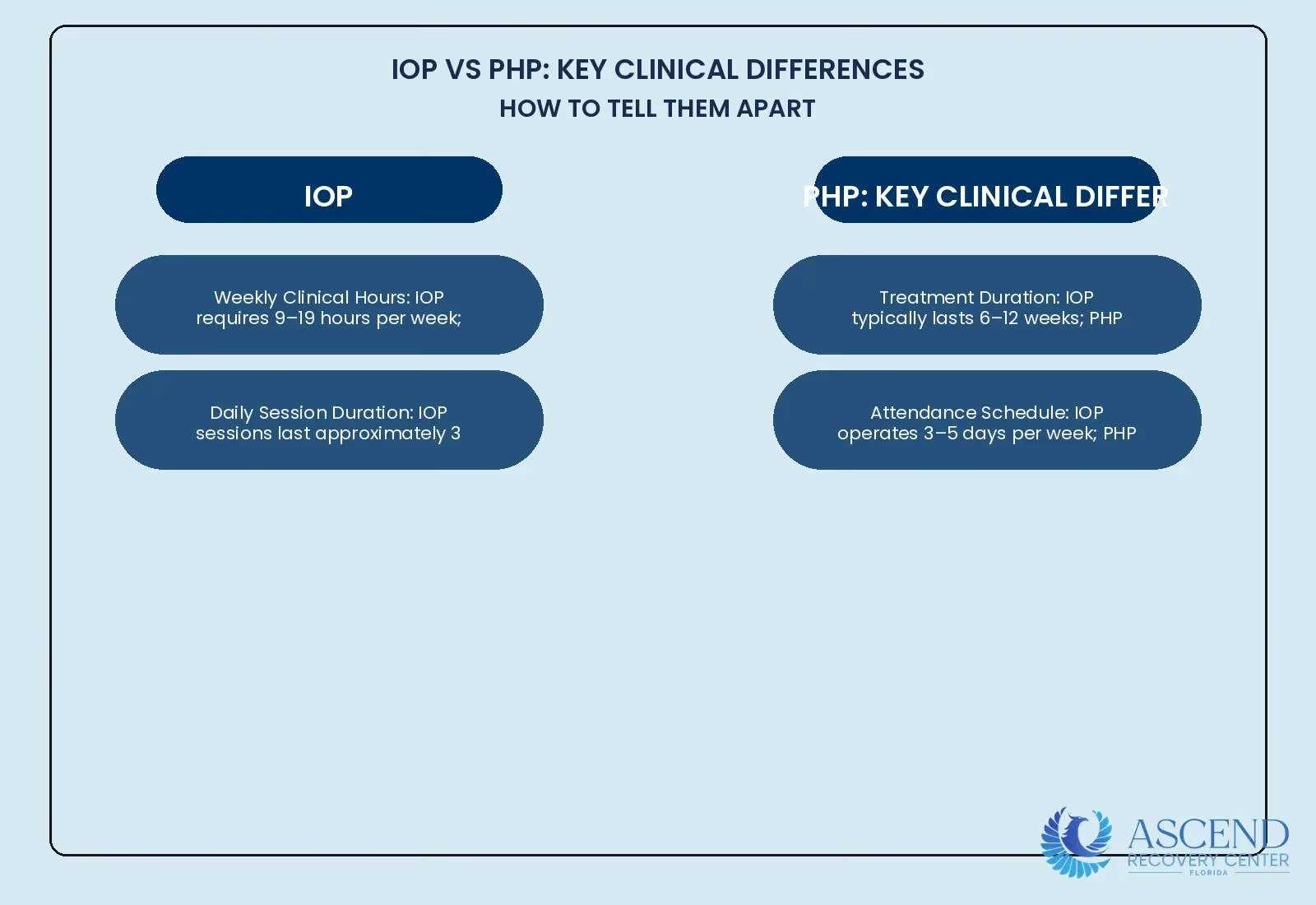
The 5 differences between IOP and PHP are:
- Weekly hours: IOP requires 9–19 hours per week; PHP requires 20–30 hours per week
- Daily session length: IOP sessions last 3 hours per day; PHP sessions last 4–6 hours per day
- Days per week: IOP operates 3–5 days per week; PHP operates 5–6 days per week
- Typical duration: IOP lasts 6–12 weeks; PHP lasts 4–6 weeks
- Monthly cost before insurance: IOP costs $4,000–$10,000 per month; PHP costs $8,000–$15,000 per month
PHP is appropriate for clients stepping down from residential treatment or medical detox who require near-daily clinical structure. IOP is appropriate for clients stepping down from PHP or entering treatment directly with moderate substance use severity. Ascend Recovery Center provides both PHP and IOP at the same Palm Beach Gardens facility, enabling seamless step-down transitions.
What Does IOP Include?
IOP includes 7 clinical components: group therapy, individual therapy, relapse prevention training, drug screening, psychiatric medication management, family therapy, and life skills development. Each component targets specific recovery dimensions identified in the client's individualized treatment plan.
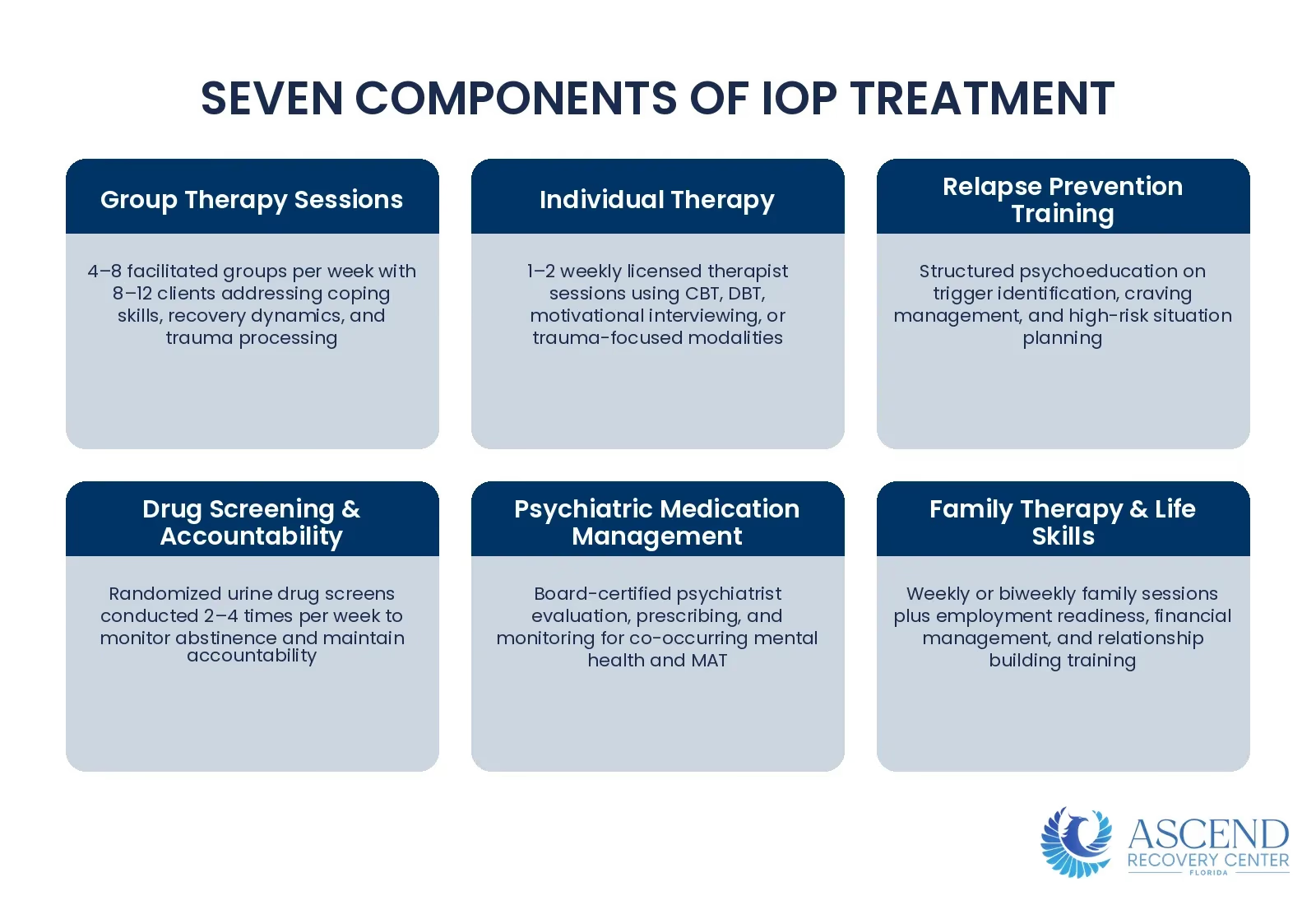
The 7 clinical components of IOP are:
- Group therapy: 4–8 facilitated group sessions per week addressing addiction recovery, coping skills, interpersonal dynamics, and trauma processing — group size of 8–12 clients per session
- Individual therapy: 1–2 weekly sessions with a licensed therapist using CBT, DBT, MI, or trauma-focused modalities (EMDR, CPT)
- Relapse prevention training: structured psychoeducation on trigger identification, craving management, high-risk situation planning, and cognitive restructuring
- Drug screening: randomized urine drug screens (UDS) conducted 2–4 times per week to maintain accountability and monitor abstinence
- Psychiatric medication management: evaluation, prescribing, and monitoring by a board-certified psychiatrist or psychiatric APRN for co-occurring mental health disorders and medication-assisted treatment (MAT)
- Family therapy: weekly or biweekly sessions involving family members in the recovery process, addressing communication, codependency, and boundary-setting
- Life skills development: structured programming on employment readiness, financial management, time management, and healthy relationship building
Ascend Recovery Center integrates all 7 components into the IOP schedule at the Palm Beach Gardens location.
Who Qualifies for an Intensive Outpatient Program?
Individuals with moderate substance use severity, stable medical status, safe housing, and sufficient motivation for outpatient-level treatment qualify for IOP. The ASAM Criteria evaluates 6 dimensions to determine IOP eligibility.
IOP is appropriate for 3 primary client profiles:
- Step-down from PHP or residential: clients who have completed 4–6 weeks of PHP or residential treatment and demonstrate clinical readiness for reduced intensity — the client maintains sobriety, attends all programming, and demonstrates effective coping skill use
- Direct entry: clients assessed at ASAM Level 2.1 who present with moderate substance use severity, no active withdrawal risk, stable psychiatric symptoms, and a substance-free living environment
- Step-up from standard outpatient: clients in Level 1.0 treatment who experience increased substance use, psychiatric destabilization, or insufficient progress at the lower intensity level
Clients who require 24-hour psychiatric monitoring, or do not have access to stable housing do not qualify for IOP and require placement at a higher ASAM level. Ascend Recovery Center conducts an for every client prior to IOP admission to confirm clinical appropriateness. Clients with physiological dependence on alcohol, opioids, or benzodiazepines complete medically supervised withdrawal first — see Drug Detox: 5–10 Day Medically Supervised Withdrawal for the medical stabilization phase that precedes IOP placement.
Does Your Insurance Cover PHP & IOP Programs?
Free, confidential verification in under 15 minutes.
How Long Does IOP Last?
IOP lasts 6–12 weeks for the majority of clients, with a NIDA-recommended minimum of 90 days of total treatment engagement across all levels of care. The clinical team adjusts IOP duration every 30 days based on ASAM Criteria reassessment.
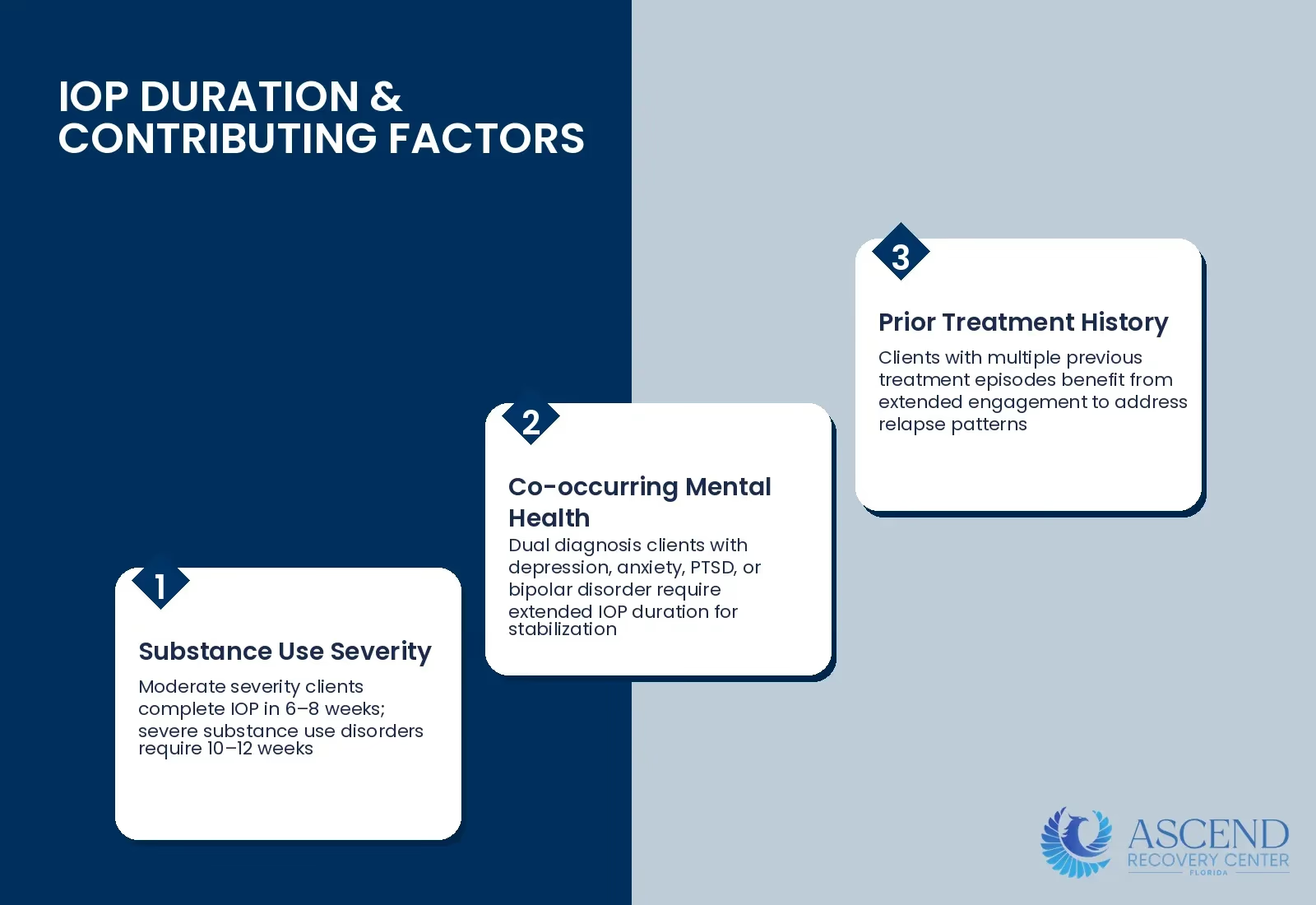
IOP duration depends on 5 factors:
- Substance use severity: clients with severe substance use disorders require 10–12 weeks of IOP; clients with moderate severity complete IOP in 6–8 weeks
- Co-occurring mental health diagnoses: dual diagnosis clients (substance use disorder + depression, anxiety, PTSD, bipolar disorder) require extended IOP duration for psychiatric stabilization
- Prior treatment history: clients with multiple prior treatment episodes benefit from extended IOP engagement to address relapse patterns
- Recovery environment quality: clients in FARR-certified sober living homes in Florida demonstrate higher treatment retention and complete IOP at standard timeframes; clients in high-risk environments require extended treatment
- Treatment engagement: consistent attendance, homework completion, and active participation in group and individual therapy predict shorter IOP duration
After completing IOP, clients step down to standard outpatient (Level 1.0) for ongoing maintenance therapy. The full step-down continuum across ASAM Levels 1.0, 2.1, and 2.5 is mapped in Outpatient Rehab in Florida: PHP, IOP & Standard OP.
IOP delivers the clinical rigor of intensive treatment while preserving the client's connection to work, family, and community — the 3 environments where sustained recovery is built.
What Is the IOP Schedule at Ascend Recovery Center?
Ascend Recovery Center operates IOP in 2 scheduling tracks — morning and afternoon — to accommodate clients' employment, education, and family responsibilities. Each track delivers the same clinical curriculum and therapeutic modalities.
The 2 IOP scheduling tracks at Ascend Recovery Center are:
- Morning track: 9:00 AM–12:00 PM, Monday through Friday (15 hours per week)
- Afternoon track: 1:00 PM–4:00 PM, Monday through Friday (15 hours per week)
Clients attend 3–5 days per week based on the clinical team's assessment of treatment needs. A typical IOP week at Ascend Recovery Center includes 4 group therapy sessions, 1 individual therapy session, 1 psychoeducation session, and 1 family therapy session (weekly or biweekly). Drug screening occurs 2–4 times per week on a randomized schedule. Psychiatric medication management appointments are scheduled individually with the psychiatric provider.
Clients who require scheduling flexibility due to employment or childcare obligations discuss alternative arrangements with the clinical team during .
What Is the Evidence Base for IOP?
IOP produces equivalent substance use outcomes to residential treatment for clients who meet ASAM Criteria for outpatient placement, according to a 2014 Cochrane Review of 14 randomized controlled trials. NIDA identifies treatment duration — not treatment setting — as the strongest predictor of long-term recovery outcomes.
4 key research findings support IOP effectiveness:
- Comparable outcomes to residential: a Cochrane Systematic Review (McCarty et al., 2014) found no statistically significant difference in substance use outcomes between outpatient and residential treatment at 12-month follow-up
- Treatment retention: IOP programs report 50–70% completion rates nationally (SAMHSA, 2020), compared to 30–40% for residential programs, due to lower treatment burden and maintained community connection
- 90-day threshold: NIDA reports that 90+ days of continuous treatment engagement produces the greatest reduction in substance use, regardless of whether treatment occurs in outpatient or residential settings
- Cost-effectiveness: IOP delivers clinical outcomes comparable to residential treatment at 40–60% lower cost, increasing access for individuals who lack insurance coverage for residential care
Ascend Recovery Center tracks client outcomes including treatment completion rates, 30/60/90-day sobriety milestones, and post-discharge engagement in continuing care.
How Does IOP Address Dual Diagnosis?
IOP addresses dual diagnosis through integrated treatment — simultaneous treatment of the substance use disorder and the co-occurring mental health disorder by the same clinical team within the same program. SAMHSA reports that 9.2 million adults in the United States have co-occurring substance use and mental health disorders (SAMHSA NSDUH, 2022).
Integrated dual diagnosis treatment in IOP includes 4 clinical elements:
- Comprehensive psychiatric evaluation: a board-certified psychiatrist or psychiatric APRN conducts a full diagnostic assessment at admission, identifying co-occurring conditions — major depressive disorder, generalized anxiety disorder, PTSD, bipolar disorder, ADHD, and personality disorders
- Medication management: psychotropic medications (SSRIs, SNRIs, mood stabilizers, antipsychotics) are prescribed and monitored alongside MAT medications for substance use disorders
- Trauma-focused therapy: evidence-based trauma modalities — EMDR (eye movement desensitization and reprocessing) and CPT (cognitive processing therapy) — address PTSD and complex trauma that co-occur with substance use
- Integrated group programming: dual diagnosis-specific groups address the interaction between mental health symptoms and substance use patterns, teaching clients to manage both conditions simultaneously
Ascend Recovery Center provides integrated dual diagnosis treatment in all IOP programming. The treatment team coordinates psychiatric and addiction services to prevent the fragmented care that occurs when mental health and substance use disorders are treated by separate providers.
Does Insurance Cover IOP?
Insurance covers IOP under the Mental Health Parity and Addiction Equity Act (MHPAEA) of 2008, which requires commercial insurance plans that cover behavioral health to apply no greater restrictions to substance use disorder treatment than to medical and surgical benefits. Florida Statute 627.669 provides additional state-level protection by requiring insurers to make substance use disorder coverage available to group policyholders in Florida — an offer mandate rather than a coverage mandate.
Insurance coverage for IOP depends on 4 factors:
- Plan type: PPO plans provide broader provider access and higher out-of-network benefits than HMO or EPO plans
- Network status: in-network providers result in lower copays, coinsurance, and deductible application compared to out-of-network providers
- Prior authorization: many insurance plans require prior authorization for IOP; the treatment provider submits clinical documentation to the insurance company to obtain approval
- Utilization review: insurance companies conduct concurrent utilization reviews every 7–14 days during IOP to determine continued medical necessity based on ASAM Criteria
Ascend Recovery Center accepts 5 major insurance carriers: Aetna, Cigna, Blue Cross Blue Shield, United Healthcare, and Humana. The admissions team completes a free within 15 minutes to determine copay, coinsurance, deductible, and authorization requirements. Contact Ascend Recovery Center at (561) 956-1082 for immediate insurance verification.
How Much Does IOP Cost Without Insurance?
Intensive outpatient programming costs $4,000–$10,000 per month before insurance in the United States, with total program costs ranging from $6,000 to $30,000 across a typical 6–12 week course. SAMHSA's National Survey of Substance Abuse Treatment Services documents per-session rates of $250–$450 for clinically structured IOP delivered by licensed clinicians. The per-month cost captures group therapy, individual therapy, psychiatric evaluation, medication management, drug screening, and case management.
IOP cost varies across 4 dimensions:
- Programming hours per week — 9-hour programs cost $4,000–$6,000 per month. 15-hour programs (the standard Ascend track) cost $6,000–$8,500 per month. 19-hour programs cost $8,000–$10,000 per month.
- Dual diagnosis intensity — programs with integrated psychiatric services, medication management, and trauma-focused modalities (EMDR, CPT) cost 15–25% more than substance use only IOP.
- Drug screening frequency — randomized urine drug screening at 2–4 tests per week adds $200–$600 per month to the base IOP rate.
- MAT continuation — buprenorphine, naltrexone, or methadone management adds $150–$500 per month in medication and provider visits.
Out-of-pocket cost is substantially lower than the gross rate when insurance benefits apply. Most insured clients at Ascend pay between $0 and $1,500 in out-of-pocket cost across the full IOP episode after deductible, copay, and coinsurance. The cost-effectiveness advantage of IOP over residential care — 40–60% lower total cost per Cochrane Review data (McCarty et al., 2014) — makes IOP the preferred level of care when ASAM Criteria support outpatient placement.
Integrated dual diagnosis treatment within IOP eliminates the treatment gap where substance use and mental health disorders are addressed by separate providers who do not coordinate care.
What Are the Risks of IOP When the Recovery Environment Is Unstable?
The primary clinical risk of IOP is relapse driven by exposure to substances, triggers, and high-risk relationships in the client's home environment between programming sessions. SAMHSA TIP 47 identifies recovery environment quality as the strongest non-clinical predictor of IOP outcomes, with clients in substance-free housing producing 2–3× higher completion rates than clients in unsupervised home environments.
Recovery environment risks during IOP and the corresponding clinical mitigations:
- Active substance use in the home — partner, roommate, or family member ongoing substance use creates daily relapse cues. Clinical mitigation: placement in a FARR-certified sober living home in Florida for the duration of IOP. FARR-certified residences enforce abstinence, random drug screening, and resident-led recovery culture.
- Unstructured time between sessions — IOP delivers 9–19 hours of structured programming, leaving 100+ waking hours per week unstructured. Clinical mitigation: 12-step or SMART Recovery meeting attendance (3–5 meetings per week), sponsor-based accountability, alumni programming, and structured employment.
- Untreated co-occurring mental health symptoms — depression, anxiety, PTSD, and bipolar disorder drive substance use as a coping mechanism. Clinical mitigation: integrated psychiatric care with weekly medication management appointments, trauma-focused therapy (EMDR or CPT), and clinical decision-making within the same treatment team.
- Drug screening non-adherence — missed or refused urine drug screens correlate with active use. Clinical mitigation: randomized, observed UDS at 2–4 tests per week with clinical response protocols for positive results.
Clients with recovery environment instability who do not have access to sober living are clinically reassessed and may be recommended for step-up to PHP (Level 2.5) or residential treatment (Level 3.1+) where 24-hour structure replaces the unsupervised home environment.
What Florida Regulations Govern IOP Settings?
Florida IOP facilities are licensed by the Agency for Health Care Administration (AHCA) under Florida Statute Chapter 397 and operate under the Florida Administrative Code Rule 65D-30 governing substance abuse services. AHCA licensure is the legal prerequisite for IOP delivery in Florida. Telehealth IOP delivery is authorized under Florida Statute 456.47, which establishes the standards for synchronous audio-video clinical services across substance use disorder treatment.
The 4 regulatory frameworks that govern Florida IOP settings:
- AHCA Substance Abuse Licensure (FS 397, FAC 65D-30) — every IOP facility must hold an active AHCA license documenting compliance with staffing ratios (1 licensed clinician per 12 clients), clinical record requirements, treatment plan timelines (initial within 7 days, updates every 30 days), and discharge planning protocols.
- DCF Background Screening (FS 397.4073) — all clinical staff complete Level 2 background screening through the Florida Department of Children and Families before client contact.
- Telehealth Standards (FS 456.47) — telehealth IOP must occur via HIPAA-compliant synchronous audio-video platforms. The licensed clinician must hold an active Florida license. Group therapy delivered via telehealth requires the same group size, duration, and clinical content as in-person programming.
- Patient Brokering Act (FS 817.505) — Florida law prohibits any payment, kickback, or referral fee for treatment placement. AHCA-licensed IOPs operate within the Patient Brokering Act protections that ended the South Florida treatment fraud era of 2013–2017.
Ascend Recovery Center operates as an AHCA-licensed substance abuse provider at 4362 Northlake Blvd Suite 117, Palm Beach Gardens, FL 33410. Both in-person and telehealth IOP services comply with FS 397, FAC 65D-30, FS 456.47, and FS 817.505. Treatment records are maintained per HIPAA, 42 CFR Part 2, and Florida confidentiality requirements.
What Happens After You Complete IOP?
After completing IOP, clients step down to ASAM Level 1.0 standard outpatient therapy, engage with alumni programming, and continue mutual support group attendance under a written continuing care plan developed 30 days before discharge. NIDA's Principles of Drug Addiction Treatment identifies the 12-month period following structured treatment completion as the highest-risk window for relapse and the period where continuing care delivers the greatest outcome impact.
The 5 components of post-IOP continuing care:
- Standard outpatient therapy (ASAM Level 1.0) — 1–2 individual therapy sessions per week with a licensed clinician. Frequency tapers from weekly to biweekly to monthly across 6–12 months based on clinical stability. Standard outpatient sustains the therapeutic relationship built during IOP and addresses emerging stressors.
- Alumni programming — Ascend's alumni community provides peer-led support, monthly events, sober social activities, and a network of individuals at varying lengths of sobriety. Alumni engagement correlates with 12-month retention in recovery per SAMHSA Recovery Community Services research.
- Mutual support groups — Alcoholics Anonymous, Narcotics Anonymous, SMART Recovery, or Refuge Recovery meetings 3–5 times per week. Sponsor-based accountability provides a non-clinical recovery relationship complementing the licensed treatment team.
- Medication-assisted treatment (MAT) continuation — clients on buprenorphine, naltrexone, or extended-release naltrexone (Vivitrol) continue medication management with a psychiatric or addiction medicine provider. MAT continuation through the first 12 months post-IOP reduces opioid overdose mortality by 50%+ per CDC opioid mortality surveillance.
- Recovery residence (sober living) — clients in FARR-certified sober living homes demonstrate substantially higher 12-month sobriety rates than clients returning to unstructured housing.
The continuing care plan is documented in writing, shared with the client and any designated family members, and reviewed at the final IOP session. Ascend's clinical team contacts each alum at 30, 60, 90, and 180 days post-discharge to monitor recovery status and intervene if relapse warning signs emerge.
Is IOP just a weaker version of 'real' rehab?
Common Misconception
"Outpatient programs like IOP are a watered-down version of real treatment."
What the Evidence Shows
Decades of research find outpatient programs produce outcomes comparable to residential treatment for most clients, at the appropriate level of care. The ASAM Criteria match severity to setting — IOP (ASAM 2.1, 9–15 hours/week) is the right level for many presentations and is associated with strong outcomes because clients practice recovery skills in their real environment while staying engaged with work and family. 'More restrictive' is not synonymous with 'more effective'; the correct level of care is.
The ASAM Criteria, 3rd Edition (American Society of Addiction Medicine); SAMHSA outpatient outcome data.
What Level of Care Do I Need?
Answer 8 questions about the current situation. A clinical assessment determines the final recommendation.
How would you describe current substance use frequency?
Confidential · Not a clinical diagnosis · Your answers stay in your browser


