


Referenced in this article
Key Takeaways
- Cannabis use disorder affects approximately 16.3 million Americans according to the 2022 NSDUH, making cannabis the most commonly misused illicit substance
- THC potency in commercial cannabis increased from 4% in 1995 to over 15% in 2021, with concentrates exceeding 80% THC content
- Cannabis withdrawal syndrome includes 7 DSM-5 recognized symptoms: irritability, anxiety, insomnia, appetite loss, restlessness, depressed mood, and physical discomfort
- CBT, motivational enhancement therapy (MET), and contingency management are the 3 evidence-based behavioral treatments for cannabis use disorder
- Cannabis withdrawal onset occurs 1-3 days after cessation, peaks at 4-14 days, and resolves within 3-4 weeks in most cases
What Are the DSM-5 Criteria for Cannabis Use Disorder?
The DSM-5-TR diagnoses cannabis use disorder when an individual meets 2 or more of 11 criteria within a 12-month period, with severity classified as mild (2-3 criteria), moderate (4-5 criteria), or severe (6 or more criteria). Cannabis use disorder is underdiagnosed because cultural normalization and legal status changes cause individuals and clinicians to underestimate marijuana's addiction potential.
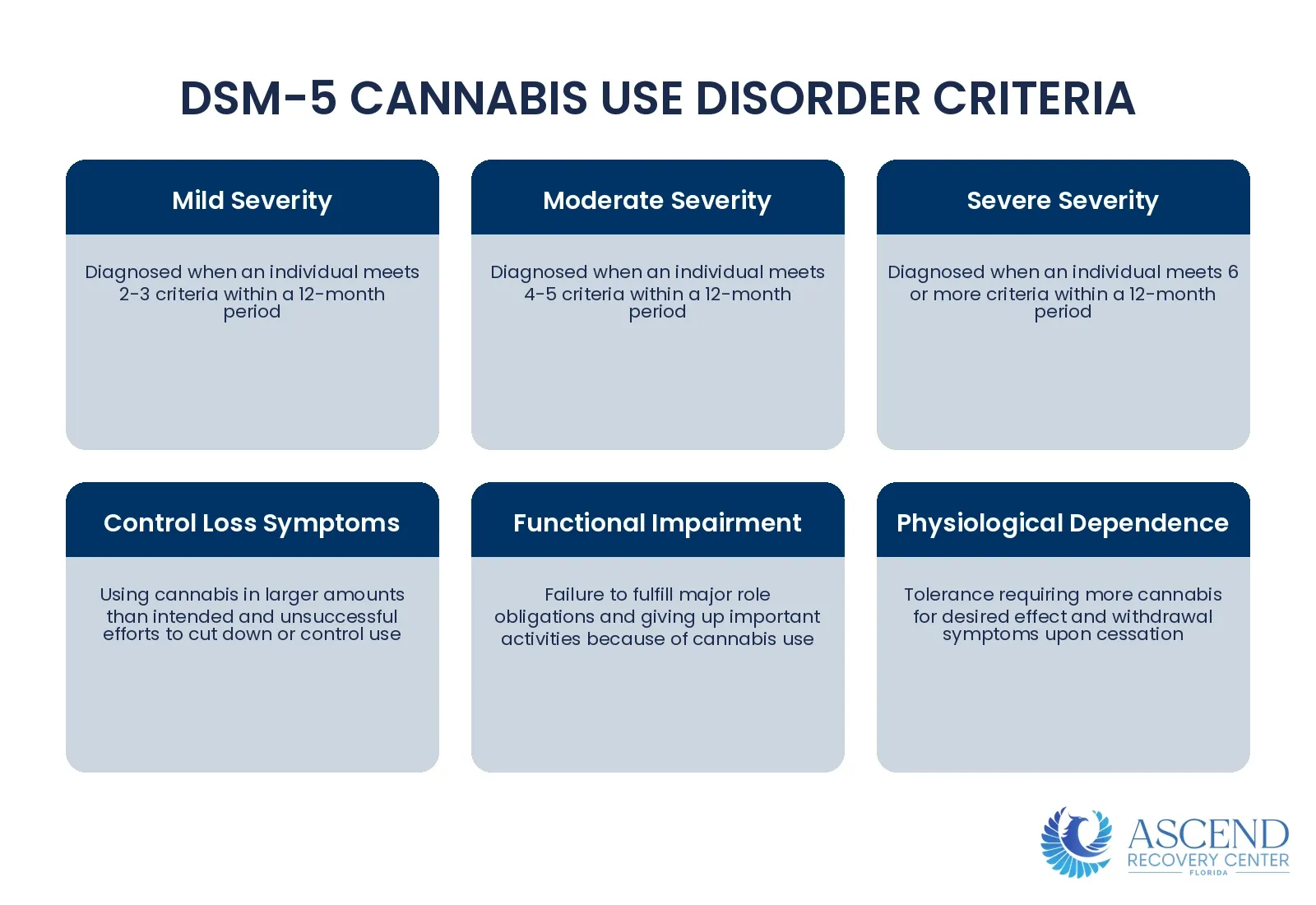
The following are the 11 DSM-5-TR diagnostic criteria for cannabis use disorder:
- Using cannabis in larger amounts or over longer periods than intended
- Persistent desire or unsuccessful efforts to cut down or control cannabis use
- Spending a great deal of time obtaining, using, or recovering from cannabis
- Craving or strong desire to use cannabis
- Recurrent cannabis use resulting in failure to fulfill major role obligations
- Continued cannabis use despite persistent social or interpersonal problems
- Giving up or reducing important activities because of cannabis use
- Recurrent cannabis use in physically hazardous situations
- Continued use despite knowledge of a physical or psychological problem caused by cannabis
- Tolerance — needing more cannabis to achieve the desired effect
- Withdrawal — experiencing characteristic cannabis withdrawal symptoms upon cessation
According to NIDA's 2023 cannabis research report, approximately 30% of people who use marijuana develop some degree of cannabis use disorder. Individuals who begin using marijuana before age 18 are 4-7 times more likely to develop cannabis use disorder compared to adults who begin use after age 18.
How Does THC Affect the Brain?
THC binds to CB1 cannabinoid receptors in the brain, disrupting the endocannabinoid system's regulation of mood, memory, appetite, pain perception, and motor coordination. CB1 receptors are concentrated in the hippocampus (memory), cerebral cortex (cognition), basal ganglia (movement), and cerebellum (coordination). THC mimics the endogenous cannabinoid anandamide, producing its effects by overstimulating CB1 receptor signaling.
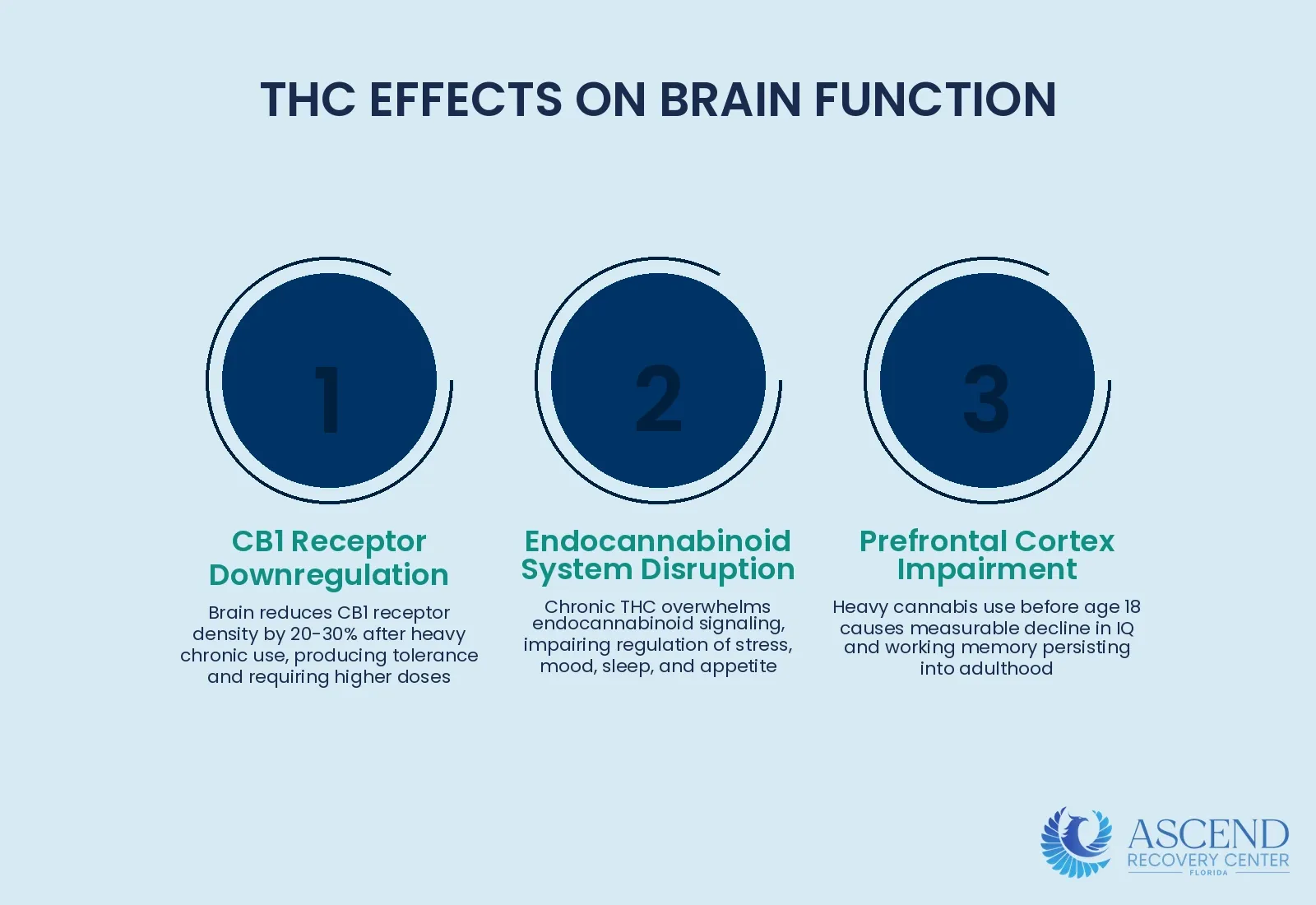
Chronic THC exposure produces 3 neuroadaptive changes:
- CB1 receptor downregulation — the brain reduces CB1 receptor density by 20-30% after heavy chronic use, producing tolerance and requiring higher doses for the same effect. CB1 receptor density begins recovering within 48 hours of abstinence and normalizes after approximately 28 days.
- Endocannabinoid system disruption — chronic THC overwhelms endocannabinoid signaling, impairing the system's ability to regulate stress, mood, sleep, and appetite without external THC input
- Prefrontal cortex impairment — THC exposure during adolescence alters prefrontal cortex development, reducing executive function capacity. According to a 2022 longitudinal study in JAMA Psychiatry, heavy cannabis use before age 18 is associated with a measurable decline in IQ and working memory that persists into adulthood.
THC potency is the primary variable determining addiction risk. Higher-potency products (concentrates, dabs, high-THC flower) produce faster tolerance, more severe withdrawal, and higher rates of cannabis use disorder compared to lower-potency products.
What Is Marijuana Withdrawal Syndrome?
Marijuana withdrawal syndrome is a recognized clinical condition in the DSM-5-TR, producing irritability, insomnia, decreased appetite, anxiety, and restlessness beginning 1-3 days after cessation and peaking at 4-14 days. Cannabis withdrawal was added to the DSM-5 in 2013 based on clinical evidence that chronic heavy cannabis users experience a consistent and clinically significant withdrawal syndrome upon abrupt cessation.
The following are the 7 DSM-5-TR symptoms of cannabis withdrawal (3 or more required for diagnosis):
- Irritability, anger, or aggression — the most commonly reported withdrawal symptom, peaking at days 4-7
- Nervousness or anxiety — heightened stress reactivity due to endocannabinoid system dysregulation
- Sleep difficulty (insomnia) — onset within 24-72 hours, persisting for 2-6 weeks in heavy users. Vivid dreams and nightmares are common as REM sleep rebounds.
- Decreased appetite or weight loss — appetite suppression lasting 1-3 weeks, with some individuals losing 5-10 pounds during the withdrawal period
- Restlessness — physical agitation and inability to relax
- Depressed mood — dysphoria and emotional flatness during the first 2 weeks of abstinence
- At least 1 physical symptom — abdominal pain, shakiness or tremors, sweating, fever, chills, or headache
Cannabis withdrawal is not life-threatening but produces sufficient discomfort to drive relapse in 70% of quit attempts within the first 2 weeks. Unlike alcohol detox or opioid detox, cannabis withdrawal does not require medical detoxification. Withdrawal severity increases with higher daily THC intake, longer duration of use, and use of high-potency products. Medical management of cannabis withdrawal focuses on symptom relief through sleep hygiene protocols, anti-anxiety interventions, and structured therapeutic support.
“Approximately 3 in 10 people who use marijuana develop cannabis use disorder, and the risk is 4 to 7 times greater for individuals who begin using before age 18.”
What Treatment Approaches Work for Cannabis Use Disorder?
Three behavioral therapies have the strongest evidence base for cannabis use disorder treatment: cognitive-behavioral therapy (CBT), motivational enhancement therapy (MET), and contingency management (CM). No FDA-approved medication exists for cannabis use disorder, though several medications are under investigation. According to a 2023 Cochrane review, the combination of CBT and MET produces the highest sustained abstinence rates for cannabis use disorder.
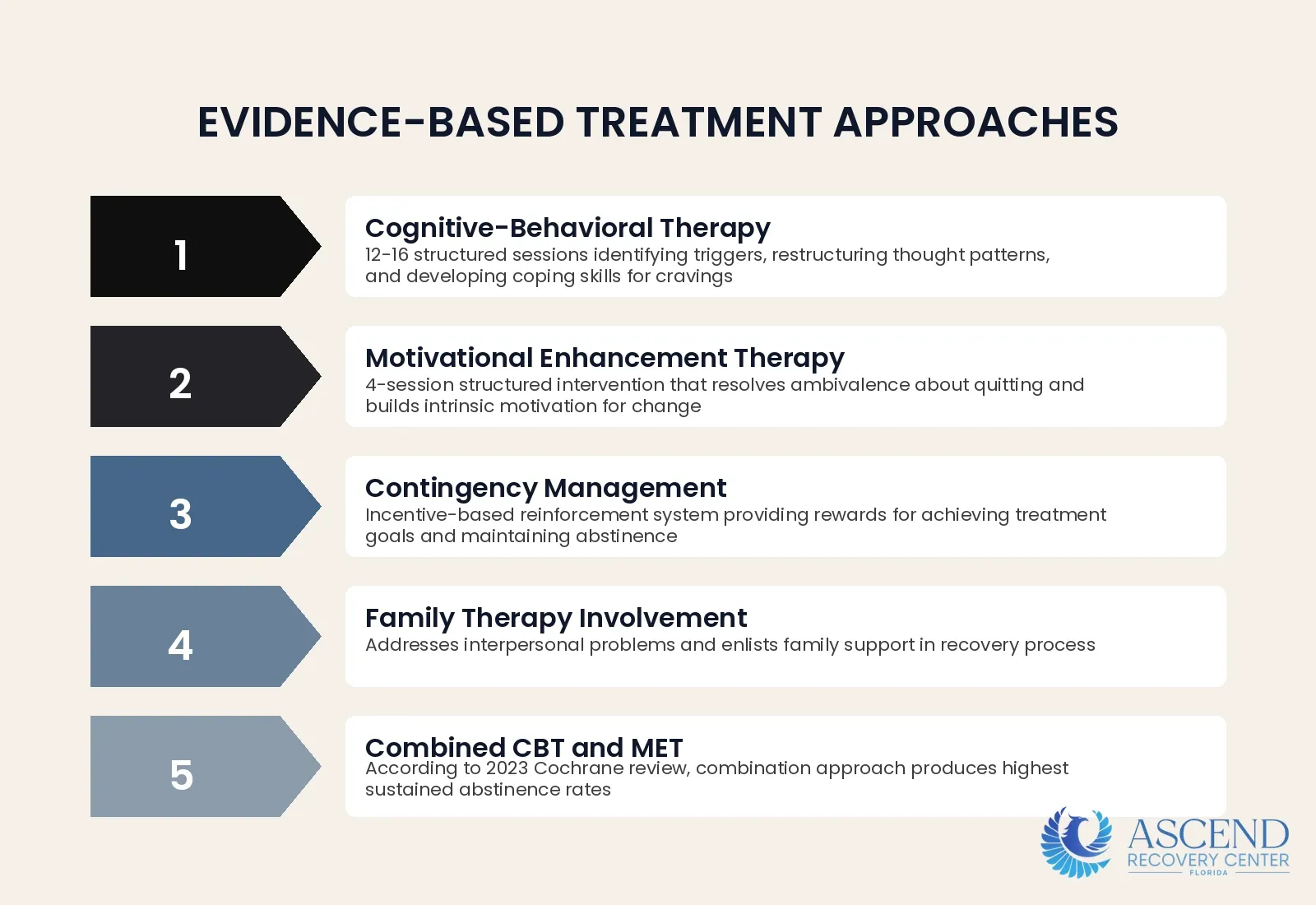
The following are 4 evidence-based treatment approaches for cannabis use disorder:
- Cognitive-behavioral therapy (CBT) — identifies marijuana-use triggers, restructures thought patterns that maintain use, and develops coping skills for managing cravings. CBT for cannabis use disorder involves 12-16 structured sessions targeting functional analysis of use patterns and skill development for high-risk situations.
- Motivational enhancement therapy (MET) — a 4-session structured intervention that resolves ambivalence about quitting marijuana and builds intrinsic motivation for change. MET is effective because many individuals with cannabis use disorder are ambivalent about whether marijuana use constitutes a problem.
- Contingency management (CM) — provides incentive-based reinforcement for verified cannabis-negative drug screens. CM is combined with CBT and MET for individuals with moderate-to-severe cannabis use disorder.
- Mindfulness-based relapse prevention (MBRP) — integrates mindfulness meditation with relapse prevention skills training to help individuals observe cravings without acting on the cravings, reduce stress reactivity, and build emotional regulation capacity
Ascend Recovery Center integrates CBT and motivational enhancement therapy within PHP and IOP programming. Individuals receive individual therapy, group therapy, and psychiatric support for co-occurring conditions within a structured treatment schedule.

Ascend Recovery Center — Palm Beach Gardens, FL
Does Your Insurance Cover Drug Rehab Education?
Free, confidential verification in under 15 minutes.
How Is Cannabis Use Disorder Treated in PHP and IOP Programs?
Cannabis use disorder treatment in PHP delivers 5-6 hours of clinical programming per day (5 days per week), while IOP provides 3 hours per day (3-5 days per week), both incorporating individual therapy, group therapy, and psychiatric support. PHP is appropriate for individuals with moderate-to-severe cannabis use disorder, co-occurring mental health conditions, or a history of failed outpatient treatment attempts. IOP serves individuals stepping down from PHP or those with mild-to-moderate severity who need structured treatment while maintaining work or school.
The following are 6 core treatment components for cannabis use disorder at Ascend Recovery Center:
- Individual CBT and MET sessions — weekly one-on-one therapy targeting marijuana-specific triggers, ambivalence resolution, and skill development
- Psychoeducation groups — education about THC's effects on the brain, cannabis withdrawal management, and the relationship between THC potency and addiction severity
- Process groups — peer-supported exploration of relapse triggers, emotional regulation, and recovery identity development
- Psychiatric evaluation — assessment and medication management for co-occurring depression, anxiety, insomnia, and attention disorders that are common among individuals with cannabis use disorder
- Holistic programming — Yoga Therapy and mindfulness training support stress reduction and nervous system regulation during cannabis withdrawal and early recovery
- Aftercare coordination — discharge planning includes step-down to outpatient therapy, placement in sober living homes in Florida when appropriate, mutual-aid referrals (SMART Recovery, Marijuana Anonymous), and relapse prevention planning
“The average potency of THC in seized marijuana samples has increased from approximately 4 percent in 1995 to 15 percent in 2021, and some products available in legal markets exceed 90 percent THC.”
What Co-Occurring Conditions Are Common with Cannabis Use Disorder?
Anxiety disorders, depressive disorders, and ADHD co-occur with cannabis use disorder at rates 2-4 times higher than in the general population. According to SAMHSA's 2022 data, 37% of adults with cannabis use disorder also met criteria for a co-occurring mental health disorder in the past year. Many individuals initiate cannabis use to self-medicate anxiety, insomnia, chronic pain, or PTSD symptoms — creating a cycle where marijuana temporarily suppresses symptoms while worsening the underlying condition over time. Some individuals with cannabis use disorder also develop dependence on other substances, including prescription drugs or alcohol.
The following are 5 co-occurring conditions frequently associated with cannabis use disorder:
- Generalized anxiety disorder — chronic cannabis use paradoxically worsens anxiety over time through endocannabinoid system disruption and heightened stress sensitivity during periods of abstinence
- Major depressive disorder — cannabis-related anhedonia and motivational deficits overlap with and exacerbate depressive symptoms
- ADHD — individuals with untreated ADHD use cannabis to self-medicate restlessness and difficulty concentrating. Proper ADHD assessment and non-stimulant treatment improve cannabis use disorder outcomes.
- PTSD — cannabis use to manage trauma and PTSD symptoms delays trauma processing and increases avoidance behaviors. EMDR Therapy provides evidence-based trauma resolution without reliance on cannabis.
- Insomnia — chronic cannabis use disrupts natural sleep architecture by suppressing REM sleep. Cannabis cessation triggers REM rebound insomnia that persists 2-6 weeks, driving relapse in individuals who used marijuana primarily for sleep.
Ascend Recovery Center provides dual diagnosis treatment that addresses cannabis use disorder and co-occurring mental health conditions within a single clinical framework.
What Are the Risks of Synthetic Cannabinoids?
Synthetic cannabinoids (K2, Spice, bath salts containing synthetic cannabinoids) are chemically unrelated to THC but activate CB1 receptors with 10-800 times greater potency, producing unpredictable and life-threatening effects. Synthetic cannabinoids are manufactured in unregulated laboratories with no quality control, resulting in inconsistent potency across batches and within a single product. The DEA has identified over 200 distinct synthetic cannabinoid compounds.
The following are 5 medical emergencies associated with synthetic cannabinoid use:
- Seizures — synthetic cannabinoids cause generalized tonic-clonic seizures at rates far exceeding plant-based cannabis
- Psychosis — acute psychotic episodes with paranoid delusions, hallucinations, and agitation occur in 20-40% of emergency department presentations for synthetic cannabinoid toxicity
- Kidney injury — acute kidney injury requiring dialysis has been reported in clusters associated with specific synthetic cannabinoid batches
- Cardiovascular events — tachycardia (heart rates exceeding 150 bpm), hypertension, and myocardial infarction
- Death — synthetic cannabinoid-related deaths result from respiratory depression, cardiac arrhythmia, or multi-organ failure. The CDC reported 56 deaths linked to synthetic cannabinoids in 2018.
Treatment for synthetic cannabinoid use disorder follows the same behavioral therapy framework as plant-based cannabis use disorder. Individuals using synthetic cannabinoids face additional medical stabilization needs due to the unpredictable pharmacology of these compounds. Emergency medical treatment for synthetic cannabinoid toxicity requires hospital-based care before transitioning to outpatient addiction treatment.

Ascend Recovery Center — Palm Beach Gardens, FL
Cannabis/Marijuana Use Self-Assessment
1 / 11Answer 11 questions based on DSM-5 substance use disorder diagnostic criteria. This provides general guidance — a clinical evaluation determines diagnosis.
Using cannabiss in larger amounts or for longer periods than intended?
Confidential · Not a clinical diagnosis · HIPAA protected