


Referenced in this article
Key Takeaways
- Cocaine addiction (stimulant use disorder) involves compulsive cocaine use despite harmful consequences, diagnosed using 11 DSM-5 criteria
- No FDA-approved medication treats cocaine addiction — behavioral therapies (CBT, contingency management, motivational interviewing) are primary treatments
- Cocaine withdrawal follows 3 phases: crash (hours to days), withdrawal (1-10 weeks), and extinction (months), with no life-threatening medical complications
- Cocaine blocks dopamine reuptake transporters, producing a 200-400% increase in synaptic dopamine levels compared to natural reward
- PHP and IOP programming at Ascend Recovery Center addresses stimulant use disorder with evidence-based behavioral therapy in Palm Beach Gardens, FL
How Does Cocaine Affect the Brain?
Cocaine blocks the reuptake of dopamine, serotonin, and norepinephrine in the synaptic cleft, causing a rapid accumulation of dopamine in the brain's reward circuit. Dopamine reuptake inhibition in the nucleus accumbens produces the intense euphoria, increased energy, and heightened alertness associated with cocaine use. The dopamine surge from cocaine is 3-5 times higher than what occurs from natural rewarding activities like eating or social interaction. Cocaine's effects begin within seconds (smoked/injected) to 3-5 minutes (intranasal) and last 15-30 minutes (smoked) to 60-90 minutes (intranasal).
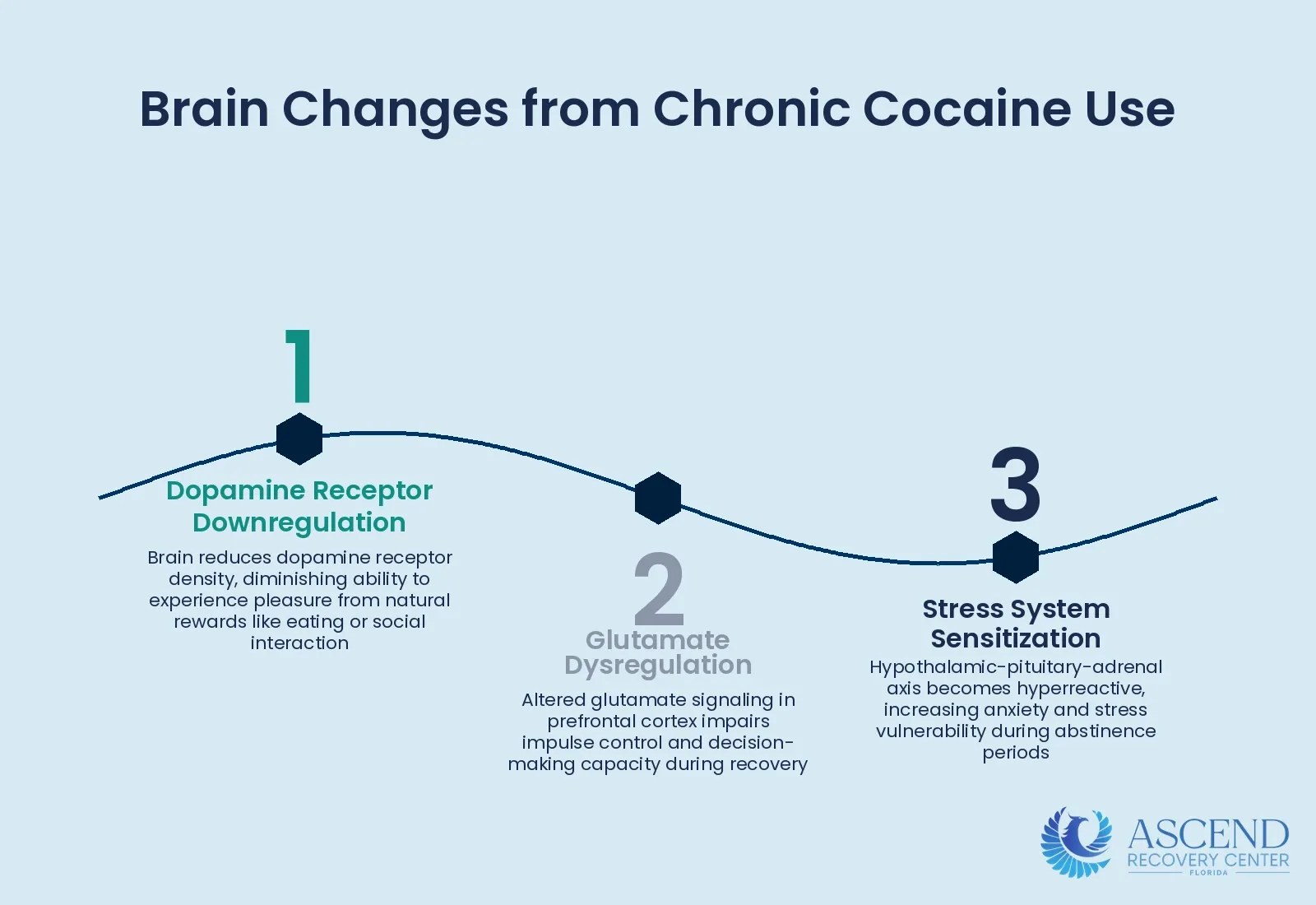
Chronic cocaine use produces 3 key neuroadaptive changes:
- Dopamine receptor downregulation — the brain reduces dopamine receptor density, diminishing the ability to experience pleasure from natural rewards (anhedonia)
- Glutamate dysregulation — altered glutamate signaling in the prefrontal cortex impairs impulse control and decision-making
- Stress system sensitization — the hypothalamic-pituitary-adrenal (HPA) axis becomes hyperreactive, increasing anxiety and stress vulnerability during abstinence
According to NIDA's 2023 cocaine research report, neuroimaging studies demonstrate that these brain changes persist for months after cocaine cessation, explaining the extended period of vulnerability to relapse.
What Are the DSM-5 Signs of Cocaine Addiction?
Cocaine addiction is diagnosed as stimulant use disorder (cocaine type) under the DSM-5-TR when an individual meets 2 or more of 11 criteria within a 12-month period. Severity is classified as mild (2-3 criteria), moderate (4-5 criteria), or severe (6 or more criteria).
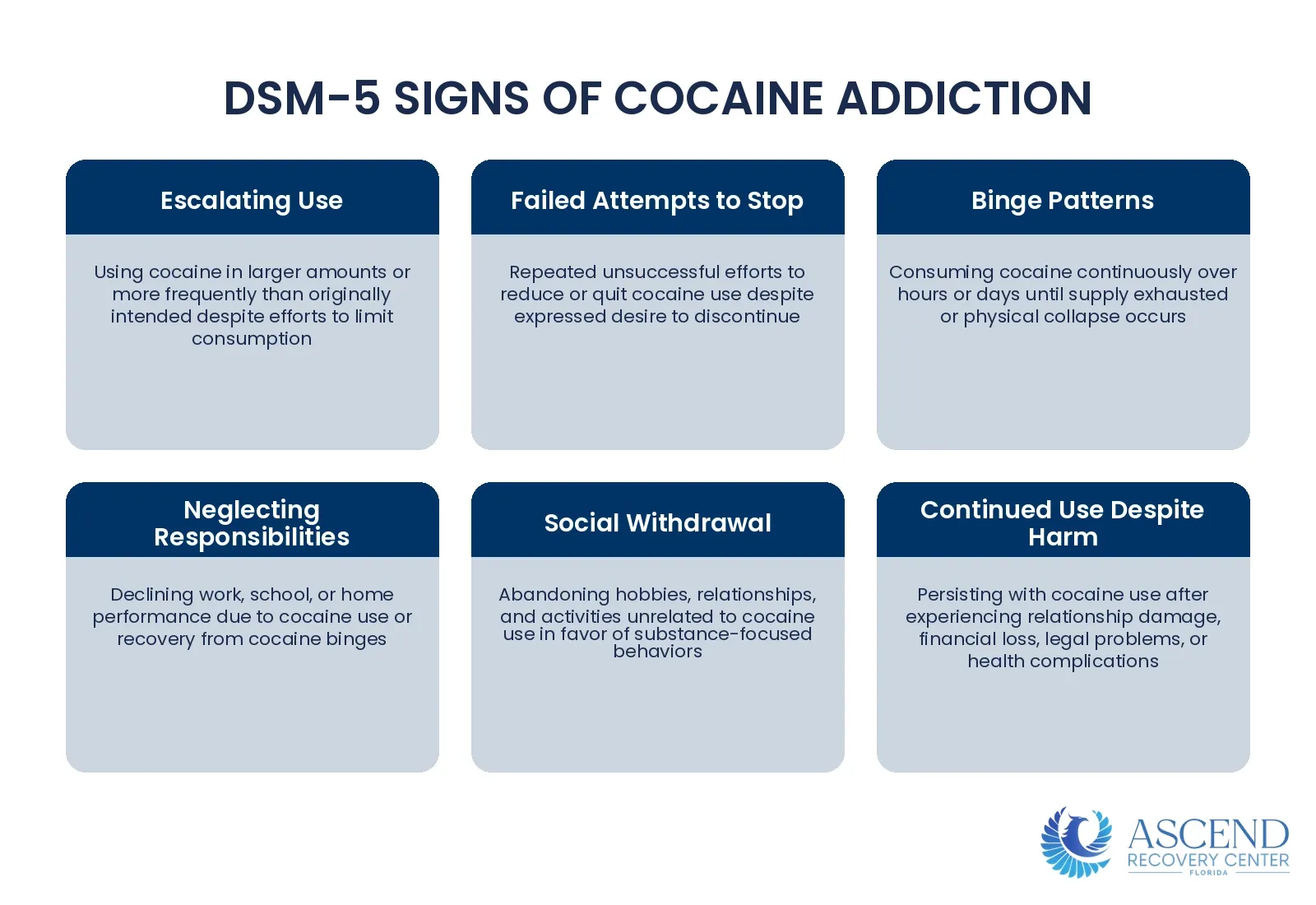
The following are 8 common behavioral and physical signs of cocaine addiction:
- Escalating use — using cocaine in larger amounts or more frequently than originally intended
- Failed attempts to stop — repeated unsuccessful efforts to reduce or quit cocaine use
- Binge patterns — consuming cocaine continuously over hours or days until the supply is exhausted or physical collapse occurs
- Neglecting responsibilities — declining performance at work, school, or home due to cocaine use or recovery from cocaine binges
- Social withdrawal — abandoning hobbies, relationships, and activities unrelated to cocaine use
- Continued use despite consequences — persisting with cocaine use after experiencing relationship damage, financial loss, legal problems, or health complications
- Physical signs — frequent nosebleeds (intranasal use), dilated pupils, rapid weight loss, insomnia, and dental erosion (crack cocaine)
- Tolerance development — needing progressively larger amounts of cocaine to achieve the desired effect
A clinical evaluation from a licensed addiction specialist is required for an accurate diagnosis. Contact at (561) 956-1082 for a confidential clinical assessment.
What Is the Difference Between Crack and Powder Cocaine?
Crack cocaine and powder cocaine contain the same active compound (cocaine hydrochloride base) but differ in formulation, route of administration, onset speed, and addiction potential. Powder cocaine (cocaine hydrochloride) is a water-soluble salt form in standard practice insufflated (snorted) or dissolved for intravenous injection. Crack cocaine is the freebase form of cocaine, produced by processing powder cocaine with baking soda and water, then heating the mixture to create a solid "rock" that is smoked.
The following are 4 pharmacological differences between crack and powder cocaine:
- Onset of action — smoked crack reaches the brain within 8-10 seconds; intranasal powder cocaine reaches the brain within 3-5 minutes
- Duration of effect — crack produces a 5-15 minute high; powder cocaine produces a 30-90 minute high
- Addiction trajectory — crack cocaine's faster onset and shorter duration create a more rapid reinforcement cycle, accelerating the development of compulsive use patterns
- Route-specific health risks — crack smoking causes pulmonary damage ("crack lung"), while intranasal cocaine use causes nasal septum perforation and chronic sinusitis
Both forms produce identical stimulant use disorder diagnoses under the DSM-5-TR and respond to the same evidence-based behavioral treatments. Individuals who use cocaine alongside opioids or alcohol face compounded risks and requires drug and alcohol detoxification before beginning outpatient treatment.
“Behavioral therapies, particularly cognitive-behavioral therapy and contingency management, remain the most effective treatments for cocaine use disorder in the absence of FDA-approved pharmacotherapy.”
What Treatment Approaches Work for Cocaine Addiction?
Behavioral therapy is the primary treatment for cocaine addiction because no FDA-approved pharmacotherapy exists for stimulant use disorder. Two behavioral interventions have the strongest evidence base for cocaine addiction treatment: cognitive-behavioral therapy (CBT) and contingency management (CM). According to NIDA's 2023 treatment research review, combining CBT with contingency management produces the highest rates of sustained cocaine abstinence.
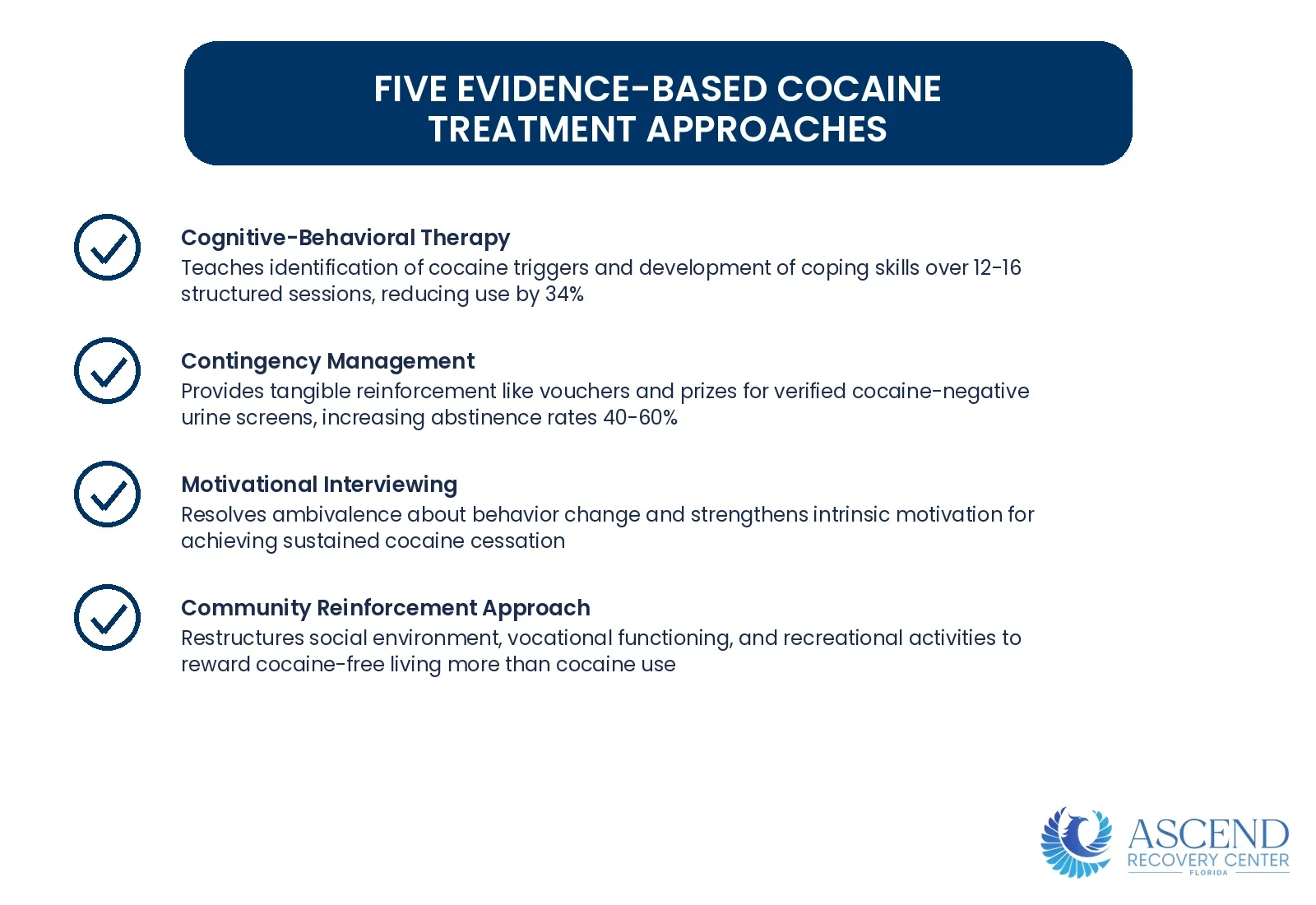
The following are 5 evidence-based treatment approaches for cocaine addiction:
- Cognitive-behavioral therapy (CBT) — teaches individuals to identify cocaine-use triggers, challenge distorted thought patterns, and develop coping skills for high-risk situations. CBT for cocaine addiction in standard practice involves 12-16 structured sessions. A 2022 meta-analysis in Addiction found CBT reduces cocaine use by 34% compared to treatment-as-usual.
- Contingency management (CM) — provides tangible reinforcement (vouchers, prizes, or privileges) for verified cocaine-negative urine drug screens. CM produces the largest effect sizes of any behavioral intervention for stimulant use disorders. According to a 2023 Cochrane review, CM increases cocaine abstinence rates by 40-60%.
- Motivational interviewing (MI) — resolves ambivalence about behavior change and strengthens intrinsic motivation for cocaine cessation
- Community reinforcement approach (CRA) — restructures the individual's social environment, vocational functioning, and recreational activities to make cocaine-free living more rewarding than cocaine use
- Matrix Model — a 16-week structured outpatient program combining CBT, MI, family education, 12-step facilitation, and random drug testing
Ascend Recovery Center integrates CBT, contingency management principles, and motivational interviewing within PHP and IOP treatment tracks. Individual therapy sessions address cocaine-specific relapse triggers, and group therapy builds peer-supported recovery skills.

Ascend Recovery Center — Palm Beach Gardens, FL
Does Your Insurance Cover Drug Rehab Education?
Free, confidential verification in under 15 minutes.
What Is the Cocaine Withdrawal Timeline?
Cocaine withdrawal follows a 3-phase pattern: crash (hours to days), withdrawal (1-10 weeks), and extinction (months), with no medically dangerous physical symptoms but significant psychological distress. Unlike opioid withdrawal or alcohol withdrawal, cocaine withdrawal does not produce seizures, vital sign instability, or life-threatening complications. The primary clinical concern during cocaine withdrawal is severe depression and suicidal ideation.
The following are the 3 phases of cocaine withdrawal:
- Phase 1: Crash (9 hours to 4 days after last use) — exhaustion, hypersomnia (sleeping 12-18 hours), increased appetite, irritability, dysphoria, and reduced cocaine craving. The crash phase follows the depletion of dopamine, serotonin, and norepinephrine after a cocaine binge.
- Phase 2: Withdrawal (1-10 weeks) — anhedonia (inability to feel pleasure), fatigue, difficulty concentrating, vivid and disturbing dreams, intermittent cocaine cravings, anxiety, and depression. Cravings intensify during weeks 2-4 and are triggered by environmental cues associated with prior cocaine use.
- Phase 3: Extinction (months to years) — intermittent cravings triggered by stress, environmental cues, or emotional states. Cue-induced cravings diminish in frequency and intensity over 6-12 months of sustained abstinence.
Cocaine withdrawal management does not require medical detox in most cases. Individuals experiencing severe depression or suicidal ideation during cocaine withdrawal require psychiatric evaluation. Ascend Recovery Center provides psychiatric assessment and depression treatment for individuals experiencing cocaine withdrawal-related mood symptoms.
How Are Co-Occurring Disorders Treated Alongside Cocaine Addiction?
Co-occurring mental health disorders are present in 50-70% of individuals with cocaine use disorder, requiring integrated dual-diagnosis treatment for effective recovery. The 3 most common co-occurring disorders with cocaine addiction are major depressive disorder, generalized anxiety disorder, and attention-deficit/hyperactivity disorder (ADHD). According to SAMHSA's 2022 report on co-occurring disorders, treating substance use and mental health conditions separately produces inferior outcomes compared to integrated treatment.
The following are 4 co-occurring conditions frequently associated with cocaine addiction:
- Depression — cocaine-induced dopamine depletion causes severe anhedonia and depressive symptoms that persist for weeks after cessation. Depression treatment alongside cocaine addiction treatment reduces relapse risk.
- Anxiety disorders — chronic cocaine use sensitizes the brain's stress response system, producing persistent anxiety during early recovery
- ADHD — individuals with undiagnosed ADHD use cocaine to self-medicate attention and executive function deficits. Proper ADHD diagnosis and non-stimulant medication management is critical for sustained cocaine recovery.
- Trauma and PTSD — trauma and PTSD frequently drive cocaine use as a maladaptive coping mechanism. EMDR Therapy addresses underlying trauma without requiring cocaine as an emotional regulator.
Ascend Recovery Center provides dual diagnosis treatment that addresses both cocaine addiction and co-occurring mental health conditions within a single clinical framework.
“Contingency management interventions that provide tangible incentives for stimulant-negative urine drug screens produce the largest effect sizes for cocaine and methamphetamine use disorders of any psychosocial treatment studied to date.”
What Relapse Prevention Strategies Work for Cocaine Addiction?
Relapse prevention for cocaine addiction centers on environmental cue management, cognitive restructuring, lifestyle modification, and sustained therapeutic engagement. Cocaine produces powerful conditioned associations — environmental cues (locations, people, paraphernalia, specific times of day) trigger intense cravings even after extended periods of abstinence. According to NIDA, cue-induced cocaine craving activates the same brain reward circuitry as cocaine itself, making environmental management a critical component of relapse prevention.
The following are 6 evidence-based relapse prevention strategies for cocaine addiction:
- Cue exposure and response prevention — systematic desensitization to cocaine-associated environmental triggers through guided therapeutic exposure
- Cognitive restructuring — identifying and challenging "permission-giving" thought patterns ("I can use once," "I deserve it") that precede relapse
- Social network modification — replacing cocaine-associated social connections with recovery-supportive relationships through mutual-aid groups, SMART Recovery, and community engagement
- Urge surfing — mindfulness-based technique that teaches individuals to observe cocaine cravings without acting on the craving, recognizing that craving intensity peaks and subsides within 15-30 minutes
- Structured daily routine — filling time previously occupied by cocaine acquisition, use, and recovery with structured activities including exercise, vocational engagement, and recovery programming
- Ongoing outpatient therapy — continuing outpatient individual and group therapy after completing PHP and IOP maintains relapse prevention skill development and provides early intervention for emerging risk factors

Ascend Recovery Center — Palm Beach Gardens, FL
How Is Cocaine Addiction Treated in PHP and IOP at Ascend Recovery Center?
Cocaine addiction treatment at Ascend Recovery Center follows a structured step-down model from PHP (5-6 hours daily, 5 days per week) to IOP (3 hours daily, 3-5 days per week) to outpatient care. PHP provides the highest level of outpatient clinical intensity and is appropriate for individuals transitioning from residential treatment or those with moderate-to-severe stimulant use disorder. IOP provides continued therapeutic structure while accommodating work, school, and family responsibilities.
The following are 6 treatment components for cocaine addiction at Ascend Recovery Center:
- Individual CBT sessions — weekly one-on-one cognitive-behavioral therapy targeting cocaine-specific triggers, thought patterns, and coping skills
- Process groups — daily group therapy addressing relapse prevention, emotional regulation, and interpersonal skills development
- Psychiatric evaluation — assessment and medication management for co-occurring depression, anxiety, ADHD, and trauma-related conditions
- Drug testing protocol — regular urine drug screening to monitor abstinence and provide accountability
- Family education — psychoeducation for family members about stimulant addiction, recovery timelines, and supportive communication
- Aftercare planning — discharge planning includes sober living homes in Florida referrals, ongoing outpatient therapy, mutual-aid meeting schedules, and relapse response protocols
To begin cocaine addiction treatment, contact at (561) 956-1082 or submit an online request.
Cocaine/Stimulant Use Self-Assessment
1 / 11Answer 11 questions based on DSM-5 substance use disorder diagnostic criteria. This provides general guidance — a clinical evaluation determines diagnosis.
Using stimulants in larger amounts or for longer periods than intended?
Confidential · Not a clinical diagnosis · HIPAA protected