


Referenced in this article
Key Takeaways
- DSM-5-TR requires 5 or more symptoms of inattention and/or hyperactivity-impulsivity for adults age 17+, with several symptoms present before age 12 — ADHD cannot be newly acquired in adulthood.
- Adult ADHD is missed in women because the internalized inattentive presentation is mislabeled as anxiety or depression; women are roughly three times more likely to be misdiagnosed with a mood disorder before ADHD is identified.
- Rejection sensitive dysphoria is a described feature of ADHD-related emotional dysregulation — most strongly associated with ADHD though also linked to depression, anxiety, borderline personality disorder, and autism — not a personality defect.
- Executive dysfunction and time blindness drive procrastination and missed deadlines; medication improves time blindness only indirectly, so behavioral time-management support is recommended alongside pharmacotherapy.
- Stimulants act within hours with the largest effect sizes but carry Schedule II misuse risk, while non-stimulants take four to six weeks, carry no abuse liability, and reach nearly comparable executive-function benefit.
- Approximately 50% of adults with ADHD have a co-occurring substance use disorder, commonly explained by the self-medication hypothesis, making integrated dual diagnosis care the SAMHSA TIP 42 standard.
- The ASRS v1.1 is the WHO/Kessler-developed 6-item Part A screener validated for primary care use; it identifies who needs a full DSM-5-TR evaluation but does not diagnose on its own.
What Are the DSM-5-TR Criteria and Subtypes for Adult ADHD?
DSM-5-TR diagnoses adult ADHD when a person age 17 or older presents with 5 or more symptoms of inattention and/or hyperactivity-impulsivity, several of which were present before age 12, occurring across two or more settings, and causing clear impairment in functioning. Children under 17 require 6 or more symptoms in each domain; the lowered threshold for adults reflects how symptom presentation changes rather than a lower diagnostic bar.
DSM-5-TR defines three presentations based on which symptom domain predominates:
- Predominantly inattentive presentation: difficulty sustaining attention, disorganization, forgetfulness, and distractibility dominate, with minimal hyperactive-impulsive symptoms.
- Predominantly hyperactive-impulsive presentation: restlessness, interrupting, impulsive decision-making, and difficulty waiting dominate, with minimal inattentive symptoms.
- Combined presentation: 5 or more symptoms in both domains — the presentation most common among adults referred for formal evaluation.
The before-age-12 onset requirement is the key differentiator between adult ADHD and adult-onset attention complaints caused by anxiety, depression, or sleep disorders, none of which carry a childhood-onset requirement. A person presenting with new inattention at age 35 without a childhood history does not meet DSM-5-TR criteria for ADHD regardless of current symptom severity, and the signs and symptoms adults do report often diverge sharply from the checklist language, shifting toward internalized restlessness rather than overt hyperactivity.
What Are the Signs and Symptoms of Adult ADHD?
Adult ADHD presents as chronic disorganization, time blindness, emotional dysregulation, and internalized restlessness rather than the overtly disruptive hyperactivity typical of childhood presentations, with symptoms concentrated in inattentive and executive-function domains rather than visible overactivity. The symptom picture shifts substantially between childhood and adulthood even when the underlying condition is unchanged.
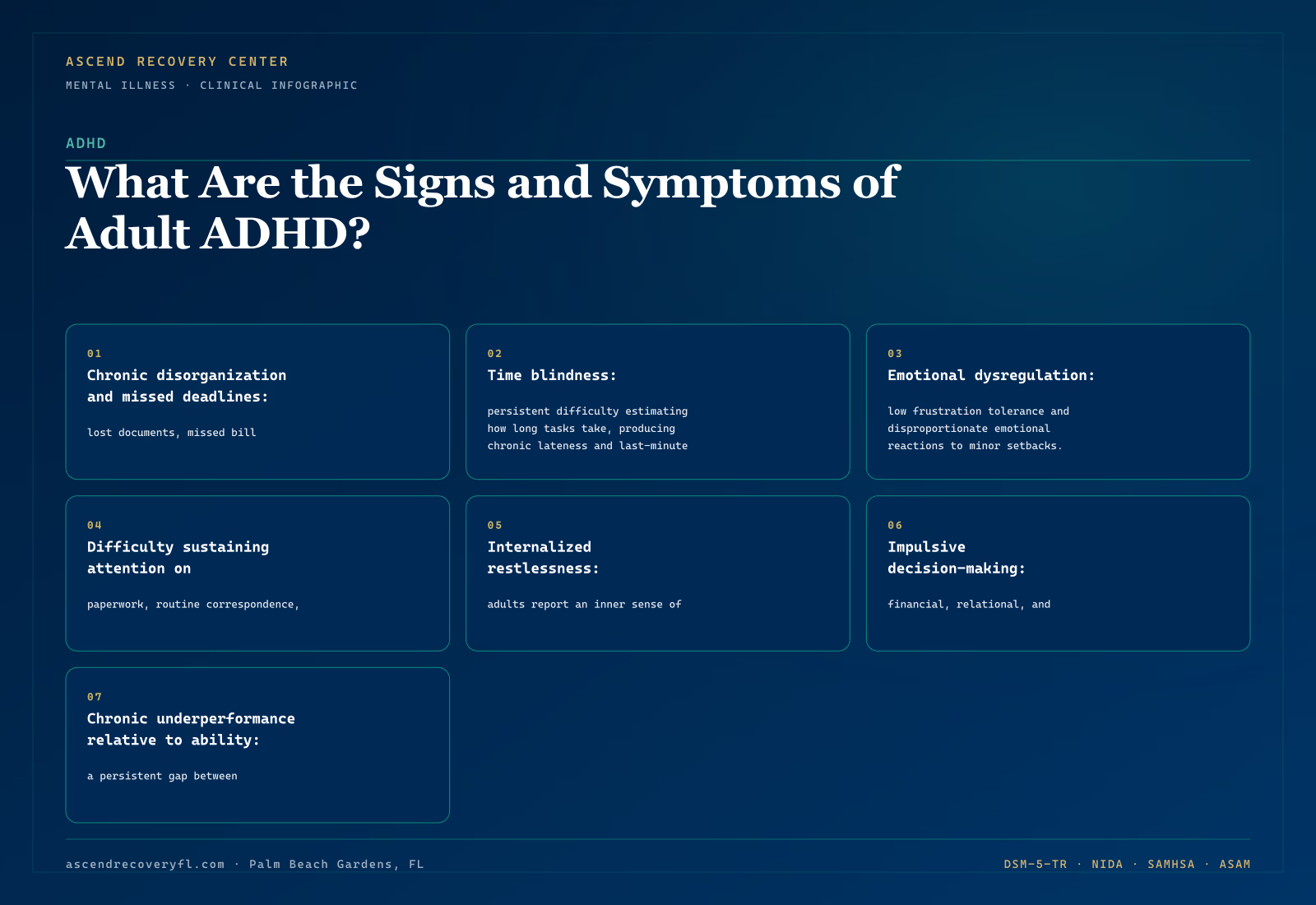
- Chronic disorganization and missed deadlines: lost documents, missed bill payments, and repeated deadline failures despite genuine effort to manage tasks.
- Time blindness: persistent difficulty estimating how long tasks take, producing chronic lateness and last-minute scrambling.
- Emotional dysregulation: low frustration tolerance and disproportionate emotional reactions to minor setbacks.
- Difficulty sustaining attention on non-stimulating tasks: paperwork, routine correspondence, and administrative work trigger avoidance despite adequate ability.
- Internalized restlessness: adults report an inner sense of restlessness rather than the visible fidgeting or running seen in childhood hyperactivity.
- Impulsive decision-making: financial, relational, and occupational decisions made without adequate deliberation.
- Chronic underperformance relative to ability: a persistent gap between demonstrated intelligence or skill and actual output.
Inattentive symptoms tend to persist more than hyperactive-impulsive symptoms as a person with ADHD ages, which is why genetic and neurobiological risk factors matter for understanding why the condition develops in the first place.
What Causes ADHD and What Are the Risk Factors?
ADHD is a neurodevelopmental condition rooted in genetic heritability, prenatal risk exposure, and dopamine-norepinephrine signaling differences in the prefrontal cortex and executive-function networks — not a result of poor parenting, diet, or screen time. Twin studies place ADHD heritability at 74-88%, among the highest of any psychiatric condition, confirming a strong genetic basis independent of environment or upbringing.
Prenatal risk factors associated with elevated ADHD incidence include maternal smoking or alcohol use during pregnancy, prematurity, and low birth weight. Neurobiologically, adult ADHD involves dysregulated dopamine and norepinephrine signaling combined with structural and functional differences in the prefrontal cortex and its connected executive-control networks, which produce the working-memory, planning, and impulse-control deficits characteristic of the condition.
Shared genetic and neurobiological risk factors overlap substantially with those seen in anxiety disorders, and the two conditions co-occur frequently in adults with ADHD. This overlap complicates diagnosis and is one reason a structured clinical evaluation is required rather than symptom self-report alone.
How Is Adult ADHD Diagnosed?
Adult ADHD is diagnosed through a structured clinical interview measured against DSM-5-TR criteria, corroborating developmental history confirming childhood-onset symptoms, and differential rule-out of thyroid dysfunction, sleep disorders, anxiety, and depression that can mimic inattentive symptoms. School records, report cards, and family report of childhood behavior provide the corroborating evidence needed to confirm the before-age-12 onset requirement.
The ASRS v1.1 (Adult ADHD Self-Report Scale) is the validated screening instrument developed by the World Health Organization and Kessler and colleagues, and is used in primary care settings worldwide as the first-line screening tool before formal diagnostic evaluation. The 6-item Part A subset carries the strongest predictive validity for identifying adults likely to meet full ADHD criteria.
A score of 4 or more shaded responses across the 6 ASRS v1.1 Part A items is highly consistent with adult ADHD and warrants referral for full clinical evaluation. The screener does not replace a diagnostic interview — it identifies who should receive one, and that evaluation is what determines which stimulant or non-stimulant treatment fits a person's clinical profile.
The women we diagnose in their thirties and forties almost never present with ADHD as the complaint. They come in for anxiety or burnout, and it is only when we take a real developmental history that the lifelong inattention shows up underneath. The mood symptoms were the smoke, not the fire.
Does Your Insurance Cover Mental Illness Education?
Free, confidential verification in under 15 minutes.
Why Is Adult ADHD So Often Missed in Women Until Adulthood?
Adult ADHD is missed in women because the predominantly inattentive presentation produces internalized symptoms — quiet distractibility, disorganization, and forgetfulness rather than disruptive overactivity — that get read as anxiety or depression, making women roughly three times more likely to be misdiagnosed with a mood disorder before ADHD is correctly identified. The result is systematic late diagnosis, often arriving decades after symptoms first appeared.
Girls with ADHD are more likely than boys to present with the inattentive rather than the hyperactive-impulsive profile, so they rarely trigger the behavioral referrals that lead to childhood evaluation. Many compensate through effort, perfectionism, and people-pleasing that masks the underlying deficit while quietly raising anxiety, and by adulthood the accumulated cost surfaces as burnout, mood symptoms, and chronic self-criticism that clinicians treat as primary rather than as consequences of unmanaged ADHD.
Because DSM-5-TR requires several symptoms before age 12, a correct adult diagnosis still traces the pattern back to childhood — the "daydreamer" who lost assignments and finished tests late, not a condition acquired in adulthood. Once the inattentive picture is recognized, the emotional component women most often describe as the hardest part becomes the next thing to name: an intense sensitivity to rejection and criticism.
What Is Rejection Sensitive Dysphoria and Is It Part of ADHD?
Rejection sensitive dysphoria (RSD) is an intense, often sudden emotional reaction to perceived rejection, criticism, or failure that clinicians describe as a feature of ADHD-related emotional dysregulation — not one of the DSM-5-TR inattention or hyperactivity criteria, yet reported by a large share of adults with ADHD as their most distressing symptom. It is a described clinical experience, not a personality defect or a character weakness.
RSD sits inside the broader emotional-dysregulation domain that meta-analytic evidence identifies as central to adult ADHD even though the DSM criteria focus on attention and activity. The reaction can feel physically painful and disproportionate to the trigger, driving people-pleasing, conflict avoidance, perfectionism, or sudden withdrawal from relationships and work. RSD is most strongly associated with ADHD, but the same sensitivity is also linked to depression, anxiety, borderline personality disorder, body dysmorphic disorder, bipolar disorder, and autism, which is one reason it is easy to misread when ADHD has never been diagnosed.
Naming RSD as part of the ADHD experience reframes years of self-blame as a treatable dysregulation pattern rather than a flaw, and it responds to the same combination of medication and skills work used for the condition's functional symptoms — the executive-function deficits that shape daily life.
How Do Executive Dysfunction and Time Blindness Affect Daily Life?
Executive dysfunction in adult ADHD impairs task initiation, working memory, and future-oriented planning, while time blindness distorts the internal sense of how time passes — together producing chronic procrastination, missed deadlines, and last-minute scrambling despite intact intelligence and genuine effort. These are the mechanisms behind the everyday failures that look like carelessness from the outside.
- Task initiation: starting a low-stimulation task feels disproportionately hard, so work is delayed until a deadline supplies the urgency the brain cannot generate on its own.
- Working memory: holding steps, intentions, and details in mind long enough to act on them fails, so plans evaporate and items are forgotten mid-task.
- Prospective planning: future consequences feel abstract and distant, which weakens the pull of long-term goals against immediate demands.
- Time blindness: the felt sense of duration is unreliable, producing chronic lateness, underestimated task times, and "time slips" during absorbing activities.
Procrastination in this context is a regulation problem, not a motivation problem. Medication improves time blindness only indirectly, by strengthening working memory and task initiation, and rarely resolves it on its own — which is why behavioral time-management support such as external timers, calendars, and body-doubling is clinically recommended alongside pharmacotherapy rather than in place of it. Understanding that medication is necessary but not sufficient makes the real differences between stimulant and non-stimulant options matter.
What Evidence-Based Treatments Work for Adult ADHD?
Stimulant medications are first-line pharmacotherapy for adult ADHD with the largest effect sizes, while non-stimulant options and cognitive behavioral therapy provide effective alternatives and adjuncts, particularly for adults with a substance use disorder history. Treatment selection depends heavily on comorbidity profile and substance use history.
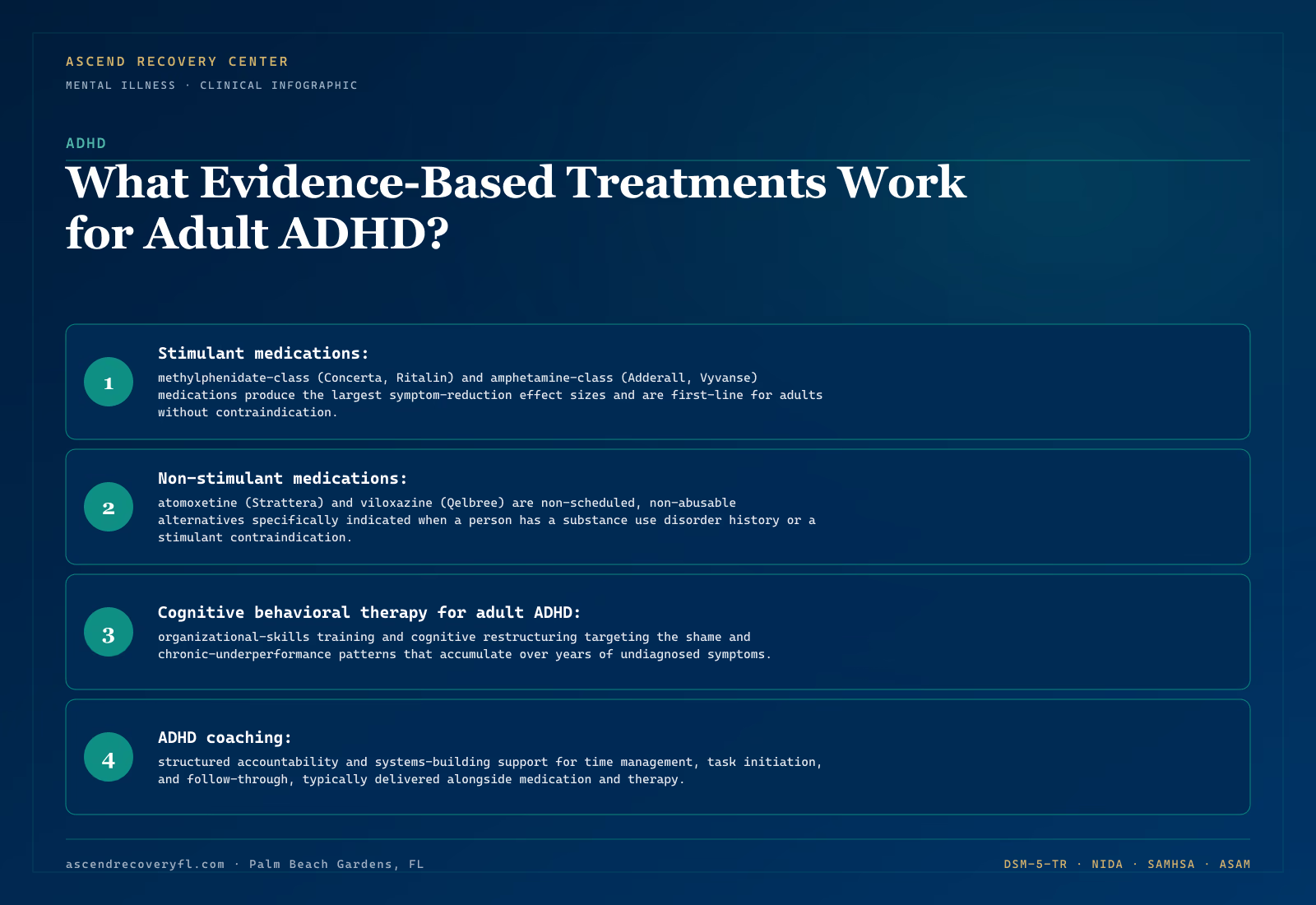
- Stimulant medications: methylphenidate-class (Concerta, Ritalin) and amphetamine-class (Adderall, Vyvanse) medications produce the largest symptom-reduction effect sizes and are first-line for adults without contraindication.
- Non-stimulant medications: atomoxetine (Strattera) and viloxazine (Qelbree) are non-scheduled, non-abusable alternatives specifically indicated when a person has a substance use disorder history or a stimulant contraindication.
- Cognitive behavioral therapy for adult ADHD: organizational-skills training and cognitive restructuring targeting the shame and chronic-underperformance patterns that accumulate over years of undiagnosed symptoms.
- ADHD coaching: structured accountability and systems-building support for time management, task initiation, and follow-through, typically delivered alongside medication and therapy.
Ascend Recovery Center's ADHD treatment program integrates medication management, CBT, and coaching within a framework that accounts for co-occurring substance use disorder, which affects roughly half of adults with ADHD.
Adults with a substance use history who come to us already on a stimulant are the population we screen most carefully. Atomoxetine and viloxazine give us real symptom control without reopening the door to misuse — that trade-off matters more than which medication works fastest.
How Do Stimulant and Non-Stimulant Medications Compare for Adults?
Stimulants act within hours and deliver the largest symptom-reduction effect sizes but carry Schedule II misuse potential, while non-stimulants such as atomoxetine take four to six weeks to reach full effect, carry no abuse liability, and reach nearly comparable executive-function benefit in systematic-review data. The right choice depends on how those trade-offs meet a person's clinical profile.
- Onset: stimulants improve focus the same day at an effective dose, whereas non-stimulants build over four to six weeks — a difference competitors flatten into "stimulants work best" but that reflects speed, not ceiling of benefit.
- Abuse potential: stimulants are Schedule II controlled substances with real misuse and diversion risk; atomoxetine and viloxazine are non-scheduled and non-abusable, which is why they are preferred for adults with a substance use history.
- Efficacy on executive function: systematic-review and meta-analytic data show non-stimulants improving executive function nearly as much as stimulants, so the practical decision is often driven by comorbidity and misuse risk rather than raw potency.
- Rebound effect: as short- and extended-release stimulants wear off, symptoms can return sharply — sometimes with irritability or a crash — a daily pattern that non-stimulants, which provide steadier all-day coverage, do not produce.
Matching agent to person is a clinical decision, and medication management that tracks dose, timing, rebound, and side effects over the first weeks is what turns a prescription into durable symptom control. That decision is especially consequential for adults whose ADHD sits alongside a substance use disorder.
How Is ADHD Connected to Substance Use Disorders?
Approximately 50% of adults with ADHD have a co-occurring substance use disorder, frequently driven by the self-medication hypothesis in which untreated inattentive and executive-function symptoms are managed through stimulant use, including misuse of prescription stimulants. The high comorbidity rate makes ADHD one of the more substance-use-relevant psychiatric conditions in adult clinical populations.
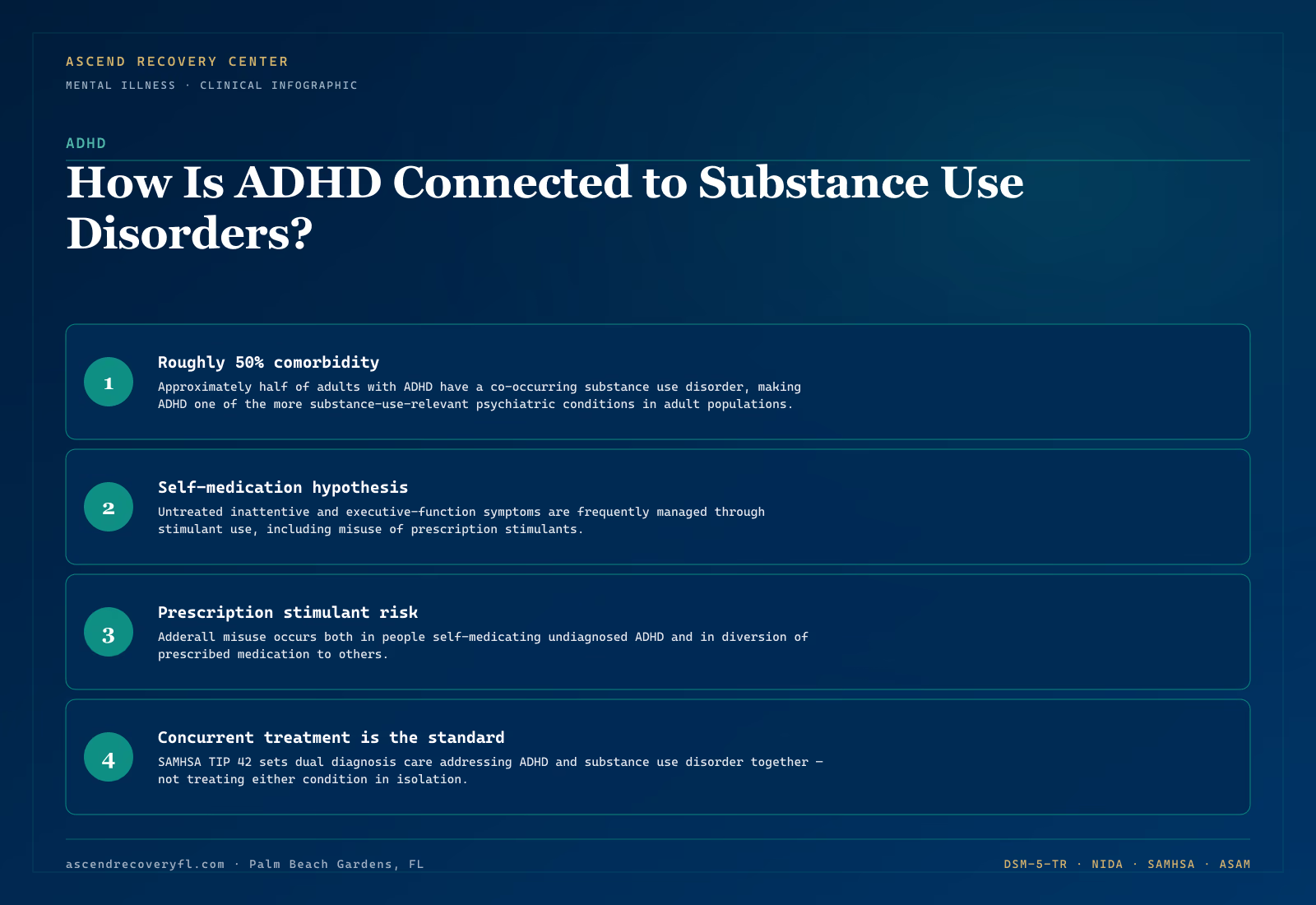
Adderall misuse occurs both in people self-medicating undiagnosed ADHD and in diversion of prescribed medication to others, and prescribers must weigh this risk carefully when selecting pharmacotherapy for a person with a substance use history. Dual diagnosis treatment that addresses ADHD and substance use disorder concurrently is the standard of care under SAMHSA TIP 42, rather than treating either condition in isolation.
This clinical reality is precisely why non-stimulant options like atomoxetine and viloxazine matter for adults with ADHD and a substance use disorder history — they deliver symptom control without the misuse and diversion risk carried by stimulant medications, which is why the next step for these adults is a formal evaluation from a team equipped to treat both conditions together.
How Do You Get Help for Adult ADHD?
Evaluation is indicated when chronic occupational, financial, or relational impairment persists, when a person self-medicates inattentive symptoms with stimulants or alcohol, or when childhood symptoms that went undiagnosed resurface under adult stress. These indicators warrant a full diagnostic interview rather than continued self-management.
Ascend Recovery Center is a Joint Commission-accredited, Florida DCF-licensed outpatient provider offering PHP, IOP, outpatient, and telehealth care for adult ADHD and co-occurring conditions, including substance use disorder, from its Palm Beach Gardens, Florida location. Treatment integrates psychiatric medication management, CBT, and dual diagnosis programming for adults whose ADHD symptoms co-occur with substance use.
Contact Ascend Recovery Center at (561) 956-1082 or verify insurance to begin the evaluation and treatment-planning process for adult ADHD.
ASRS v1.1 Part A — Adult ADHD Self-Report Screen
The Adult ADHD Self-Report Scale (ASRS v1.1) Part A was developed by the World Health Organization and Kessler and colleagues (2005) and is used in primary care settings worldwide as the first-line adult ADHD screener. Takes 60 seconds.
How often do you have trouble wrapping up the final details of a project, once the challenging parts have been done?
Confidential · Not a clinical diagnosis · Your answers stay in your browser


