


Referenced in this article
Key Takeaways
- Warning signs of mental illness cluster across four domains: cognitive, emotional/mood, behavioral, and physical/somatic.
- 22.8% of U.S. adults experienced mental illness in the past year per NIMH — 59.3 million people.
- Median delay between symptom onset and first treatment is 8–10 years across mental health conditions; earlier engagement produces better outcomes.
- Substance use is one of the strongest warning signs of an underlying or co-occurring mental health condition; 50% of severe mental illness cases involve a substance use disorder lifetime.
- Clinical evaluation is indicated when symptoms persist beyond DSM-5 duration thresholds, cause functional impairment, or co-occur with suicidality or substance use.
- Call or text 988 for the Suicide and Crisis Lifeline if experiencing suicidal thoughts; same-day clinical assessment is available at Ascend Recovery Center.
What are the four primary warning-sign categories?
Warning signs of mental illness cluster across four observable domains: cognitive changes, emotional and mood changes, behavioral changes, and physical and somatic changes. Most mental health conditions produce signs across multiple domains; the specific pattern points to the likely diagnostic category and the appropriate clinical evaluation.
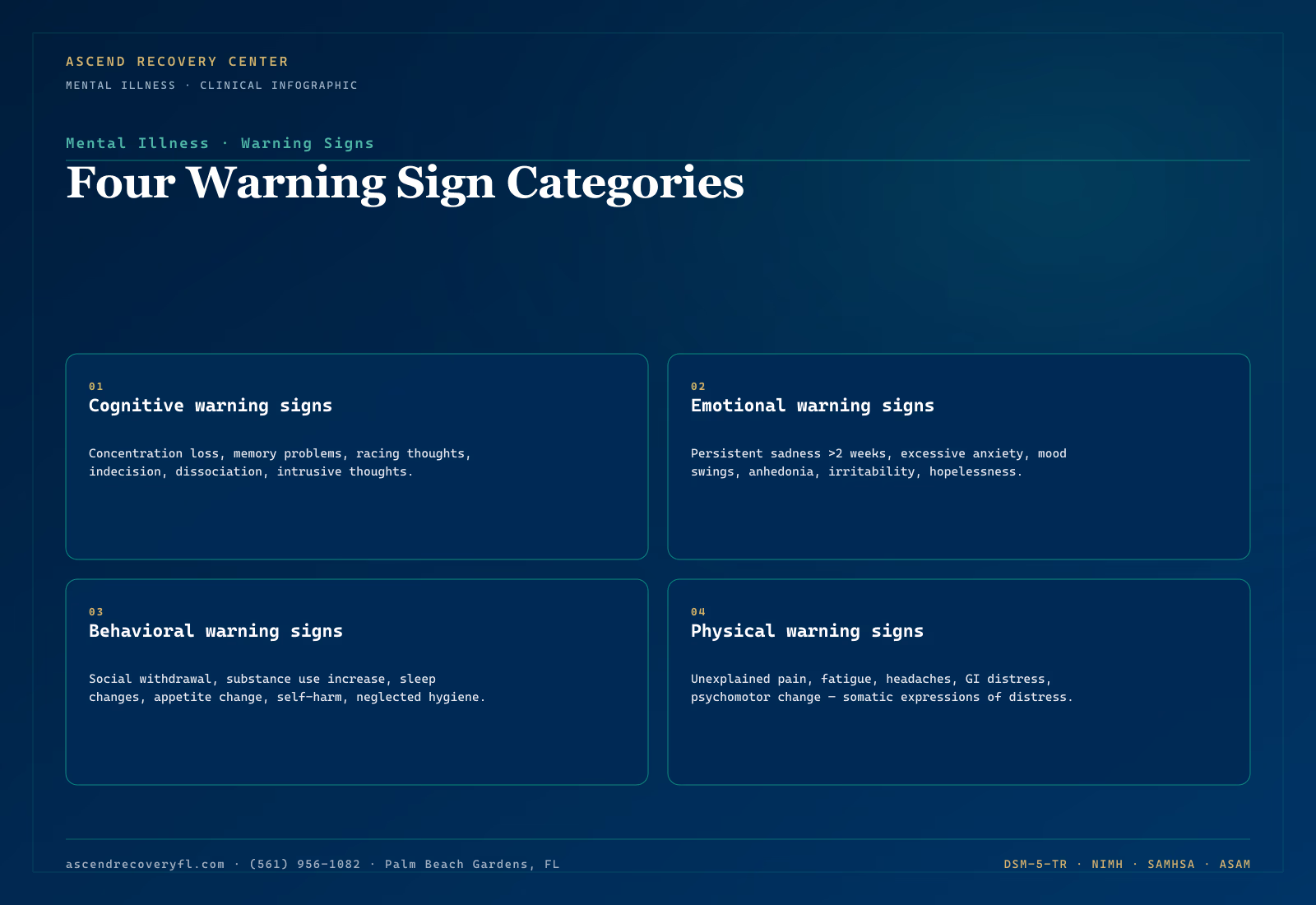
- Cognitive signs: difficulty concentrating, memory problems, indecisiveness, racing thoughts, slowed thinking, distorted thinking patterns (catastrophizing, all-or-nothing thinking), confusion, disorganized thinking, paranoid or grandiose thoughts.
- Emotional and mood signs: persistent sadness or low mood, irritability or anger outbursts, excessive worry or fear, emotional numbness or flat affect, mood swings, anhedonia (loss of interest in activities), hopelessness, excessive guilt or worthlessness, panic attacks, euphoria or elevated mood that is disproportionate to circumstances.
- Behavioral signs: social withdrawal and isolation, decline in work or school performance, neglect of personal hygiene or appearance, sleep changes (insomnia or hypersomnia), appetite changes (significant weight loss or gain), substance use (initiation, escalation, or relapse), risk-taking or impulsive behavior, ritualistic or compulsive behaviors, self-harm, suicidal statements or behaviors.
- Physical and somatic signs: unexplained fatigue, headaches, gastrointestinal symptoms, muscle tension or chronic pain without medical explanation, racing heart or palpitations, sweating, trembling, sleep disturbance, sexual dysfunction, weight changes, low immune function with frequent illness.
What signs point to anxiety disorders?
Anxiety disorders produce a characteristic pattern of excessive worry or fear that is disproportionate to actual threat, accompanied by physical symptoms of sympathetic nervous system activation and behavioral avoidance of feared situations. The pattern persists for 6+ months in adults (less in children) and produces functional impairment.
Key warning signs for anxiety disorders:
- Persistent worry about multiple events, more days than not, for 6+ months (generalized anxiety disorder)
- Recurrent unexpected panic attacks with persistent concern about additional attacks (panic disorder)
- Marked fear of social situations involving possible scrutiny (social anxiety disorder)
- Marked fear of specific objects or situations (specific phobia)
- Physical symptoms: racing heart, sweating, trembling, shortness of breath, chest pain, nausea, dizziness, muscle tension, fatigue, sleep disturbance
- Behavioral avoidance: avoiding feared situations, places, or activities; needing reassurance; checking behaviors
- Functional impairment: missed work, declined social invitations, restricted daily activity
Anxiety frequently co-occurs with depression (45% comorbidity per NIMH) and substance use disorders (24% co-occurrence with AUD in social anxiety per NIDA). See our guide to anxiety disorders for the six DSM-5 subtypes, diagnostic criteria, and evidence-based treatment overview.
What signs point to depression?
Depression is characterized by a persistent low mood or loss of interest in nearly all activities (anhedonia) lasting 2+ weeks, accompanied by physical and cognitive symptoms that produce significant functional impairment. Either depressed mood OR anhedonia is required for diagnosis — the absence of both rules out major depressive disorder regardless of how many other symptoms are present.
Key warning signs for depression:
- Persistent sadness, emptiness, or hopelessness, more days than not, for 2+ weeks
- Loss of interest or pleasure in activities once enjoyed (anhedonia)
- Sleep changes: insomnia (most common) or hypersomnia
- Appetite changes: significant weight loss or weight gain
- Fatigue or loss of energy despite adequate sleep
- Psychomotor changes: agitation (visible restlessness) or retardation (slowed movement and speech)
- Feelings of worthlessness or excessive/inappropriate guilt
- Concentration problems or indecisiveness
- Recurrent thoughts of death or suicide (with or without a specific plan)
Suicide is the second-leading cause of death in U.S. adults aged 25–34 and the leading mortality risk in untreated depression. If you or someone you know is experiencing suicidal thoughts, call or text 988 to reach the Suicide and Crisis Lifeline (free, confidential, 24/7). Depression frequently co-occurs with substance use disorders — 32% comorbidity per NIDA. See our guide to depression symptoms and types for the seven DSM-5 depressive disorders, diagnostic criteria, and treatment options.
The clients who delay the longest aren't the ones with the worst symptoms — they're the ones with the most plausible alternative explanations. 'It's just work stress.' 'I just need more sleep.' 'My family is going through a hard time.' Those explanations can all be true AND a mental health condition can be present underneath them.
What signs point to bipolar disorder?
Bipolar disorder is characterized by distinct episodes of mania or hypomania alternating with depressive episodes, separated by periods of normal mood (euthymia). The hallmark warning sign is mood instability — alternation between energetic, expansive, impulsive periods and depressive periods rather than the sustained low mood of unipolar depression.
Key warning signs for mania or hypomania:
- Persistently elevated, expansive, or irritable mood lasting 7+ days (mania) or 4+ days (hypomania)
- Inflated self-esteem or grandiosity
- Decreased need for sleep (feels rested after only 3 hours)
- More talkative than usual or pressure to keep talking
- Racing thoughts or flight of ideas
- Distractibility
- Increased goal-directed activity or psychomotor agitation
- Excessive involvement in activities with high potential for painful consequences (unrestrained spending, sexual indiscretions, foolish business decisions, substance use)
The clinical danger is that hypomania is often experienced as relief from depression rather than as illness — leading to delayed diagnosis (average 8–10 years from symptom onset). Family members are often the first to identify the episodic mood pattern. Bipolar disorder has the highest substance use disorder co-occurrence of any psychiatric condition — 60% lifetime per NIDA. See our guide to bipolar disorder for the three DSM-5 subtypes and treatment.
Does Your Insurance Cover Mental Illness Education?
Free, confidential verification in under 15 minutes.
What signs point to PTSD or trauma-related disorders?
PTSD is characterized by the persistence of trauma-related symptoms across four DSM-5 clusters — intrusion, avoidance, negative cognition and mood, and arousal — for 1+ month after exposure to actual or threatened death, serious injury, or sexual violence.
Key warning signs for PTSD:
- Intrusion: recurrent unwanted memories, distressing dreams, flashbacks (re-experiencing the trauma as if happening again), intense psychological or physiological reactions to trauma reminders
- Avoidance: avoiding internal trauma reminders (thoughts, feelings, memories) or external reminders (people, places, conversations, activities, objects, situations)
- Negative cognition and mood: persistent negative beliefs about self/world, distorted blame, persistent negative emotional state, diminished interest in activities, detachment from others, inability to experience positive emotions
- Arousal: irritable behavior or angry outbursts, reckless or self-destructive behavior, hypervigilance, exaggerated startle response, concentration problems, sleep disturbance
Trauma exposure includes combat, sexual assault, childhood abuse, serious accidents, natural disasters, violent crime, and first-responder occupational exposure. PTSD frequently co-occurs with depression (50%) and substance use disorders (40–60% per NIDA). See our guide to PTSD symptoms for the full DSM-5 criteria, complex PTSD, and evidence-based treatment.
When does substance use signal a mental health condition?
Substance use is one of the strongest warning signs of an underlying or co-occurring mental health condition — the self-medication hypothesis explains that individuals with untreated psychiatric conditions frequently use alcohol, cannabis, benzodiazepines, stimulants, or opioids to manage symptoms. NIDA documents that 50% of individuals with severe mental illness develop a substance use disorder during their lifetimes — more than double the general population rate.
The specific substance often points to the likely underlying condition:
- Alcohol use that escalates with stress or anxiety — most common in generalized anxiety, social anxiety, PTSD, depression with anxiety features.
- Benzodiazepine misuse — most common in anxiety disorders, PTSD, alcohol use disorder; clinical concern is the development of physiological dependence within 4–6 weeks of daily use.
- Cannabis use as a sleep aid or anxiolytic — common in PTSD, anxiety disorders, and chronic pain.
- Cocaine, methamphetamine, or prescription stimulant misuse — common in undiagnosed ADHD, depression with low energy, bipolar disorder during manic phases.
- Opioid misuse — strongly associated with chronic pain, depression, PTSD, and untreated trauma; emotional numbing effect drives continued use.
Integrated assessment evaluating both the mental health condition and the substance use disorder is the standard of care when both are present. See our co-occurring disorders guide for the integrated treatment model and the four-component framework for effective dual diagnosis care.
Physical symptoms — chronic pain, GI distress, fatigue, headaches — are the most common somatic expression of underlying mental health conditions in adults. Clients spend years in medical workups before anyone screens for depression or anxiety. The PHQ-9 should be administered at every primary care visit; it takes 90 seconds.
When should you seek clinical assessment?
Clinical assessment is indicated when warning signs persist for 2+ weeks for mood symptoms (4+ weeks for anxiety symptoms, 1+ month for trauma symptoms), cause significant distress or functional impairment, or co-occur with substance use, suicidal ideation, or thoughts of harming others.
Five specific indicators that warrant immediate clinical evaluation:
- Suicidal ideation or thoughts of harming others — requires same-day evaluation. Call or text 988 (Suicide and Crisis Lifeline) or 911 for immediate response.
- Functional impairment — missed work or school, withdrawal from relationships, inability to complete previously routine tasks, neglect of self-care or hygiene.
- Substance use that is escalating or interfering with functioning — particularly when combined with mood or anxiety symptoms, this signals a co-occurring presentation requiring integrated assessment.
- Symptoms that have persisted beyond the threshold duration — 2 weeks for depression, 4+ weeks for anxiety, 1+ month for trauma symptoms, 2+ years for chronic mood patterns.
- Family history of mental illness combined with current symptoms — heritability is significant for bipolar disorder (60–85%), depression (30–40%), anxiety disorders (30–50%), and ADHD (70–80%).
Ascend Recovery Center conducts confidential mental health screening at no cost as part of every intake call. The clinical team includes a board-certified addiction psychiatrist, EMDR-certified trauma clinicians, and licensed therapists trained in cognitive behavioral therapy, DBT, and motivational interviewing — the four evidence-based components most relevant to integrated mental health treatment across PHP, IOP, and outpatient programming.
Wouldn't I notice if I had a mental illness?
Common Misconception
"Mental illness is obvious. If I had it, I'd know — or someone around me would."
What the Evidence Shows
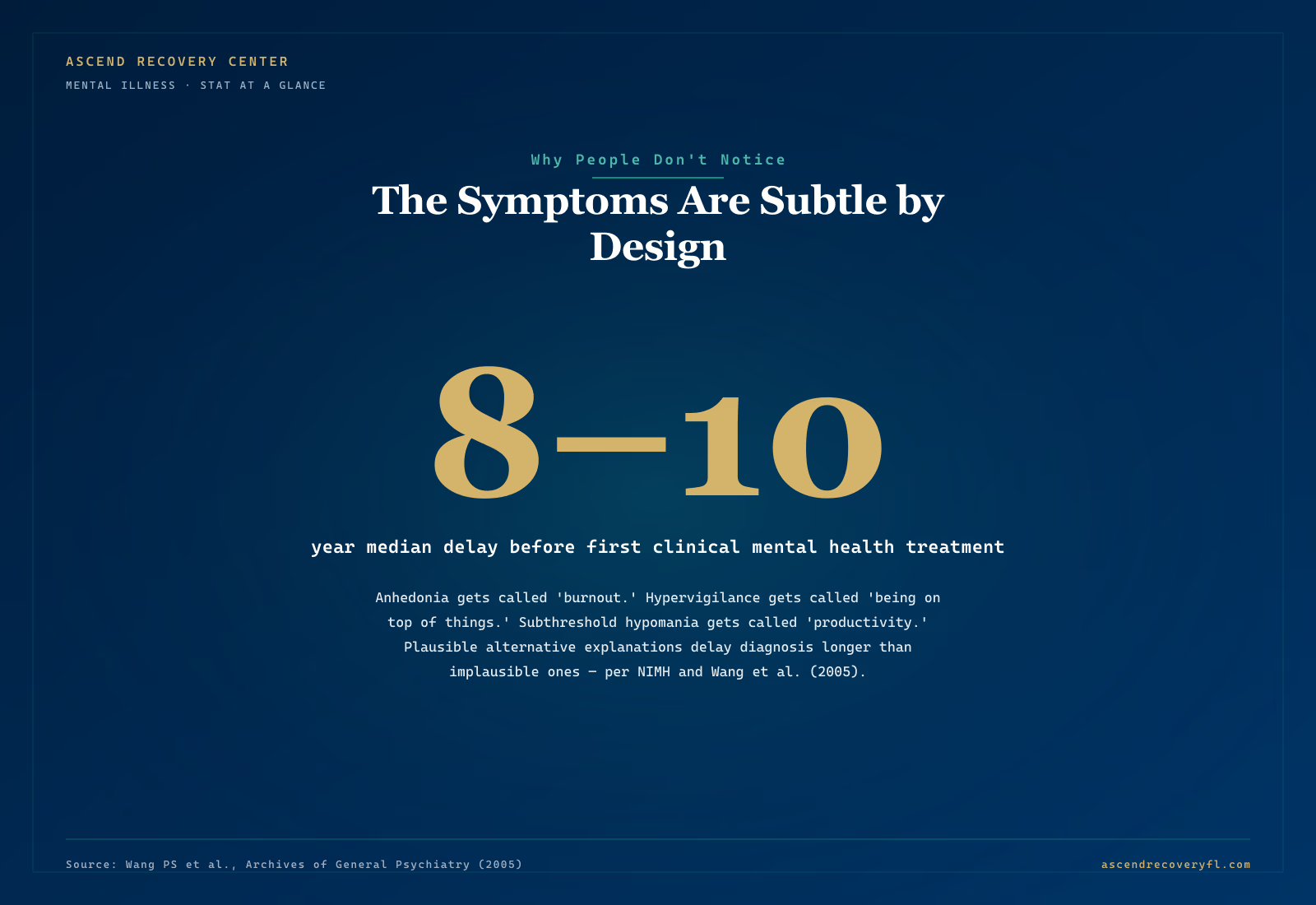
The median delay between symptom onset and first clinical treatment is 8–10 years across mental health conditions per NIMH. The reason is precisely that the symptoms are often gradual, subtle, normalized by family systems, or misattributed to stress, personality, or life circumstances. Anhedonia gets called "burnout." Hypervigilance gets called "being on top of things." Subthreshold hypomanic episodes get called "productivity." Routine screening in primary care — exactly what the PHQ-9 and GAD-7 were designed for — is what closes this gap.
Wang PS et al., Failure and delay in initial treatment contact after first onset of mental disorders in the National Comorbidity Survey Replication, Archives of General Psychiatry (2005).
Should I Seek a Mental Health Assessment?
Ten warning-sign questions across the four clinical categories — cognitive, emotional, behavioral, and physical. Based on the screening literature for adult mental health presentations in primary care. Takes 90 seconds.
Over the past month, have you had persistent concentration problems, racing thoughts, or memory issues affecting daily life?
Confidential · Not a clinical diagnosis · Your answers stay in your browser


